The Winter Rye Overseeding: Green Grass Through Winter
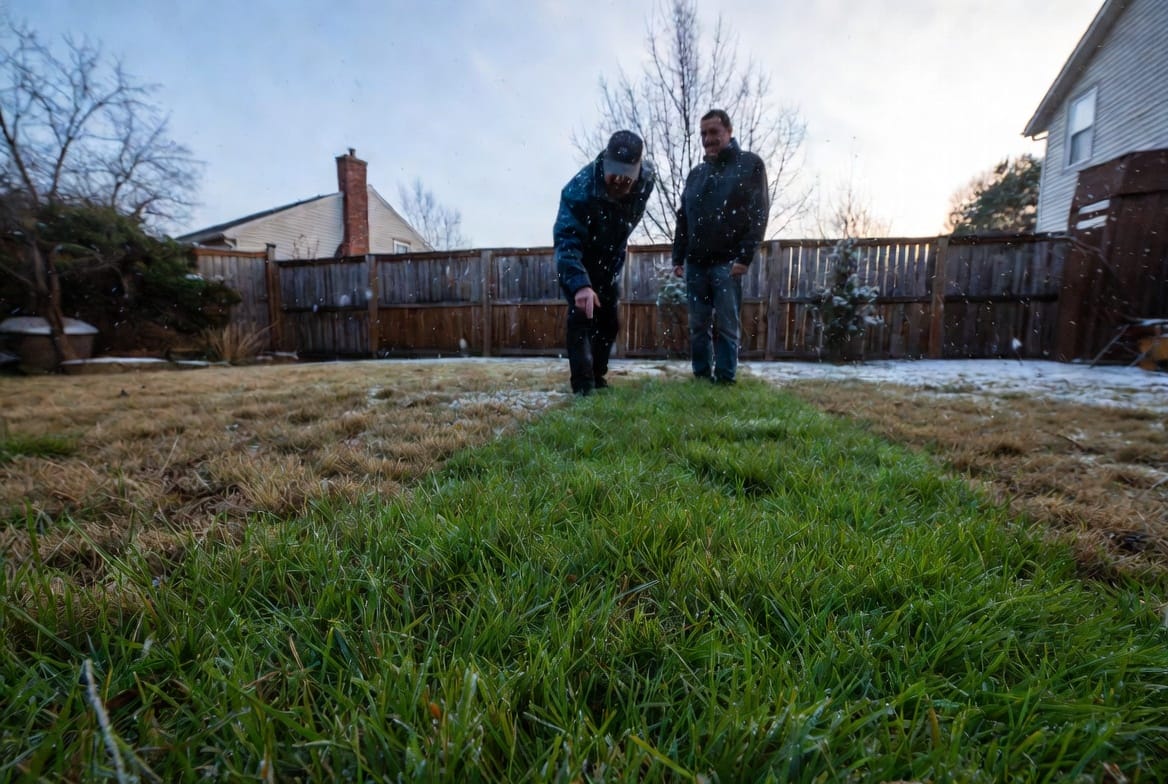
Maintaining a beautiful lawn year-round can feel challenging when warm-season grasses like bermudagrass naturally go dormant and turn brown during the colder months. Fortunately, winter rye overseeding offers a proven, effective strategy to keep your lawn lush and green through winter without replacing your existing turf. This technique transforms your outdoor space into an inviting, vibrant area even in the off-season.
Transform Your Lawn for Winter – Call Today!
At our lawn care services, we’ve helped countless homeowners achieve green grass through winter using smart overseeding practices. This comprehensive guide walks you through everything you need to know about overseeding bermudagrass with annual ryegrass, from timing and preparation to spring transition. Follow these steps for reliable results and a lawn you’ll be proud of all year.
Why Warm-Season Lawns Need Overseeding
Bermudagrass thrives in hot summers but enters dormancy as temperatures drop, leaving your yard looking tired and brown. This natural process can make your property less appealing and potentially more susceptible to weeds and erosion.
Winter rye overseeding involves introducing annual ryegrass into your established bermudagrass lawn. The ryegrass germinates quickly in cooler weather, providing dense green coverage while your bermuda rests. Once spring arrives, the ryegrass naturally fades or is easily removed, allowing your bermudagrass to reclaim the lawn.
This approach delivers year-round green lawns and offers several key advantages:
- Enhanced curb appeal during the holiday season and early spring.
- Soil protection against winter erosion and compaction.
- Weed suppression as the thick rye cover crowds out unwanted plants.
- Improved playability for families and pets who enjoy outdoor time year-round.
Homeowners who overseed report higher satisfaction and stronger, healthier base turf come summer. It's a low-risk investment in your property's beauty and value.
Understanding the Science Behind Winter Rye Overseeding
Annual ryegrass is a cool-season grass that excels in temperatures between 40°F and 70°F. It establishes rapidly, often within 5–10 days, creating a dense carpet that masks the dormant bermudagrass below.
Unlike perennial ryegrass, annual varieties complete their life cycle in one season, making them ideal for temporary color without long-term competition. When overseeded properly onto bermudagrass, the two grasses coexist peacefully during winter, with rye providing the visual and functional benefits.
Key benefits include:
- Faster germination than many other cool-season options.
- Excellent cold tolerance for reliable winter performance.
- Natural disease resistance when managed correctly.
- Easy transition back to warm-season grass in spring.
This strategy is particularly popular in transition zones and southern regions where bermudagrass dominates.
Optimal Timing for Overseeding Success
Timing is critical for winter rye overseeding. The best window typically falls in mid-to-late fall, when soil temperatures consistently reach 55–65°F and nighttime lows stay above freezing but air temperatures begin to cool.
- Ideal soil temperature range: Monitor with a simple soil thermometer for best results.
- Avoid early seeding: Too soon and warm weather may stress young rye seedlings.
- Don’t wait too long: Late seeding risks poor germination before hard freezes.
In most regions, aim for 4–6 weeks before the first expected frost. This gives ryegrass time to establish strong roots while bermudagrass is still somewhat active. Local climate variations matter — consult your area’s first frost date for precision.
Professional lawn care teams can assess your specific lawn conditions and recommend the exact week for seeding to maximize success rates.
Preparing Your Bermudagrass Lawn for Overseeding
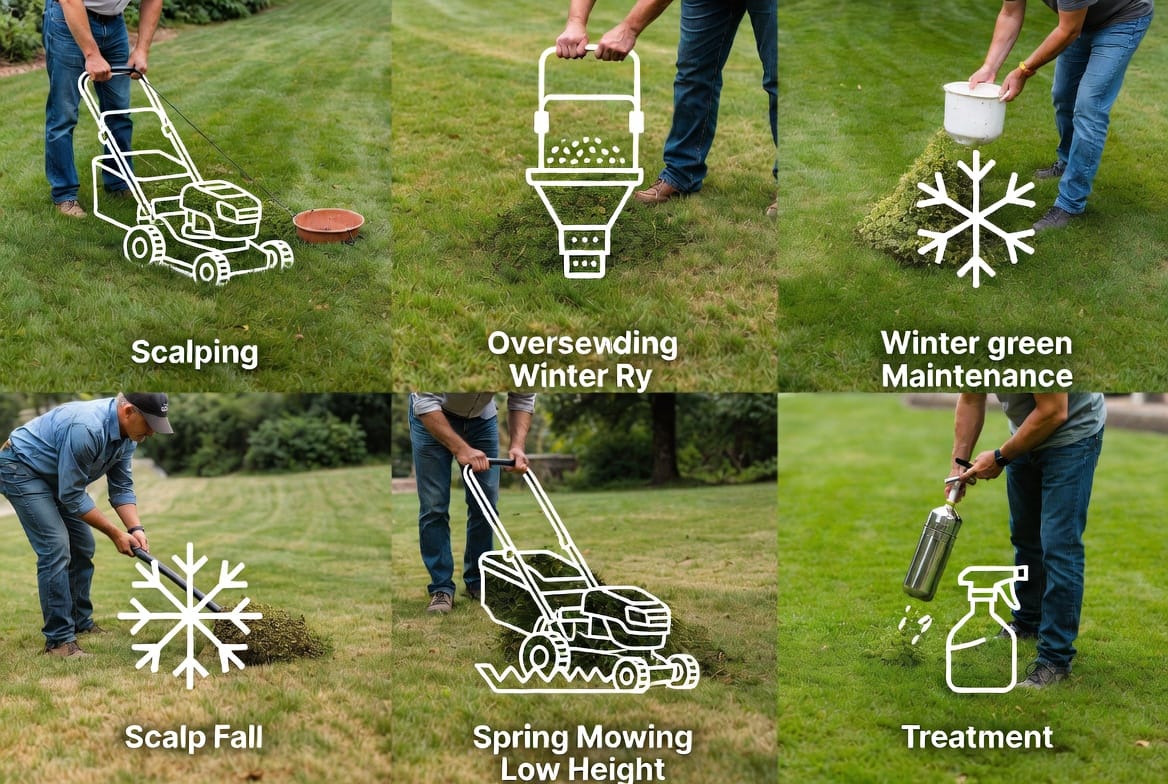
Proper preparation sets the stage for uniform germination and healthy growth. The first critical step is scalping your existing lawn.
Scalping process:
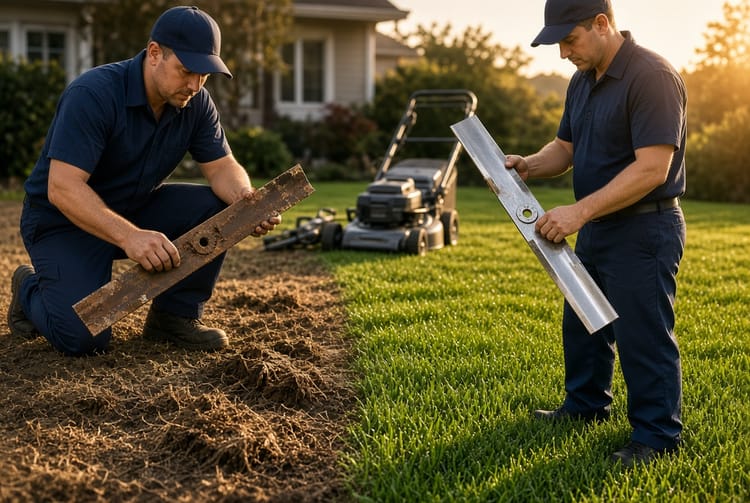
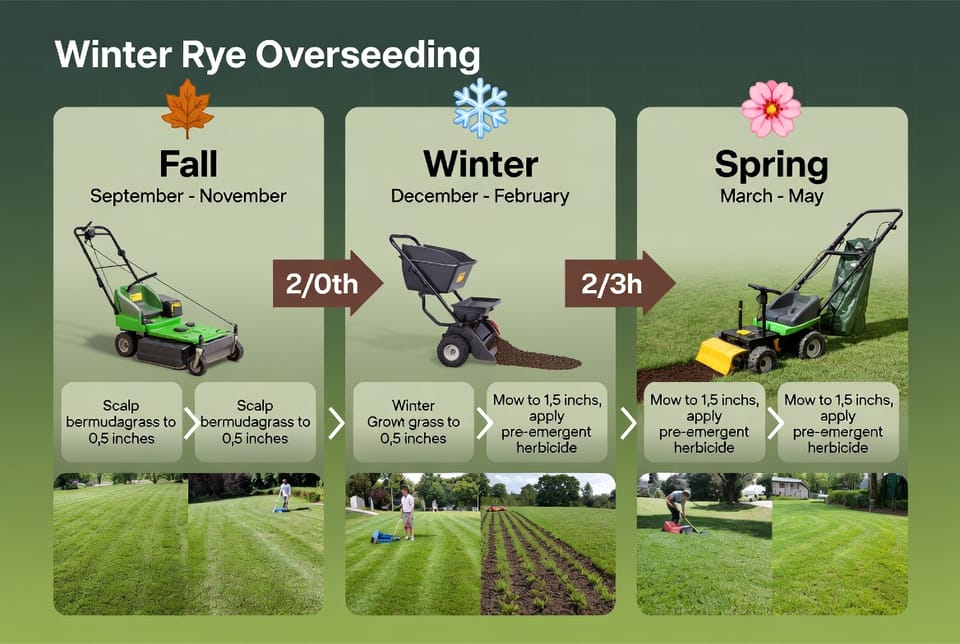
- Mow your bermudagrass as low as safely possible (usually 0.5–1 inch).
- Remove all clippings and debris thoroughly.
- Aerate the soil lightly to improve seed-to-soil contact.
- Address any bare spots or thin areas before proceeding.
Scalping reduces competition from the warm-season grass and allows sunlight to reach the new seeds effectively. This step is essential — skipping it often leads to patchy results.
Next, conduct a soil test to check pH and nutrient levels. Most lawns benefit from a balanced starter fertilizer high in phosphorus to encourage strong root development in the ryegrass.
The Overseeding Process Step by Step
Achieving even coverage requires careful execution:
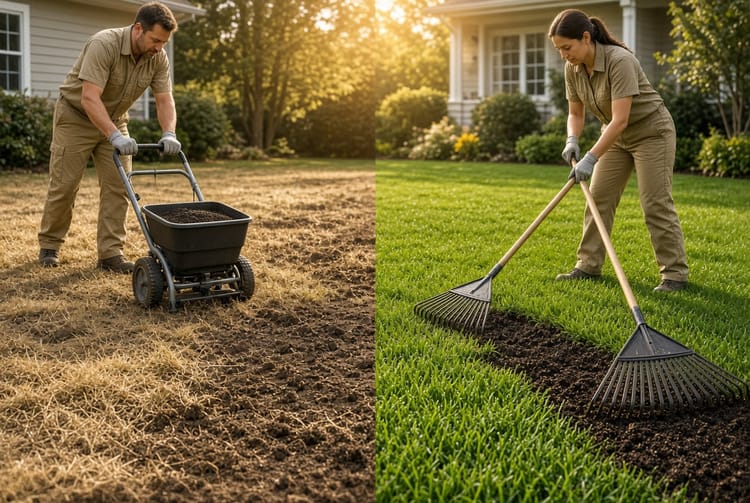
- Spread seed uniformly using a broadcast spreader at the recommended rate (typically 5–10 pounds per 1,000 square feet for overseeding).
- Gently rake or roll the area to ensure good seed-soil contact without burying seeds too deeply.
- Water lightly but consistently — keep the top inch of soil moist until germination occurs (usually 7–14 days).
- Apply a light topdressing of compost or fine soil if needed for added protection.
Consistent moisture is vital during establishment. Light, frequent watering prevents drying out while avoiding waterlogging that could promote fungal issues.
Winter Maintenance for Lush Results
Once established, your winter rye overseeded lawn requires moderate care to stay vibrant:
- Mowing: Keep the ryegrass at 2–3 inches. Regular mowing encourages density and prevents scalping.
- Watering: Supplemental irrigation during dry spells. Deep, infrequent watering promotes deeper roots.
- Fertilization: Light nitrogen applications every 4–6 weeks to maintain color without excessive growth.
- Weed control: Spot-treat any invaders promptly to protect the rye cover.
These practices ensure your lawn remains thick, green, and resilient throughout the winter months. Many homeowners enjoy the soft, cushioned feel underfoot compared to dormant turf.
Mastering the Spring Transition
The transition back to bermudagrass is just as important as the initial overseeding. As temperatures rise in spring, the annual ryegrass will begin to decline naturally, but proactive management ensures a clean switch.
Effective transition methods:
- Mow low (around 1 inch) repeatedly to stress the ryegrass and favor bermudagrass recovery.
- Apply a selective herbicide labeled for ryegrass removal once bermudagrass starts greening up.
- Fertilize appropriately to boost bermudagrass growth while the rye fades.
- Monitor closely — timing the herbicide application is key to avoiding damage to your permanent turf.
With the right approach, the transition is smooth and your lawn quickly returns to its summer glory. Patience and precision during this phase prevent thinning or weed invasion.
Potential Risks and How to Mitigate Them
While winter rye overseeding is generally reliable, awareness of common challenges helps ensure success:
- Poor germination: Addressed by proper scalping, seed quality, and consistent moisture.
- Uneven coverage: Prevented with calibrated spreaders and thorough preparation.
- Spring transition difficulties: Managed by timely mowing and targeted herbicide use.
- Disease pressure: Minimized through good airflow, proper watering, and avoiding over-fertilization.
Our experienced team provides guidance tailored to your lawn’s unique conditions, reducing risks significantly.
Common Mistakes to Avoid
Even well-intentioned homeowners sometimes encounter setbacks. Avoid these pitfalls:
- Seeding too early or too late.
- Using the wrong seed variety or rate.
- Inconsistent watering during establishment.
- Neglecting the spring transition plan.
Learning from these ensures your green grass through winter strategy delivers outstanding, long-lasting results.
Achieving Year-Round Lawn Excellence
Winter rye overseeding represents one of the most effective ways to maintain an attractive lawn through colder months. By understanding your bermudagrass, timing the process correctly, and following proper maintenance and transition protocols, you can enjoy lush green coverage when neighbors’ lawns are brown and dormant.
This technique not only boosts aesthetics but also supports soil health and overall lawn vitality. Whether you’re preparing for winter gatherings or simply want the best-looking yard on the block, overseeding delivers reliable, beautiful outcomes.
Ready to enjoy a green lawn year-round with overseeding? Our lawn care professionals are here to handle the details — from expert assessment and precise seeding to complete winter maintenance and smooth spring transition.
Don’t let another season pass with a dormant, brown yard. Let us help you achieve the vibrant, healthy lawn you deserve.
Ready for Winter Rye Overseeding? Call Now!