The Lawn Topdressing: Improving Soil Health with Compost
Lawn topdressing with compost stands as one of the most reliable, low-disruption methods for building a stronger, more resilient turf. Homeowners who want thicker grass, fewer bare spots, and reduced dependence on synthetic inputs often discover that a thin, even layer of quality compost delivers results that fertilizers alone cannot match. This practice improves the living soil beneath the lawn rather than simply feeding the blades on the surface. When performed correctly, topdressing creates lasting change in soil structure, microbial activity, and root development.
Restore Soil Health and Reduce Thatch – Call Now
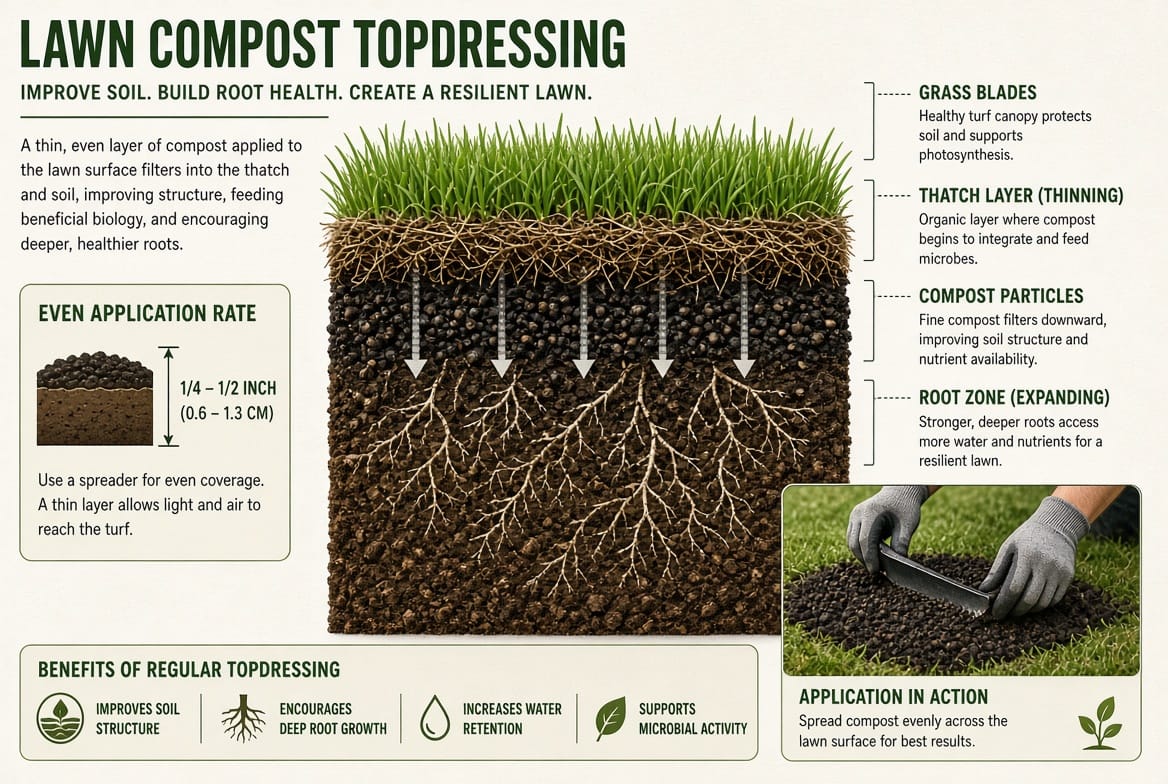
The technique itself is straightforward: a measured amount of compost or a compost-sand blend is spread across the existing turf at a depth of ¼ to ½ inch. The material sifts downward through the grass canopy and begins interacting with the soil immediately. Over subsequent weeks and months, beneficial organisms multiply, thatch begins to break down, and grass plants respond by sending roots deeper. The result is a lawn that holds water more efficiently, resists wear better, and maintains color even during periods of moderate stress.
This guide explains the practice in full—what topdressing actually is, the specific benefits it provides, and the precise steps required for successful application. Every recommendation is grounded in standard horticultural principles used by professional lawn-care teams. Follow the guidelines below and you can expect measurable improvement in soil health and turf density.
What Lawn Topdressing Actually Involves
Topdressing is the controlled application of a thin layer of amendment over an established lawn. The most common and beneficial material is fully mature, screened compost. In some soil types a blend of compost and coarse sand is preferred. The layer must remain shallow—never thicker than ½ inch—so that existing grass blades stay visible and continue photosynthesizing.
Unlike core aeration or complete soil replacement, topdressing works with the living turf already in place. The compost particles settle into small depressions, coat the thatch layer, and gradually incorporate into the upper soil profile. Repeated light applications over several seasons gradually raise organic-matter content without the shock of heavy tillage.
Quality of material matters more than quantity. Compost should be dark brown to black, have an earthy smell, and crumble easily when squeezed. It must be free of viable weed seeds and large woody pieces. Immature compost or raw manure can generate heat, introduce pathogens, or create an uneven surface; both outcomes harm rather than help the lawn. Professional services routinely test or source compost that meets these standards so homeowners avoid the most common material-related failures.
Application timing also influences success. Cool-season grasses respond best in early fall or mid-spring when soil temperatures support active root growth. Warm-season grasses benefit from late-spring applications after they have fully greened. Avoid the peak heat of summer, when grass is already under moisture stress and a new layer of material could increase that stress.
Primary Benefits of Compost Topdressing
The value of topdressing appears across several interconnected aspects of lawn health. Each benefit reinforces the others, producing a cumulative improvement that becomes more obvious with each passing season.
- Improved soil structure and biological activity. Compost introduces organic matter that feeds bacteria, fungi, and other soil organisms. These organisms produce sticky compounds that bind soil particles into stable aggregates. The resulting structure holds moisture in sandy soils and improves drainage in clay soils. Cation-exchange capacity rises, allowing the soil to retain nutrients that would otherwise leach away.
- Accelerated thatch reduction. Thatch is the layer of dead stems and roots that accumulates at the soil surface. Excessive thatch blocks water and air and harbors pests. The microbial burst triggered by compost speeds decomposition of this layer. Over one or two growing seasons the thatch mat thins naturally, reducing the need for mechanical dethatching.
- Stronger, deeper root systems. Better soil aeration and a steady supply of slow-release nutrients encourage grass plants to extend roots downward rather than remaining in the top inch of soil. Deeper roots access moisture during dry spells and anchor the turf against traffic and wind. The visible result is a denser, more wear-tolerant lawn.
- Additional practical gains include modest leveling of minor surface irregularities, a richer green color from balanced nutrition, and a reduced requirement for quick-release fertilizers. Disease pressure often declines because a biologically active soil supports beneficial microbes that compete with pathogens.
These outcomes appear gradually rather than overnight. Most homeowners notice improved color and density within four to six weeks, with structural soil changes becoming evident the following season.
Step-by-Step Application Guide
Successful topdressing depends on preparation, accurate measurement, and even distribution. Follow the sequence below to achieve professional-grade results.
Prepare the Lawn Surface
Mow the grass one-half inch shorter than usual so the compost can reach the soil more easily. Remove clippings, leaves, and debris. If the soil feels hard or water pools on the surface, perform core aeration first. Aeration creates channels that allow the compost to move deeper and speeds incorporation. Allow the lawn to dry slightly after aeration so cores do not turn into mud.
Calculate and Source the Right Amount
The target depth is ¼ inch for most maintenance applications and ½ inch only when the lawn needs extra organic matter or minor leveling. To calculate volume, multiply lawn square footage by desired depth in inches and divide by 324; the result is the number of cubic yards required. Order a modest surplus—approximately 10 percent—to account for settling and uneven spots. Choose screened compost with particle size no larger than ⅜ inch so it filters through the turf without smothering it.
Spread the Material Evenly
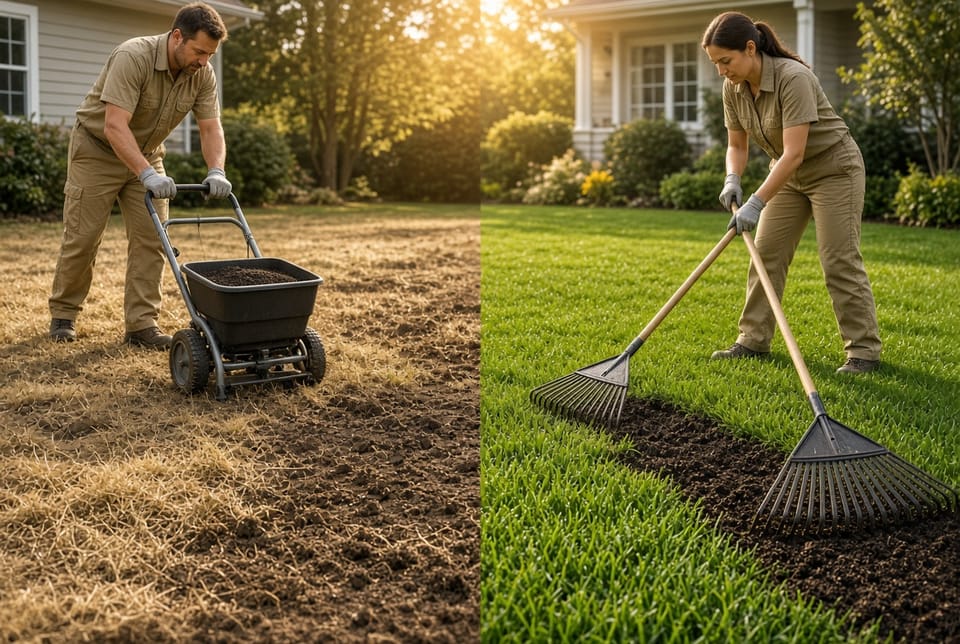
Use a drop spreader calibrated for compost, a specialized topdressing machine, or a combination of wheelbarrow, shovel, and landscape rake. Work in small sections. After each pass, use the back of a rake or a drag mat to work the compost down into the grass canopy. Grass blades must remain visible; a completely buried lawn will yellow and may die in patches. Pay extra attention to high-traffic areas and any low spots that collect water.
Water and After-Care
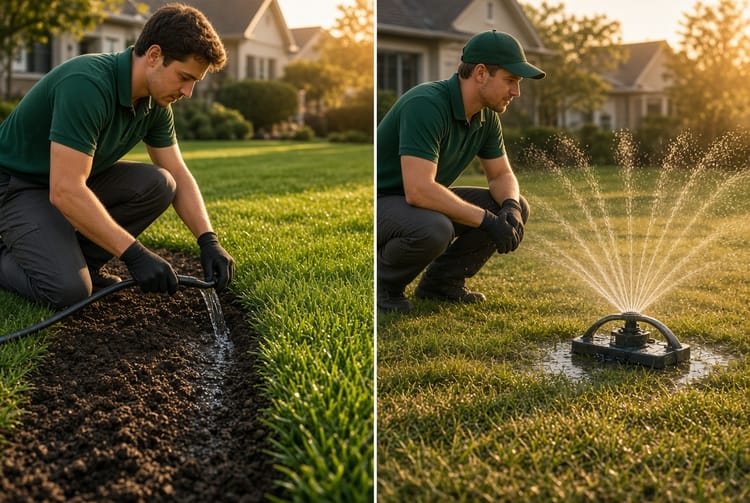
Apply a light irrigation immediately after spreading to settle the compost and begin the integration process. Avoid heavy watering that could wash material into clumps. Keep foot traffic and mowing off the lawn for three to five days. Once new growth appears through the layer, resume normal mowing height. Overseeding can be performed at the same time as topdressing for even faster density gains; the compost provides an ideal germination medium.
Timing, Frequency, and Integration with Other Practices
Apply compost topdressing once per year for most home lawns. Lawns on very sandy or very heavy clay soils may benefit from applications every 12 to 18 months until soil tests show adequate organic-matter levels. Combine topdressing with core aeration whenever possible; the two practices multiply each other’s effectiveness. Fall applications pair especially well with overseeding of cool-season grasses because the compost protects seed and supplies nutrients during establishment.
Avoid applying immediately before a predicted heavy rain that could cause runoff, or during drought when the lawn cannot recover quickly. Always test soil pH and nutrient levels every two to three years so the compost program can be adjusted rather than applied blindly.
Common Mistakes and How to Avoid Them
The most frequent error is applying too thick a layer. Anything beyond ½ inch risks smothering the existing turf and creating anaerobic pockets. Another common problem is using unfinished compost that still contains large pieces or generates heat. Always inspect material before spreading. Skipping aeration on compacted soil limits how deeply the compost can penetrate. Finally, applying during the hottest weeks of summer adds unnecessary stress. Stick to the recommended windows and depths and these pitfalls disappear.
Tools and Professional Support
Homeowners can complete a modest-sized lawn with a wheelbarrow, flat shovel, and quality rake. Larger properties or those needing precise depth control benefit from a calibrated drop spreader or a professional topdressing machine. Rental equipment is widely available, yet many property owners prefer to hire experienced technicians who already possess the correct machinery, tested compost sources, and knowledge of local soil conditions.
Long-Term Results and Ongoing Care
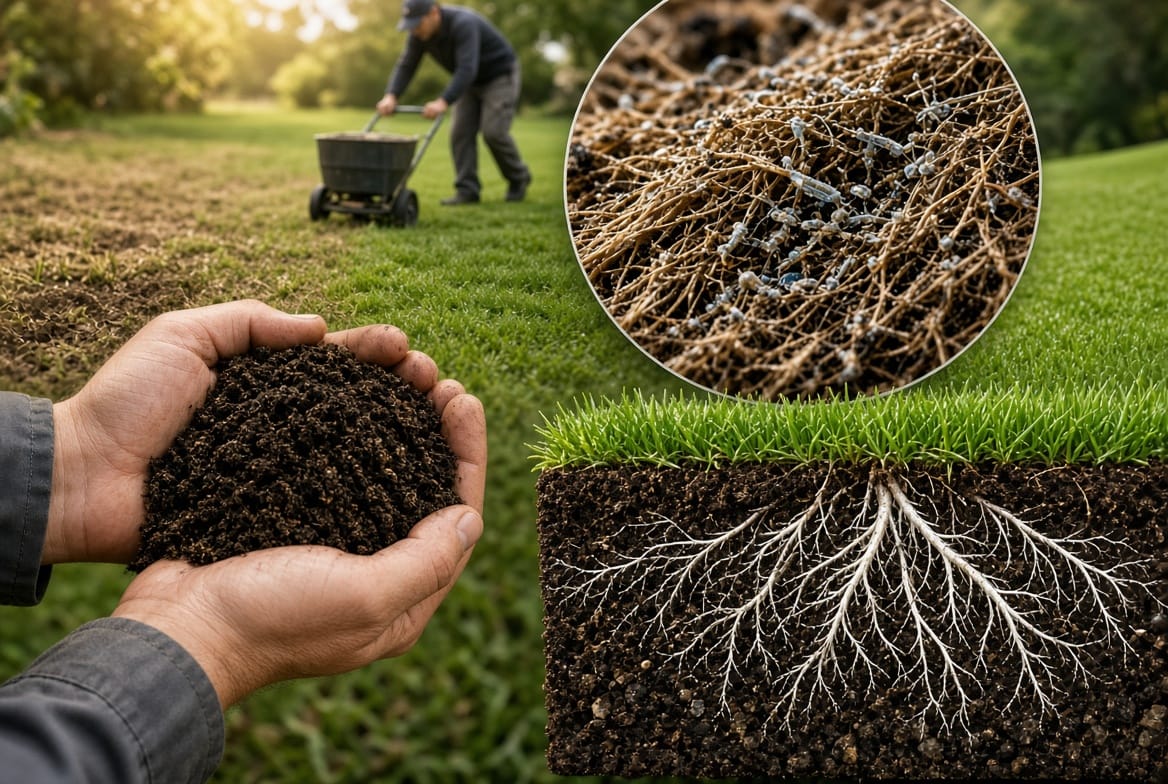
A single well-executed topdressing produces noticeable improvement, yet the greatest gains appear after two or three annual applications. Soil organic-matter percentages rise, water infiltration improves, and the lawn requires less supplemental irrigation and fertilizer. Disease and insect pressure typically decline because a biologically rich soil supports a balanced ecosystem. The lawn becomes more self-sustaining, which is the ultimate goal of any soil-first program.
Continue regular mowing at the proper height, irrigate deeply but infrequently, and address weeds promptly. These standard practices work far more effectively once the soil itself has been strengthened through compost topdressing.
Improve Your Lawn with Topdressing
Compost topdressing offers a proven, sustainable path to better soil health, reduced thatch, and stronger root systems. The process is straightforward when the correct depth, material, and timing are observed. Whether you choose to perform the work yourself or prefer professional execution, the investment pays dividends in a thicker, greener, more resilient lawn for years to come.
We will evaluate your soil, select the appropriate compost blend, and apply it evenly so your lawn receives the full benefit of this essential practice. Take the first step toward lasting soil improvement—your turf will show the difference.
Transform Tired Turf with Professional Topdressing – Call Now