The Lawn Watering Deep vs. Shallow: Why Roots Matter
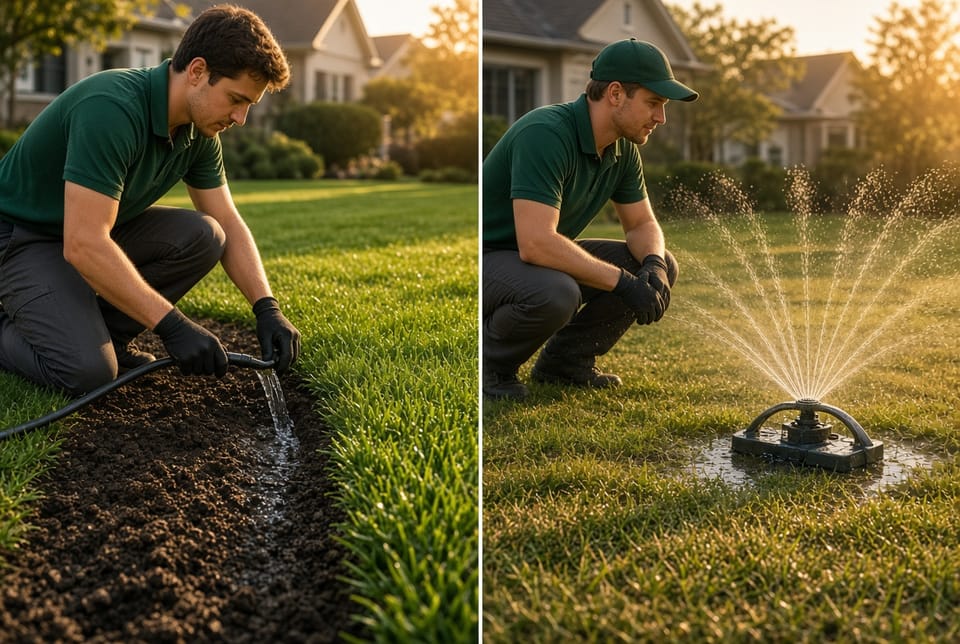
Most homeowners believe that watering the lawn every day keeps it green and healthy. In reality, that habit often produces the opposite result. The difference between a resilient, drought-tolerant lawn and one that browns at the first dry spell lies almost entirely beneath the surface: in the roots. Deep, infrequent watering trains grass to send roots far into the soil. Shallow, frequent watering keeps those roots clustered near the top, leaving the turf vulnerable to heat, drought, and disease. Understanding this single principle and applying it consistently is the most reliable way to build a stronger lawn.
Call Now for Expert Deep-Watering Lawn Care
This guide explains the proper watering technique in clear, practical terms. It shows why root depth determines everything from water efficiency to disease resistance, and it gives you specific, repeatable guidelines you can start using immediately.
Why Roots Determine Lawn Health
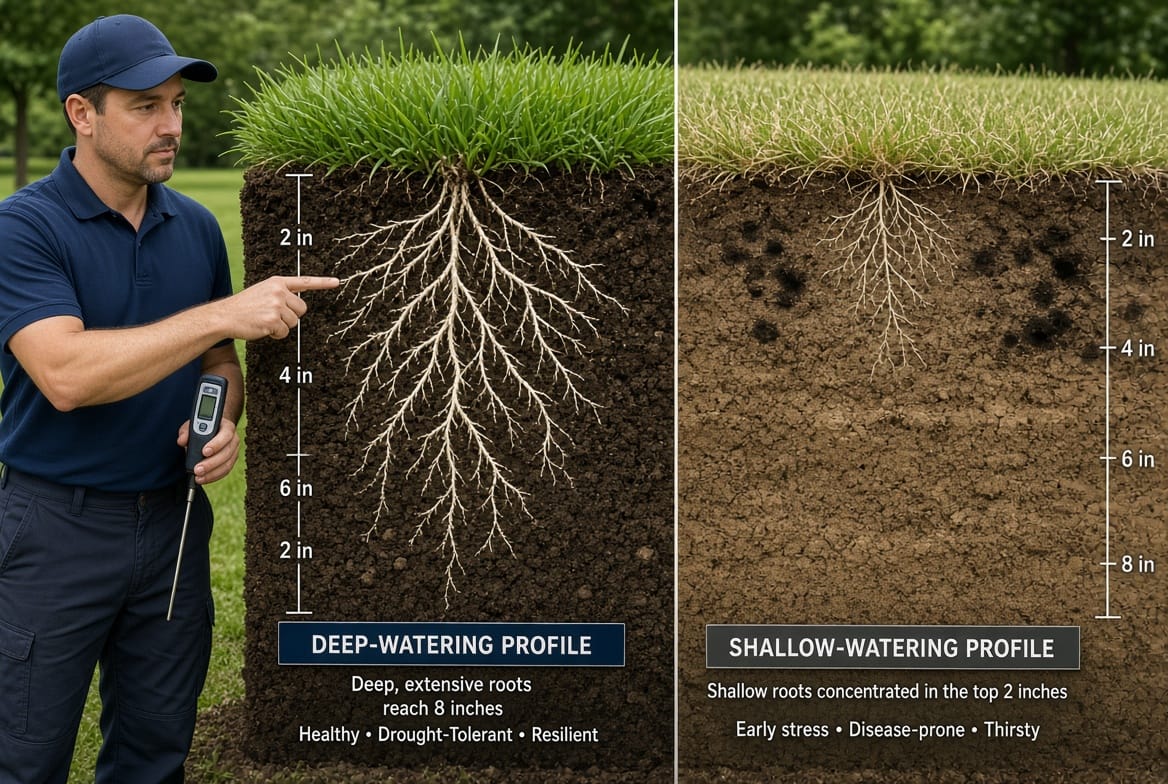
Grass blades are only the visible part of the plant. The real work happens underground. Roots absorb water and nutrients, anchor the plant against foot traffic and wind, and store energy for recovery after stress. When roots stay shallow, the entire plant lives in a narrow, unstable zone that dries out quickly and stays damp on the surface. When roots grow deep, the plant taps moisture and minerals that remain available long after the top inch of soil has dried.
A mature, well-watered lawn typically develops roots 6 to 8 inches deep, sometimes deeper in ideal conditions. That extra depth is not cosmetic. It is the difference between a lawn that survives two weeks without rain and one that shows footprints and grayish color after three hot days.
Deep, Infrequent Watering Builds Drought-Tolerant Roots
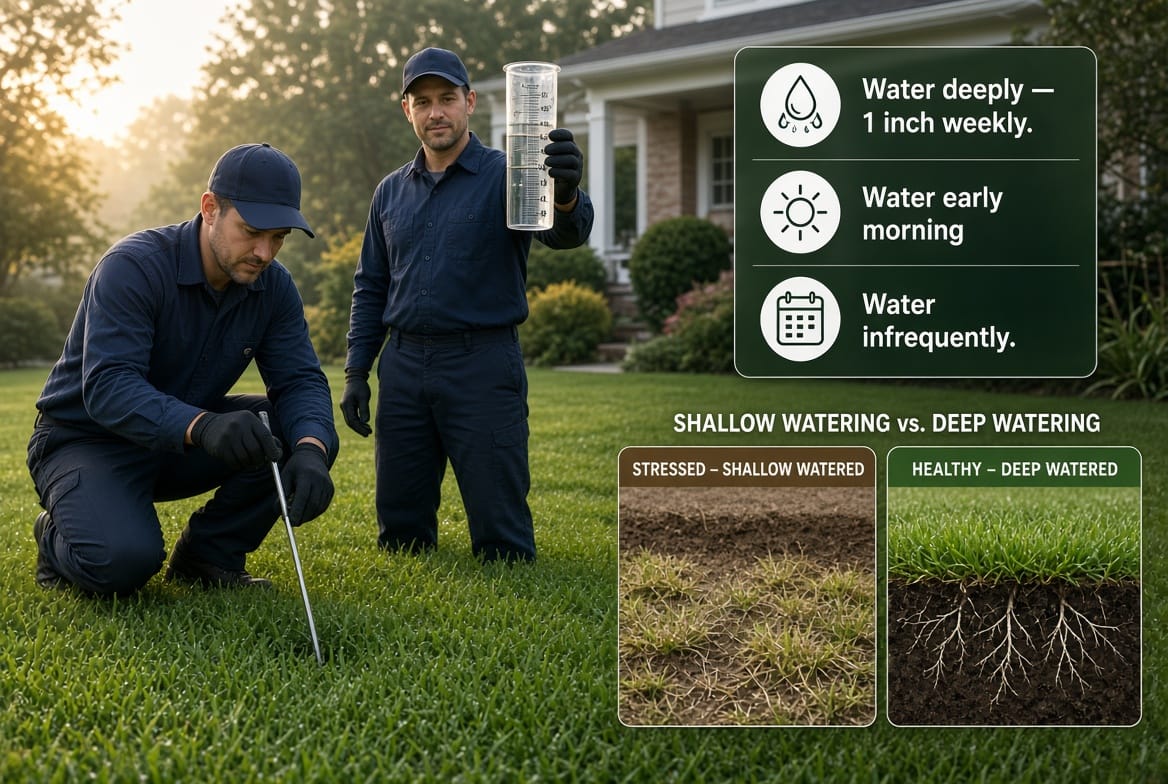
Deep watering means applying enough water in a single session for moisture to reach 6–8 inches into the soil, then waiting until the lawn actually needs water again. For most cool-season and warm-season grasses, that target equals roughly 1 inch of water per week, delivered in one or two sessions rather than daily sprinkles.
When the soil profile is moistened to that depth, grass roots follow the moisture downward. Over successive cycles the root system lengthens and branches. Deeper roots confer three major advantages:
- They reach water that remains after the surface has dried, so the lawn stays green longer during dry periods.
- They access nutrients that have leached below the top few inches.
- They improve soil structure by creating channels that enhance drainage and aeration.
The result is a lawn that is measurably more drought tolerant. It requires less frequent irrigation once established and recovers faster after heat or traffic stress.
Shallow, Frequent Watering Creates Weak, Disease-Prone Roots
Shallow watering—light daily or every-other-day applications that wet only the top 1–2 inches—produces the opposite outcome. Roots have no incentive to grow downward because moisture is always available at the surface. The root mass stays concentrated in a thin layer that heats and dries rapidly.
This pattern creates several risks:
- The lawn becomes highly susceptible to drought stress. A few hot, windy days can wilt the turf even if you watered yesterday.
- Constant surface moisture encourages fungal diseases such as brown patch, dollar spot, and pythium. Spores germinate easily when the thatch and upper soil stay wet for long periods.
- Nutrient uptake is limited because many minerals sit below the shallow root zone.
- The turf develops a weak, easily compacted surface that shows wear quickly.
In short, frequent light watering trains the lawn to be needy and fragile rather than self-reliant.
Proper Watering Technique: How to Apply Water Deeply
Follow these steps to shift from shallow to deep watering.
Measure the output of your system. Place several straight-sided containers (tuna cans or rain gauges) across the lawn. Run the sprinklers or soaker lines and time how long it takes to collect 1 inch of water. That duration becomes your standard cycle. Most rotary sprinklers need 30–60 minutes; soaker hoses may need longer but apply water more efficiently with less evaporation.
Water only when the lawn needs it. Look for these signs: grass blades fold or roll, footprints remain visible after walking across the lawn, or the color shifts from bright green to a dull bluish-gray. A screwdriver or soil probe pushed into the ground should meet resistance after 4–6 inches if the profile is dry.
Apply the full 1 inch in one or two sessions. If runoff begins before you reach the target, stop, let the water soak in for 30–60 minutes, then resume. Cycle-and-soak prevents waste on sloped or clay soils.
Water in the early morning. The ideal window is between 4 a.m. and 10 a.m. Temperatures are cooler, wind is calmer, and the grass has time to dry before nightfall, reducing disease pressure. Midday watering loses too much to evaporation; evening watering leaves foliage wet overnight.
Choose efficient delivery methods. Soaker hoses and drip lines place water directly at the soil surface with minimal loss. If you use overhead sprinklers, select heads that produce large droplets rather than fine mist, and adjust them so water lands on turf, not sidewalks or driveways.
Guidelines for Different Soils and Seasons
Soil type changes how often you water, not how much.
- Sandy soils drain quickly. You may need to water twice a week, still totaling 1 inch, because moisture moves downward fast.
- Clay soils hold water longer. One deep session per week is usually sufficient; over-watering causes saturation and root rot.
- Loam soils fall in the middle and are the most forgiving.
In spring and fall, cooler temperatures and occasional rain often reduce the need to once every 7–10 days. In peak summer heat, you may still stay at 1 inch per week but watch the lawn more closely. Newly seeded or sodded areas require lighter, more frequent watering only until roots establish—usually 2–3 weeks—then transition to the deep schedule.
Common Mistakes and How to Correct Them
Many well-intentioned routines undermine root development:
- Watering for 10–15 minutes every day “just to be safe.” Switch to the measured 1-inch cycle and skip days when the soil is still moist.
- Ignoring weather. Skip irrigation after significant rainfall. A simple rain gauge or local forecast prevents over-watering.
- Using the same schedule year-round. Adjust frequency with the seasons rather than volume.
- Forgetting to maintain equipment. Clogged nozzles and misaligned heads create dry spots that tempt extra watering.
Correcting these habits does not require new equipment in most cases—only a change in timing and duration.
Transitioning an Existing Lawn
If your lawn has been watered shallowly for years, do not switch overnight. Begin by extending each watering session by 5–10 minutes while reducing frequency by one day per week. Over 3–4 weeks the roots will follow the deeper moisture. During the transition the turf may look slightly stressed; that is normal and temporary. Consistent deep watering soon produces thicker, darker growth.
Aeration once a year further helps by relieving compaction so water and roots can penetrate more easily. Core aeration in early fall or spring, followed by the deep-watering program, accelerates improvement.
Year-Round Maintenance for Lasting Results
Once deep roots are established, maintenance becomes simpler. Continue the 1-inch weekly target, adjusting only for rainfall and temperature. Mow at the proper height for your grass type (generally 3–4 inches for most cool-season lawns) so blades shade the soil and reduce evaporation. Fertilize according to soil-test recommendations rather than a fixed calendar; healthy roots use nutrients more efficiently.
Watch for localized dry spots caused by compacted soil, thatch, or poor sprinkler coverage. Address those areas with targeted aeration or head adjustment instead of increasing overall watering time.
A lawn managed this way uses water more efficiently, stays greener longer between rains, and resists common diseases without extra chemical applications. The investment is not more water—it is better timing and greater depth.
Water Deeply for a Stronger Lawn
The choice between deep and shallow watering is one of the few lawn-care decisions that produces visible, lasting change within a single season. Deep, infrequent irrigation grows roots that make the turf drought-tolerant and disease-resistant. Shallow, frequent irrigation does the reverse. Follow the 1-inch weekly guideline, water in the early morning, and let the soil dry slightly between sessions. Your lawn will reward the change with richer color, better density, and far less summer stress.
Ready for professional help implementing these techniques or diagnosing an existing lawn problem? We will assess your soil, irrigation system, and grass type, then set up a watering program that builds the deep roots your lawn needs.
Stop Shallow Watering Problems – Call Now