The Lawn Fertilization Schedule: When to Feed for Best Results
A beautiful lawn does not happen by accident. It happens when nutrients arrive at the exact moment your grass can use them. Feed too early and much of the product washes away or feeds weeds. Feed too late and you encourage weak, disease-prone growth. The difference between a patchy yard and a thick, resilient carpet of turf is almost always timing.
Get Professional Lawn Fertilization Timed for Best Results
This guide gives you a clear, year-round lawn fertilization schedule that works for both cool-season and warm-season grasses. You will learn why each season has a specific job, what products belong in that window, and how to adjust for your climate. Follow the plan and you reduce waste, lower disease pressure, and give your lawn the steady nutrition it needs to stay dense and green.
Why Seasonal Feeding Matters More Than “Just Fertilize”
Grass is not a houseplant. Its growth rate, root activity, and nutrient demand change dramatically with soil temperature and day length. In spring the plant is waking up and building new shoots. In summer it is defending itself against heat and traffic. In fall it is storing energy for winter. In winter many grasses simply rest.
When you match fertilizer type and nitrogen rate to that biological calendar, three things happen:
- Roots grow deeper instead of staying shallow.
- Top growth stays balanced instead of becoming lush and weak.
- Weeds and disease find fewer openings.
Ignore the calendar and you invite fertilizer burn, excessive thatch, or a mid-summer collapse. The schedule below prevents those problems.
Understanding Your Grass Type First
Before you buy a single bag, identify whether you have cool-season grass (Kentucky bluegrass, tall fescue, perennial ryegrass, fine fescue) or warm-season grass (Bermuda, zoysia, St. Augustine, centipede). Cool-season grasses grow most actively in spring and fall. Warm-season grasses peak in summer heat.
A simple soil test every two to three years tells you pH and existing nutrient levels. Most lawns benefit from a slightly acidic to neutral pH (6.0–7.0). If the test shows high phosphorus, skip starter fertilizers that contain extra P. If potassium is low, choose a winterizer with a higher third number. These small adjustments keep you from wasting money and protect local waterways.
Spring: Pre-Emergent Protection Plus a Measured First Feeding
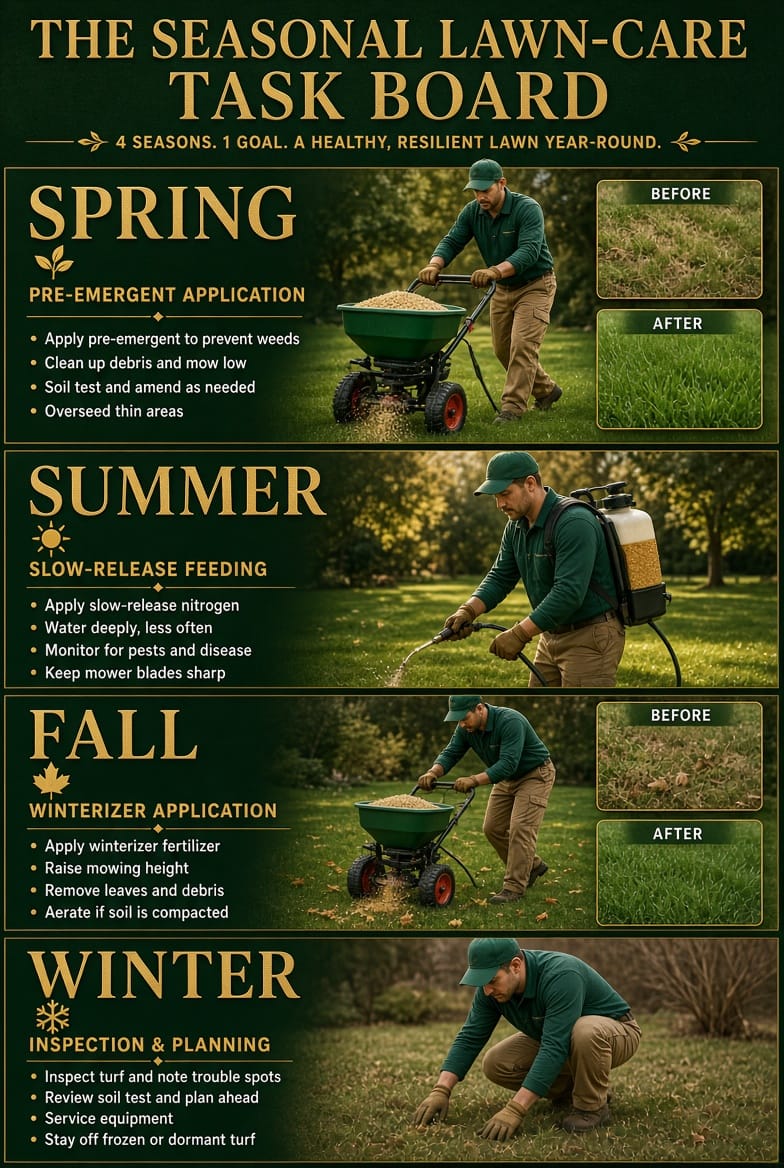
Spring is the season of dual purpose: stop weeds before they start and give grass a gentle push out of dormancy.
Timing window
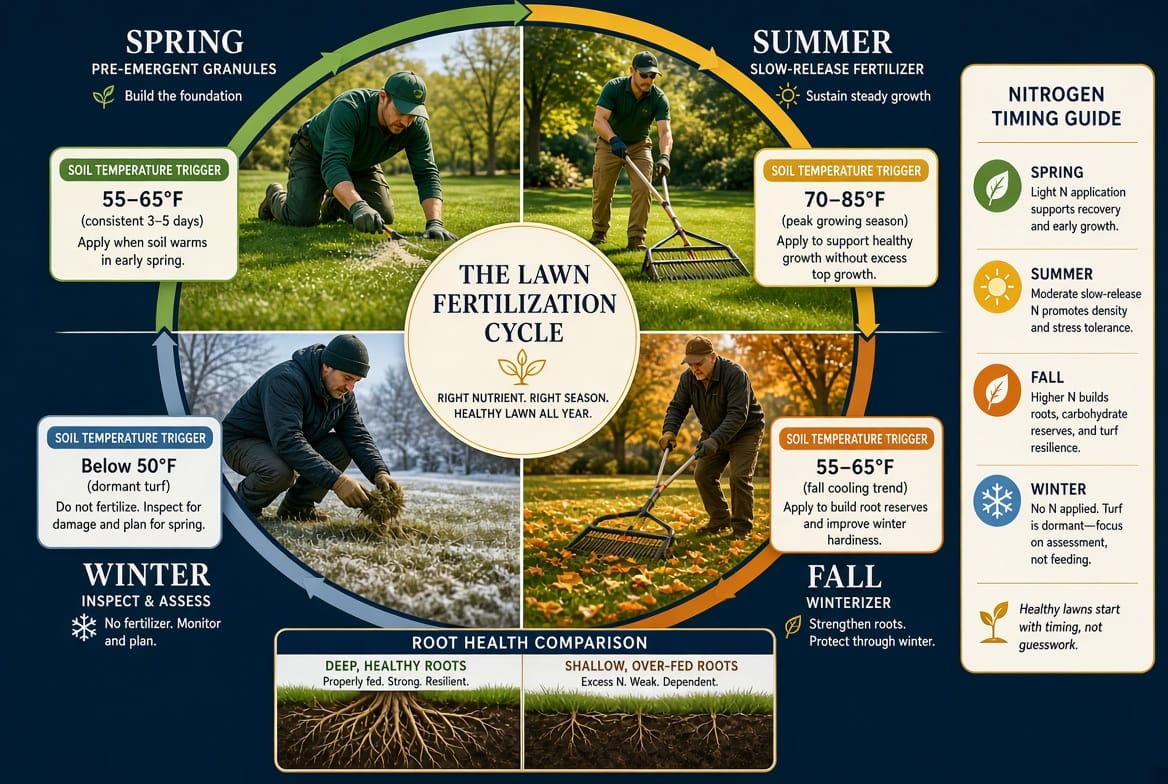
- Cool-season lawns: soil temperature reaches 50–55°F, usually 2–4 weeks before the last expected frost or when forsythia blooms.
- Warm-season lawns: after the grass has fully greened and soil stays above 65°F. Do not rush this application on Bermuda or zoysia.
What to apply
- A quality pre-emergent herbicide (prodiamine, dithiopyr, or pendimethalin) to block crabgrass and other summer annuals.
- A balanced or slightly nitrogen-focused fertilizer at a modest rate—typically 0.5 to 0.75 pounds of actual nitrogen per 1,000 square feet. Many “spring lawn food” products combine both jobs in one bag.
Why this combination works Pre-emergent creates a chemical barrier in the top half-inch of soil. Fertilizer at this stage supports new leaf growth without forcing the plant to grow faster than its still-cool roots can support. Over-applying nitrogen in early spring produces soft tissue that is easily damaged by late frost or the first heat wave.
Practical tips
- Water the pre-emergent in with 0.25–0.5 inches of irrigation or rain so it activates.
- If you plan to overseed a cool-season lawn, skip pre-emergent or use a product labeled safe for new seed.
- Keep pets and children off the lawn until the granules have been watered in and the surface has dried.
A light spring feeding plus weed prevention sets the tone for the entire year. Skip it and you spend the rest of the season fighting crabgrass instead of enjoying the lawn.
Summer: Slow-Release Nutrition That Protects Against Stress
Summer is the season of restraint. High temperatures, drought, and heavy use already stress the plant. A big flush of quick-release nitrogen at this time creates tender growth that insects and disease love.
Timing window
- Cool-season lawns: late spring through early summer only if the lawn looks hungry; otherwise wait until fall. Many northern lawns need little or no summer fertilizer.
- Warm-season lawns: every 6–8 weeks during active growth, typically May through August depending on region.
What to apply
- A slow-release fertilizer that uses coated urea, polymer-coated nitrogen, or organic sources. These products feed the lawn over 6–12 weeks instead of all at once.
- Lower nitrogen rates: 0.5 pounds of actual N per 1,000 square feet per application is usually enough.
Why slow-release is the summer standard Slow-release nitrogen matches the plant’s reduced uptake during heat. It also lowers the risk of leaf burn and reduces leaching into groundwater. Many premium summer formulas include extra potassium and micronutrients that help the grass tolerate drought and traffic.
Practical tips
- Never fertilize a drought-stressed lawn. Water first, then feed after the grass has recovered.
- Raise mowing height. Taller grass shades the soil, reduces water loss, and needs less fertilizer.
- If you must apply in midsummer heat, do it in the evening and water immediately.
Summer feeding is about maintenance, not transformation. The goal is a lawn that stays green without becoming a magnet for brown patch or grubs.
Fall: The Winterizer Application That Builds Next Year’s Lawn
Fall is the most important feeding window of the entire year for cool-season grasses and the last meaningful window for warm-season grasses.
Timing window
- Cool-season lawns: Labor Day through mid-October for the main feeding; a second lighter application 4–6 weeks later if growth continues.
- Warm-season lawns: 6–8 weeks before the average first frost so the grass can use the nutrients before dormancy.
What to apply
- A winterizer fertilizer formulated with a higher potassium number (the third number on the bag) and moderate nitrogen. Typical analysis examples: 24-0-10, 20-0-8, or similar.
- Rate: 1.0 pound of actual nitrogen per 1,000 square feet for cool-season lawns; slightly less for warm-season lawns.
Why fall feeding is non-negotiable Cool-season grasses use fall nitrogen to grow roots and store carbohydrates. Those reserves carry the plant through winter and produce the first green-up next spring. Potassium strengthens cell walls and improves cold and drought tolerance. Skipping the winterizer leaves the lawn thin and slow to recover in April.
Practical tips
- Core aerate before or immediately after the fall application if the soil is compacted. Fertilizer reaches the root zone faster.
- Continue mowing until growth stops; do not let leaves smother the turf.
- If you overseed in early fall, choose a starter fertilizer with a modest phosphorus component only if your soil test recommends it.
A properly timed winterizer is the single highest-return application you can make. It is the difference between a lawn that looks tired in March and one that greens up evenly and densely.
Winter: Dormancy Management and Warm-Season Exceptions
Winter is not a feeding season for most lawns. The plant is either dormant or growing so slowly that extra nitrogen sits unused and can leach.
Cool-season lawns Once soil temperatures drop below 50°F and top growth stops, put the spreader away. Focus on keeping leaves raked, avoiding heavy traffic on frozen turf, and planning next year’s soil test.
Warm-season lawns These grasses go fully dormant in most of the country. Do not apply nitrogen after the last fall feeding. A late application can delay dormancy and increase winter-kill risk, especially on Bermuda and zoysia. If the lawn stays green in a mild southern climate, a very light, slow-release feeding may be considered only after professional soil and tissue testing.
Practical winter habits
- Keep debris off the lawn so snow mold has less opportunity.
- Avoid de-icing salts near turf; they damage roots.
- Use this quiet period to service equipment and order next season’s products.
Winter is the season of patience. The work you did in fall is now doing its job underground.
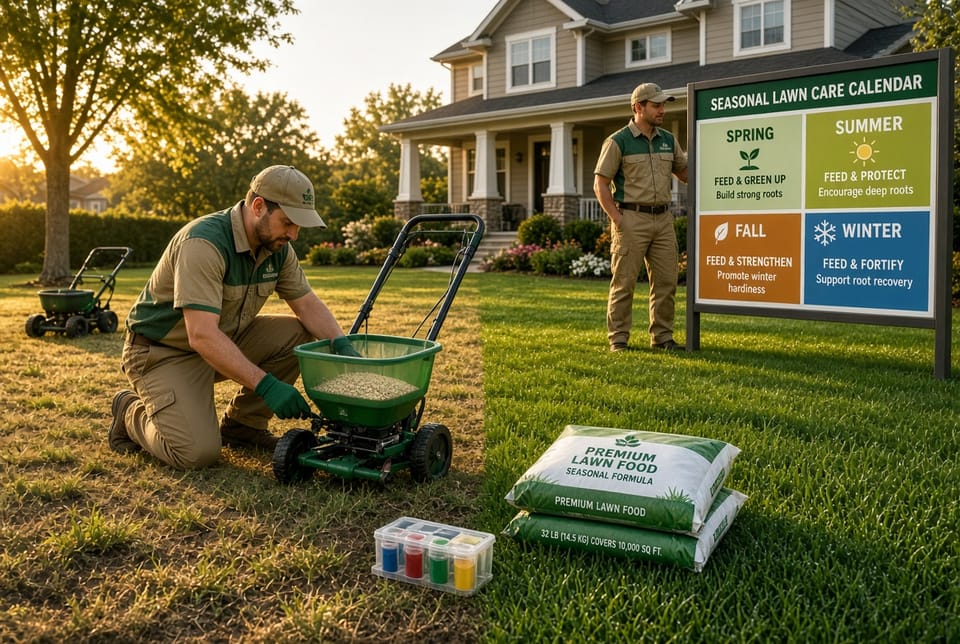
A Simple Year-Round Schedule at a Glance
- Early Spring — Pre-emergent + light fertilizer once soil hits 50–55°F (cool-season) or after full green-up (warm-season).
- Late Spring / Early Summer — Slow-release product only if the lawn shows hunger; skip or reduce on cool-season turf.
- Mid-Summer — Warm-season lawns only; slow-release at modest rates; never fertilize drought-stressed grass.
- Early to Mid-Fall — Winterizer application; highest priority feeding of the year for cool-season grass.
- Late Fall — Optional second light feeding on cool-season lawns if growth continues.
- Winter — No fertilizer. Dormant warm-season lawns stay unfed.
Adjust dates two to three weeks earlier in southern zones and later in northern zones. Local extension services publish soil-temperature maps that take the guesswork out of timing.
Timing Tips That Separate Good Results from Great Results
Soil temperature is more reliable than the calendar. A $15 soil thermometer or a free local weather-station reading tells you when roots are actually active.
Water the lawn the day before fertilizing so granules stick and begin to dissolve. After application, apply 0.25–0.5 inches of water unless rain is forecast within 24 hours.
Calibrate your spreader every season. An uncalibrated spreader is the most common cause of striping and burn.
Split heavy applications. Two half-rate feedings two weeks apart are safer than one full-rate dump.
Watch the weather. Do not apply before a heavy rain that will wash product into the street, and do not apply when temperatures will exceed 85–90°F for several days.
These small habits protect both the lawn and the investment you make in product.
Common Risks and How to Avoid Them
Over-fertilization produces weak, disease-prone growth and can burn leaf tissue. Stick to labeled rates and prefer slow-release sources in warm weather.
Wrong product at the wrong time — a high-nitrogen summer fertilizer on cool-season grass in July is a classic mistake. Match the bag to the season.
Ignoring soil pH — nutrients become locked up when pH is too high or too low. Lime or sulfur according to test results, not guesswork.
Applying to wet or stressed turf — wait until the grass has recovered from drought or heat before feeding.
Professional application removes most of these risks. Technicians use calibrated equipment, current weather data, and products chosen for your exact grass type and soil.
Putting the Schedule to Work on Your Property
Every lawn is a little different because of shade, soil, traffic, and grass variety. The framework above gives you the correct windows and product types. Fine-tuning comes from observation: color, density, and how quickly the lawn recovers after mowing or play.
If you would rather spend weekends enjoying the yard instead of studying fertilizer labels, a professional service removes the variables. Trained technicians arrive with the right product on the right week, apply it evenly, and adjust for weather in real time.
Feed your lawn at the right time.
A simple conversation today can put your lawn on a proven seasonal schedule that delivers thicker turf, fewer weeds, and less wasted product all year long.
Call Now for Spring, Summer, Fall & Winter Lawn Feeding