The Lawn Mower Blade Sharpening: Why It Matters for Grass Health
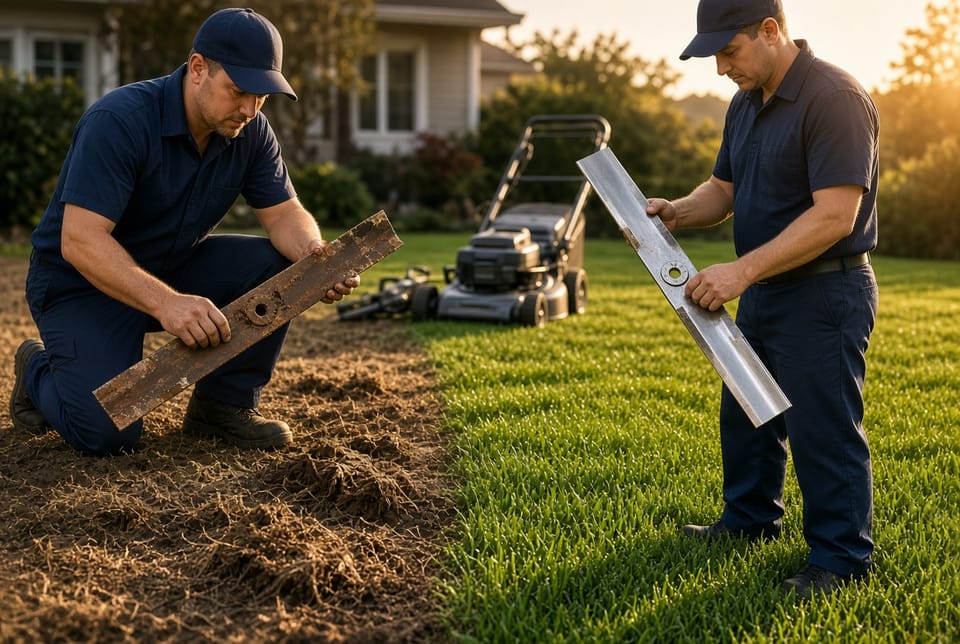
Proper lawn mower blade sharpening is one of the most important yet frequently neglected steps in lawn maintenance. A sharp blade does far more than make mowing faster. It directly protects grass health by delivering a clean cut instead of a damaging tear. When blades grow dull, they rip grass tissue, leaving ragged edges that invite disease, produce unsightly brown tips, and weaken the entire lawn.
Call Now for Professional Mower Blade Sharpening
This guide explains exactly how dull blades harm grass, the clear signs you should watch for, and the correct way to sharpen or replace the blade. Follow these maintenance practices and your turf will stay thicker, greener, and more resilient.
How Dull Blades Tear Grass Instead of Cutting It
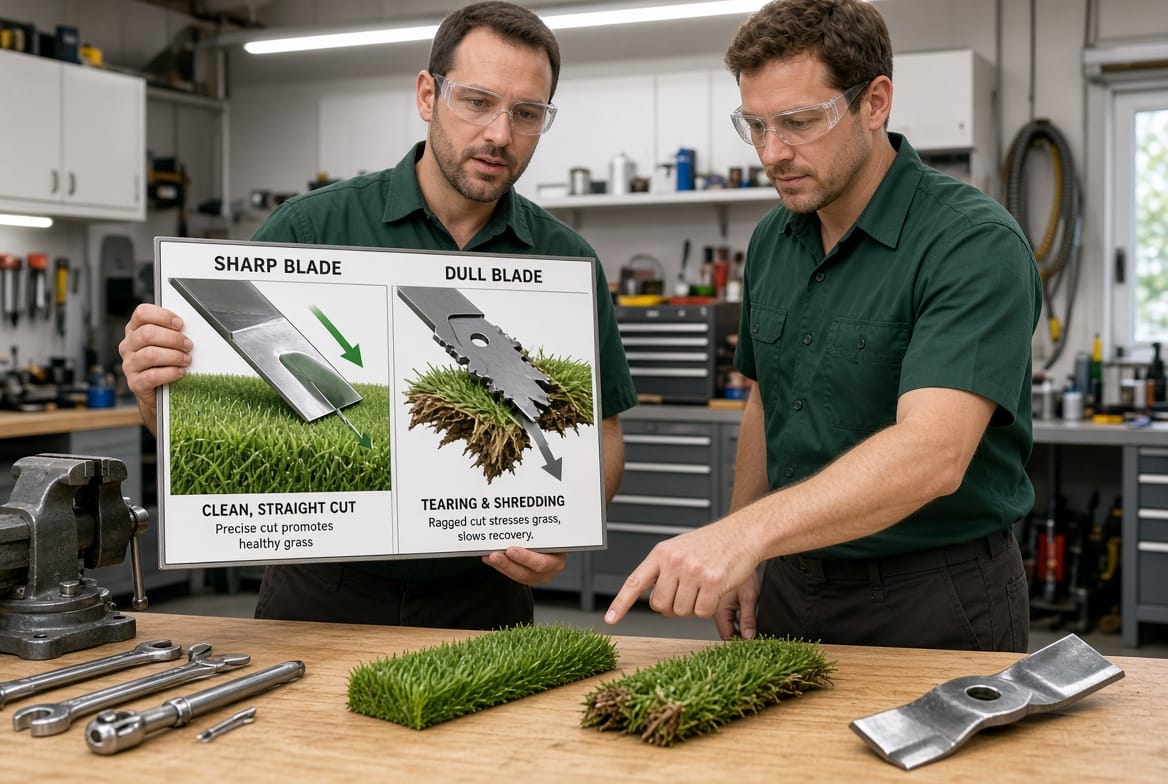
A sharp mower blade functions like a precision knife. It slices through each grass leaf with a smooth, straight cut. The plant immediately begins sealing the wound, loses very little moisture, and continues growing without extra stress.
A dull blade works like a blunt instrument. It smashes, shreds, and tears the grass rather than slicing it. The resulting edge is frayed, white or brownish, and far larger than a clean cut. These torn surfaces stay open longer, allowing pathogens easy entry and causing the tips to die back.
The damage is not limited to appearance. Torn grass:
- Loses water more rapidly through the ragged tissue
- Redirects energy toward healing instead of root and shoot growth
- Becomes an easy target for fungal and bacterial diseases
- Develops the familiar brown tips that appear a day or two after mowing
Over repeated cuttings, the cumulative stress produces a thin, off-color lawn that never looks its best no matter how much water or fertilizer you apply.
Why Torn Grass Invites Disease and Stress
Healthy grass has a natural waxy coating and the ability to close small wounds quickly. A clean cut from a sharp blade heals within hours. A torn cut from a dull blade can remain open for days.
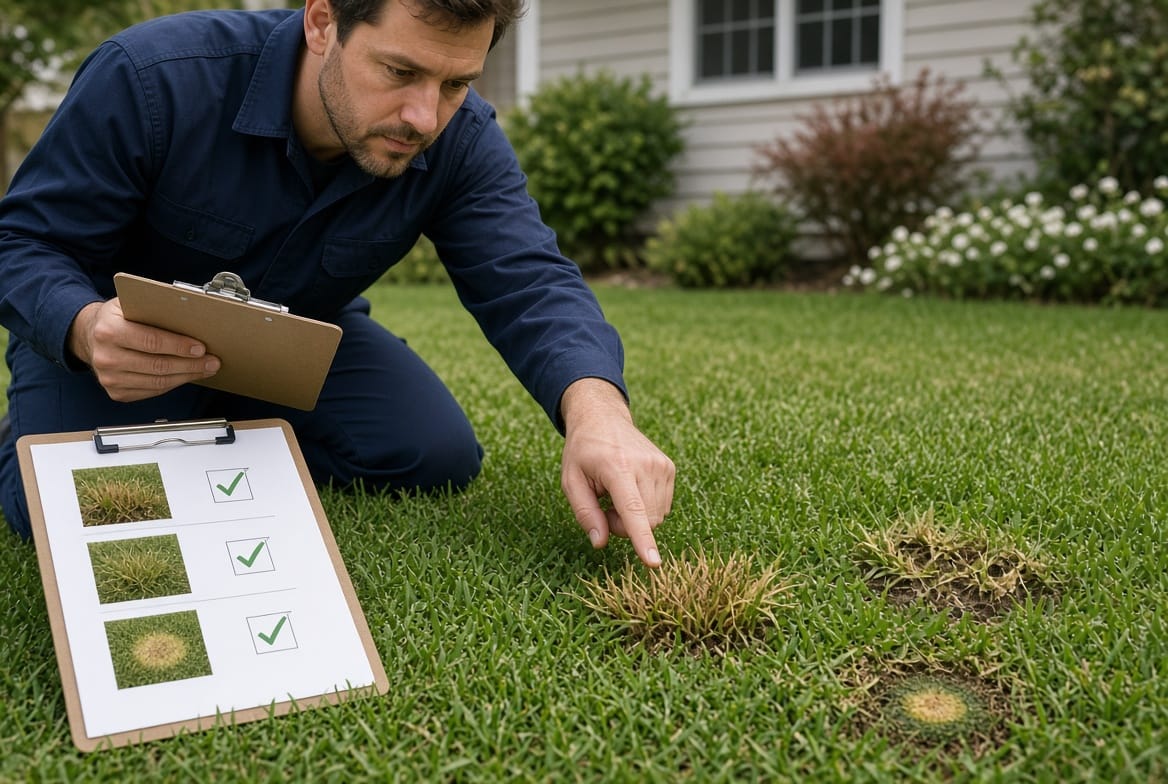
During that time the plant is vulnerable. Common lawn diseases such as brown patch, dollar spot, and leaf spot find the damaged tissue an ideal entry point, especially in warm, humid weather. The same open wounds also accelerate moisture loss, so the grass wilts faster during dry spells.
The visible result is a lawn that looks “burned” at the tips even when soil moisture is adequate. Homeowners often increase watering or fertilizing in response, yet the underlying cause—the dull blade—remains unaddressed. Sharpening the blade removes the source of the injury and allows the grass to recover its natural defenses.
Regular blade maintenance therefore functions as both a cosmetic and a health measure. It reduces disease pressure, conserves water, and keeps the turf dense enough to crowd out weeds.
Signs Your Mower Blade Has Become Dull
You do not need specialized equipment to diagnose a dull blade. The lawn itself and the mower provide clear signals:
- Ragged or shredded cuts instead of clean, straight lines across the grass
- Brown or tan tips appearing within 24–48 hours after mowing
- Grass that looks chewed or mashed rather than neatly trimmed
- The mower working harder, leaving uncut strips, or vibrating more than usual
- Visible nicks, dents, or a rounded cutting edge when you inspect the blade
- An overall dull, grayish cast to the lawn even after proper watering
If two or more of these signs are present, schedule sharpening promptly. Continuing to mow with a dull blade only multiplies the damage.
How Often Should You Sharpen the Blade?
Most residential mowers benefit from sharpening every 20–25 hours of use or at least twice during the growing season—once in spring and again in mid-summer. Sandy or dusty conditions, frequent encounters with sticks or toys, and large properties may require more frequent attention.
A quick visual check each time you change the oil or clean the deck takes only a minute and prevents the blade from becoming severely dull. Catching the problem early keeps both the grass and the mower in better condition.
Sharpening Versus Replacing the Blade
Not every blade needs to be discarded. A blade that is merely dull or lightly nicked can be restored with proper sharpening. Replacement becomes the better choice when the blade is:
- Cracked or deeply bent
- Worn so thin that the cutting edge cannot be restored safely
- Severely out of balance after previous sharpening attempts
- Showing large chunks missing from the edge
A quality replacement blade costs far less than the long-term damage a compromised blade inflicts on the lawn. When in doubt, a professional inspection removes the guesswork.
Safe, Effective Steps to Sharpen a Lawn Mower Blade
Always prioritize safety. Disconnect the spark-plug wire, allow the engine to cool, and wear heavy gloves and eye protection.
- Tip the mower according to the manufacturer’s instructions (usually carburetor side up) or remove the blade while the mower sits level.
- Note the orientation of the blade so it can be reinstalled the same way.
- Secure the blade in a vise and use a mill file or bench grinder to restore the original bevel angle—typically 30–45 degrees.
- Remove the same amount of metal from both cutting edges to keep the blade balanced.
- Check balance by hanging the blade on a nail or using a dedicated balancer. Grind the heavier side until it hangs level.
- Reinstall the blade with the correct torque and reconnect the spark-plug wire.
If you prefer not to perform the work yourself, a lawn-care service can sharpen or replace the blade quickly and correctly as part of routine maintenance.
Avoid these common mistakes: grinding the blade too thin, changing the factory bevel, or skipping the balance check. An unbalanced blade causes vibration that shortens the life of the mower’s spindle and bearings.
Additional Maintenance That Supports Blade Performance
Blade sharpness works best when the rest of the mower is also maintained. Keep the underside of the deck clean so grass clippings do not pack against the blade and reduce cutting efficiency. Check belt tension and spindle bearings so the blade spins at the proper speed. Set the cutting height correctly for your grass type—removing more than one-third of the leaf blade at once stresses the plant regardless of how sharp the blade is.
Together these habits produce a consistently healthy lawn with minimal extra effort.
The Long-Term Benefits of a Sharp Blade
A properly sharpened blade delivers measurable advantages:
- Cleaner appearance with no brown tips
- Reduced disease incidence
- Faster lawn recovery after mowing
- Lower fuel consumption and less strain on the engine
- Longer mower life because of reduced vibration
- Thicker turf that naturally resists weeds
These benefits compound over the season. Homeowners who keep blades sharp typically report needing fewer corrective treatments and enjoying a lawn that stays attractive with ordinary watering and fertilizing.
When Professional Lawn Care Makes the Difference
Many homeowners successfully sharpen blades themselves. Others prefer the convenience and precision of a trained technician who can also inspect the entire mowing system, balance the blade accurately, and recommend the right replacement if needed. Professional service removes any uncertainty about safety or technique and ensures the job is done to the same standard used on high-visibility commercial properties.
Whether you handle the sharpening or call for help, the goal remains the same: give your grass the clean cut it needs to stay healthy.
Sharpen your blade for a healthier lawn.
Protect Grass Health – Schedule Lawn Care Today