The Wild Turkey Flock: Managing Large Birds in Suburban Yards

As suburban neighborhoods expand into former woodlands, encounters with wild turkeys have become increasingly common. These large, intelligent birds often form sizable flocks that treat residential yards as prime foraging grounds. While fascinating to observe, an unmanaged turkey flock can quickly turn from a novelty into a significant property damage and safety concern.
Protect Your Yard from Wild Turkeys – Call Now!
At our professional wildlife removal service, we understand the delicate balance between respecting local wildlife and protecting your home and family. This comprehensive guide explores effective, humane strategies for managing wild turkeys while maintaining peace in your suburban sanctuary.
Wild turkeys (Meleagris gallopavo) are native to North America and have adapted remarkably well to human-altered landscapes. A single flock can number from 10 to over 50 birds, especially during fall and winter months when food sources become concentrated.
Understanding Wild Turkey Behavior in Suburban Settings
Wild turkeys are highly social and opportunistic foragers. In suburban yards, they seek out:
- Insects and grubs in lawns
- Seeds, berries, and tender plants in gardens
- Spilled birdseed from feeders
- Acorns and nuts from ornamental trees
During mating season (typically March through May), male turkeys (toms) become notably aggressive. They may display, strut, and even charge at humans, pets, or reflective surfaces they perceive as rivals. This seasonal behavior elevates safety risks for children, elderly residents, and small pets.
Key risks associated with large turkey flocks include:
- Garden destruction — Scratching can uproot young plants and destroy landscaping
- Lawn damage — Extensive raking behavior creates bare patches
- Droppings accumulation — Large volumes of feces can harbor bacteria and create slip hazards
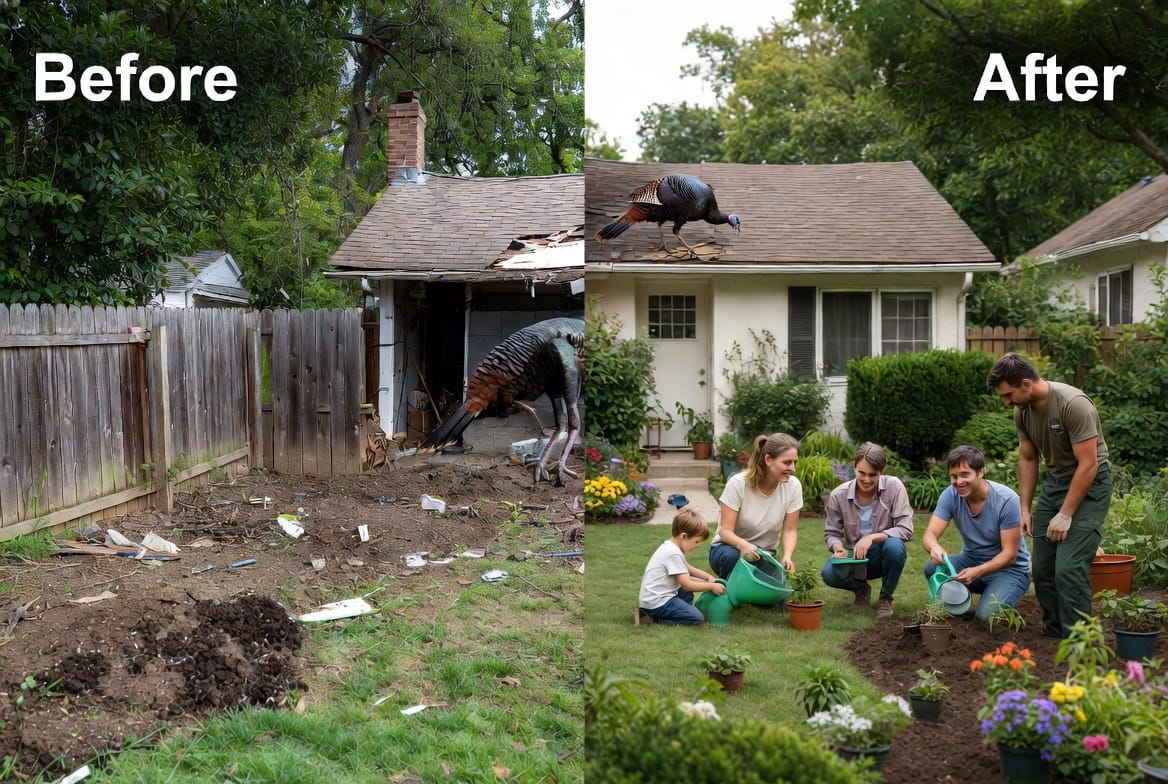
- Structural concerns — Turkeys occasionally roost on roofs, causing shingle damage
- Vehicle collisions — Flocks crossing roads in residential areas
Early intervention prevents small groups from becoming established flocks that are harder to manage.
Humane Deterrents: Effective First-Line Solutions
The most successful turkey management approaches focus on making your yard less attractive while using non-lethal methods. Professional wildlife experts recommend starting with these proven techniques:
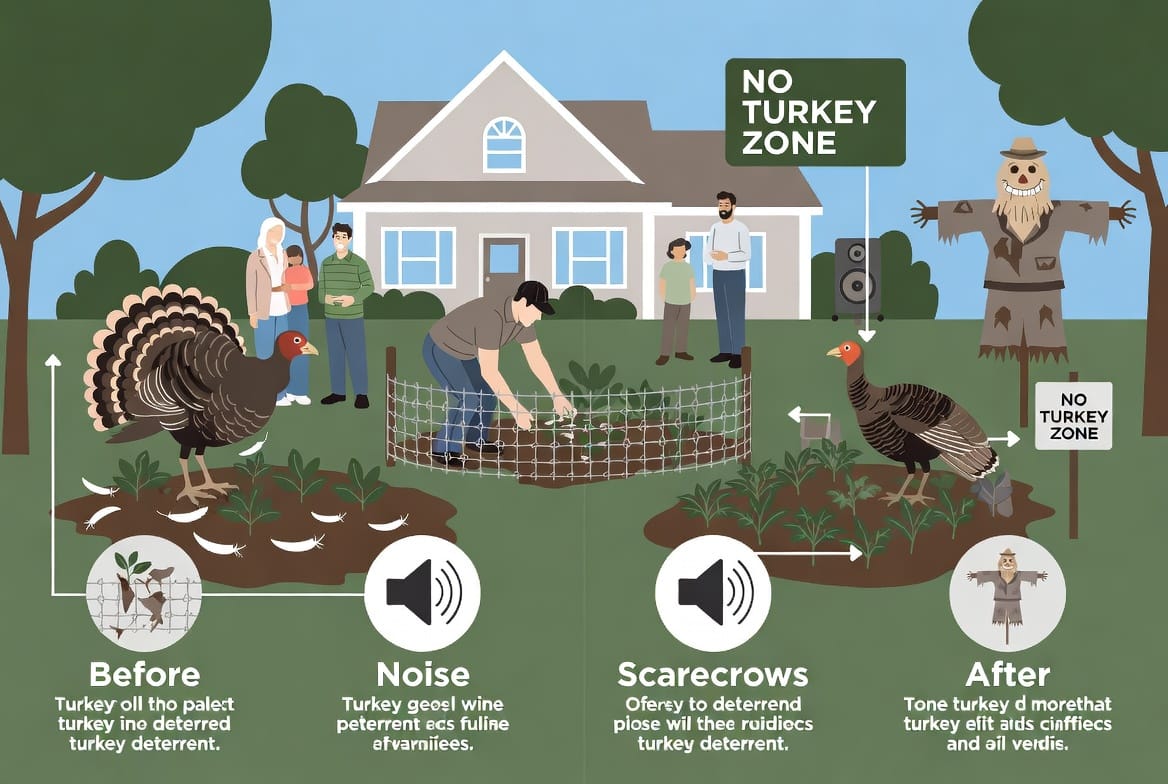
- Physical barriers: Install sturdy fencing around vegetable gardens and flower beds. Use poultry wire or hardware cloth buried slightly underground to prevent scratching underneath.
- Motion-activated deterrents: Sprinklers with motion sensors provide both a physical surprise and visual disruption that turkeys dislike.
- Visual repellents: Strategic placement of reflective tape, predator decoys, or moving objects can discourage foraging.
- Auditory hazing: Recorded predator calls or intermittent noise devices (used responsibly) disrupt turkey comfort levels.
- Companion animals: Trained dogs with strong herding or guarding instincts can effectively patrol yards and discourage flocks.
Consistency is crucial. Turkeys are intelligent and will test boundaries if deterrents are applied sporadically.
Advanced Hazing Techniques for Persistent Flocks
When basic deterrents aren't enough, professional hazing methods become necessary. These techniques leverage the turkeys' natural flight response without causing harm:
Effective hazing practices include:
- Controlled pursuit using noise makers while maintaining safe distance
- Pressure spraying with water hoses from elevated positions
- Strategic lighting and shadow projection during early morning or dusk
- Habitat modification by removing food sources and roosting sites
- Border patrolling with working dogs under owner supervision
Important safety note: Never corner or trap turkeys, as this can escalate defensive behaviors. Always prioritize humane, stress-minimizing approaches that encourage the flock to relocate naturally.
Seasonal Considerations for Turkey Management
Turkey behavior changes throughout the year, requiring adaptive management strategies:
Spring (Breeding Season): Highest aggression levels. Focus on protecting children and pets. Secure garbage and limit outdoor pet food.
Summer: Hens with poults (young turkeys) may become protective. Maintain distance and avoid separating family groups.
Fall/Winter: Largest flocks form. Emphasize food source elimination and roost disruption.
Proactive year-round monitoring helps prevent seasonal problems from escalating.
Protecting Your Garden and Landscaping
Your beautiful suburban garden represents a significant investment. Wild turkey damage can undo months of work in days.
Effective protection strategies:
- Raised garden beds with wire mesh bases
- Netting systems for berry bushes and fruit trees
- Native plant selection that is less appealing to turkeys
- Mulch alternatives that don't attract insects turkeys seek
- Companion planting with strong-scented herbs that naturally repel birds
Many homeowners report significant recovery within weeks of implementing these combined solutions, restoring both aesthetics and property value.
Signs You Have a Turkey Problem
Early detection leads to easier management. Watch for these common indicators:
- Extensive scratching patterns in mulch and soil
- Large droppings (often 2-3 inches long)
- Damaged low-lying plants and uprooted seedlings
- Turkeys roosting on fences, decks, or rooftops
- Aggressive posturing by males during spring
- Persistent flock presence despite initial scaring attempts
If you notice multiple signs, it's time to implement a structured management plan.
When to Call Professional Wildlife Removal Experts
While many issues can be addressed through DIY methods, large or persistent flocks often require professional assessment. Benefits of working with licensed wildlife specialists include:
- Expert identification of specific flock patterns and entry points
- Customized management plans tailored to your property
- Safe implementation of advanced hazing techniques
- Long-term prevention strategies that protect your investment
- Peace of mind knowing the issue is handled humanely and legally
Professional intervention often resolves problems faster and more thoroughly than repeated unsuccessful attempts.
Creating a Turkey-Resistant Suburban Landscape
Long-term success comes from thoughtful landscape design that balances beauty with wildlife management:
- Reduce open foraging areas through strategic planting
- Install motion lighting around perimeters
- Maintain clear sightlines to discourage hidden roosting
- Choose turkey-resistant ground covers
- Properly store all potential food sources
These modifications not only deter turkeys but often improve overall yard aesthetics and functionality.
The Importance of Humane Wildlife Management
Responsible suburban wildlife management reflects our commitment to coexistence. Wild turkeys play important ecological roles, including insect control and seed dispersal. Our goal is never elimination but rather encouraging appropriate habitat use away from high-conflict residential zones.
By choosing humane methods, homeowners contribute to broader conservation efforts while protecting their families and property investments.
Success Stories from Suburban Communities
Many neighborhoods have successfully managed turkey populations through coordinated efforts. Common outcomes include:
- Restored gardens producing abundant harvests
- Reduced property damage and maintenance costs
- Safer outdoor spaces for families and pets
- Decreased road hazards from crossing flocks
- Improved neighbor relations through shared strategies
These positive results demonstrate that effective management leads to harmonious suburban living.
Maintaining Long-Term Turkey Control
Sustainable management requires ongoing vigilance. Establish these good habits:
- Regular yard inspections during peak seasons
- Consistent application of deterrents
- Prompt removal of fallen fruit and nuts
- Community education about shared responsibilities
- Annual professional property assessments
With proper attention, most homeowners achieve excellent long-term results with minimal ongoing effort.
Understanding Local Regulations
Wildlife management operates within legal frameworks designed to protect both people and native species. Always ensure your methods comply with local ordinances. Professional services stay current with regulations and can guide you through compliant solutions.
Preparing for Turkey Season
Anticipate seasonal changes by preparing your property in advance. Late winter preparations can dramatically reduce spring problems. Simple steps taken early yield significant benefits when flocks become active.
The Value of Professional Guidance
Navigating turkey management challenges becomes straightforward with expert support. Professional wildlife removal teams bring experience, proper equipment, and proven techniques that deliver reliable outcomes while ensuring humane treatment.
Turkeys can damage property and be aggressive. For reliable wildlife management advice and effective solutions tailored to your specific situation,.
Our experts are ready to help you restore peace and protect your suburban home from unwanted wild turkey activity.
Get Professional Wild Turkey Removal Help – Call Now!