The Pigeon Control: Managing Urban Bird Populations
Cities give feral pigeons everything they need: ledges that feel like cliffs, leftover food, water from gutters, and warmth radiating from brick and concrete. What begins as a few birds on a cornice often becomes a persistent urban colony. The issue is not that pigeons exist. The issue is that they roost on buildings, cause messes, and leave behind waste that can affect health, safety, and property value. The good news is that humane pigeon control works when it is planned correctly. Exclusion, deterrents, sanitation, and professional removal can restore a building without cruelty and without endless cleaning cycles.
End Droppings and Roosting – Call Wildlife Removal
This guide explains pigeon behavior, the real health risks tied to droppings, disease, and parasites, and the control methods that last: netting, spikes, and professional bird control. Property owners do not need to panic. They need a clear plan.
Why Pigeons Thrive in Urban Landscapes
The rock pigeon evolved on cliffs. A modern office tower, parking garage, warehouse eave, church steeple, or apartment balcony is, from the bird’s point of view, a safer version of the same habitat. Flat ledges, sheltered recesses, signage, HVAC platforms, and beam work offer overnight roosts and daytime loafing sites. Pigeons are site-loyal. Once a location feels safe and reliable, the flock returns even after a one-time cleanup.
Urban food sources keep colonies growing. Spilled grain, outdoor dining, overflowing dumpsters, pet food, and well-meaning people who scatter bread all reinforce the habit. Pigeons breed several times a year when conditions are good. A modest flock can become a chronic building problem in a single season if nesting sites stay open.
They prefer places that are:
- Elevated and hard for predators to reach
- Sheltered from wind and rain
- Close to daily feeding routes
- Marked by existing droppings, which signal “this site is already in use”
That last point matters. Accumulated guano is not only a mess. It is a chemical and visual invitation for more birds.
How Roosting Turns Into a Building Problem
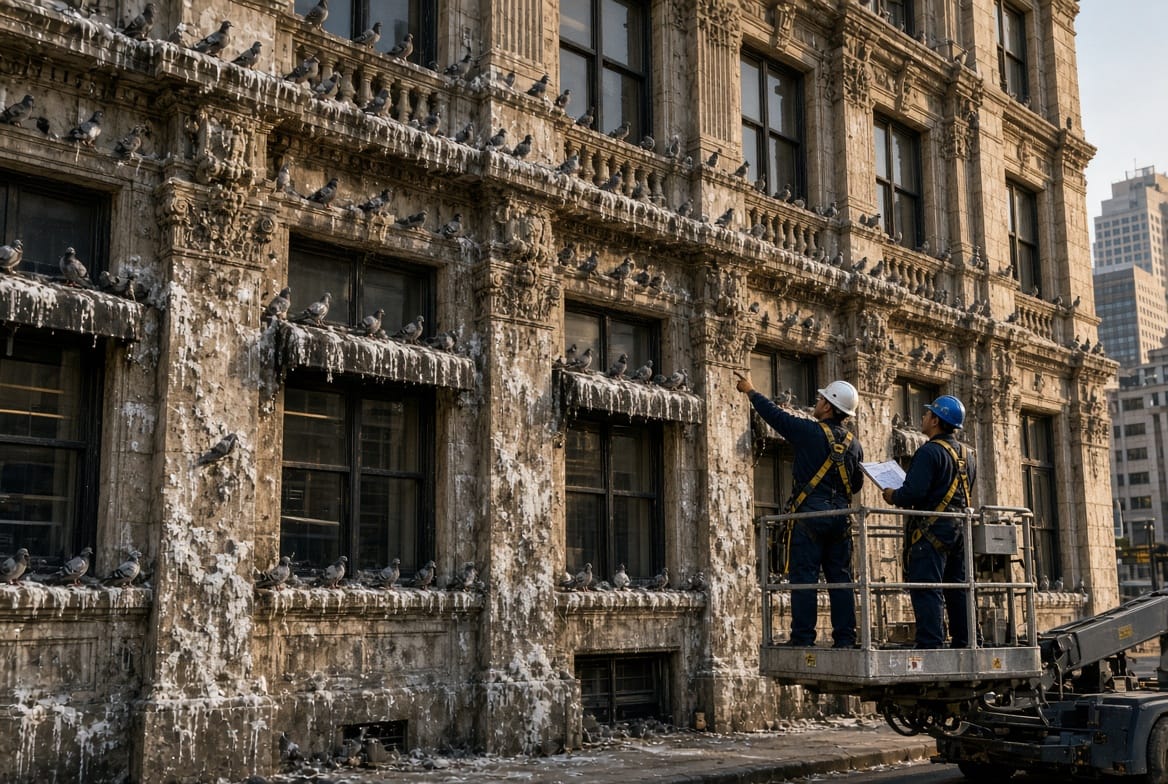
A single well-fed pigeon can deposit a surprising volume of waste over a year. A colony multiplies that load quickly. Droppings are acidic. They etch stone, corrode metal flashings, stain paint, clog gutters, and foul solar panels, skylights, and HVAC coils. Nests block drains and vents. Feathers and debris collect in corners that are expensive to reach.
Slippery walkways beneath roosts create liability. Tenants complain about odor. Retail storefronts lose curb appeal. Food facilities face inspection pressure. Historic facades suffer staining that is far more costly to restore than to prevent.
Cleanup alone rarely ends the cycle. If the ledge still offers a comfortable perch, pigeons return. Effective pigeon control therefore has two parts: remove the attraction and make the structure unavailable.
Health Risks Hidden in Droppings, Dust, and Nests
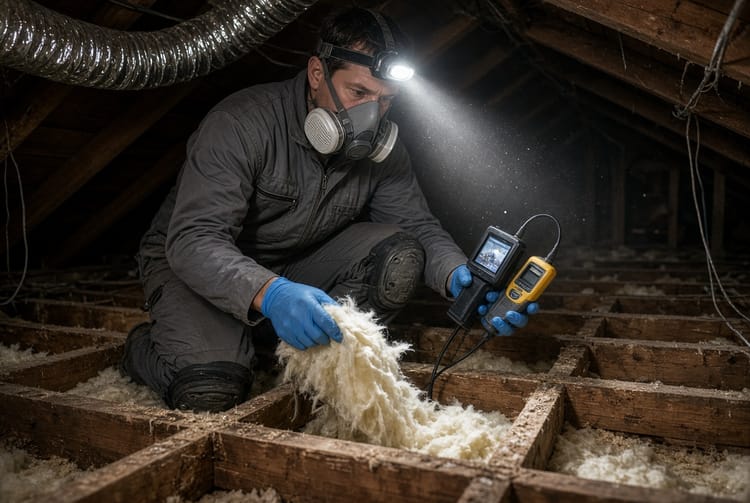
Casual contact with pigeons in a park is not the same as living or working under a long-established roost. The primary pathway of concern is inhalation of dried dropping dust, not a peck or a brief outdoor encounter. When pigeon droppings dry, they crumble. Disturbing that material—sweeping, pressure-washing, or working in a poorly ventilated attic, loading bay, or mechanical room—can send particles into the air.
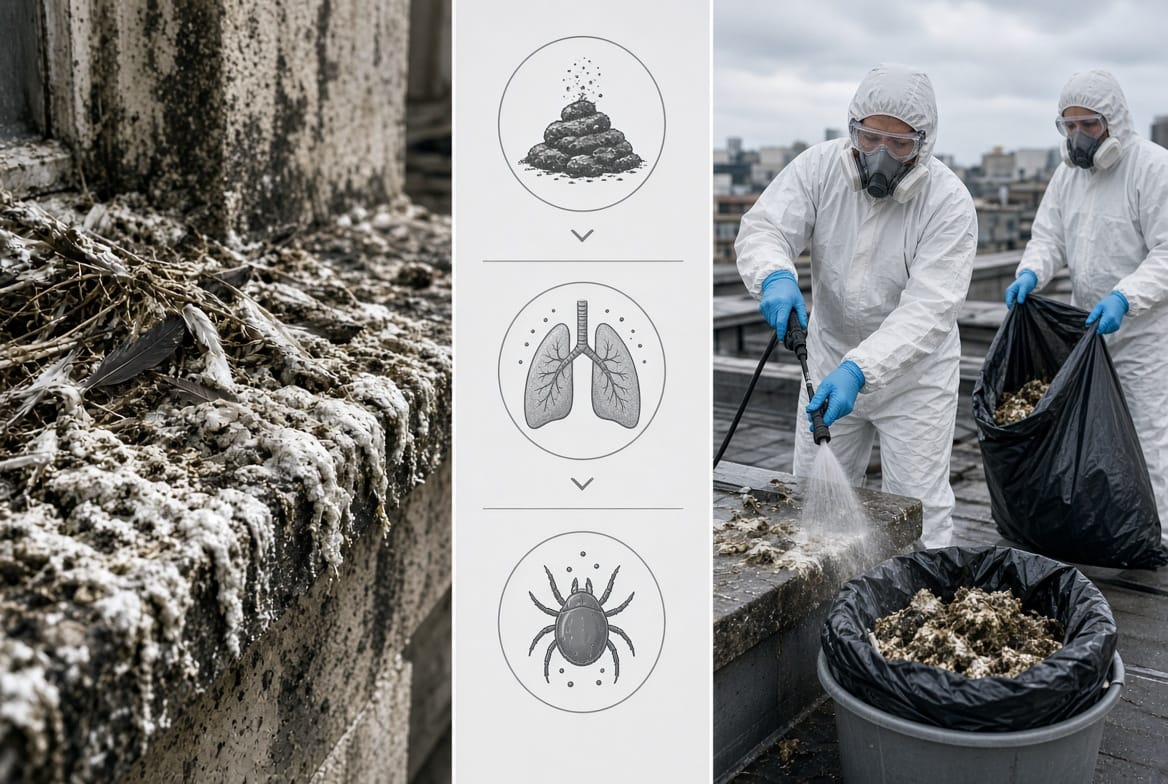
Key concerns associated with heavy accumulations include:
- Histoplasmosis: a fungal infection linked to droppings-enriched environments. Spores can cause flu-like or pneumonia-like illness, with greater risk for people who have weakened immune systems.
- Cryptococcosis: associated with Cryptococcus organisms that can persist in pigeon guano. Infection typically begins in the lungs and is especially serious for immunocompromised individuals.
- Psittacosis (also called ornithosis): caused by Chlamydia psittaci, which has been detected in urban pigeon flocks and droppings. People may develop fever, headache, muscle aches, and respiratory illness after inhaling contaminated dust or secretions.
- Bacterial contamination: organisms such as Salmonella can be present in waste and can contaminate surfaces if sanitation is poor.
- Parasites: mites, ticks, fleas, and lice living in nests or on birds. When a roost is abandoned or disturbed, bird mites may move indoors and cause irritating bites.
- Allergens and secondary pests: feathers, dander, and organic debris can aggravate respiratory sensitivity and attract flies, beetles, or rodents.
Risk is highest for:
- Maintenance staff and contractors who clean old roosts without respiratory protection
- Occupants of buildings where droppings collect near air intakes
- People with asthma, chronic lung disease, or compromised immunity
- Food-handling and healthcare environments that demand high hygiene standards
This is not a reason for alarm about every pigeon on a sidewalk. It is a reason to treat established indoor or facade roosts as an environmental health issue, not a cosmetic inconvenience. Safe work practice means wetting material before disturbance, using appropriate PPE, containing waste, and disinfecting after removal.
Property, Safety, and Reputation Costs
Beyond illness, unmanaged colonies create operational drag. Insurance and facilities teams see recurring invoices for power washing, roof repairs, and pest complaints. In commercial settings, visible droppings on entryways damage first impressions. Around loading docks, waste can contaminate pallets and equipment. Around schools, hospitals, and hospitality properties, the expectation of cleanliness is higher still.
There is also a safety dimension. Birds nesting in electrical equipment or blocking drainage can contribute to overheating, water intrusion, and ice dams. Flocks near airports or busy roadways raise separate collision and distraction concerns. For most building owners, though, the daily problem is simpler: a structure that looks neglected and feels unsanitary.
Humane Control That Actually Changes Behavior
Lethal shortcuts and random gadgets rarely solve urban pigeon problems. Birds habituate to noise machines. Incomplete spike rows leave landing gaps. Poison is inappropriate for public spaces and can create secondary hazards. The professional standard is humane exclusion plus sanitation.
Effective programs usually combine several tools:
- Bird netting: UV-stabilized polyethylene netting, commonly around a 50 mm mesh for pigeons, tensioned across courtyards, loading bays, undercrofts, rafters, balconies, and large facade voids. Properly installed netting is a physical barrier. Birds cannot reach the roost. Poorly installed netting sags, traps wildlife, and fails.
- Pigeon spikes: stainless-steel or quality polymer spike systems on narrow ledges, parapets, signs, pipes, and sills. Spikes do not impale birds. They make a confident landing impossible. Coverage must be complete; a small untreated gap becomes the new perch.
- Slope modifications and post-and-wire systems: changing a ledge angle or adding discreet tensioned wire where architecture or aesthetics limit spikes.
- Humane trapping and professional removal: used selectively when birds are already occupying a site that will be sealed. Traps must be checked frequently, with food, water, and shade. Removal without exclusion is temporary; new birds will occupy the same vacancy.
- Sanitation and odor removal: droppings and nest material carry scent and visual cues. After birds are excluded, professional cleaning and disinfection break the cycle.
complementary steps strengthen every installation:
- Remove outdoor food sources and secure dumpsters
- Repair leaks and standing water that serve as drinking sites
- Close gaps into lofts, eaves, plant rooms, and unused attics
- Schedule work outside peak nesting when local rules require protection of active nests
- Inspect systems after storms and at seasonal intervals
DIY products can help on a single, easily reached windowsill. They are a poor match for multi-story facades, historic ornament, warehouse roofs, or any site that requires fall protection, tension calculations, and lawful handling of wildlife.
What Professional Bird Control Adds
A qualified wildlife removal and bird-control team starts with inspection, not a product catalog. Technicians map roosts, flight lines, food sources, and access points. They photograph staining patterns, check for active nests, and identify materials that will accept fasteners without damaging the building. Then they sequence the work: protect people, exclude birds, clean waste, install deterrents, and document maintenance.
That sequence protects both occupants and workers. Dried guano should not be dry-swept. Height work needs harnesses, lifts, and trained installers. Netting needs correct mesh, perimeter cable, and service zippers so mechanical equipment remains reachable. Spikes need the right width and substrate preparation so they do not peel off in a year.
Professional programs also respect local rules. Feral pigeons are often unmanaged as a species, but methods, nest timing, and disposal still sit inside municipal and animal-welfare expectations. A reputable company chooses non-lethal exclusion first and uses removal only as part of a sealed-site plan.
Building a Long-Term Prevention Plan
Lasting urban bird population management is maintenance, not magic. After the first installation:
- Walk the roof and ledges quarterly
- Clear any debris that could give birds a new foothold
- Keep waste areas closed and clean
- Educate staff and tenants not to feed birds
- Re-treat or extend coverage if neighboring properties push flocks onto your structure
Architecture can help future projects. New ledges can be sloped. Decorative recesses can be designed so they do not form sheltered shelves. Screens on vents prevent entry without waiting for an infestation.
Communities benefit when neighboring owners act together. A single protected building in a feeding corridor may simply shift birds next door. Coordinated dumpster standards and shared exclusion on connected facades reduce pressure for everyone.
A Practical Path Forward
Pigeons are adaptable, intelligent, and deeply attached to successful roosts. That is why half-measures disappoint. It is also why a complete, humane system succeeds. Deny the perch. Remove the waste that advertises the site. Keep food and water from becoming a daily buffet. Use netting for large volumes of space, spikes for linear ledges, and professional removal when birds must be cleared before a structure is sealed.
Owners who act early spend less. A few pairs on a sign are easier to deter than a multi-year colony in a clock tower. Owners who wait still have options. The same methods scale. They simply require more sanitation, more access equipment, and a more careful health protocol.
Pigeon control is not a war on wildlife. It is building stewardship. Cities will always have birds. Buildings do not have to host unmanaged roosts, stained stone, contaminated dust, or parasite complaints. With the right inspection and the right physical barriers, urban flocks move to sites that do not put people, property, and public health at odds.
Manage pigeons humanely and effectively. If droppings are accumulating, if birds have claimed ledges or interiors, or if previous gadgets have failed. A trained team can inspect the site, explain a lawful plan, and restore a clean, protected structure.
Clear Pigeons from Ledges Fast – Call Experts