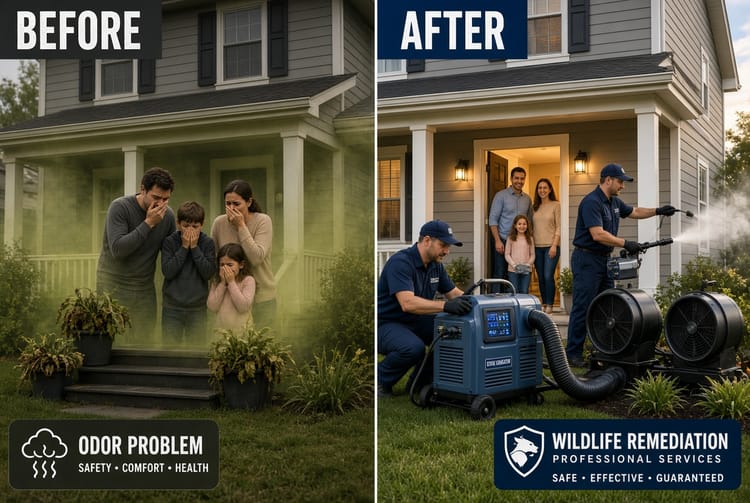
The Dead Animal Removal: Locating and Deodorizing the Source
Finding a persistent, worsening odor in a home is one of the most unsettling household problems a property owner can face. When the smell is sweet, sour, and unmistakably organic, the cause is often a dead animal that has entered a wall void, attic, crawlspace, chimney, or HVAC cavity and died out of sight. Dead animal removal is an unpleasant but necessary service. Done incorrectly, it leaves behind biohazard residue, lingering odor, flies, and health risks. Done correctly, it restores a safe, livable indoor environment.
Remove Dead Animals Safely – Call Now
This guide explains how to locate the source, why professional removal is the responsible choice, and which deodorization methods—including ozone treatment and fogging—actually neutralize the problem instead of masking it.
Why a Hidden Carcass Becomes a Serious Problem
Animals enter buildings looking for shelter, warmth, or food. Mice, rats, squirrels, raccoons, opossums, birds, and bats commonly die in concealed spaces after illness, injury, trapping, or poisoning. Once decomposition begins, fluids and gases soak into porous materials such as wood, insulation, drywall, and subflooring. The odor does not stay localized. It travels through air gaps, ductwork, and wall cavities.
Left untreated, a carcass can create:
- Air quality problems from decaying tissue and bacterial growth
- Insect activity, especially flies and beetles that feed on remains
- Secondary contamination if scavengers or pets disturb the site
- Staining and structural damage where fluids migrate
- Recurring odor every time humidity or temperature rises
The goal is not only to take the animal out. The goal is to locate, remove, sanitize, and deodorize the source so the problem does not return.
How to Locate a Dead Animal
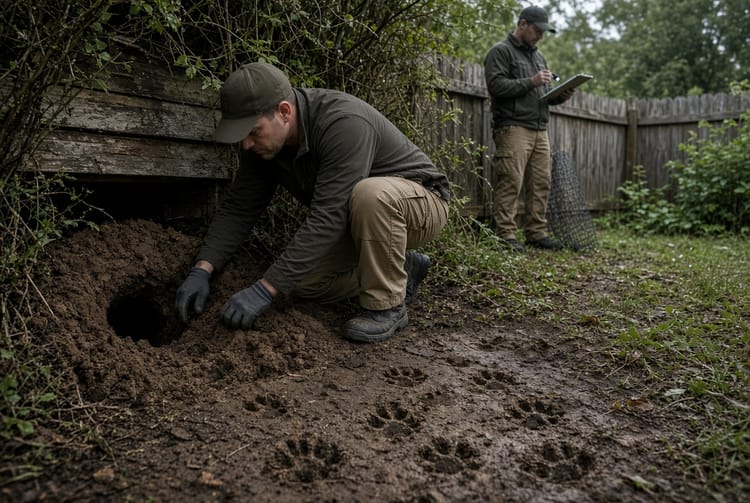
Accurate location is the foundation of successful dead animal removal. Guessing leads to unnecessary holes in walls and incomplete cleanup.
Follow the Smell, Not Assumptions
Odor is the most reliable early clue. A fresh carcass may produce a faint, musky smell. Within days the odor becomes stronger, heavier, and more distinctive. It often intensifies in warm rooms, near vents, or after the HVAC system runs.
Useful locating habits include:
- Walk the property slowly and note where the smell is strongest
- Check attics, crawlspaces, garages, basements, and unused rooms first
- Stand near supply and return vents; odor often travels through ductwork
- Compare interior walls on both sides of a shared partition
- Reassess at different times of day; heat can drive odor upward
The strongest smell is not always directly above the carcass. Air currents can move odor several feet from the actual source.
Watch for Flies and Other Activity
Flies are one of the most practical indicators. Blow flies and flesh flies can detect a carcass quickly and will cluster near the closest exit point: a light fixture, outlet, window frame, soffit, or gap around a vent. Maggots or sudden indoor fly activity in winter is especially telling.
Other signs may include:
- Staining on ceilings or walls
- Localized dampness or discoloration in insulation
- Scratching that suddenly stops, followed by odor days later
- Pets staring, sniffing, or pawing at one section of a wall or floor
- A buzzing sound inside a cavity
Common Hidden Locations
Animals rarely die in the middle of a finished room. They seek tight, sheltered spaces.
Typical locations include:
- Attic insulation and roof junctions
- Wall voids near kitchens, bathrooms, and utility rooms
- Crawlspaces and under-deck areas
- Chimneys and unused fireplaces
- Behind appliances and inside cabinet toe-kicks
- Drop ceilings and soffits
- HVAC returns, blower compartments, and duct runs
- Garage attics and storage voids
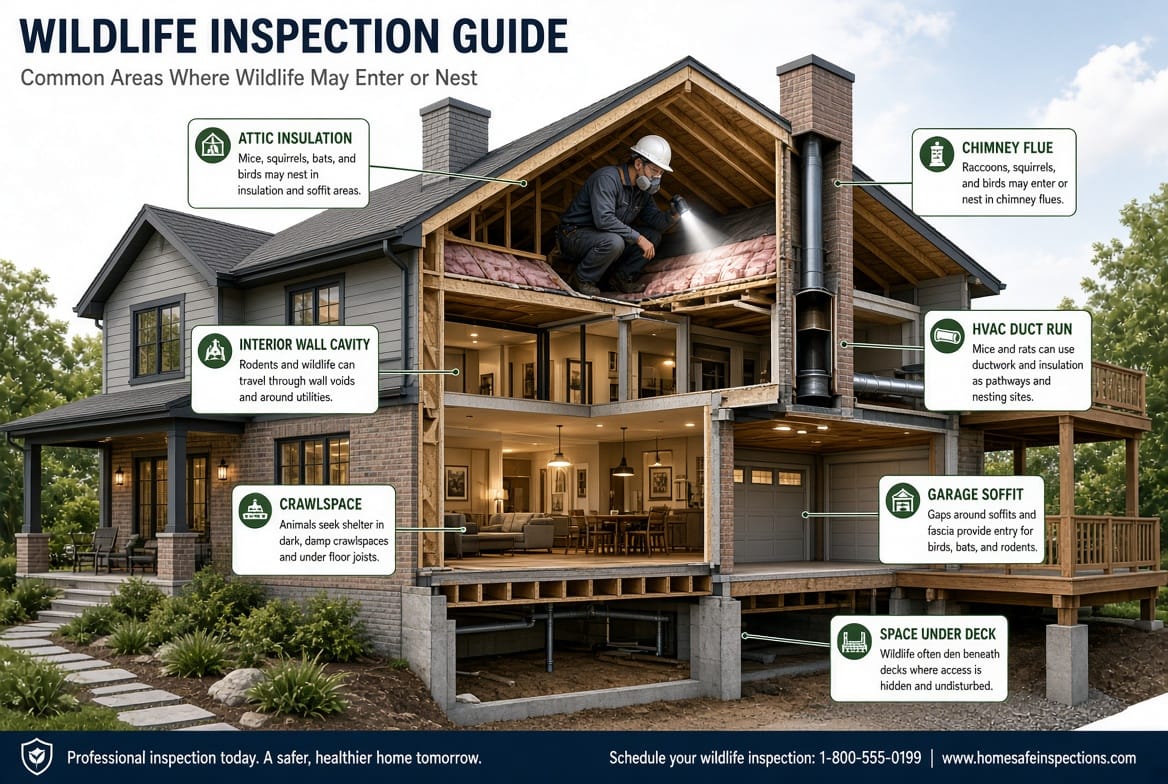
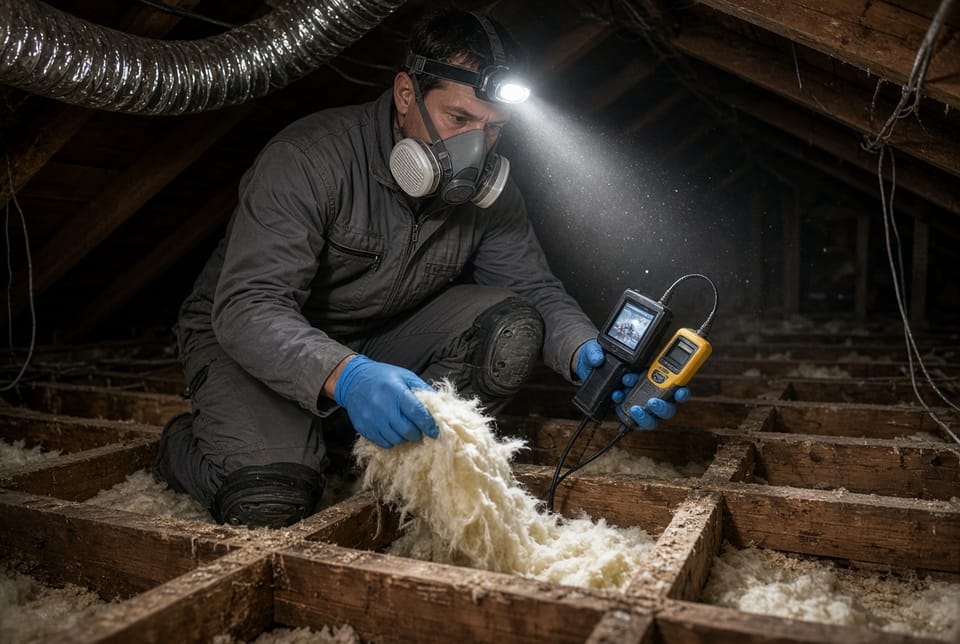
A thorough inspection may require attic access, moisture meters, inspection cameras, thermal imaging, and controlled opening of a small access point. That is one reason many homeowners stop at detection and call a specialist.
Why Professional Dead Animal Removal Is Necessary
Some people attempt to wait the smell out. Others cut a hole and hope for the best. Both approaches create avoidable risk.
Health Risks Are Real
A decomposing animal is a biohazard. Bacteria, parasites, and contaminated fluids can spread to surrounding materials. Flies that breed on the remains can transfer pathogens to food surfaces and living areas. Droppings and nesting material left behind may also carry disease organisms associated with wildlife.
Key concerns include:
- Bacterial contamination from decaying tissue and body fluids
- Airborne particles when dried residue is disturbed
- Parasites and insects that leave the carcass and enter living space
- Allergenic dust from nesting debris and spoiled insulation
- Cross-contamination through shared HVAC systems
The exact risk depends on the species, the location, and how long the animal has been there. The safe assumption is that the area should be treated as contaminated until it has been properly cleaned.
Proper Disposal Matters
Carcasses cannot be handled like ordinary trash in every jurisdiction. Professionals follow local rules for wildlife carcass disposal, use sealed biohazard bags, and prevent scavengers from accessing remains. They also document the situation when needed for property managers, landlords, or insurance discussions.
Improper disposal can:
- Attract other animals
- Violate local health or waste rules
- Reintroduce odor if fluids leak during transport
- Leave family members or pets exposed during handling
Property Damage Is Easy to Overlook
A homeowner may remove the visible remains and still leave saturated insulation, stained wood, and odor locked in a wall cavity. Cutting the wrong panel can damage wiring, plumbing, or finished surfaces. Professionals know how to create the smallest useful access point, remove affected materials, and restore the area.
Professional removal is needed because the job is not only extraction. It is source control, sanitation, odor neutralization, and prevention of a repeat entry.
What a Complete Service Should Include
A reliable dead animal removal process follows a clear sequence.
- Inspection and source location
Confirm the species when possible, identify entry points, and map odor travel. - Contained removal
Wear protective equipment, isolate the work area, and extract the carcass without dragging fluids through living space. - Material assessment
Remove soaked insulation, nesting debris, and unsalvageable porous materials. - Sanitizing the cavity
Apply professional-grade cleaners designed for organic contamination. - Deodorization
Treat the air and remaining surfaces so odor molecules are neutralized, not covered up. - Exclusion and repair
Seal the entry point that allowed the animal inside. - Verification
Recheck the area after treatment to confirm the odor source is gone.
Skipping any of these steps is why some “removed it myself” jobs still smell weeks later.
Deodorizing the Source: Methods That Work
Odor control fails when someone sprays air freshener and walks away. Fragrance sits on top of the problem. True deodorization targets the compounds created by decomposition and the materials those compounds have entered.
Why the Smell Persists After Removal
Even after the carcass is gone, odor can remain in:
- Wood framing
- Insulation
- Drywall paper
- Subfloors
- Duct interiors
- Soil or gravel in a crawlspace
Warmth and humidity reactivate those compounds. That is why a room can smell acceptable in the morning and unpleasant by afternoon.
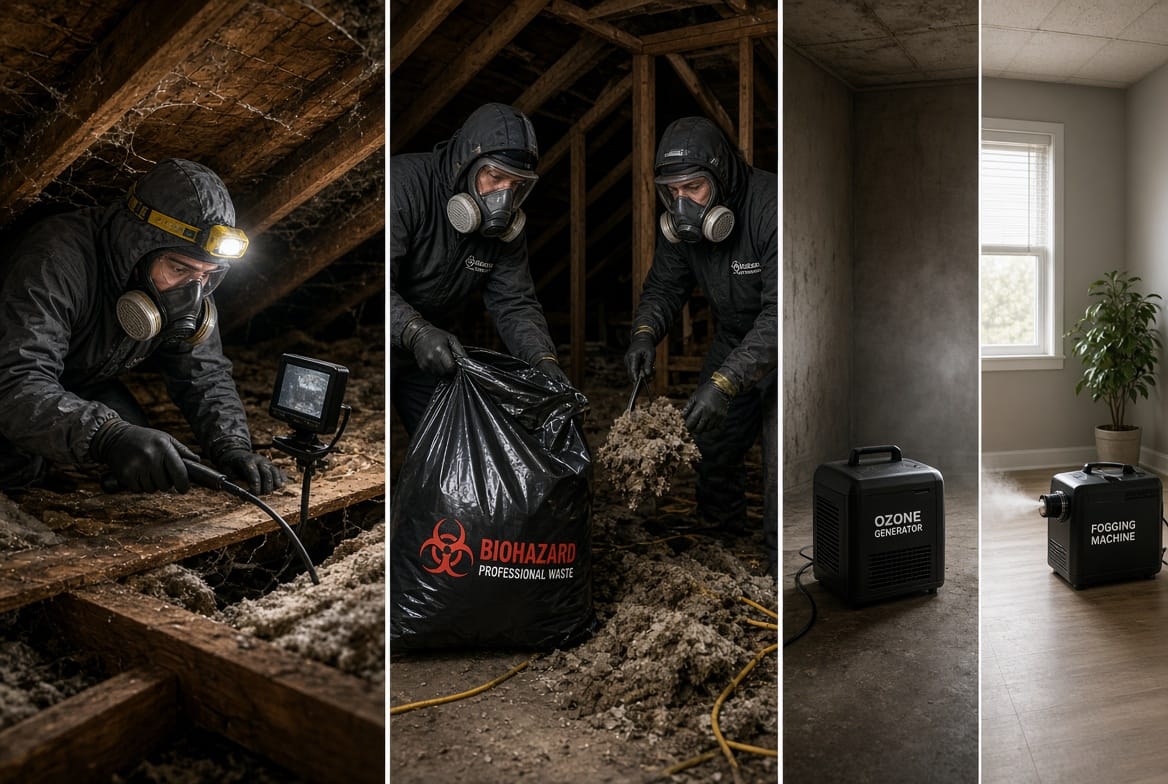
Ozone Treatment
Ozone treatment is one of the most effective tools for stubborn organic odor when used by trained technicians in an unoccupied space. Ozone generators convert oxygen into O₃, a reactive gas that oxidizes odor-causing molecules in the air and on exposed surfaces.
Important points:
- The area must be vacated during treatment
- People, pets, and plants should not be present
- The space is sealed so the gas can work
- After treatment, the area is ventilated before re-entry
- Ozone is a tool, not a substitute for removing the source
Used correctly, ozone can dramatically reduce residual odor in attics, rooms, vehicles, and enclosed cavities after the physical contamination has been removed. Used incorrectly, it can irritate lungs and fail because the carcass or wet insulation is still in place.
Fogging
Fogging applies a fine mist of deodorizing or disinfecting solution into cavities, attics, and rooms that are difficult to wipe by hand. Thermal fogging and ULV (ultra-low volume) fogging are common in wildlife cleanup because they reach irregular surfaces.
Fogging is useful for:
- Attic rafters and insulation surfaces
- Wall cavities after access has been created
- Crawlspaces with limited clearance
- Rooms where odor has circulated through the air
The solution selected matters. Professionals choose products formulated for organic odor and biological residue, not generic household spray.
Supporting Methods
A complete deodorization plan may also include:
- Enzyme cleaners that break down organic residue on hard surfaces
- Antimicrobial treatment of affected framing
- Insulation replacement when material has absorbed fluids
- HVAC cleaning if odor entered the duct system
- Activated carbon or specialized odor absorbers during the recovery period
- Targeted sealing of stained wood after cleaning, when appropriate
No single product solves every case. The method follows the location. An animal in a sealed wall needs access, removal, and cavity treatment. An animal in open attic insulation may require material removal plus ozone or fogging. An animal in a duct requires system isolation and cleaning so the odor is not blown through the house.
What Homeowners Should Not Do
Well-intended shortcuts often make the situation worse.
Avoid:
- Pouring perfume, bleach, or vinegar into a wall and calling it finished
- Ignoring fly activity because “it might go away”
- Removing a carcass with bare hands or household trash bags
- Running the HVAC continuously to “air it out” before the source is found
- Sealing a smell into a cavity without cleaning the materials first
- Using an ozone machine in an occupied bedroom or while pets are home
Bleach can react poorly with organic material and does not reliably eliminate deep odor in wood or insulation. Masking products create a second smell on top of the first.
Prevention After the Cleanup
Once the source is gone, the property should be made less inviting to the next animal.
Effective follow-up includes:
- Sealing gaps around vents, soffits, pipes, and roof intersections
- Repairing torn screens and damaged attic vents
- Installing chimney caps where appropriate
- Storing pet food and bird seed in sealed containers
- Trimming branches that give squirrels and raccoons roof access
- Scheduling a wildlife inspection if there has been repeated activity
Dead animal removal without exclusion is incomplete. If one animal found a way in, another can use the same opening.
When to Call for Service Immediately
Contact a professional promptly if:
- The odor is spreading through multiple rooms
- Flies are appearing indoors with no obvious cause
- Someone in the home has respiratory sensitivity
- The smell is coming from a vent or appliance cavity
- You cannot safely access the attic or crawlspace
- Previous DIY attempts failed and the odor returned
Speed matters. The longer a carcass remains, the more fluids migrate and the more materials may need replacement.
A Practical Standard for a Difficult Job
Dead animal removal is not glamorous work, but it is essential property care. The correct approach is methodical: identify the odor path, confirm the location, extract the remains, dispose of them properly, clean contaminated materials, and neutralize what the carcass left behind. Ozone and fogging are valuable when the physical source has already been addressed. They are not magic substitutes for removal.
Homeowners do not need to crawl through insulation, guess at wall cavities, or live with a smell that signals a sanitation problem. A trained team can find the source, protect the structure, and return the indoor air to a condition that feels normal again.
Remove dead animals safely and professionally.
Call Now for Safe Removal & Deodorizing