The Skunk Odor Removal: Deodorizing Your Home and Yard After a Spray
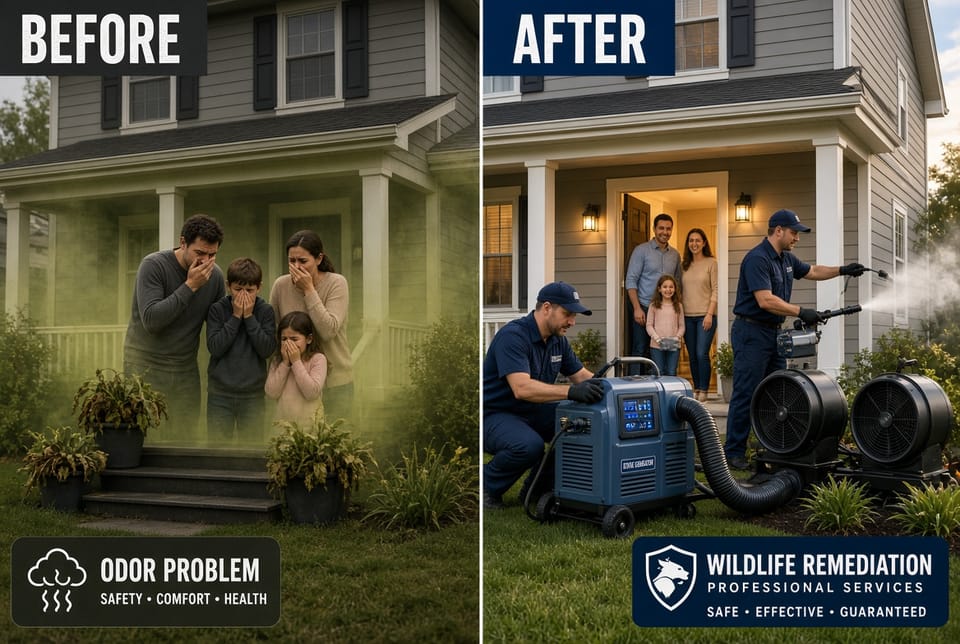
A close encounter with a skunk leaves more than a startling memory. The oily spray embeds thiols and thioacetates into every porous surface it touches, creating an odor that can persist for weeks or months if not addressed correctly. This guide focuses exclusively on remediation—the practical, science-based process of deodorizing your home and yard after a spray. You will learn the exact sequence of ventilation, targeted cleaning, and neutralization that actually works, why popular home remedies fail, and when professional-grade ozone and enzymatic treatments become essential.
Call Today for Professional Skunk Odor Removal
Skunk spray is not ordinary dirt. The sulfur compounds bind tightly to fabrics, wood, drywall, soil, and HVAC components. Simple airing-out or masking sprays only postpone the problem. Proper skunk odor removal requires breaking those chemical bonds at the molecular level. The methods below have been refined through years of wildlife remediation fieldwork and deliver measurable results when followed in order.
Understanding Why Skunk Odor Lingers
Skunk spray contains two primary groups of compounds. Thiols produce the immediate, intense smell. Thioacetates remain relatively odorless until they contact moisture or humidity, at which point they convert into additional thiols. This delayed reaction explains why a room that seemed acceptable in the afternoon can become unbearable by evening or after a rain shower.
Porous materials act as reservoirs. Carpet padding, upholstery foam, unfinished wood, and topsoil absorb the oils and slowly release them. Air currents then circulate the molecules throughout the entire house. Without systematic deodorization, the smell migrates into ductwork and can reappear every time the air conditioner or heater cycles.
Recognizing this chemistry prevents wasted effort. Surface wiping or scented candles never reach the embedded oils. Effective remediation therefore combines mechanical removal of the oils, chemical oxidation or enzymatic breakdown of the thiols, and controlled airflow to exhaust the resulting gases.
Immediate Actions: Ventilation Comes First
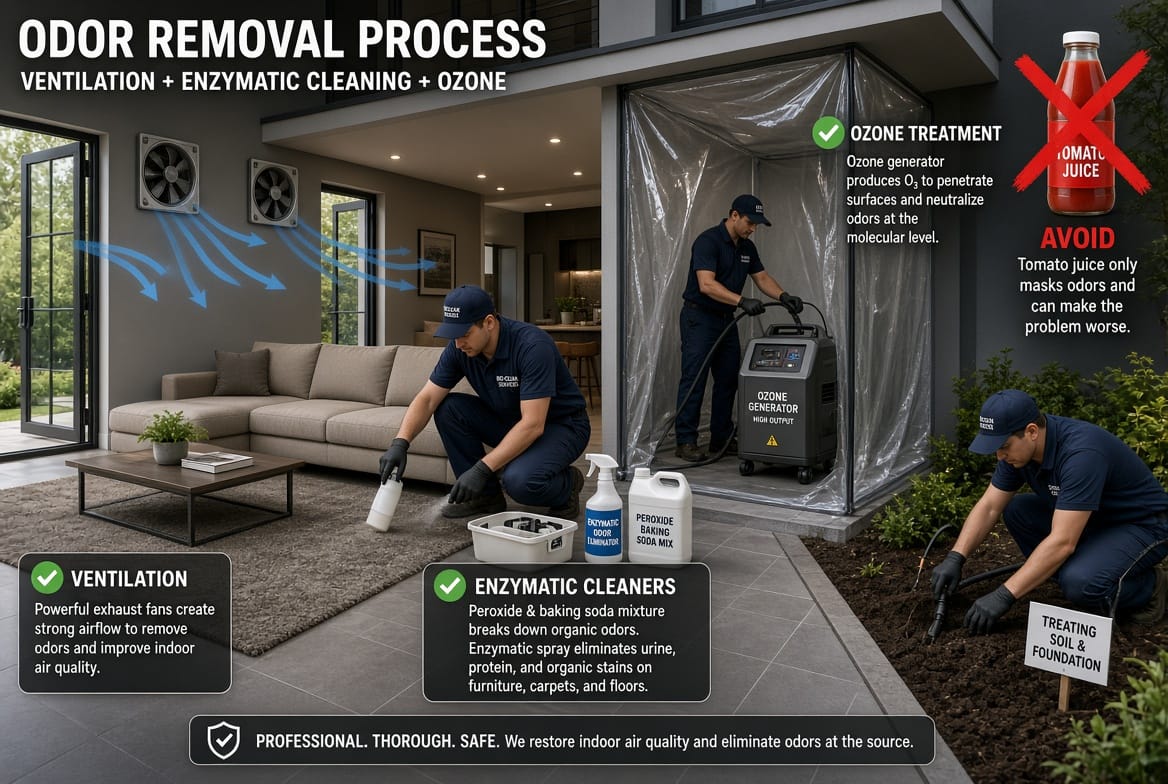
The single most important first step is aggressive ventilation. Open every window and door on opposite sides of the house to create a cross-breeze. Place box fans in windows facing outward so they pull contaminated air outside rather than recirculating it. Run bathroom and kitchen exhaust fans continuously.
If the spray occurred near an exterior wall or foundation, position additional fans at ground level directed away from the house. This prevents outdoor odor from being drawn back inside. Continue this forced-air exchange for a minimum of four to six hours before beginning any wet cleaning. Moisture applied too early can activate remaining thioacetates and intensify the smell.
While ventilating, isolate contaminated items. Place clothing, throw pillows, and removable cushions in sealed plastic bags and move them outdoors. Do not wash them yet. Change HVAC filters immediately and set the system to “fan only” with the fresh-air intake closed if your unit has one. These simple mechanical steps reduce the overall odor load by 40–60 percent in most residential cases and make subsequent treatments far more effective.
What Works and What Does Not: Debunking the Tomato Juice Myth
Countless households still reach for tomato juice after a skunk incident. The practice is a persistent myth. Tomato juice does not neutralize thiols. Its strong scent merely overwhelms the human nose through olfactory fatigue, creating the temporary illusion that the skunk odor has vanished. Once the tomato smell dissipates, the original sulfur compounds remain fully intact and often smell worse because they have been spread by the liquid.
Other ineffective approaches include:
- Straight vinegar or baking-soda sprinkles used alone (they absorb some odor but do not break chemical bonds)
- Commercial air fresheners and essential-oil diffusers (pure masking agents)
- Bleach solutions (can react with organic residues and produce additional irritating gases)
- Steam cleaning without an enzymatic additive (heat can volatilize more thiols into the air)
What actually works targets the sulfur compounds directly:
- Freshly mixed hydrogen-peroxide formulas that oxidize thiols
- Bacterial enzymatic cleaners that digest the oily carrier
- Controlled ozone that chemically alters the odor molecules
- Professional-grade oxidizing fogs designed for porous surfaces
The difference is chemistry versus camouflage. Only methods that change or consume the thiols produce lasting skunk odor removal.
Proven DIY Methods for Home Interiors
After thorough ventilation, prepare a fresh oxidizing solution: one quart of 3-percent hydrogen peroxide, one-quarter cup of baking soda, and one teaspoon of liquid dish soap. Mix only the amount you will use immediately; the combination can build pressure if stored. Wear gloves and eye protection. Test an inconspicuous area first because the mixture can lighten colored fabrics.
Apply the solution generously to hard surfaces, baseboards, and non-upholstered furniture. Allow it to dwell ten to fifteen minutes, then wipe or rinse. For carpets and upholstery, blot rather than rub, then follow with a commercial enzymatic cleaner labeled for organic odor elimination. These products contain bacteria that consume the remaining oils over 24–48 hours.
Repeat the process on any item that still carries odor after drying. Washable fabrics can be laundered separately using the same peroxide mixture in place of detergent, followed by an extra rinse cycle. Do not place treated items in the dryer until the smell is completely gone; heat can lock residual odor into fibers.
If the spray reached interior walls or ceilings, wipe with the peroxide solution and then apply an enzymatic fog according to the product label. Keep the room ventilated during and after application. Most interior surfaces respond well to two complete treatment cycles spaced 24 hours apart.
Deodorizing the Yard and Outdoor Living Areas
Outdoor contamination requires a slightly different approach because soil and vegetation behave as large reservoirs. Begin by removing any visible spray residue or dead vegetation. Avoid heavy watering at this stage; excess moisture can drive the oils deeper into the ground.
Broadcast a generous layer of baking soda over affected soil and grass, then lightly mist with water to activate it. Follow with a ready-to-use outdoor enzymatic treatment designed for organic waste. These products work in sunlight and continue breaking down thiols for several days.
Hard surfaces such as decks, patios, and siding can receive the same peroxide mixture used indoors. Rinse thoroughly afterward to prevent residue. For dense shrubbery or ground-cover plants that absorbed spray, repeated enzymatic applications over a week usually suffice. In severe cases, a thin layer of activated charcoal worked into the top inch of soil provides additional adsorption.
Keep pets and children off treated areas until the products have dried and the odor has receded. Outdoor remediation typically requires three to five days of consistent treatment because weather and soil composition affect the rate of breakdown.
When Professional Deodorization Becomes Necessary
DIY methods succeed when contamination is limited to a few rooms or a small yard area. Once the spray has entered the HVAC system, soaked into subflooring, or saturated large volumes of insulation, professional intervention is the only reliable path to complete skunk odor removal.
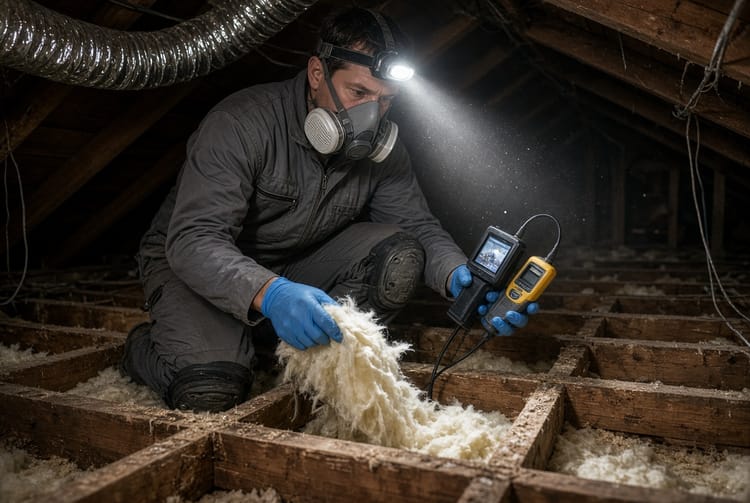
Certified wildlife-remediation technicians arrive with industrial ozone generators, hydroxyl machines, and commercial enzymatic fogs that penetrate far beyond household products. They first perform a thermal-fogging treatment that carries neutralizing agents into wall cavities and ductwork. After a controlled dwell period they introduce ozone at precisely calculated concentrations while the home remains unoccupied. Ozone oxidizes remaining thiols into odorless compounds and is then safely exhausted.
Professionals also inspect and, if needed, clean or replace HVAC components, apply encapsulating primers to persistent surfaces, and treat the entire yard with commercial-grade oxidizers. The process usually requires 24–48 hours of restricted access followed by a final ventilation cycle. Most homes return to a neutral scent baseline after a single professional visit when the work is performed correctly.
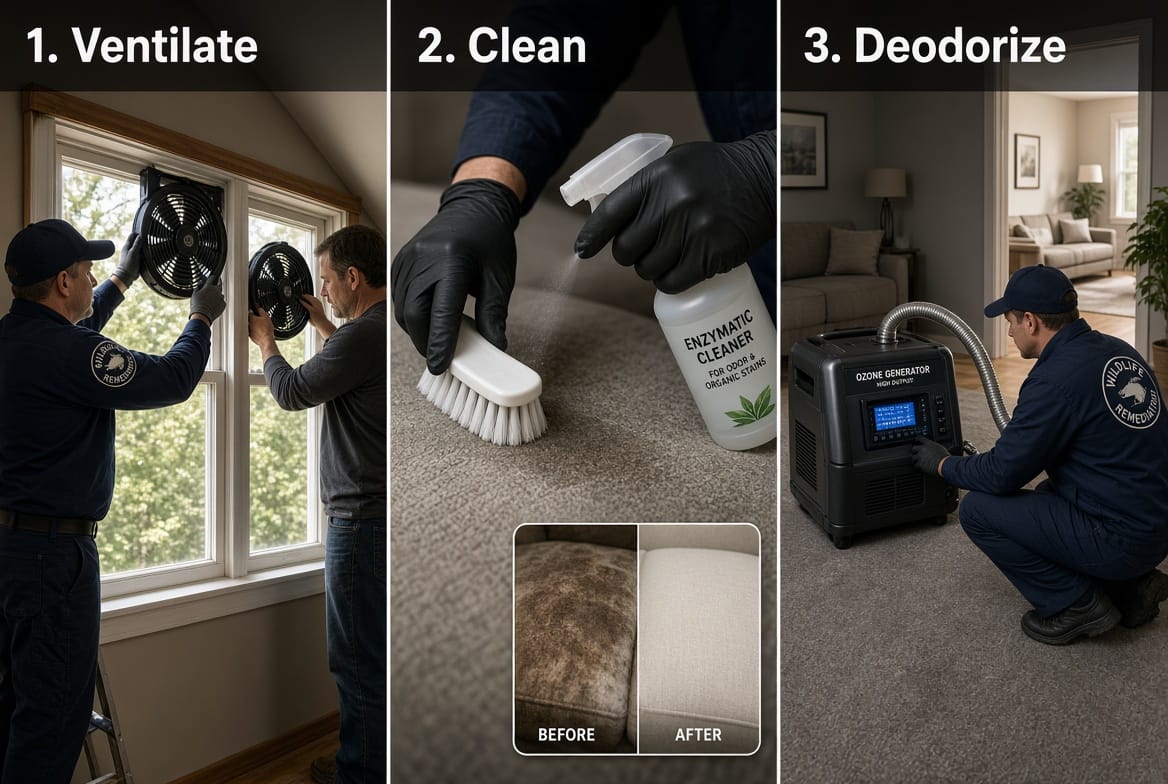
Choosing professional service also reduces health risks. High-concentration ozone and industrial chemicals require training and monitoring equipment that homeowners do not possess. Attempting to improvise these tools can damage rubber seals, houseplants, and electronics or leave unsafe residual gases.
Long-Term Prevention After Successful Remediation
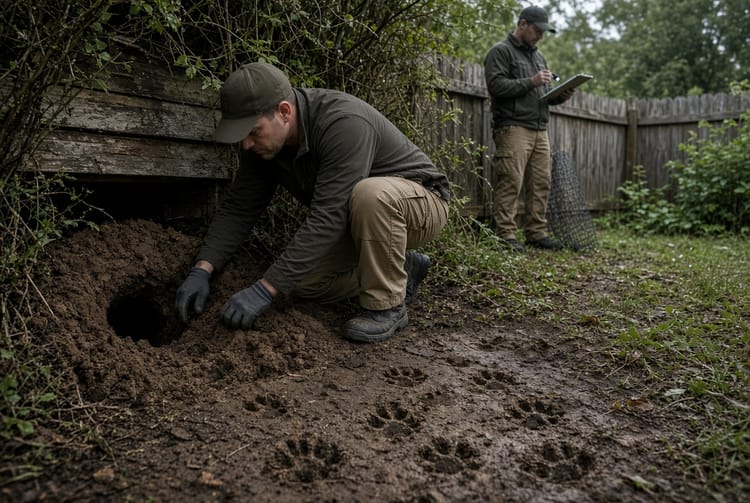
Once the odor is gone, simple habits keep it from returning. Seal potential entry points around the foundation, install motion-activated lights, and remove attractants such as unsecured garbage or pet food left outdoors. If a skunk is still living nearby, licensed wildlife removal should precede any further deodorization so the source is eliminated.
Schedule an HVAC inspection six months after treatment to confirm no residual odor has collected in the ducts. Keep a bottle of enzymatic cleaner on hand for any future minor incidents; early application prevents oils from soaking in.
These measures, combined with the remediation sequence already described, give homeowners lasting control over one of nature’s most stubborn odors.
Eliminate skunk odor permanently.
Get Professional Skunk Odor Removal Today