The Water Pressure Booster: Solving Low Flow Issues in Multi-Story Homes

Low water pressure in multi-story homes is more than an inconvenience — it disrupts daily life, from weak showers to slow-filling bathtubs and inefficient appliances. If you live on the second or third floor and notice reduced flow while the first floor seems fine, gravity, pipe friction, and municipal supply limitations are likely the culprits. A water pressure booster provides a reliable, professional-grade solution that restores full pressure throughout your home without major renovations.
Fix Low Water Pressure Today – Call for a Booster Pump
In this comprehensive guide, we explain exactly when a water pressure booster becomes essential, how these systems work, key installation considerations for homes relying on municipal water, and the peace of mind they deliver. Whether your pressure drops below 40 PSI or you simply want consistent performance on every level, the right booster pump can transform your home’s plumbing system into the efficient, high-flow network it was designed to be.
Understanding Low Water Pressure in Multi-Story Homes
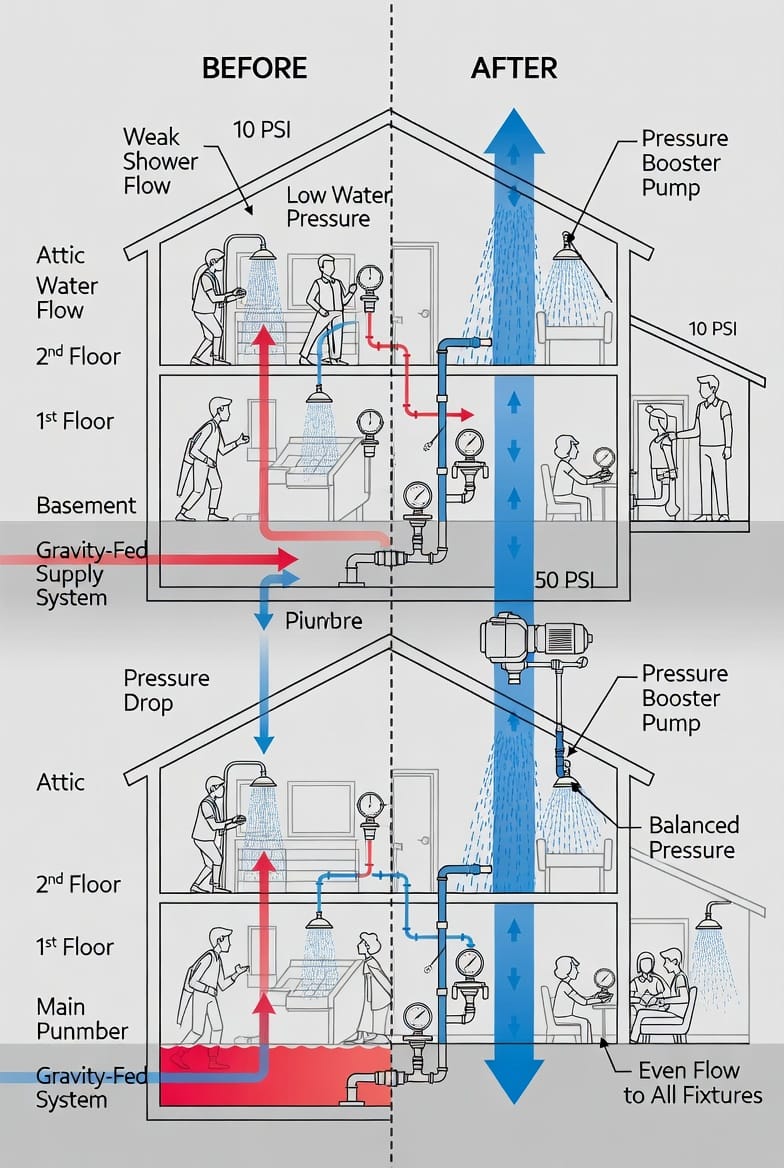
Municipal water enters your home at a base pressure that naturally decreases as it travels upward. Gravity pulls water down, while friction inside pipes further reduces force. In a two- or three-story residence, the second floor may already experience noticeable drops, and the third floor often suffers the most.
Inadequate municipal pressure compounds the problem. Many older neighborhoods receive supply pressure as low as 30-40 PSI at the street main. Add elevation, long horizontal runs, and multiple fixtures running simultaneously, and upper floors can drop well below the recommended 45-60 PSI range for comfortable use.
Homeowners often tolerate these issues until they become unbearable. Yet living with low flow issues wastes time, increases energy bills (as appliances work harder), and can even damage fixtures over time. A water pressure booster addresses the root cause directly by increasing pressure at the source rather than masking symptoms.
When Is a Water Pressure Booster Needed?
You need a water pressure booster when:
- Second- or third-floor showers deliver only a weak spray
- Faucets on upper levels fill sinks and tubs at a snail’s pace
- Pressure consistently measures below 40 PSI at the highest fixture
- Multiple fixtures running together cause noticeable drops on any floor
- Your home sits at the end of a long municipal line or experiences seasonal pressure fluctuations
These symptoms are especially common in homes built before modern pressure standards or in areas with aging infrastructure. If your first-floor pressure feels adequate but upper floors struggle, the issue is almost always elevation-related and perfectly suited for a booster solution.
How a Water Pressure Booster Works
A water pressure booster is a compact, high-efficiency pump system installed on your main water line. It senses incoming pressure and automatically activates to raise output to your desired level — typically 50-80 PSI — before distributing water to every floor.
Most modern units feature:
- A variable-speed pump that adjusts output in real time
- A pressure tank or diaphragm that maintains steady flow
- Smart sensors that prevent unnecessary cycling
- Quiet operation suitable for indoor placement
When water demand increases (someone turns on a shower upstairs), the booster detects the drop and ramps up instantly. Once demand decreases, it returns to standby mode. This on-demand technology ensures energy efficiency while delivering consistent strong water pressure exactly where and when you need it.
Types of Water Pressure Boosters for Residential Use
Different homes require different systems. Single-stage boosters suit modest two-story properties with moderate demand. Multi-stage centrifugal pumps handle larger three-story homes or those with high simultaneous usage. Tankless models offer space-saving installation, while tank-style units provide extra buffering during peak times.
Professional plumbers assess your incoming pressure, peak demand, and pipe size to recommend the correctly sized unit. An undersized booster will underperform; an oversized one wastes energy. Proper sizing ensures years of reliable, worry-free service.
Installation Considerations for Homes with Inadequate Municipal Pressure
Proper installation is critical for long-term performance and code compliance. The water pressure booster is typically placed near the water meter or main entry point in a basement, utility room, or garage. Professional installers:
- Shut off and drain the main line safely
- Cut and fit the pump into the supply pipe using high-quality valves and unions
- Install electrical wiring with proper grounding and GFCI protection
- Set the pressure switch or variable-speed controller to your target PSI
- Test the entire system under full load to verify even pressure on every floor
Municipal water systems often require backflow prevention devices and may need permits. Experienced plumbers handle all paperwork and inspections, ensuring your installation meets local codes while protecting your home’s warranty.
Installation usually takes one to two days with minimal disruption. Once complete, you’ll immediately notice the difference — strong, consistent flow from every fixture, every time.
Clear Signs You Need a Water Pressure Booster
Recognizing the need early prevents frustration. Key indicators include:
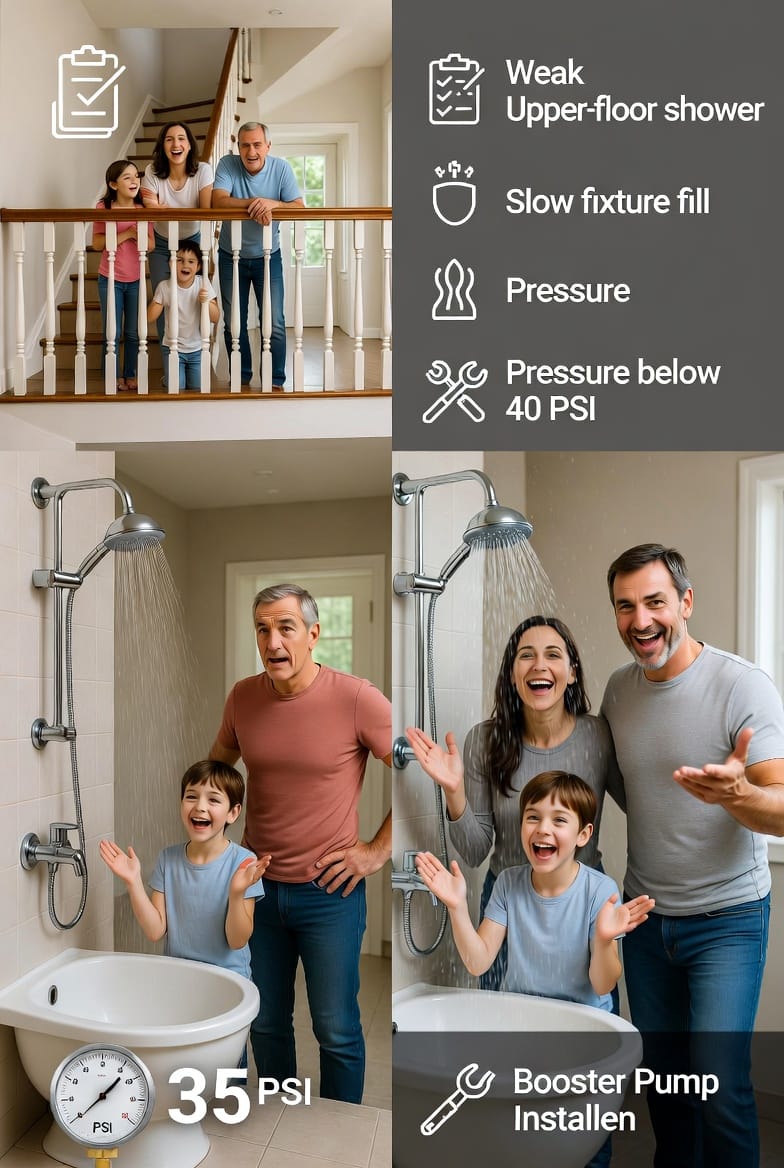
- Weak shower pressure on upper floors despite full flow downstairs
- Slow-filling toilets, washing machines, or garden hoses
- Pressure below 40 PSI when measured at the highest fixture
- Sputtering faucets or fluctuating flow when multiple outlets run
- Complaints from family members about “no water pressure upstairs”
If these sound familiar, a professional pressure test takes only minutes and provides definitive answers.
Benefits That Go Beyond Stronger Showers
A properly installed water pressure booster delivers far-reaching advantages:
- Consistent performance on every floor, regardless of demand
- Faster appliance cycles and reduced energy consumption
- Protection for water heaters and fixtures from low-pressure strain
- Increased home value and buyer appeal
- Peace of mind knowing your plumbing system meets modern standards
Homeowners consistently report that the investment pays for itself through daily convenience and long-term efficiency.
Maintenance and Longevity
Quality booster systems require minimal upkeep. Annual professional inspections, occasional filter cleaning, and pressure checks keep everything running smoothly. Most units last 10–15 years or more with proper care, making them a smart, low-maintenance upgrade.
Common Myths About Pressure Boosters
Some homeowners worry about noise, high electricity use, or complexity. Modern units run quieter than a refrigerator and consume power only when water flows. Professional installation eliminates guesswork and ensures optimal efficiency.
Restoring Pressure to Upper Floors Today
Low water pressure in multi-story homes is a solvable problem. A water pressure booster provides the authoritative, long-term fix that delivers reliable, high-flow performance to every level of your residence.
If weak showers, slow fixtures, or pressure below 40 PSI are affecting your daily comfort, it’s time to take action. Restore powerful water flow throughout your home with a professionally installed water pressure booster system.
Our plumbing experts are ready to assess your system, recommend the perfect solution, and restore the pressure your multi-story home deserves.
Get Powerful Showers on Every Floor – Call Now!