The Toilet Tank Sweating: Causes and Solutions for Condensation
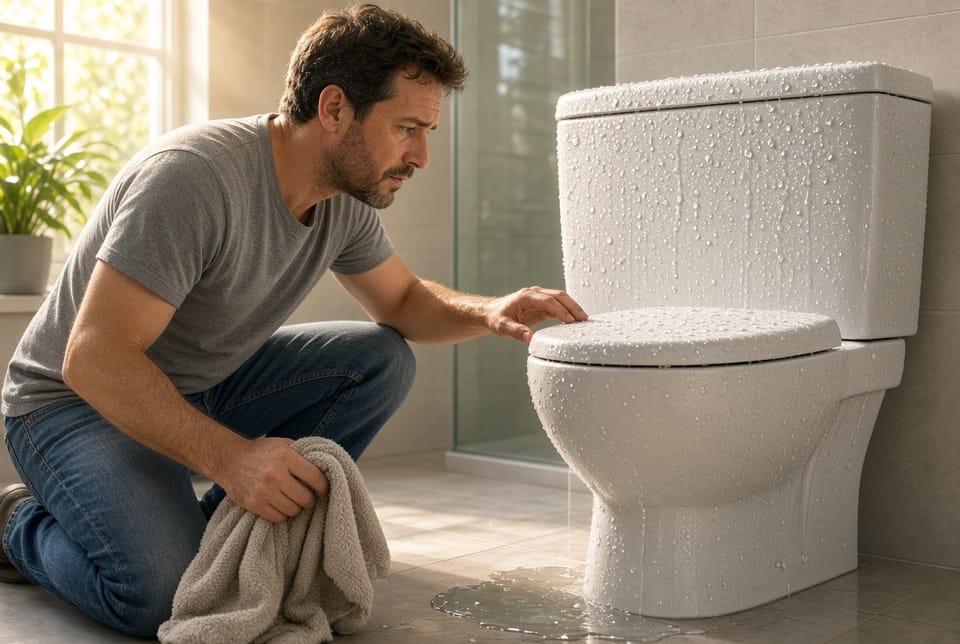
Toilet tank sweating is one of those quiet summer problems that many homeowners notice but often dismiss as harmless. Water beads form on the outside of the tank, drip onto the floor, and leave small puddles that seem to appear out of nowhere. In reality, this condensation is a clear sign that cold water inside the tank is meeting warm, moisture-laden air. Left unaddressed, it can create bigger issues than a wet floor. This article explains exactly why toilet tanks sweat, the risks it poses, and the most effective ways to stop it for good.
Call Now to End Condensation & Prevent Water Damage
Summer humidity turns an ordinary bathroom fixture into a condensation magnet. Understanding the process and applying the right solutions protects your floors, prevents mold growth, and keeps your bathroom comfortable.
What Causes a Toilet Tank to Sweat?
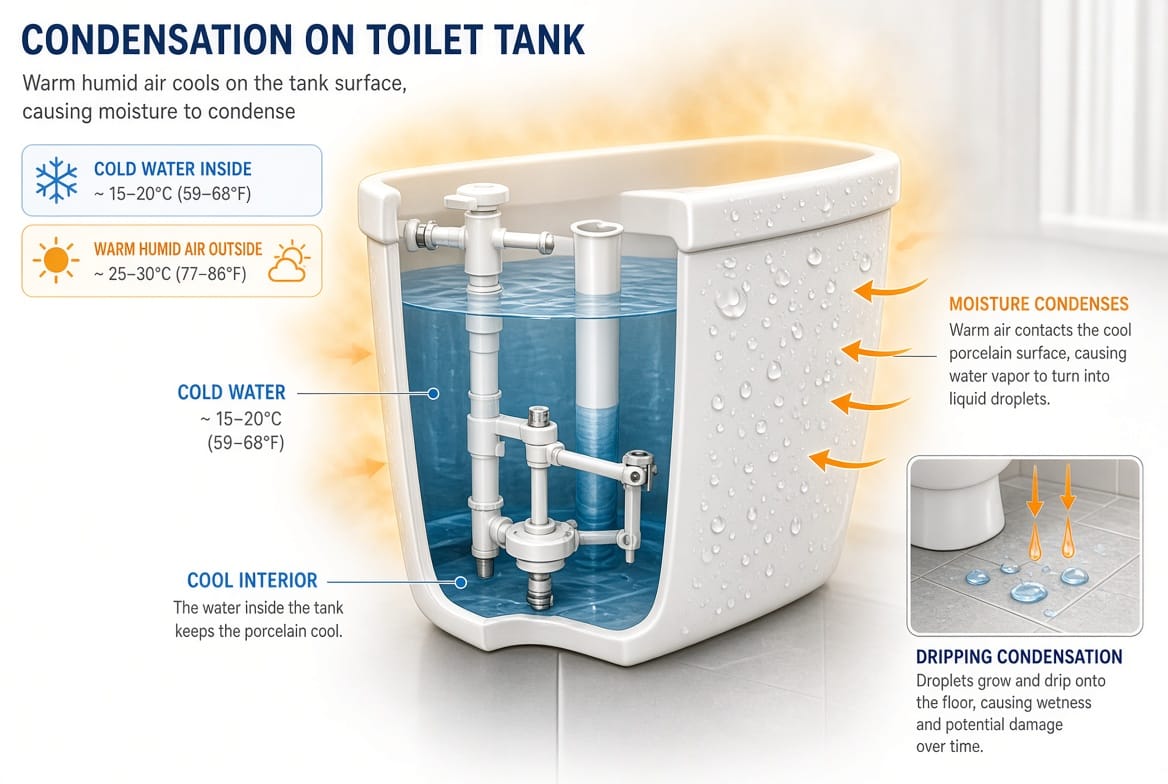
The science is straightforward. Cold water from the supply line fills the toilet tank after every flush. In many homes, especially those with well water or uninsulated pipes, this water stays significantly cooler than the surrounding air. When the bathroom air is warm and humid — typical in summer — moisture in the air condenses on the cooler porcelain surface, just as a cold glass of water “sweats” on a hot day.
Humidity is the main driver. Relative humidity above 50–60 percent combined with tank water temperatures in the 50s or low 60s Fahrenheit creates ideal conditions for condensation. The tank itself is usually uninsulated porcelain, an excellent conductor that stays cold for hours.
Other contributing factors include:
- Poor bathroom ventilation
- Frequent flushing that constantly replenishes cold water
- Air conditioning that cools rooms while outdoor humidity remains high
- Older homes with limited insulation around plumbing lines
The result is visible water droplets that run down the sides of the tank and collect at the base.
Why Toilet Tank Sweating Peaks in Summer
Summer brings higher outdoor temperatures and elevated moisture levels. Even if your home is air-conditioned, bathrooms often remain warmer and more humid because of showers, baths, and limited airflow. Cold incoming water stays cold longer when the surrounding environment is hot, widening the temperature difference that produces condensation.
Homes in humid climates experience this issue more frequently and more severely. Coastal areas, the Southeast, and regions with long muggy seasons see toilet tanks dripping almost daily during peak summer months. The problem can appear overnight after a string of humid days.
Problems Caused by a Sweating Toilet Tank
A few drops may look minor, but consistent dripping creates real damage over time.
Water damage is the most immediate concern. Water pools around the base of the toilet, seeps under flooring, and can warp wood, stain tiles, or deteriorate grout. In bathrooms with vinyl or laminate flooring, trapped moisture leads to bubbling and peeling. Over months, the subfloor can weaken.
Mold and mildew thrive in the damp environment created by constant moisture. Dark spots often appear first behind the toilet or along the baseboard. Mold spores can affect indoor air quality and trigger allergies or respiratory irritation, especially in households with children or sensitive individuals.
Additional issues include:
- Slippery floors that create a safety hazard
- Unpleasant musty odors
- Accelerated wear on the toilet’s external finish
- Hidden leaks that become harder to detect because the area is already wet
Ignoring the problem rarely makes it disappear. Humidity patterns repeat every summer, so the cycle continues unless you intervene.
How to Confirm Your Toilet Tank Is Sweating
Not every wet toilet base is condensation. Distinguishing sweating from an actual leak is important.
Look for these signs of condensation:
- Water droplets covering the entire tank surface, not just one spot
- Moisture appearing after the tank refills with cold water
- No water inside the tank overflowing
- Problem worsening on humid days and improving when humidity drops
A simple test: dry the tank completely with a towel, then wait 20–30 minutes without flushing. If new droplets form across the surface, condensation is the cause. If water appears only at a specific point or from the supply line connection, you may have a leak that needs professional attention.
Proven Solutions to Stop Toilet Tank Sweating
Several reliable methods address the root causes: the temperature difference and excess humidity. Combining approaches often delivers the best results.
Tank Liners
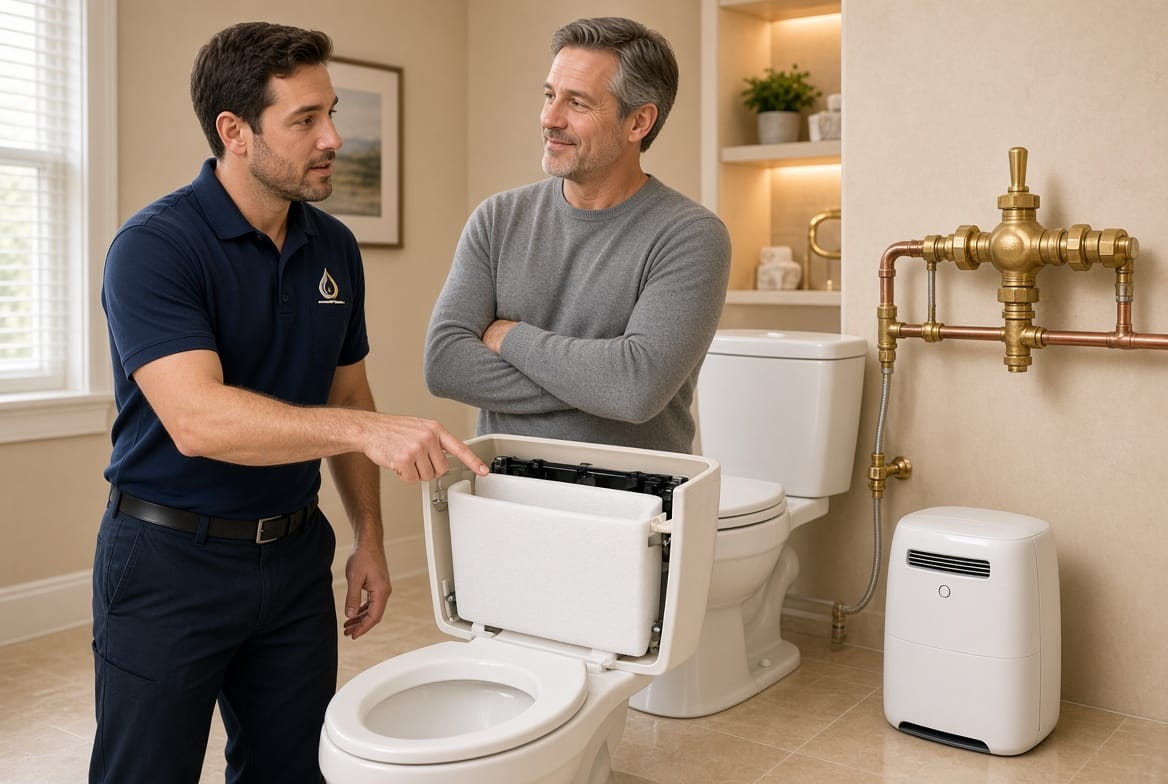
A tank liner is an insulating barrier installed inside the toilet tank. It keeps the cold water from transferring its temperature to the porcelain walls. Most liners are made of foam or plastic and fit snugly against the inner surfaces.
Benefits include:
- Immediate reduction in surface condensation
- Relatively low cost
- No changes to plumbing
- Easy enough for many homeowners to install with basic tools
The liner works by creating an air or foam gap that slows heat transfer. After installation, the outside of the tank stays closer to room temperature, so moisture no longer condenses as readily. Quality liners last for years and do not interfere with the flush mechanism when properly fitted.
Anti-Sweat Valves
An anti-sweat valve (sometimes called a tempering valve) mixes a small amount of hot water with the incoming cold supply. This raises the temperature of the water entering the tank just enough to reduce the temperature gap with the surrounding air.
The valve is installed on the water supply line near the toilet. It is adjustable so you can find the sweet spot that prevents sweating without wasting hot water. This solution is especially effective in homes where the incoming water is very cold.
Professional installation is recommended because it involves connecting to both hot and cold lines. Once set correctly, the valve operates automatically and requires little maintenance.
Dehumidification and Ventilation
Reducing bathroom humidity attacks the problem from the air side. A dehumidifier placed in or near the bathroom pulls excess moisture from the air, lowering the dew point so condensation is less likely.
Complementary steps include:
- Running the exhaust fan during and after showers
- Opening a window when weather permits
- Using a timer or humidity-sensing fan
- Keeping the bathroom door open when not in use to improve air circulation
In very humid climates, a whole-house dehumidifier or improved HVAC dehumidification can provide broader relief. These measures also benefit the rest of the home by reducing overall moisture levels.
Other helpful tactics include insulating the cold water supply line leading to the toilet and ensuring the bathroom has adequate airflow. Some homeowners wrap the tank with an insulating cover, though an internal liner is usually more effective and less visible.
Additional Prevention Tips for Lasting Results
Prevention keeps the problem from returning each summer.
- Monitor indoor humidity with an inexpensive hygrometer; aim for 40–50 percent in bathrooms.
- Flush less frequently when possible during peak humidity periods to limit the influx of cold water.
- Check that the toilet is not running continuously, which constantly introduces fresh cold water.
- Schedule seasonal plumbing inspections to catch related issues early.
- Consider upgrading to a modern toilet with better insulation if your current fixture is old.
These habits, combined with one or more of the core solutions above, typically eliminate sweating entirely.
When Professional Plumbing Help Makes Sense
Many solutions can be handled by a capable homeowner, but certain situations call for a licensed plumber. If you notice signs of an actual leak, if the supply valve or tank components are old, or if you prefer a permanent anti-sweat valve installation, professional service is the safest route. A plumber can also inspect the entire bathroom for hidden moisture damage and recommend the most efficient combination of fixes for your specific home.
Attempting complex plumbing work without experience can create new leaks or code issues. Expert help ensures the job is done correctly the first time.
Take Action Before Summer Humidity Returns
Toilet tank sweating is a common but solvable issue. Cold water meeting humid air produces condensation that can damage floors, encourage mold, and create ongoing mess. The combination of a tank liner, an anti-sweat valve, and better dehumidification addresses both the temperature difference and the moisture in the air.
You do not have to live with dripping tanks and damp floors every summer. Implementing even one of these solutions usually brings noticeable improvement; using two or three often eliminates the problem completely.
Stop toilet tank sweating today. For reliable plumbing solutions tailored to your home. A professional can assess your situation, recommend the right approach, and restore a dry, comfortable bathroom quickly.
Taking care of condensation now protects your investment and keeps your bathroom healthy year after year. The right combination of insulation, temperature control, and humidity management delivers lasting results without constant wiping and worry.
Call Now for Tank Liners, Valves & Dry Bathrooms