The Water Hammer: Why Your Pipes Bang and How to Fix It
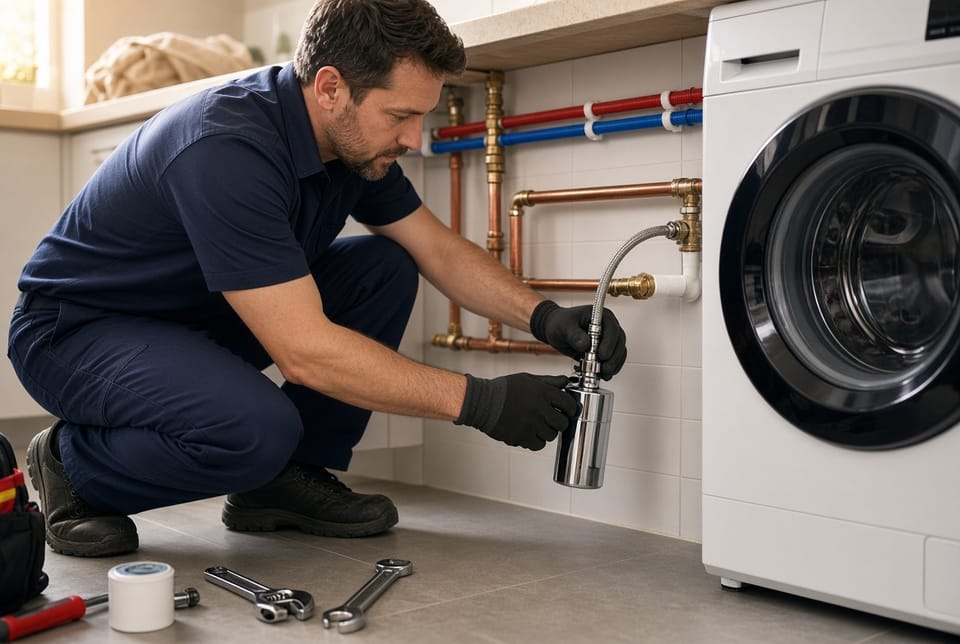
That sudden bang, clank, or shudder when a faucet snaps shut, a washing machine cycle ends, or a dishwasher valve closes is more than an annoying household soundtrack. It is water hammer—a real hydraulic shock wave racing through your plumbing. Left unaddressed, the same force that startles you at 2 a.m. can loosen fittings, fatigue joints, and eventually produce leaks. The good news is that water hammer is both diagnosable and highly correctable. This guide explains exactly what is happening inside the pipes, the warning signs to watch for, and the proven solutions that restore quiet, reliable service.
Stop Water Hammer Today – Call for Service
What Water Hammer Actually Is
Water moving through a pipe possesses momentum. When a valve closes quickly—a solenoid on a washing machine, a quarter-turn ball valve, or even a modern low-flow fixture—the moving column of water has nowhere to go. The sudden stop converts kinetic energy into a pressure spike, often several times the system’s normal operating pressure. That spike travels as a shock wave, reflecting off elbows, tees, and closed ends until the energy dissipates as noise and vibration.
Think of it as the plumbing equivalent of a car slamming on the brakes: the contents keep going until something absorbs the force. In a rigid, poorly supported pipe run, that “something” is the pipe wall itself—hence the familiar banging pipes.
The phenomenon is most noticeable on long, straight runs that serve appliances with fast-acting valves. High municipal or well-pump pressure makes the surge even more violent. Older galvanized or poorly anchored copper lines transmit the shock more readily than modern, properly clipped PEX.
Common Signs You Have Water Hammer
You do not need special instruments to recognize the problem. Homeowners typically notice one or more of these symptoms:
- Sharp banging or knocking the instant a fixture or appliance shuts off
- Pipes that vibrate or rattle against joists, studs, or each other
- A brief thump followed by a fading series of smaller knocks
- Noise that is louder at certain times of day when demand (and pressure) is higher
- Visible movement in exposed supply lines, especially near laundry or kitchen appliances
If the sound occurs only when one particular appliance cycles, that appliance’s valve is the most likely trigger. If it happens throughout the house, system-wide pressure or inadequate pipe support is usually involved.
Why Ignoring the Bangs Is Risky
Water hammer is not merely cosmetic. Repeated pressure spikes:
- Stress solder joints, compression fittings, and threaded connections
- Accelerate wear on appliance inlet valves and washing-machine hoses
- Loosen pipe hangers, allowing even more movement and noise
- In extreme cases contribute to pinhole leaks or premature pipe failure
The same shock that produces an audible bang is also traveling through your water heater, valves, and fixtures. Addressing it promptly protects both comfort and the long-term integrity of the system.
How Water Hammer Forms—and How Arrestors Stop It
The sequence is straightforward: flowing water → abrupt valve closure → pressure wave → reflection and noise. A water hammer arrestor interrupts that sequence by giving the shock wave a place to go.
Modern arrestors contain a sealed air or nitrogen cushion behind a piston or diaphragm. When the surge arrives, the piston compresses the cushion, absorbing the energy instead of letting it hammer the pipe. Once the pressure equalizes, the piston returns to its ready position. Unlike old-style air chambers that eventually fill with water and lose effectiveness, today’s sealed units are maintenance-free for years.
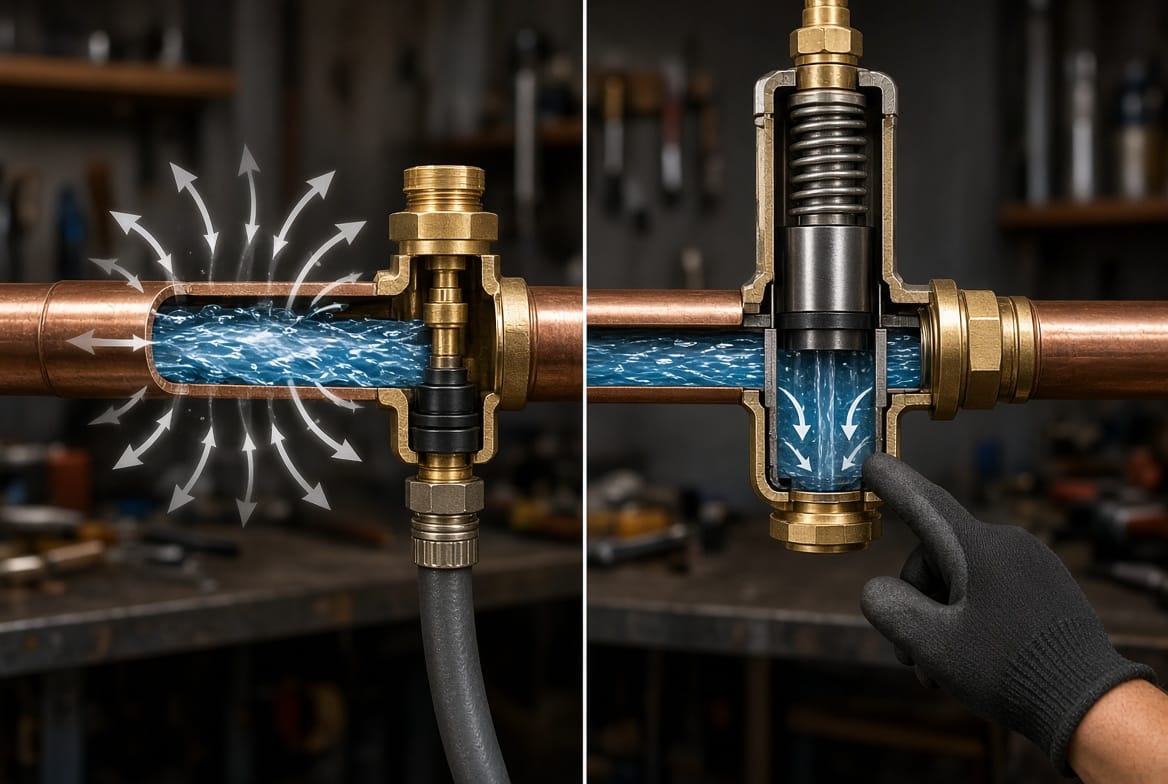
Proper placement matters. Arrestors work best when installed as close as practical to the offending valve—typically on the hot and cold supplies serving a washing machine, dishwasher, or ice maker. In some homes a single pair at the laundry box solves the loudest events; in others, additional units near the water heater or main branches are required.
Proven Solutions That Silence Banging Pipes
A complete, lasting repair usually combines several complementary measures rather than a single gadget.
1. Install Water Hammer Arrestors
This is the most direct and reliable fix for appliance-triggered hammer. Quality piston-style arrestors are compact, code-accepted, and can be added to existing supply lines with standard fittings. A licensed plumber will size and locate them correctly so they protect the entire branch.
2. Secure Loose or Undersupported Pipes
Even a perfect arrestor cannot stop noise if pipes are free to slap against wood or each other. Adding properly spaced hangers, isolators, and cushioned clamps reduces both vibration transmission and long-term fatigue. This step is especially important in unfinished basements, crawl spaces, and laundry rooms.
3. Check and Reduce Excessive Water Pressure
Municipal or well systems sometimes deliver 80 psi or higher. Most residential plumbing is designed for 40–60 psi. A pressure-reducing valve (PRV) at the main entrance, set and maintained at the proper level, lowers the energy available to create a shock wave in the first place. A simple gauge test tells you whether pressure is part of the problem.
4. Add or Restore Pipe Insulation and Isolation
Foam or rubber insulation sleeves do more than prevent condensation; they dampen sound and keep pipes from contacting framing. Combined with isolation pads at hanger points, they make residual vibration far less audible.
5. Inspect Appliance Valves and Supply Lines
Worn washing-machine or dishwasher solenoids can close even more abruptly than when new. Replacing aging fill valves or upgrading to braided stainless hoses with integral arrestors often reduces the trigger itself.
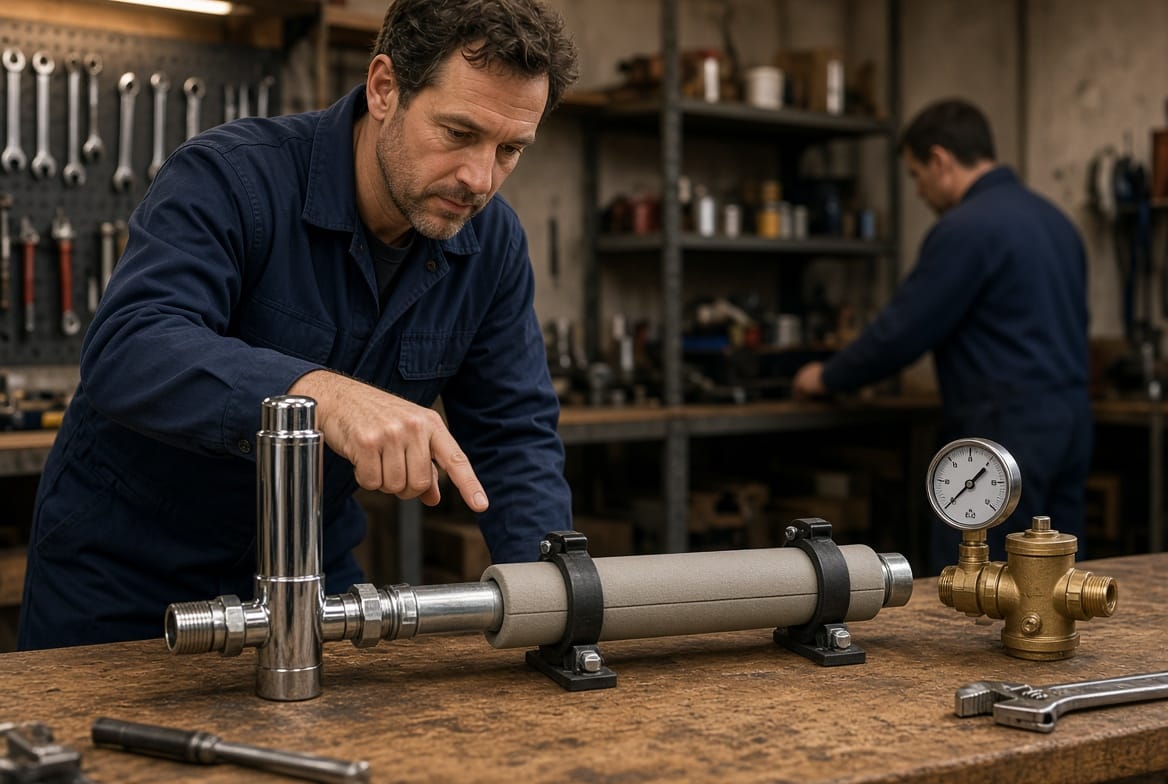
Most homes benefit from a combination of the first three items. A professional assessment determines the exact mix for your layout, pipe material, and water pressure.
DIY Observation vs. Professional Repair
Homeowners can safely:
- Note which fixture or appliance produces the bang
- Look for obviously loose pipes in accessible areas
- Check the house pressure with an inexpensive gauge on an outdoor hose bib
Everything beyond that—cutting into supply lines, selecting and installing arrestors, adjusting or replacing a PRV, or working near the water heater—belongs with a licensed plumber. Incorrectly installed arrestors, over-tightened fittings, or an improperly set PRV can create new leaks or code issues. A trained technician also carries the fittings, thread sealant, and experience to complete the job in a single visit with minimal disruption.
Prevention After the Fix
Once the banging stops, a few habits keep it from returning:
- Have water pressure checked during routine plumbing service
- Replace washing-machine hoses on the manufacturer’s recommended schedule
- Avoid slamming valves when possible; modern fixtures already close quickly enough
- Schedule a periodic inspection of hangers and exposed piping, especially after remodeling that may have disturbed supports
Water hammer is a mechanical event, not a mysterious house “personality.” Treat the cause and the soundtrack disappears.
Silence Your Banging Pipes
You do not have to live with the jolt and the noise. Water hammer is a well-understood plumbing condition with straightforward, durable remedies. A properly placed arrestor, secured piping, and correctly regulated pressure restore both quiet and peace of mind.
Silence your banging pipes. A licensed technician can diagnose the source, install the right combination of arrestors and supports, and leave your home running smoothly and silently.
Get Water Hammer Arrestors Installed – Call Today