The Water Heater Expansion Tank: Why It's Required for Closed Systems
Modern homes rely on reliable hot water every day. Behind that convenience sits a critical yet often overlooked safety device: the water heater expansion tank. In closed plumbing systems, this component plays an essential role in protecting your entire water heating setup from damaging pressure buildup. Understanding why the expansion tank is required, how it functions, and what happens when it fails can help homeowners avoid costly repairs and maintain peace of mind.
Protect Your Water Heater Today – Call Now!
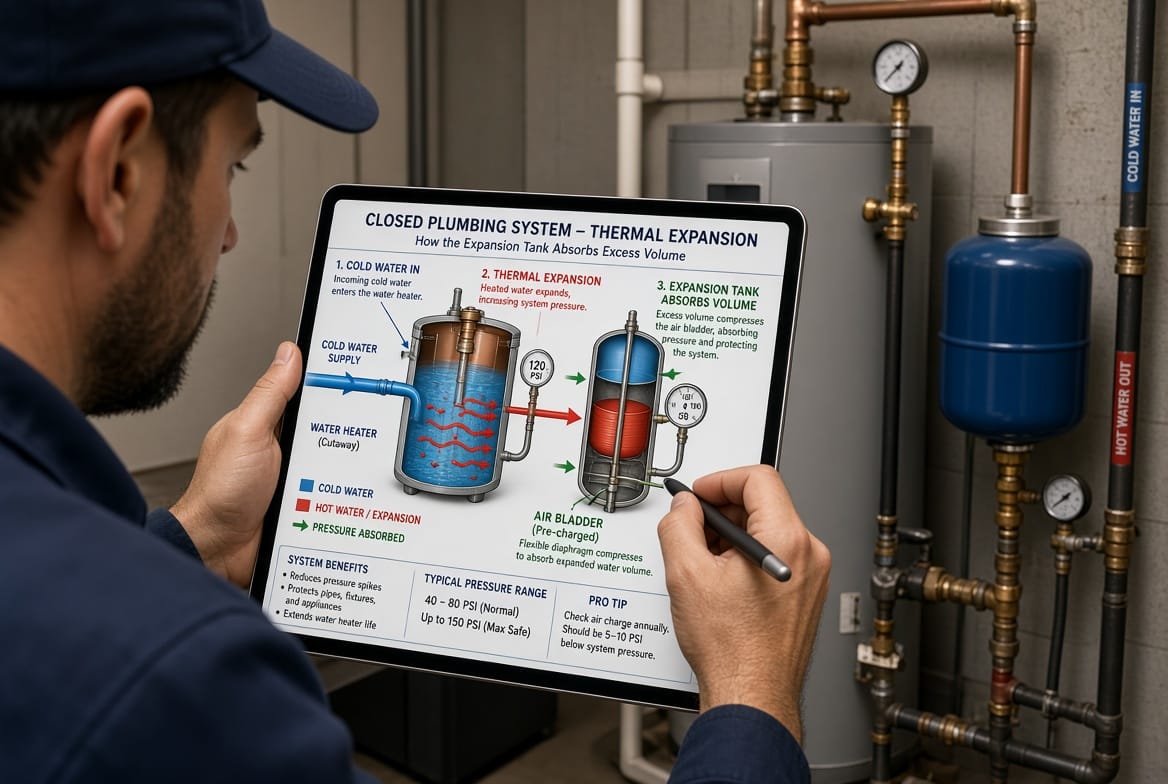
A closed plumbing system exists whenever backflow prevention devices, pressure-reducing valves, or check valves are installed on the main water supply line. These devices stop water from flowing backward into the municipal supply, which is excellent for contamination control. However, they also trap water inside the home’s pipes. When the water heater warms that trapped water, the liquid expands. Without a place for the extra volume to go, system pressure rises rapidly. That is exactly where the expansion tank steps in.
Understanding Thermal Expansion in Closed Systems
Water is nearly incompressible. As temperature increases inside a water heater, the volume of water grows by roughly three to four percent between cold inlet temperatures and the typical 120–140 °F storage range. In an open system, the excess volume simply pushes back into the public water main. In a closed system, that excess has nowhere to escape. Pressure can climb from a normal 40–60 psi to levels exceeding 150 psi in a matter of minutes during a heating cycle.
High pressure places stress on every component: the water heater tank itself, supply lines, fixtures, and especially the temperature-and-pressure relief valve. Over time, repeated pressure spikes accelerate wear, create leaks, and raise the risk of catastrophic tank failure. The water heater expansion tank absorbs this extra volume safely, keeping pressure within design limits and preserving the integrity of the entire plumbing network.
How the Expansion Tank Works
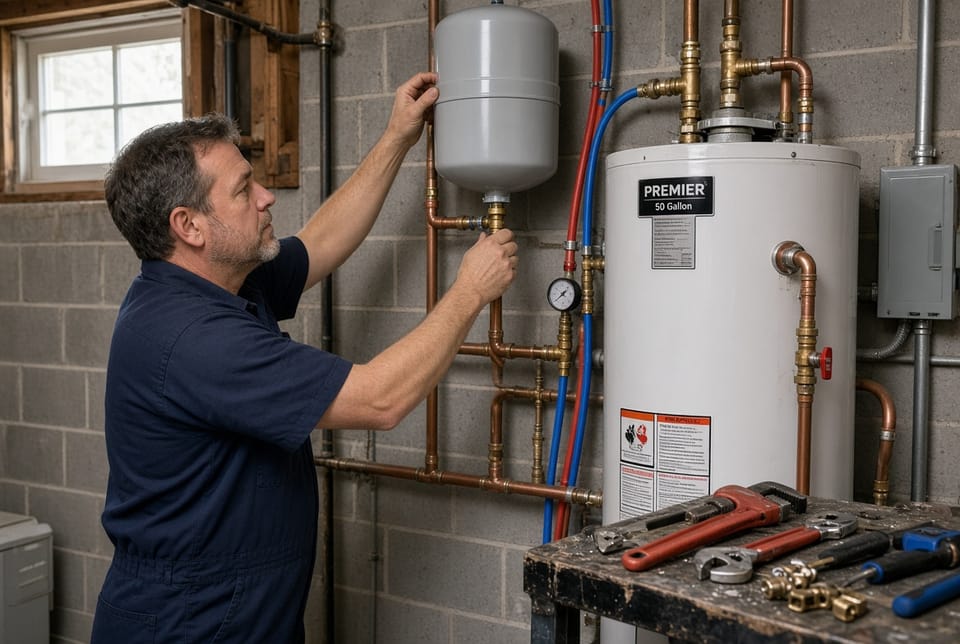
An expansion tank is a small steel vessel, usually 2 to 5 gallons in capacity, that contains a flexible rubber bladder or diaphragm. One side of the bladder is pre-charged with air at a pressure matching the home’s static water pressure. The other side connects to the cold-water supply line near the water heater.
When hot water expands, the excess volume enters the tank and compresses the air cushion. The air acts like a shock absorber, accepting the extra water without allowing system pressure to rise significantly. Once the water cools or is drawn from a faucet, the compressed air pushes the water back into the system, ready for the next heating cycle. This simple, passive process repeats thousands of times over the life of the tank and requires no electricity or moving parts beyond the bladder itself.
Because the device operates automatically, many homeowners never notice it—until something goes wrong. Proper sizing is essential. An undersized tank cannot absorb the full expansion volume, while an oversized tank may allow pressure to drop too low during draw-downs. A qualified technician calculates the correct size based on water heater capacity, incoming water temperature, and system pressure.
Why the Expansion Tank Is Required for Safety
Building codes in most jurisdictions now mandate expansion tanks whenever a closed system is present. The requirement exists for three primary safety reasons.
First, it protects the water heater’s glass-lined tank from excessive internal pressure that can crack the lining or rupture the steel shell. Second, it prevents the temperature-and-pressure relief valve from cycling repeatedly. Every time that valve opens, it releases hot water onto the floor or into a drain, creating both a water-damage hazard and a scald risk. Third, sustained high pressure shortens the life of faucets, washing-machine hoses, dishwasher solenoids, and ice-maker valves.
Without an expansion tank, the relief valve becomes the only pressure-release path. That valve is designed as a last-resort safety device, not as a routine expansion control. Relying on it for daily expansion is both inefficient and dangerous. Installing a properly charged expansion tank restores the system to its intended operating range and dramatically reduces the chance of sudden failures.
Recognizing Signs of Expansion Tank Failure
Even the best equipment eventually wears out. The most common failure mode is a ruptured or waterlogged bladder. When the bladder fails, the tank fills completely with water and loses its ability to compress air. Pressure then rises unchecked during every heating cycle.
Homeowners should watch for these clear warning signs:
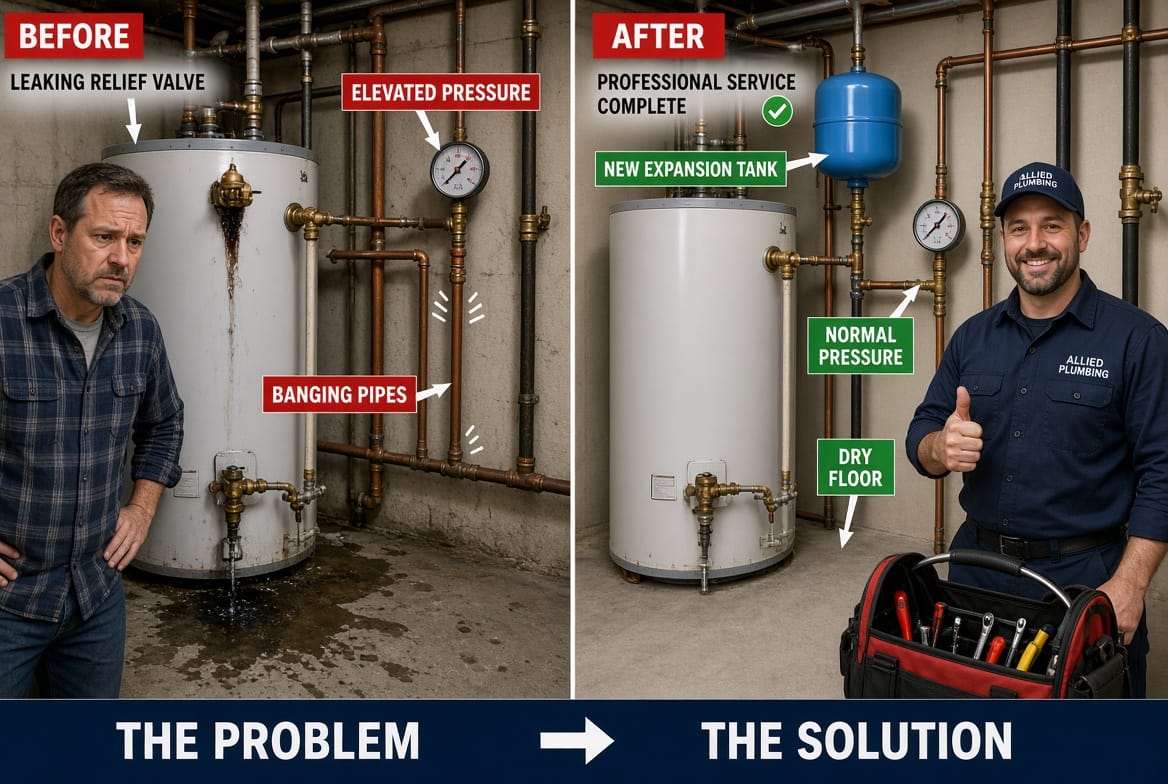
- Water heater relief valve leaking or dripping intermittently, especially after the heater has been running
- High water pressure readings on a gauge installed near the water heater or at a faucet aerator
- Banging pipes or water-hammer noises when hot water is drawn
- Frequent cycling of the relief valve accompanied by a puddle beneath the discharge pipe
- Reduced hot-water flow or fluctuating temperature at fixtures
Any one of these symptoms warrants immediate professional inspection. Ignoring them can lead to tank rupture, flooding, or the need for a complete water-heater replacement—expenses far higher than the cost of a new expansion tank.
Professional Installation Steps
Correct installation is as important as the tank itself. The process begins with measuring static water pressure at a hose bib or laundry faucet. The expansion tank’s air charge must be set to match that pressure—usually between 40 and 60 psi—before the tank is connected to the system. A tire-pressure gauge and bicycle pump or air compressor are used for this adjustment.
Next, the cold-water supply is shut off and the water heater is drained slightly to relieve residual pressure. A tee fitting is installed on the cold inlet line within two feet of the heater. The expansion tank is then mounted either horizontally or vertically, depending on model and available space, using a secure bracket to support its weight when full. Flexible stainless-steel connectors or rigid copper are preferred for the final connection.
After the tank is in place, the system is refilled, air is purged from the lines, and the heater is restored to service. A final pressure check confirms that the tank is absorbing expansion correctly. Most installations take less than two hours and can be completed with minimal disruption to household routines.
Homeowners should never attempt this work without proper tools and knowledge of local codes. An incorrect air charge or improper mounting can render the tank ineffective or create new leak points. Professional installation guarantees that the device functions as designed from day one.
Long-Term Benefits and Maintenance
A properly installed expansion tank extends water-heater life by reducing stress cycles on the tank shell and heating elements. It also lowers the risk of hidden leaks behind walls or under floors caused by repeated pressure spikes. Energy efficiency improves slightly because the heater no longer loses heat through frequent relief-valve discharges.
Maintenance is straightforward. Once a year, a technician should verify the air charge with the system depressurized. If the charge has dropped, air is simply added. The bladder itself typically lasts 5–10 years; replacement of the entire tank is inexpensive compared with the protection it provides.
In regions with aggressive water chemistry, a dielectric union or dielectric nipple between the tank and copper piping prevents galvanic corrosion. Some modern tanks feature stainless-steel construction or butyl-rubber bladders for extended durability in hard-water areas.
Common Misconceptions Clarified
One frequent misconception is that every home needs an expansion tank. Only closed systems require one. Homes without backflow preventers or pressure-reducing valves can still expand into the municipal main and may not need the device. Another myth is that a larger tank is always better. Oversizing can cause the system pressure to fall too low during heavy draws, leading to inadequate flow at fixtures. Correct sizing based on heater volume and temperature rise is the only reliable approach.
Some owners believe that a dripping relief valve simply needs replacement. While the valve itself may eventually fail, the root cause is almost always excess pressure from a missing or failed expansion tank. Replacing the valve alone treats the symptom, not the problem.
Protecting Your Investment
The water heater is one of the more expensive appliances in a typical home. Protecting it with a correctly sized and installed expansion tank is a modest investment that pays dividends in reliability, safety, and longevity. When the tank is working as intended, pressure remains stable, the relief valve stays closed, and hot water is delivered consistently without stress on the system.
If you notice any of the warning signs described earlier, or if your home has never been evaluated for expansion control, now is the ideal time to act. A brief professional inspection can confirm whether an expansion tank is present, properly charged, and adequately sized for your specific closed system.
Protect your water heater with an expansion tank. Our technicians arrive fully equipped, complete the work efficiently, and leave your system safer and more reliable than before. Don’t wait for a leaking relief valve or a sudden pressure spike to force an emergency decision. Take the proactive step that keeps your plumbing operating smoothly for years to come.
Prevent Costly Water Heater Damage – Call for Service!