The Washing Machine Supply Hose: Preventing Burst Hose Floods
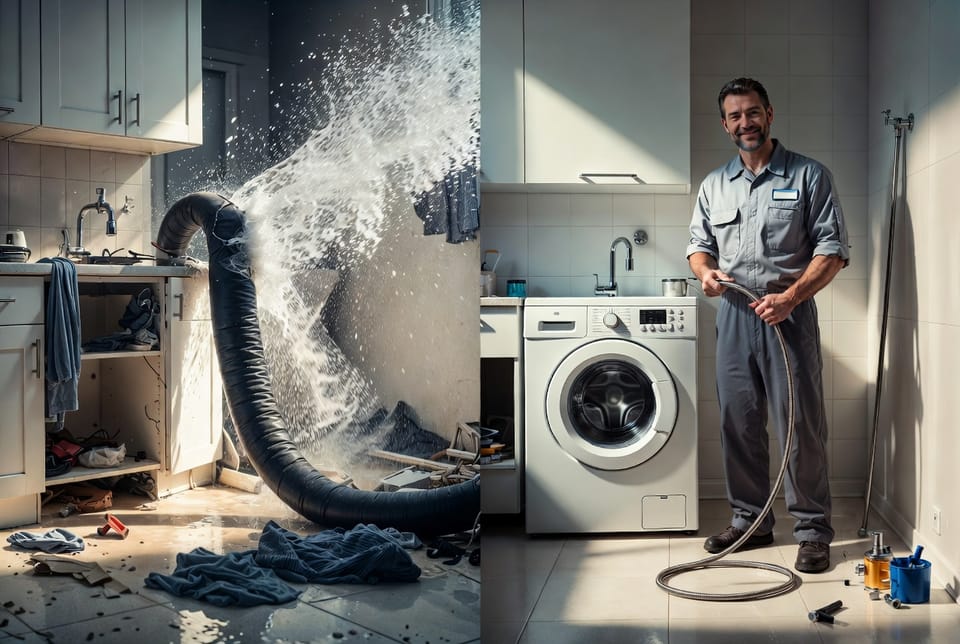
Every homeowner understands the convenience of a reliable washing machine, yet few recognize the silent threat lurking behind the appliance. The washing machine supply hose is a critical component that delivers water under constant pressure. When this hose fails, the result is often a sudden and destructive burst hose flood capable of releasing hundreds of gallons of water in minutes. These floods can ruin flooring, damage walls, destroy personal belongings, and create costly mold problems. The good news is that nearly every such disaster is preventable with simple awareness and timely action.
Prevent Burst Hose Floods Today – Call Now!
This guide explains exactly why washing machine hoses burst, how to spot early warning signs, and the single most effective prevention strategy available. By the end, you will know precisely when and how to protect your home from this common yet overlooked risk.
Understanding the Hidden Danger of Supply Hoses
Washing machines connect to household water lines through flexible supply hoses. These hoses remain under full line pressure twenty-four hours a day, even when the machine is not running. Over time, the constant stress combined with age and environmental factors weakens the material until failure occurs. A single burst hose can empty the entire water supply into your laundry area before anyone notices.
Unlike slow leaks that give gradual clues, a complete rupture happens without warning. Water pours out at high volume, saturating floors and seeping into adjacent rooms. Insurance claims related to appliance water damage frequently list failed washing machine hoses as the primary cause. The financial impact often reaches thousands of dollars in repairs, not counting temporary relocation costs or lost valuables.
The risk is universal. Whether your home is new or decades old, the supply hoses age at the same rate once installed. Ignoring them is equivalent to ignoring a ticking timer on potential property damage.
Why Washing Machine Hoses Burst: Age, Pressure, and Damage
Three primary factors cause washing machine supply hoses to fail: age, continuous pressure, and physical damage. Understanding each factor helps homeowners take control before disaster strikes.
Age-Related Deterioration
Most original equipment hoses are made of reinforced rubber. Manufacturers design these hoses with an expected service life of approximately five years under normal conditions. Beyond that point, the rubber begins to harden, lose elasticity, and develop microscopic cracks. Heat from the laundry room, residual detergent exposure, and ordinary household temperature swings accelerate this process.
After five years, the internal structure of a rubber hose can no longer withstand the forces acting on it. The material becomes brittle and prone to sudden rupture. Many homeowners replace the washing machine itself long before thinking about the hoses, leaving aging rubber connections in place for ten or even fifteen years. That extended service dramatically increases the probability of a catastrophic burst.
Constant Water Pressure
Household water systems typically operate between 40 and 80 pounds per square inch. The supply hose experiences this pressure continuously. Every time the washing machine fills, the hose flexes slightly, then returns to a static pressurized state. Over thousands of cycles, this repeated stress creates fatigue points along the hose wall and at the connection fittings.
Rubber hoses expand microscopically under pressure. Over years, the expansion and contraction weaken the reinforcement layers. Eventually a weak spot gives way, producing a full-length split or a blowout at a fitting. Stainless steel braided hoses handle the same pressure far more effectively because the metal braid contains any expansion and distributes force evenly.
Physical Damage and External Stress
Hoses suffer damage from everyday laundry-room activity. Sharp edges on the back of the washing machine, vibration during spin cycles, and accidental contact when moving the appliance all contribute to wear. Pets may chew exposed rubber. Moisture trapped behind the machine encourages corrosion at the metal fittings.
Improper installation compounds these problems. Over-tightened connections crush the hose ends, while under-tightened ones allow slow seepage that softens the material. Kinks introduced during installation create permanent stress concentrations that eventually tear open. Even a small nick from a tool during initial setup can become the starting point for a later flood.
Together, age, pressure, and damage create a predictable failure pattern. The longer a rubber hose remains in service, the higher the chance it will fail without warning.
Recognizing the Warning Signs Before Disaster Strikes
Fortunately, most hoses give visible clues before a complete rupture. Regular visual inspection allows early detection and replacement. Look carefully for the following indicators every six months.
Cracking
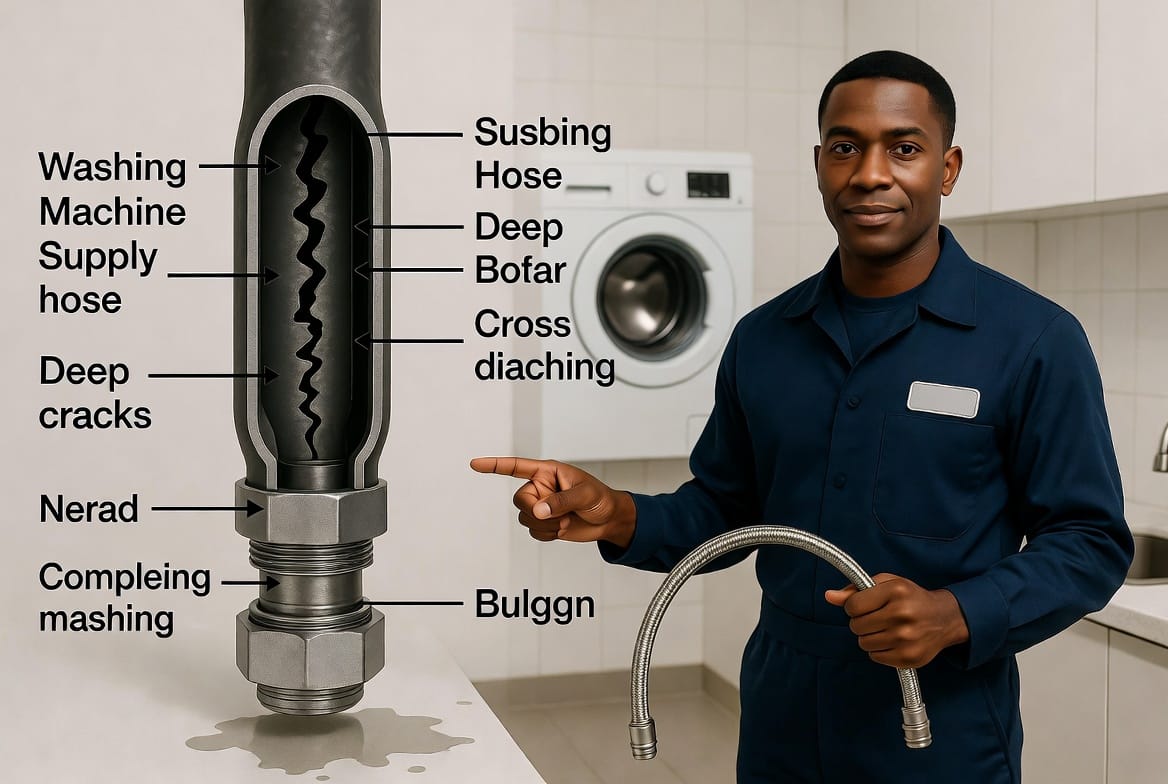
Surface cracks appear as fine lines or deeper fissures in the rubber exterior. They often start near the ends where the hose flexes most. Once cracking begins, the structural integrity declines rapidly. Water can force its way into the cracks, expanding them from the inside until the hose splits open. Any visible cracking means the hose has reached the end of its safe service life and requires immediate replacement.
Bulging
A bulge indicates that the internal reinforcement has failed in a localized area. The rubber expands outward under pressure, forming a soft, balloon-like section. Bulges commonly develop close to the metal fittings or along the middle of the hose. A bulging hose is under extreme stress and can rupture with the next pressure cycle. Never wait when you notice a bulge—turn off the water supply and schedule replacement at once.
Leaks and Water Staining
Small drips at the connections or along the hose body signal developing failure. Even a slow drip leaves water stains on the floor, the back of the machine, or nearby walls. Brownish or mineral deposits around fittings show long-term seepage. These stains often appear before a full burst and provide the final warning. Moisture also encourages mold growth behind the appliance, adding health risks to the structural damage.
Additional subtle signs include a musty odor near the laundry area, soft spots when gently pressing the hose, or unusual vibration during fill cycles. Any of these symptoms justifies proactive replacement rather than continued risk.
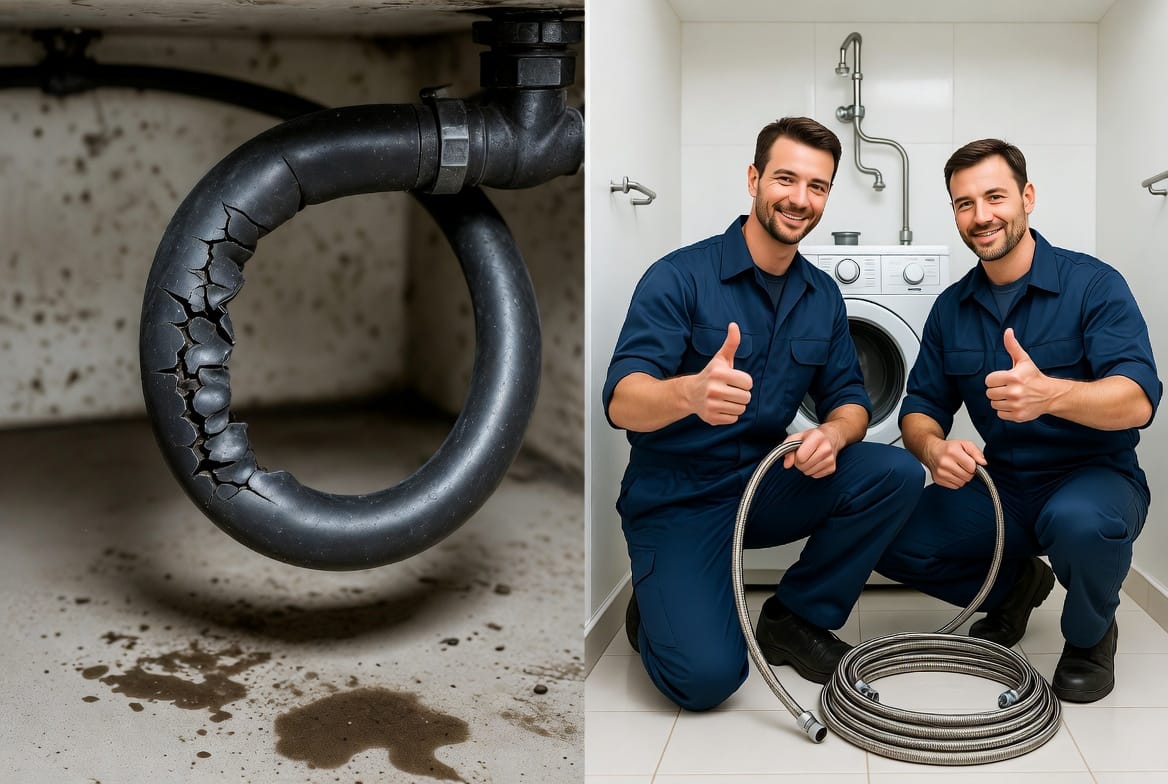
The Proven Prevention Strategy: Stainless Steel Braided Hoses Every Five Years
The most reliable way to eliminate burst hose floods is to replace rubber supply hoses with stainless steel braided models on a strict five-year schedule. This single practice removes virtually all risk associated with age-related failure.
Stainless steel braided hoses feature an inner rubber or polymer tube protected by a woven metal outer layer. The braid contains any expansion, resists abrasion, and maintains strength far beyond the capabilities of plain rubber. These hoses routinely last longer than five years, yet the recommended replacement interval remains five years for maximum safety. The modest cost of new hoses is negligible compared with the expense of even a moderate flood.
Why Stainless Steel Braided Hoses Outperform Rubber
- Superior pressure resistance prevents expansion and fatigue.
- Abrasion protection shields against vibration and contact damage.
- Corrosion-resistant fittings reduce leaks at connection points.
- Greater flexibility during installation minimizes kinks.
- Clear visual condition allows easy inspection of the braid for any damage.
When selecting replacement hoses, choose models with solid brass fittings and a pressure rating that exceeds household standards. Length should allow gentle curves without stretching or coiling tightly. Always purchase quality products designed specifically for washing machine use.
Establishing a Simple Replacement Routine
Mark the installation date on the new hoses with a permanent marker or keep a record in a household maintenance calendar. Five years later, replace both the hot and cold supply hoses regardless of visible condition. This proactive approach ensures the hoses never approach the failure threshold.
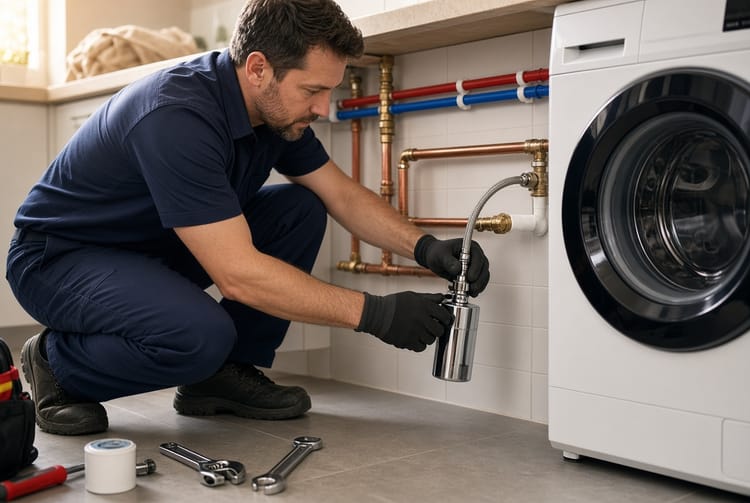
During replacement, shut off the water valves, disconnect the old hoses, and inspect the shut-off valves themselves for proper operation. Clean the connection points thoroughly before installing the new stainless steel braided hoses. Hand-tighten the fittings, then give a final quarter-turn with a wrench—never overtighten. Turn the water back on and check carefully for leaks while the machine runs a short cycle.
Professional installation guarantees correct torque, proper routing, and verification that the shut-off valves function correctly. Many homeowners prefer this option for peace of mind, especially when the laundry area is tight or the valves are older.
Additional Protective Steps for Complete Peace of Mind
Beyond hose replacement, several complementary practices further reduce risk. Install automatic water shut-off valves that detect excess flow and stop water delivery within seconds of a rupture. Place a water-sensing alarm on the floor behind the washing machine to provide immediate audible warning of any leak. Ensure the laundry floor has a slight slope toward a floor drain if possible, and keep the area clear of storage that could hide early moisture.
Inspect the entire water supply path once a year. Confirm that shut-off valves turn freely and that no corrosion exists on the metal ends of the hoses. If the washing machine vibrates excessively during spin cycles, level the appliance and check the shipping bolts to reduce stress on the connections.
These measures work together with regular hose replacement to create layered protection. The combination makes a burst hose flood extremely unlikely.
The Real Cost of Waiting Versus Acting Now
A single burst hose event can produce repair bills ranging from several thousand dollars for floor and wall restoration to tens of thousands when mold remediation and personal property loss are included. Insurance deductibles and potential rate increases add further expense. In contrast, a pair of quality stainless steel braided hoses costs far less than a typical deductible, and professional installation remains modest.
The emotional cost is harder to quantify. Discovering a flooded laundry room after a weekend away creates stress, disruption, and loss of irreplaceable items. Preventing that scenario requires only a few minutes of attention every five years.
Homeowners who adopt the five-year replacement rule report complete confidence in their laundry area. They no longer worry about hidden rubber hoses failing overnight. That peace of mind is the true value of proactive maintenance.
Taking Action Today Protects Your Home Tomorrow
The evidence is clear. Rubber washing machine supply hoses deteriorate with age, constant pressure, and incidental damage. Visible signs such as cracking, bulging, and water staining provide early warnings, yet the safest course is scheduled replacement before those signs appear. Stainless steel braided hoses installed every five years eliminate the primary cause of burst hose floods.
Do not wait for the first drip or the first bulge. Examine your current hoses this week. If they are rubber and more than five years old, or if any warning signs exist, replace them immediately. The process is straightforward, the materials are readily available, and the protection is permanent.
Replace washing machine hoses before they burst. Professional installation ensures the job is completed correctly the first time. Your floors, walls, and peace of mind will thank you.
Protect Your Home from Burst Supply Hoses – Call Now!