The Vulture Roost Problem: Managing Large Bird Colonies on Properties
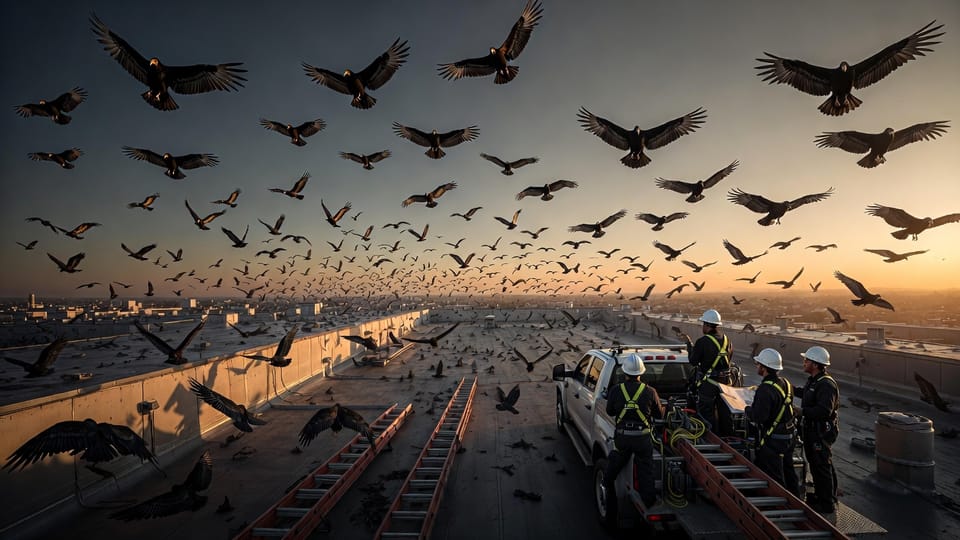
Large bird colonies can turn a peaceful commercial or residential property into a challenging environment almost overnight. When vultures choose rooftops, chimneys, or nearby trees as nightly roosts, the sheer number of birds creates visible and hidden issues that demand expert attention. At our wildlife removal service, we specialize in resolving the vulture roost problem safely, legally, and permanently.
Protect Your Property from Bird Colonies – Call Specialists
These intelligent scavengers provide an important ecological service in nature, yet their presence on human structures requires careful management. With the right approach, property owners can reclaim their space without harm to the birds or risk to compliance. This guide explores why vultures gather, the real damage they cause, and proven humane dispersal techniques that deliver lasting results.
Why Vultures Gather in Large Colonies: Roosting Behavior and Thermals
Vultures are highly social and seek safety in numbers. Both turkey vultures and black vultures prefer elevated perches that offer protection from ground predators and easy access to rising warm air currents known as thermals. These invisible columns of heated air allow the birds to soar with minimal energy, making rooftops, water towers, and tall commercial buildings ideal locations.
At dusk, dozens or even hundreds converge because roosting together improves vigilance against threats and helps regulate body temperature during cooler nights. Urban and suburban expansion has reduced natural tall-tree options, pushing colonies toward man-made structures. Once a group establishes a routine, the same site can be used for months or years unless actively disrupted.
Understanding this behavior is the first step toward effective control. Vultures are not aggressive toward humans, but their predictable nightly return creates the large bird colony challenge many property managers face. Our specialists assess wind patterns, sun exposure, and surrounding food sources to pinpoint exactly why a specific roof has become a preferred roost.
The Hidden Risks and Property Damage from Vulture Roosts
Left unchecked, a vulture roost quickly becomes more than an eyesore. The most immediate and costly issue is the accumulation of acidic droppings. Vulture feces contain high levels of uric acid that etch paint, corrode metal roofing, ruin HVAC units, and damage vehicles parked below. Gutters clog, creating water backup and structural leaks that escalate repair bills into the thousands.
Beyond physical damage, the constant noise of flapping wings and occasional regurgitation of undigested material creates unpleasant odors that affect tenant satisfaction and business operations. Slip hazards on walkways increase liability concerns for commercial properties. While vultures themselves are remarkably clean birds thanks to their immune systems, the sheer volume of waste can attract insects and secondary pests.
Health and safety risks are another serious consideration. Property owners often worry about disease transmission, and while vultures are not primary vectors, the environment they create can harbor bacteria. Employees and visitors avoid areas beneath roosts, reducing usable space and impacting productivity. These cumulative effects turn a manageable wildlife situation into a pressing operational problem that affects both aesthetics and bottom-line costs.
Bold warning: Ignoring a growing colony only amplifies every risk. Early intervention prevents small groups from becoming established mega-roosts that are far harder to resolve.
Legal Protections: Why Vultures Cannot Be Harmed Without Proper Permits
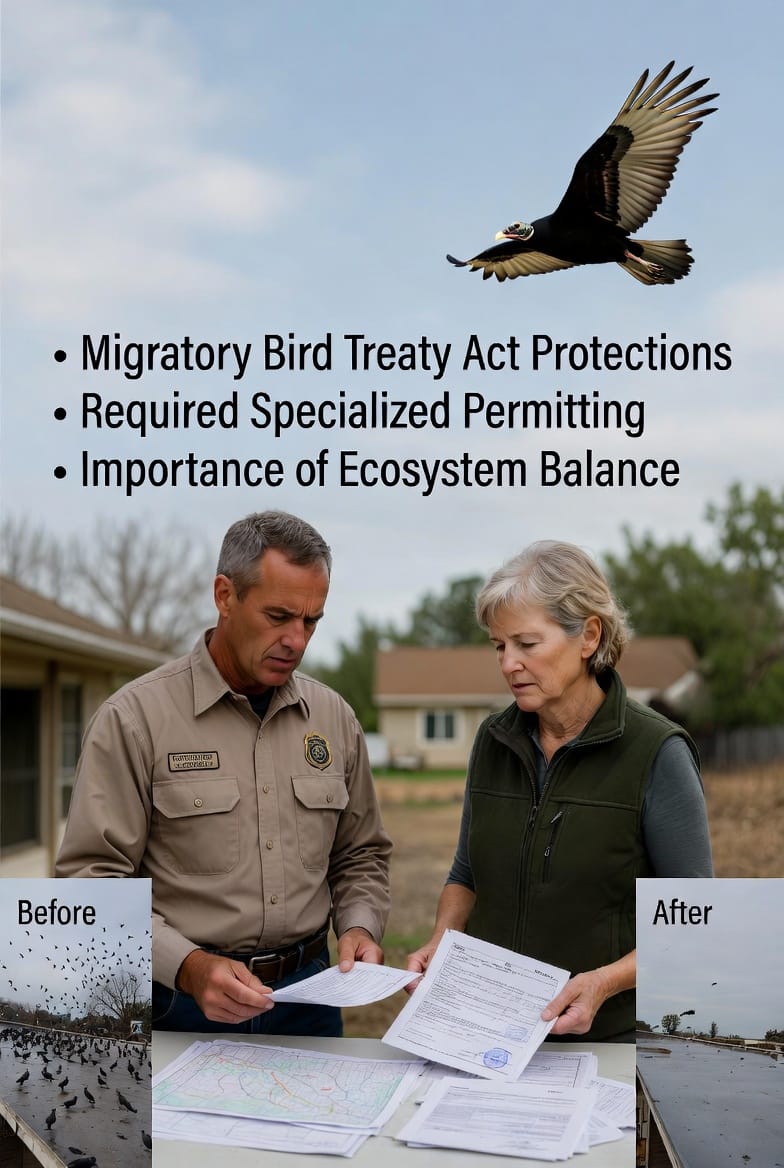
Vultures are protected under federal law, and understanding these regulations is essential for any successful management plan. The Migratory Bird Treaty Act makes it illegal to kill, injure, or disturb these birds or their nests without specific authorization from the U.S. Fish and Wildlife Service. Violations carry significant fines and potential legal consequences for property owners.
This protection exists because vultures play a critical role in the ecosystem as nature’s cleanup crew. Their presence helps prevent the spread of disease by consuming carrion. Responsible wildlife removal services never recommend or perform unauthorized lethal control. Instead, we focus exclusively on humane dispersal and habitat modification that complies fully with all regulations.
Our team holds the necessary permits and works directly with regulatory authorities when required. This legal expertise gives property owners complete peace of mind that every step of the process stays above board. Managing protected bird species correctly protects both the environment and your business from unnecessary liability.
Humane and Effective Dispersal Methods That Actually Work
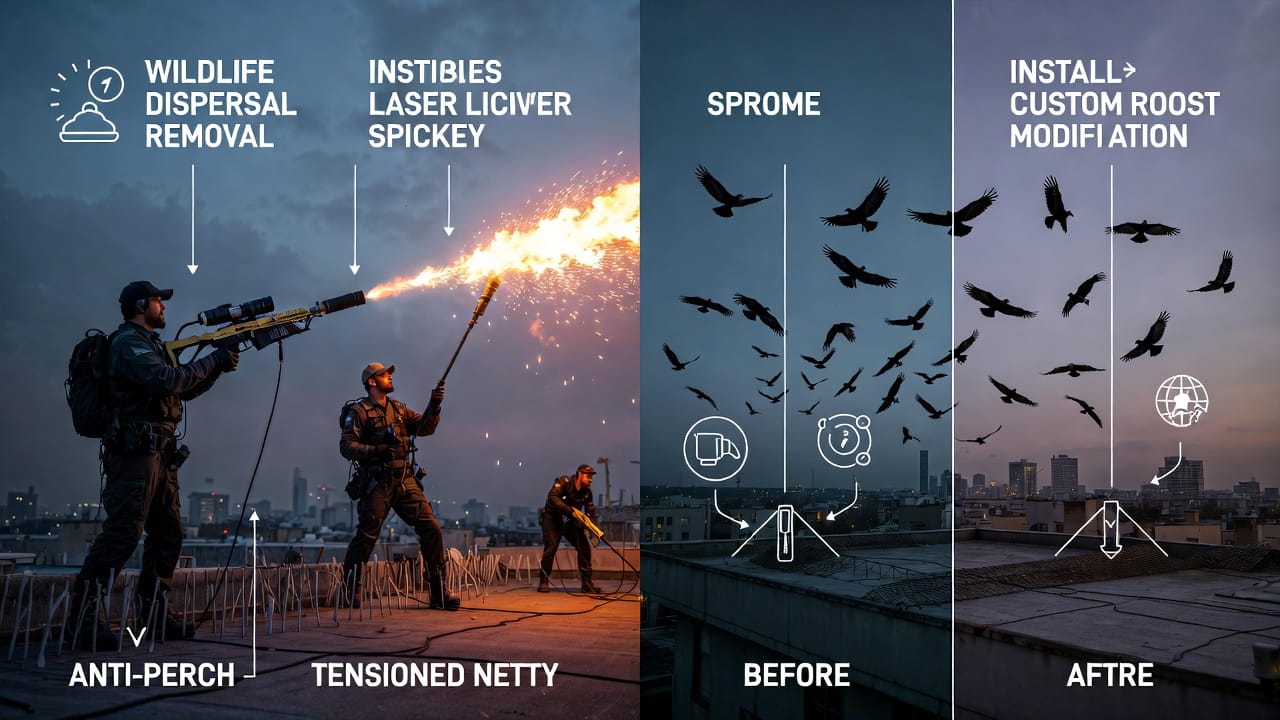
Successful vulture removal relies on a combination of harassment techniques and habitat modification rather than any single quick fix. Our proven, multi-layered approach encourages the colony to relocate voluntarily while making the original site permanently unattractive.
Harassment Techniques for Immediate Dispersal
Pyrotechnics are among the most reliable tools for breaking established roosting patterns. These specialized, low-impact exploding shells create sudden noise and light flashes that mimic predator activity without harming the birds. Deployed at precise dusk and dawn windows when vultures are most active, pyrotechnics quickly condition the flock to seek safer locations.
Laser lights offer a silent, targeted solution especially effective for nighttime roosts. High-powered green or red lasers sweep across perches in controlled patterns that birds perceive as threats, prompting them to move on. Because vultures have excellent low-light vision, lasers work without disturbing nearby residents or businesses.
Additional harassment options include recorded distress calls broadcast on timers, effigies of predators positioned strategically, and occasional drone flights. The key is variety and consistency. Rotating techniques prevents the colony from habituating to any one method. Our technicians monitor response nightly and adjust the program in real time for maximum effectiveness.
Habitat Modification for Long-Term Prevention
Harassment alone provides short-term relief; lasting success requires changing the environment itself. Roost modifications include installing stainless-steel spikes, tensioned wires, and custom netting that eliminate comfortable perching spots without altering building appearance. These physical barriers are discreet yet highly effective.
Tree pruning and branch removal around the property reduce attractive landing zones. Eliminating nearby food sources—such as unsecured trash, compost, or animal carcasses—removes the incentive for vultures to return. In some cases, reflective tapes or shiny deterrents add an extra visual layer that discourages settling.
Every modification project is custom-designed after thorough site assessment. Our specialists use weather-resistant materials guaranteed to withstand years of exposure while maintaining full compliance with building codes and aesthetic standards. Property owners appreciate solutions that blend seamlessly with existing architecture.
Step-by-Step Professional Process for Complete Resolution
When you contact our bird control specialists, the process begins with a detailed on-site inspection. We identify primary and secondary roost locations, map flight patterns, and evaluate surrounding attractants. This data drives a tailored management plan delivered within 48 hours.
Implementation follows in coordinated phases. Initial harassment breaks the nightly routine while modifications are installed concurrently. Follow-up visits over the next two to four weeks ensure the colony has fully relocated and no new birds have discovered the site. Final documentation includes before-and-after photos plus maintenance recommendations that keep your property clear long-term.
Throughout every phase, safety remains paramount. All technicians are certified, insured, and trained in both wildlife biology and regulatory compliance. You receive regular progress reports so you always know exactly what is happening on your property.
Preventing Future Vulture Colonies: Proactive Strategies
Once the current large bird colony has been dispersed, prevention becomes the focus. Simple changes yield powerful results: secure all waste containers, maintain clean loading docks, and schedule regular roof inspections. Installing preventive spikes during new construction or renovations eliminates future headaches entirely.
Seasonal monitoring is also wise. Vultures may test sites again during migration periods. Early detection allows rapid response before a new roost becomes established. Many commercial clients include our annual maintenance program, which provides scheduled visits and immediate service if any birds return.
Why Property Owners Trust Expert Wildlife Removal Services
DIY attempts often fail because they lack the right equipment, timing, and legal knowledge. Professional teams deliver faster, safer, and more permanent outcomes while protecting you from costly mistakes or regulatory violations. Our track record includes hundreds of successfully resolved vulture roost problems across commercial, industrial, and residential properties.
Clients consistently report immediate relief from odors and droppings, restored usable space, and complete peace of mind knowing the solution is fully legal and humane. We stand behind every project with clear guarantees and responsive follow-up support.
Common Questions About Vulture Management
How long does dispersal take? Most colonies respond within two weeks when using combined harassment and modification. Larger or long-established groups may require up to four weeks.
Will the birds simply move to a neighboring property? Strategic planning and simultaneous neighbor coordination (when possible) minimize this risk. Our methods encourage relocation to natural habitats rather than adjacent structures.
Are the methods safe for pets and people? Absolutely. All techniques are deployed by trained professionals using industry-approved equipment that meets or exceeds safety standards.
What if vultures are nesting rather than just roosting? Nesting triggers additional federal protections and permitting requirements. Our team handles these cases with specialized protocols that remain fully compliant.
Final Thoughts and Next Steps
The vulture roost problem is manageable when handled correctly. By combining scientific understanding of bird behavior, proven humane techniques, and strict legal compliance, property owners can eliminate the nuisance while respecting these ecologically valuable birds.
Do not let a large bird colony continue damaging your investment or disrupting operations. Manage protected bird species legally and effectively today.
Our experienced team is ready to restore your property to its clean, professional condition—safely, legally, and with complete confidence.
Clear Your Roof of Vultures Humanely – Call Today!