The Turkey Vulture Roost: Managing Protected Birds on Property
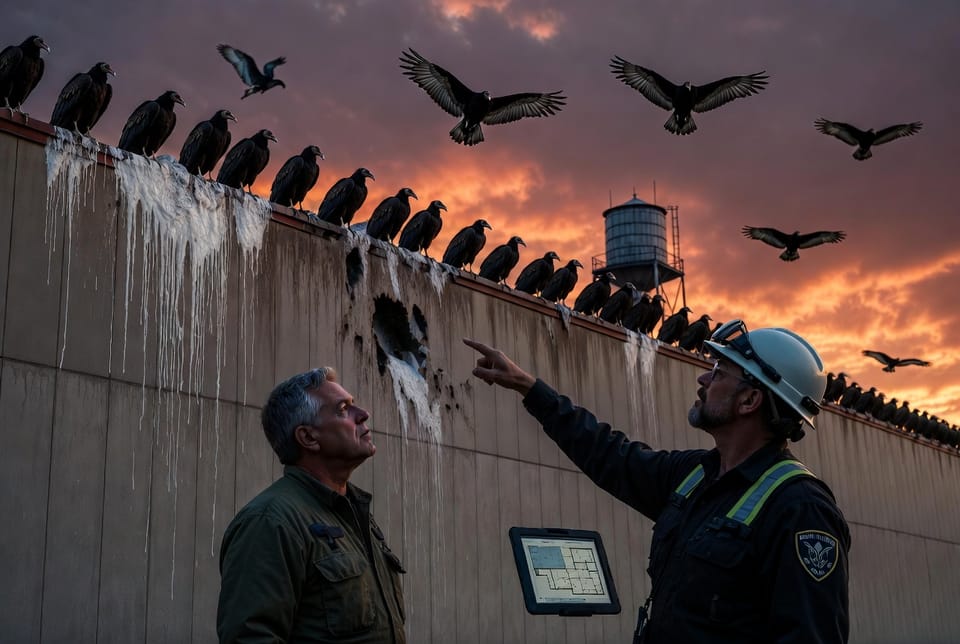
When large flocks of turkey vultures suddenly claim your commercial rooftop, warehouse, or water tower, the sight can be unsettling. These majestic yet misunderstood birds gather in impressive numbers, turning a routine property into an unexpected wildlife hotspot. At first glance, their presence may seem harmless, but left unmanaged, turkey vulture roosts create costly corrosion, persistent odors, and structural headaches.
Protect Your Roof from Vultures – Call Today!
The good news? You don’t have to face this unusual issue alone. With the right knowledge and professional guidance, managing protected birds on property is straightforward, fully legal, and completely humane. Our avian specialists have helped hundreds of Texas property owners resolve turkey vulture problems quickly and permanently—without harm to the birds or risk to your business.
In this guide, we’ll walk you through turkey vulture behavior, the real risks they pose, and proven dispersal strategies that respect federal protections while restoring your property to pristine condition.
Understanding Turkey Vulture Behavior
Turkey vultures (Cathartes aura) are large scavenging birds protected under the Migratory Bird Treaty Act. They are not aggressive toward humans or pets, yet they roost in large groups—sometimes dozens or even hundreds—because safety in numbers helps them detect food sources and thermoregulate during cooler evenings.
They prefer elevated, open perches such as rooftops, water towers, chimneys, and mature trees near open fields. Once a roost is established, the same site is often reused year after year unless actively and humanely discouraged. Their keen sense of smell and excellent eyesight make them highly efficient at locating carrion, which explains why they appear in urban and suburban areas more frequently than many realize.
Because they are a protected species, any management plan must follow strict federal and state guidelines. Attempting DIY solutions that cause injury or death can result in hefty fines and legal complications. That’s why partnering with experienced wildlife removal professionals is the smartest and safest route.
The Hidden Dangers: Property Damage from Vulture Droppings
The most immediate concern with an active turkey vulture roost is the sheer volume of droppings. Each bird can produce up to two pounds of waste per day, and in a large roost this quickly adds up to hundreds of pounds of acidic material.
Turkey vulture droppings contain high concentrations of uric acid, making them exceptionally corrosive. Over weeks or months, the droppings eat away at:
- Metal roofing and gutters
- HVAC units and electrical conduits
- Painted surfaces and sealants
- Concrete and masonry
Beyond structural damage, the buildup creates slippery walkways, unpleasant odors, and potential health concerns from bacteria. Many property managers only notice the problem when repair bills arrive or when tenants start complaining.
Early intervention prevents thousands of dollars in restorative work and keeps your insurance premiums stable. Professional vulture dispersal stops the roost before permanent damage occurs.
Why Legal Compliance Matters for Protected Birds
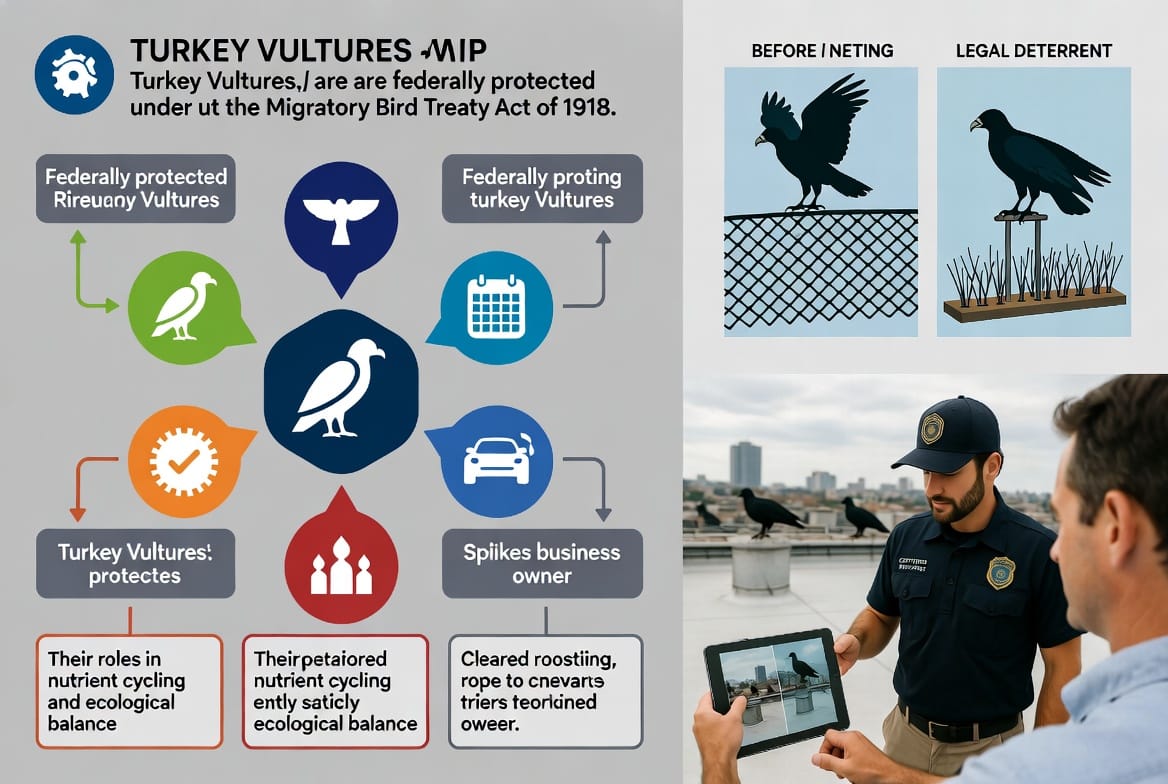
Turkey vultures are safeguarded by federal law precisely because they play a vital ecological role as nature’s cleanup crew. Disrupting a roost the wrong way—through trapping, poisoning, or physical harm—is not only ineffective long-term but also illegal.
Responsible wildlife removal companies operate with the proper permits and training to ensure every action complies with the Migratory Bird Treaty Act and Texas state regulations. This legal framework protects both the birds and your liability.
By choosing humane, science-based methods, you avoid costly penalties while demonstrating environmental stewardship—an increasingly important factor for commercial properties, HOAs, and corporate reputations.
Humane and Effective Dispersal Strategies That Deliver Results
The key to successful turkey vulture management lies in consistent, multi-layered dispersal that makes the roost site unattractive without harming the birds. Here are the proven techniques our avian specialists rely on:
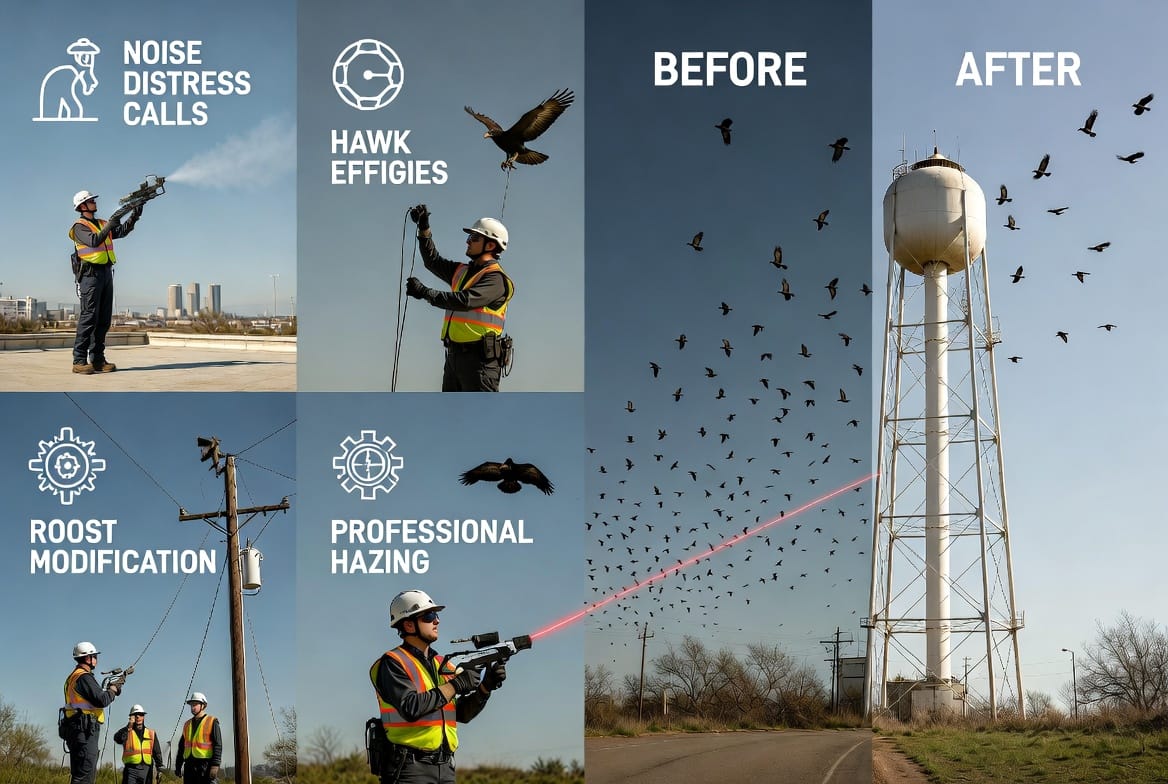
- Pyrotechnics and Propane Cannons: Short, controlled bursts of noise and light mimic predator activity and encourage the flock to relocate. Used responsibly and rotated regularly, these tools break the roosting habit within days.
- Hawk Effigies and Visual Deterrents: Realistic predator models placed strategically on rooftops and towers create the illusion of danger. When moved frequently, vultures quickly lose interest in the site.
- Roost Modification and Habitat Alteration: Installing anti-roosting spikes, bird wire, or slope panels prevents birds from landing comfortably. Trimming nearby vegetation and adjusting lighting further reduces the appeal of the location.
- Noise Distress Calls: Recorded vulture distress vocalizations broadcast at dawn and dusk signal to the flock that the area is unsafe, prompting them to seek alternative roosting grounds.
- Professional Hazing: Trained technicians use lasers, drones (where permitted), and physical presence to gently encourage the birds to move on. This hands-on approach is especially effective for established roosts.
Each method is selected based on your property layout, the size of the roost, and seasonal patterns. A customized plan ensures fast results while remaining 100% compliant and humane.
Partnering with Avian Specialists for Long-Term Solutions
While some property owners attempt temporary fixes, only professional wildlife removal teams deliver lasting success. Our specialists arrive with the right equipment, deep knowledge of local vulture patterns, and a commitment to minimal disruption of your daily operations.
We begin with a thorough site assessment, followed by a tailored dispersal plan and follow-up monitoring. Many clients see their roost disappear within 7–14 days, with zero recurrence when maintenance protocols are followed.
Real-World Success: A Dallas-Area Warehouse Story
A 120,000-square-foot distribution center near Dallas faced a persistent turkey vulture roost on its main water tower and loading dock roof. Corrosion was beginning to affect HVAC efficiency, and employee complaints were rising.
Within 48 hours of our first visit, the team deployed a combination of habitat modification, distress calls, and targeted hazing. Hawk effigies were installed and rotated weekly. Ten days later, the roost had completely relocated. Six months on, the property remains vulture-free, saving the owner over $18,000 in projected repair costs.
Stories like this remind us that managing protected birds on property is not only possible—it’s straightforward with expert help.
Manage Protected Birds Legally and Humanely
Turkey vulture roosts are an unusual but solvable challenge. By understanding their behavior, respecting their protected status, and applying proven humane methods, you protect your property, your bottom line, and the environment.
Don’t wait for damage to escalate. Manage protected birds legally and humanely today. Your rooftop—and your peace of mind—will thank you.
Clear Vulture Roosts Legally & Safely – Call Experts!