The Opossum Den: Managing Marsupials Under Decks and Sheds
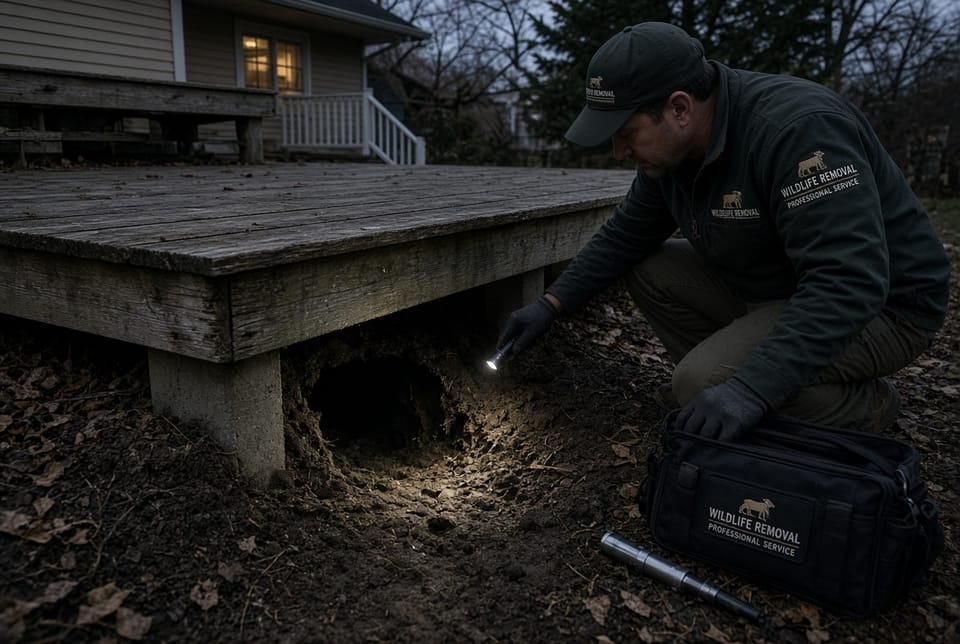
Homeowners across suburban and rural areas often discover unexpected visitors taking up residence beneath outdoor structures. When opossums choose the sheltered space under decks or sheds as their temporary home, the situation can feel unsettling. Yet these marsupials are among the most misunderstood wildlife species. Understanding their habits, recognizing early indicators, and applying proven humane removal methods allows property owners to resolve the issue calmly and effectively while preserving the ecological benefits these animals provide.
Clear Opossum Dens Safely Today – Call Our Specialists!
This comprehensive guide walks through every practical aspect of dealing with an opossum den under decks and sheds. From behavior patterns to step-by-step resolution, the focus remains on safety, prevention, and professional-grade results that restore peace of mind.
Understanding Opossum Behavior Around Structures
Opossums are nocturnal marsupials, meaning they are most active after sunset. During daylight hours they seek quiet, dark, protected locations to rest. The space beneath a raised deck or the crawl area of a shed offers ideal conditions: protection from weather, limited human disturbance, and easy access to nearby food sources such as insects, fallen fruit, or pet food left outdoors.
These animals do not dig extensive burrows the way some rodents do. Instead, they utilize existing voids and natural openings. A single adult may occupy a den for several days or weeks before moving on, while a female with young may remain longer until the joeys are mobile. Opossums are solitary by nature outside of breeding and rearing periods, so large colonies are rare under residential structures.
Their presence under decks and sheds is driven by opportunity rather than aggression. They prefer to avoid confrontation and will typically flee when discovered. This low-conflict temperament makes them excellent candidates for humane wildlife management rather than lethal approaches.
Ecological Benefits That Deserve Recognition
Before focusing solely on removal, it is important to acknowledge the valuable role opossums play in local ecosystems. These marsupials consume large quantities of ticks, including those that carry Lyme disease. A single opossum can eliminate thousands of ticks in a season through grooming and foraging. They also feed on snails, slugs, cockroaches, and other common garden pests, providing free natural pest control.
Their diet includes carrion, which helps keep yards cleaner, and they rarely damage structures themselves. Unlike raccoons or squirrels, opossums do not typically chew wiring or insulation. Recognizing these benefits supports a balanced approach: manage the den when it becomes a nuisance, yet avoid unnecessary harm to an animal that contributes positively to the surrounding environment.
Clear Signs of an Active Opossum Den
Early detection prevents minor situations from becoming ongoing concerns. Homeowners should watch for several reliable indicators that an opossum den exists under a deck or shed.
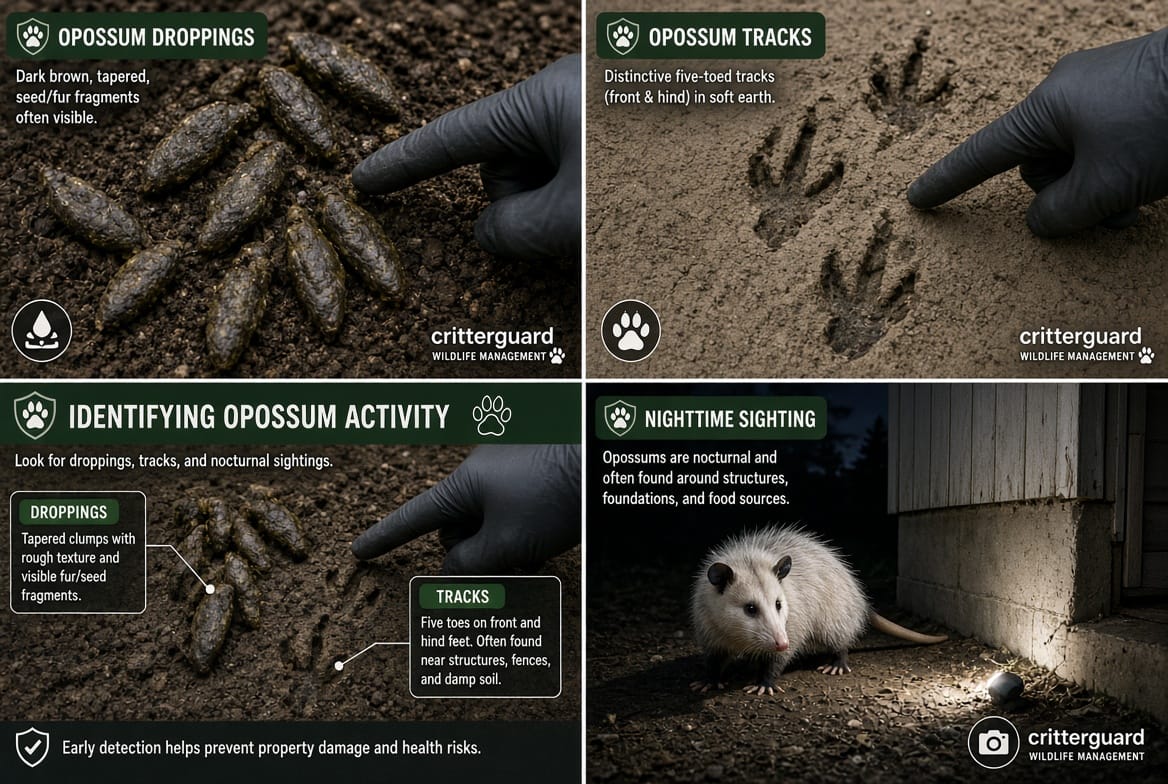
- Droppings: Opossum scat is typically dark, cylindrical, and roughly one to two inches long. It often contains visible seeds, insect parts, or undigested plant material. Fresh droppings appear moist and may be found near entry points or along travel paths.
- Tracks: Look for distinctive five-toed footprints in soft soil or dust. The hind feet show an opposable thumb-like toe that points outward, creating a unique print pattern unlike those of cats, dogs, or raccoons.
- Sightings: Direct observation at dusk or after dark is common. An opossum may be seen emerging from beneath the structure or moving slowly across the yard.
- Additional clues include faint musky odors, rustling sounds under the decking at night, or disturbed soil and leaf piles near foundation edges.
Regular visual inspections, especially after rain when tracks are clearer, help confirm activity before the den becomes established.
Potential Risks of Leaving a Den Unaddressed
While opossums are not aggressive, an active den under a deck or shed can still create practical problems. Accumulated droppings may introduce bacteria or attract secondary insects. Over time, the repeated traffic can compact soil or create secondary pathways that other wildlife might exploit. In rare cases, a female raising young may become more defensive if cornered, although this is uncommon.
Pet owners sometimes worry about interactions. Opossums generally avoid dogs and cats, yet curious pets can stress the animal or themselves. Structural concerns are minimal because opossums do not chew or dig aggressively, yet repeated use of the same entry can enlarge openings that later admit unwanted moisture or other species.
Addressing the situation promptly with humane methods eliminates these secondary risks while respecting the animal’s beneficial role.
Step-by-Step Humane Removal Process
Professional and responsible removal prioritizes the welfare of the opossum and the long-term security of the property. The process follows a clear sequence that minimizes stress and prevents re-entry.
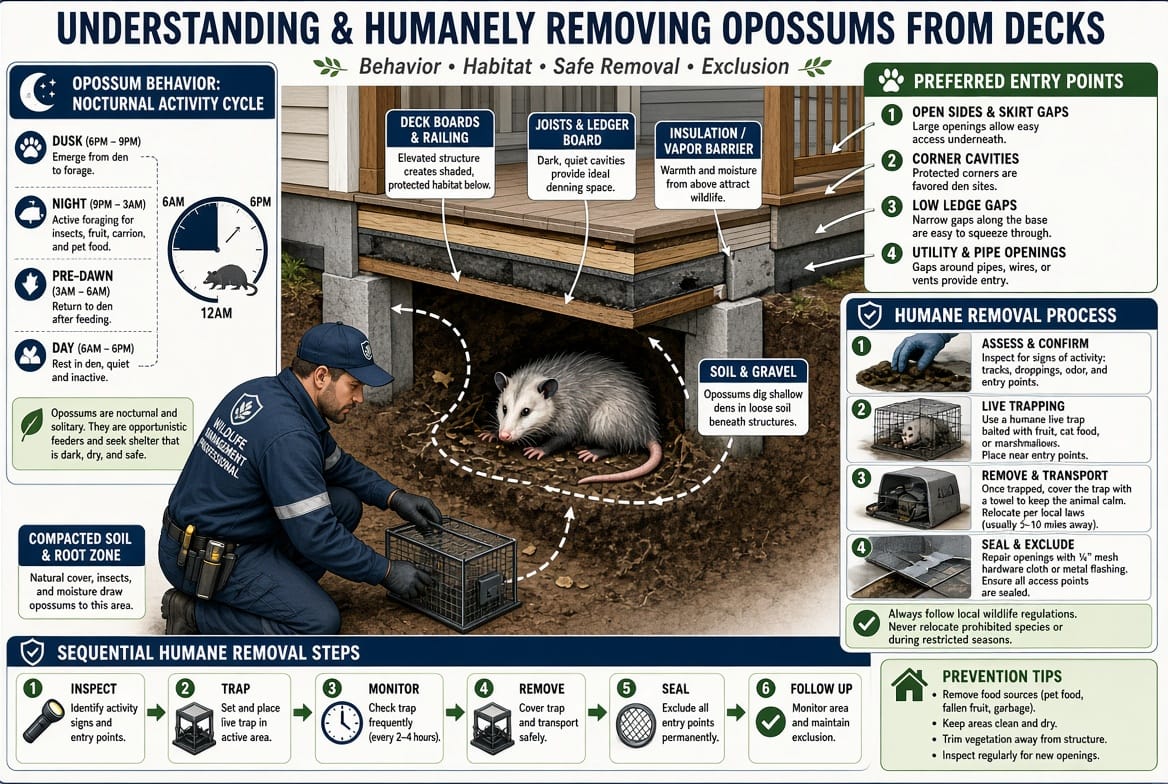
First, a thorough inspection identifies all entry points and confirms whether young are present. If joeys are inside, timing is adjusted so the family can be relocated together when possible.
Next, live trapping is employed using appropriately sized cage traps baited with appealing yet non-harmful attractants such as fruit or specialized wildlife bait. Traps are placed near primary travel routes and checked frequently to ensure the animal is not held longer than necessary.
Once captured, the opossum is transported a suitable distance in accordance with local regulations and released into appropriate habitat. Immediately afterward, every access point is sealed using durable materials such as hardware cloth, lattice panels, or custom barriers that allow ventilation while blocking re-entry. One-way exclusion doors can be installed temporarily if activity is ongoing, permitting the animal to leave but not return.
Finally, the area beneath the deck or shed is cleaned of debris and droppings to remove scent markers that might attract future visitors. Habitat modification—such as elevating stored items, securing trash, and removing outdoor pet food—further reduces appeal.
This sequence ensures the problem is resolved at the source rather than temporarily displaced.
Prevention Strategies for Long-Term Peace of Mind
After successful removal, simple ongoing practices keep structures free of new dens. Regularly inspect the perimeter of decks and sheds for new gaps. Install solid skirting or lattice with openings no larger than one-quarter inch. Keep vegetation trimmed away from foundation edges so animals cannot use plant cover as a bridge.
Eliminate easy food sources by bringing pet dishes indoors at night and using secure compost bins. Motion-activated lighting can discourage nocturnal visitors without harming them. These low-effort measures create an environment that is far less attractive to opportunistic wildlife.
When Professional Assistance Becomes Essential
Many homeowners successfully handle early-stage situations with careful observation and basic exclusion. However, dens that include young, multiple entry points, or difficult access often benefit from trained specialists. Professionals possess the equipment, permits, and experience to complete the process efficiently and in full compliance with wildlife regulations.
Attempting removal without proper knowledge can prolong the issue or create unnecessary stress for both the animal and the household. Specialists also provide warranties on exclusion work, giving homeowners lasting confidence that the problem will not recur.
Restoring Comfort and Confidence
An opossum den under a deck or shed is a manageable wildlife situation, not a crisis. By understanding the animal’s nocturnal habits, recognizing clear signs such as droppings, tracks, and sightings, and applying humane removal techniques centered on live trapping and thorough sealing, property owners regain control quickly and responsibly.
The same animals that occasionally seek shelter under outdoor structures also contribute valuable pest-control services throughout the year. Balancing respect for that ecological role with practical property protection produces the best long-term outcome.
Protect Your Home from Opossum Dens – Call for Expert Help!