The Cottontail Rabbit Nest: Protecting Baby Rabbits in Your Yard

Spring brings new life to your lawn — including cottontail rabbit nests. Discovering a hidden nest of tiny, helpless baby rabbits (called kittens) is a common and heartwarming experience for homeowners. While these nests can raise concerns about your yard and pets, they are temporary and pose no long-term threat when handled correctly.
Protect Baby Rabbits in Your Yard – Call Now!
At our professional wildlife service, we believe in humane coexistence whenever possible. Understanding cottontail behavior empowers you to protect these wild babies while keeping your property safe and beautiful. This guide covers everything you need to know about cottontail rabbit nests and practical steps for peaceful protection.
Understanding Cottontail Rabbit Nesting Behavior
Cottontail rabbits (Sylvilagus floridanus) are solitary nesters that prefer quiet, undisturbed areas. Mother rabbits create shallow depressions in the grass or under low shrubs, usually only 3–4 inches deep. They line the nest with soft grass and their own fur, then cover it with a blanket of fur and vegetation that perfectly camouflages the location.
The mother visits the nest only twice a day — once at dawn and once at dusk — to nurse the babies. This minimal presence helps protect the litter from predators. Baby rabbits stay in the nest for about 3–4 weeks before venturing out on their own.
Key fact: Cottontail nests are seasonal and temporary. They are most common from March through September, peaking in spring and early summer.
Recognizing the Signs of a Rabbit Nest in Your Yard
The most reliable indicator is a circular patch of fur or disturbed grass that looks slightly mounded. You might notice:
- A small depression covered with loose fur and dried grass
- Tiny fur-covered babies (eyes closed for the first week)
- No adult rabbit in sight (normal behavior)
- Occasional small round droppings nearby
Important safety note: Never disturb the nest if you see these signs. The babies are extremely fragile and rely on the mother’s care.
Why Coexistence Is the Best Approach
Removing a nest containing baby rabbits is rarely necessary and can be illegal in many areas without proper permits. Baby rabbits have a high survival rate when left undisturbed. Our wildlife experts recommend protection over removal for active nests.
Practical Steps to Protect the Nest
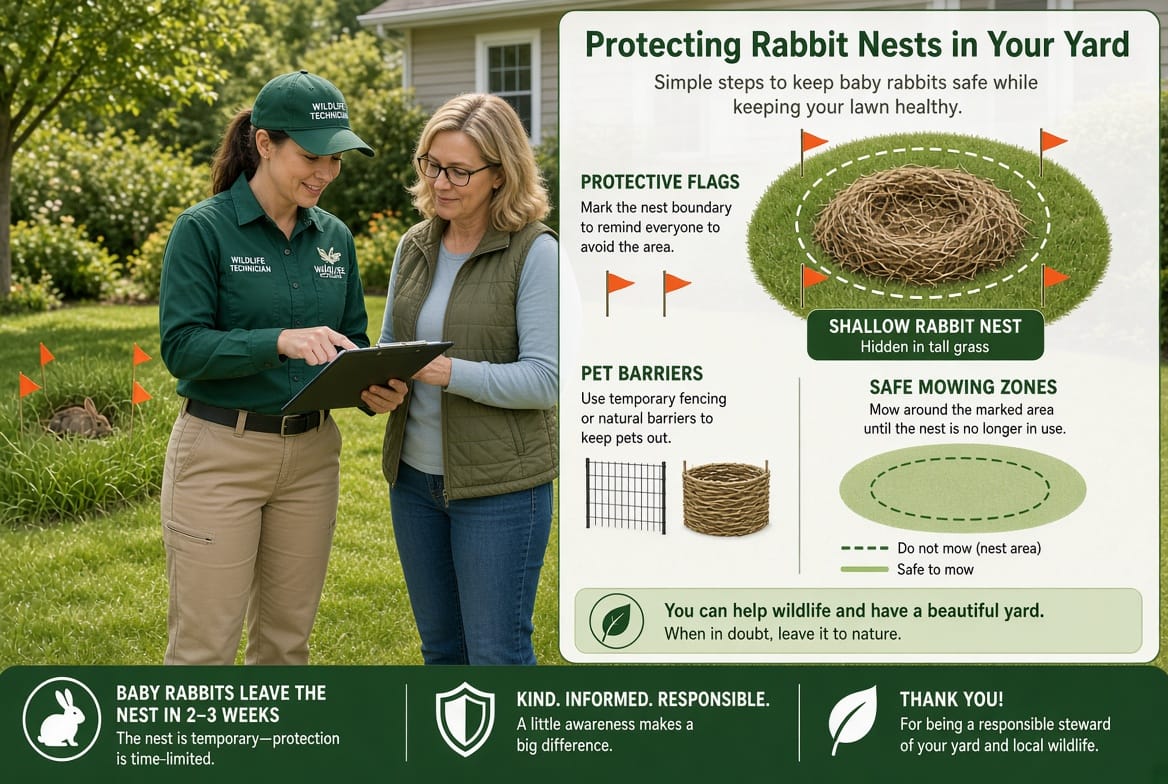
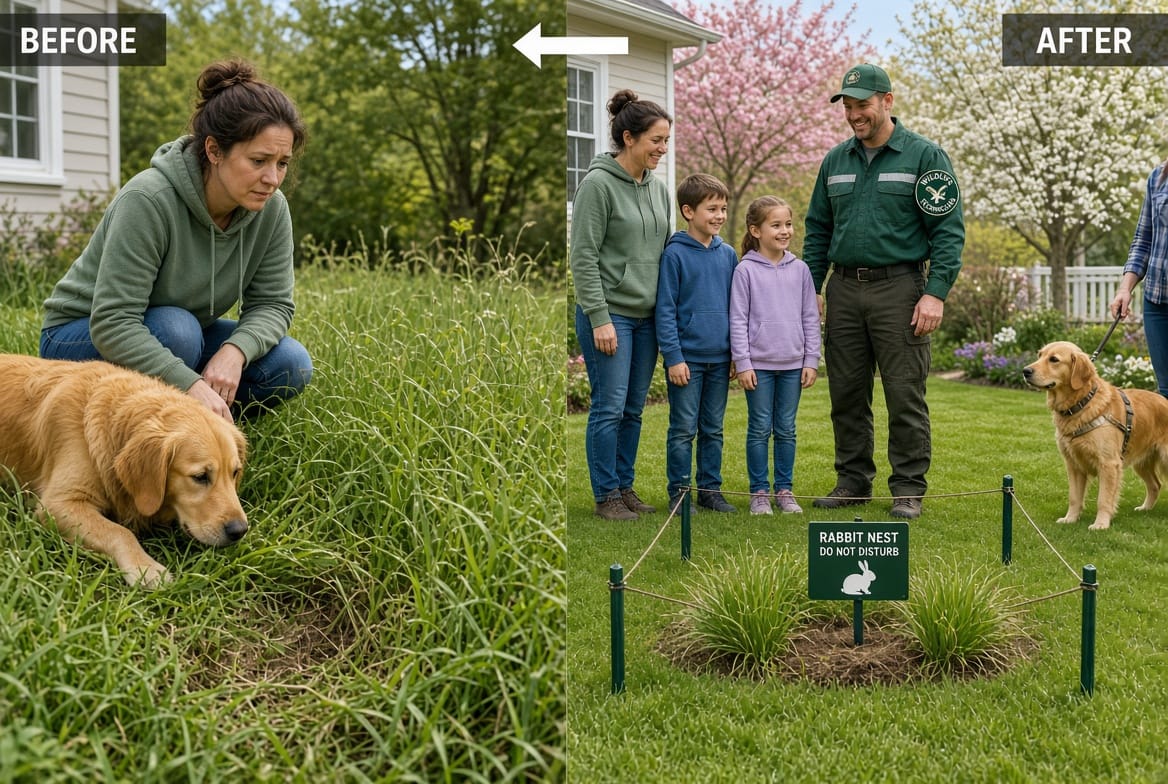
- Mark the area clearly. Place small, visible flags or stakes around the nest perimeter so family members and landscapers know to avoid it.
- Keep pets away. Confine dogs and cats indoors or to other parts of the yard until the babies have left (usually 3–4 weeks). Even well-trained pets can accidentally disturb the nest.
- Mow carefully. Leave the immediate nest area untouched. Mow around it at a higher blade setting and avoid using string trimmers near the marked zone.
- Limit foot traffic. Educate children to respect the marked area and avoid playing there.
- Monitor from a distance. Use binoculars or a trail camera if you want to observe without disturbing the family.
These simple actions allow the babies to grow safely while your yard remains healthy.
Common Concerns Homeowners Have
Many homeowners worry that rabbits will damage gardens or attract other wildlife. In reality, cottontail rabbits cause minimal landscape damage compared to larger pests. They prefer tender new growth but rarely devastate established lawns or gardens when natural food sources are plentiful.
If you have an active nest:
- Do not attempt to relocate the babies yourself. Moving them usually results in the mother abandoning them.
- Avoid using repellents or chemicals near the nest — these can harm the rabbits and other beneficial wildlife.
- Wait patiently. The nest will naturally disperse within a few weeks as the young rabbits become independent.
When Professional Wildlife Advice Makes Sense
While most cottontail nests resolve naturally, certain situations benefit from expert guidance:
- Nest located in high-traffic areas near doorways or play zones
- Evidence of injury to the mother or babies
- Repeated nesting in the same problematic spot
- Concerns about pets or small children
Our team provides humane, on-site assessments and practical solutions tailored to your property. We focus on prevention strategies that discourage future nesting in unwanted areas while respecting wildlife.
Long-Term Prevention Strategies
After the current nest empties, you can reduce future nesting with these proven methods:
- Keep grass moderately short in high-use areas
- Remove dense brush piles and thick ground cover near buildings
- Install physical barriers around vegetable gardens
- Use motion-activated lights or sprinklers in problem spots
These techniques maintain a wildlife-friendly yard without harming beneficial animals.
The Importance of Protecting Native Wildlife
Cottontail rabbits play a vital role in local ecosystems as prey for hawks, owls, foxes, and other predators. Supporting their natural life cycle contributes to biodiversity and a healthy environment around your home.
By choosing coexistence, you teach your family respect for nature while avoiding unnecessary stress for wild animals.
Final Thoughts: Peaceful Coexistence Is Possible
Discovering a cottontail rabbit nest in your yard is a sign of a thriving local ecosystem. With proper marking, pet management, and careful maintenance, you can protect the baby rabbits and enjoy watching nature unfold safely.
Protect wildlife nests on your property. If you need expert advice on handling rabbit nests or any other wildlife situation. We’re here to help you maintain a safe, beautiful yard while respecting the wild neighbors who share it.
Keep Wildlife Safe & Your Yard Peaceful – Call Today