The Pileated Woodpecker Damage: Protecting Trees and Siding
Homeowners across wooded and suburban landscapes often wake to an unexpected sound: a powerful, rhythmic drumming that echoes through the early morning air. That sound frequently belongs to the pileated woodpecker, one of North America’s largest and most impressive woodpeckers. While these striking birds play a vital ecological role, their relentless search for food and nesting sites can create serious structural damage to both living trees and the exterior of homes. Understanding their behavior, recognizing the early signs, and applying proven deterrents allows property owners to protect valuable trees and siding without harming the birds.
Get Woodpecker Damage Fixed Fast – Call Now!
This comprehensive guide delivers clear, authoritative guidance on pileated woodpecker damage, the risks it poses, and the practical steps that restore peace of mind. Every recommendation focuses on humane, effective solutions that safeguard both property and wildlife.
Understanding Pileated Woodpecker Behavior
The pileated woodpecker is a crow-sized bird easily identified by its bold black body, white wing patches, and brilliant red crest. Adults measure 16 to 19 inches in length with a wingspan approaching 30 inches. Their powerful bills and specialized neck muscles enable them to excavate deep cavities in search of carpenter ants, wood-boring beetle larvae, and other insects that live inside decaying or healthy wood.
These birds do not randomly attack surfaces. They target locations where insect activity is highest. Once a productive feeding site is located, a single bird or pair may return repeatedly, enlarging the same holes over days or weeks. In addition to foraging, pileated woodpeckers create large nesting cavities—often 6 to 18 inches deep and roughly rectangular—inside mature trees. When suitable trees are scarce near homes, the birds sometimes transfer the same excavating behavior to wooden siding, fascia boards, and even cedar shakes.
Because the species is protected under the Migratory Bird Treaty Act, any management approach must remain non-lethal and non-destructive to the birds themselves. The goal is always to encourage the woodpeckers to move on while eliminating the underlying attractants that drew them in the first place.
Recognizing the Clear Signs of Damage
Early detection prevents minor pecking from escalating into costly repairs. Property owners should watch for several distinctive indicators:
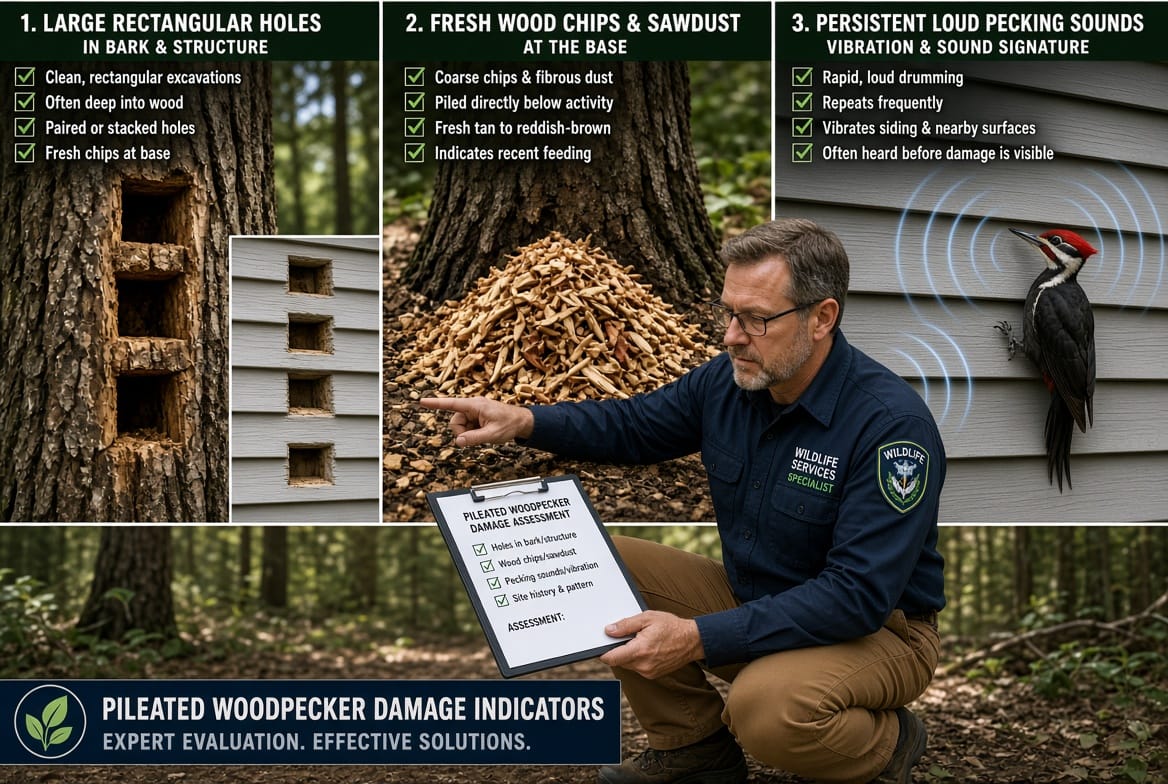
- Large rectangular holes typically 2 to 4 inches wide and several inches deep, often arranged in vertical or slightly irregular patterns.
- Fresh wood chips and coarse sawdust piled directly beneath the excavation sites.
- Persistent pecking sounds—a loud, deliberate drumming that differs from the lighter tapping of smaller woodpecker species.
- Visible insect galleries or ant trails near the damaged areas.
- Multiple holes concentrated on the same tree trunk or section of siding.
These signs appear most frequently on mature hardwoods such as oak, maple, and hickory, as well as on homes with wood, fiber-cement, or composite siding that retains moisture or harbors insects.
The Real Risks to Trees and Home Siding
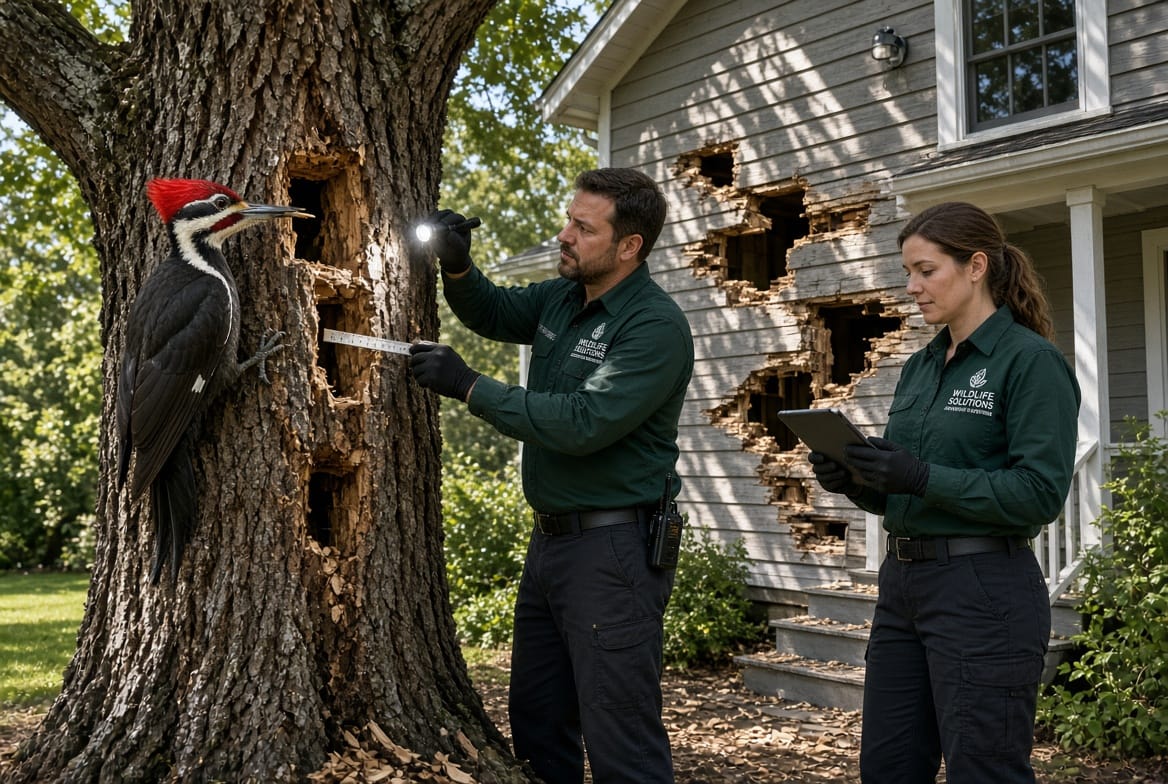
Left unaddressed, pileated woodpecker damage compounds quickly. In living trees, repeated excavation can girdle the trunk, interrupt nutrient flow, and invite secondary fungal infections or additional insect infestation. Large cavities also weaken structural integrity, raising the risk of limb failure during storms.
On homes the consequences are equally serious. Deep holes compromise the weather barrier, allowing rainwater intrusion that leads to rot, mold growth, and eventual structural decay of wall sheathing. Repair costs escalate when moisture damage spreads behind the siding. In addition, the open cavities can attract secondary wildlife such as starlings or squirrels that further enlarge the openings.
The financial impact is measurable. Replacing a single section of premium siding or removing a compromised mature tree often exceeds several thousand dollars—expenses that timely intervention can largely avoid. Equally important is the peace of mind that comes from knowing the property is secure and the birds have been guided to more suitable natural habitat.
Proven Deterrents That Protect Without Harm
Effective management combines exclusion, sensory deterrents, and habitat modification. The most reliable strategies include:
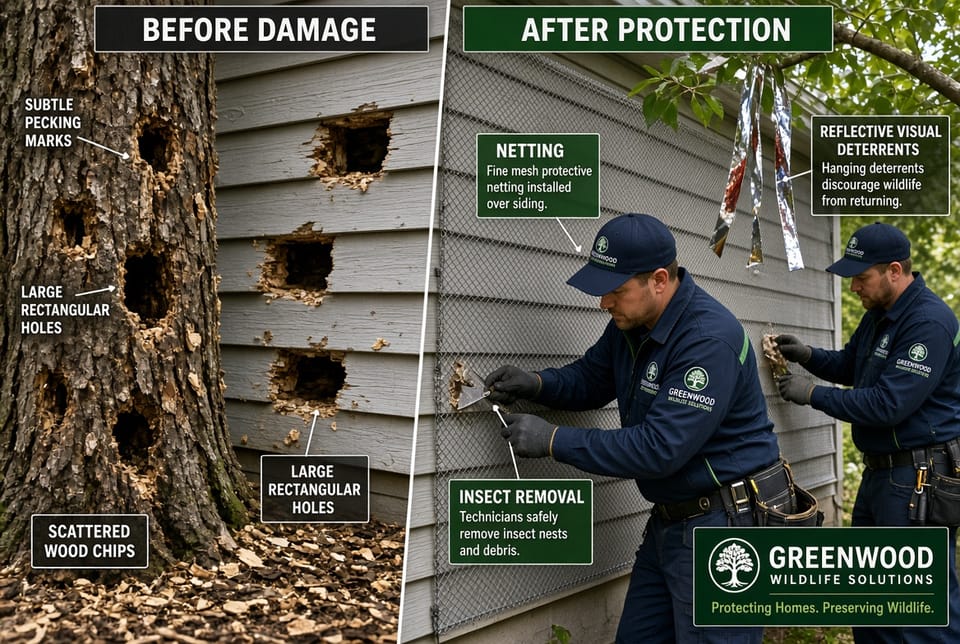
- Physical netting: Heavy-duty polyethylene or polypropylene netting with mesh openings no larger than ¾ inch, stretched taut over vulnerable siding or wrapped around high-value trees. Proper installation leaves a small air gap so the birds cannot reach the surface.
- Visual deterrents: Reflective tape, holographic streamers, predator decoys (especially owl or hawk models), and moving objects that create unpredictable flashes of light. These devices work best when rotated every few days to prevent habituation.
- Insect removal and wood treatment: Professional inspection and elimination of carpenter ant colonies, beetle larvae, and other wood-boring insects removes the primary food source. Treating exterior wood with insecticidal coatings or borate solutions further reduces attractiveness.
- Sound and motion devices: Motion-activated sprinklers or ultrasonic units can supplement visual methods in high-pressure situations, though they should never be relied upon exclusively.
When these measures are applied together and maintained, most pileated woodpeckers relocate within one to two weeks. Consistency is essential; a single neglected entry point can undo an otherwise successful program.
When Professional Assistance Becomes Essential
While determined homeowners can implement basic deterrents, complex or widespread damage often requires specialized expertise. Certified bird specialists possess the training, equipment, and regulatory knowledge to:
- Conduct thorough inspections that locate every active and potential excavation site.
- Install commercial-grade exclusion systems that remain effective for years.
- Safely remove insect infestations without introducing harmful chemicals into the environment.
- Provide documentation needed for insurance claims when structural repairs become necessary.
- Offer ongoing monitoring plans that adapt to seasonal bird activity.
Attempting extensive repairs or aggressive exclusion without proper techniques can inadvertently create new entry points or violate wildlife protection laws. Partnering with experienced professionals ensures both compliance and lasting results.
Long-Term Prevention Strategies for Trees and Homes
Prevention begins with thoughtful landscape and home maintenance:
- Keep trees healthy through regular pruning, proper watering, and prompt treatment of any decay.
- Maintain a clear zone of at least several feet between mature tree canopies and the house exterior.
- Inspect siding, eaves, and fascia annually for early insect activity or moisture problems.
- Store firewood away from the foundation and elevate it off the ground.
- Consider planting less attractive tree species in high-risk areas if future landscaping is planned.
These practices reduce the likelihood of future visits and support the overall health of the property’s ecosystem.
Restoring Confidence in Your Outdoor Spaces
The presence of a pileated woodpecker does not have to signal inevitable destruction. With accurate identification of behavior and signs, timely application of netting and visual deterrents, thorough insect control, and professional support when needed, property owners can successfully protect both valuable trees and home siding. The process is straightforward, humane, and highly effective when executed correctly.
Every successful resolution begins with a single informed decision—to address the issue promptly rather than hoping it will resolve on its own. The techniques outlined here have protected thousands of homes and landscapes, delivering quiet mornings and structurally sound exteriors once again.
Professional Woodpecker Removal – Call for Help!