The Sump Pump Check Valve: Preventing Backflow and Cycling
A reliable sump pump system is one of the most important defenses a homeowner can have against basement flooding. Yet even the strongest pump can fail to perform correctly if one small but critical component is missing or damaged. That component is the sump pump check valve. When this valve works as designed, it keeps water moving in only one direction—out of the pit and away from your home. When it fails, water returns, the pump short-cycles, and the risk of flooding rises sharply.
Prevent Sump Pump Backflow Today – Call Now!
This article explains exactly what a check valve does, the clear warning signs that it has stopped working, and the straightforward steps required for proper replacement. By the end you will understand why routine attention to this single part delivers long-term peace of mind and how professional service can restore full protection in a single visit.
Understanding the Role of the Sump Pump Check Valve
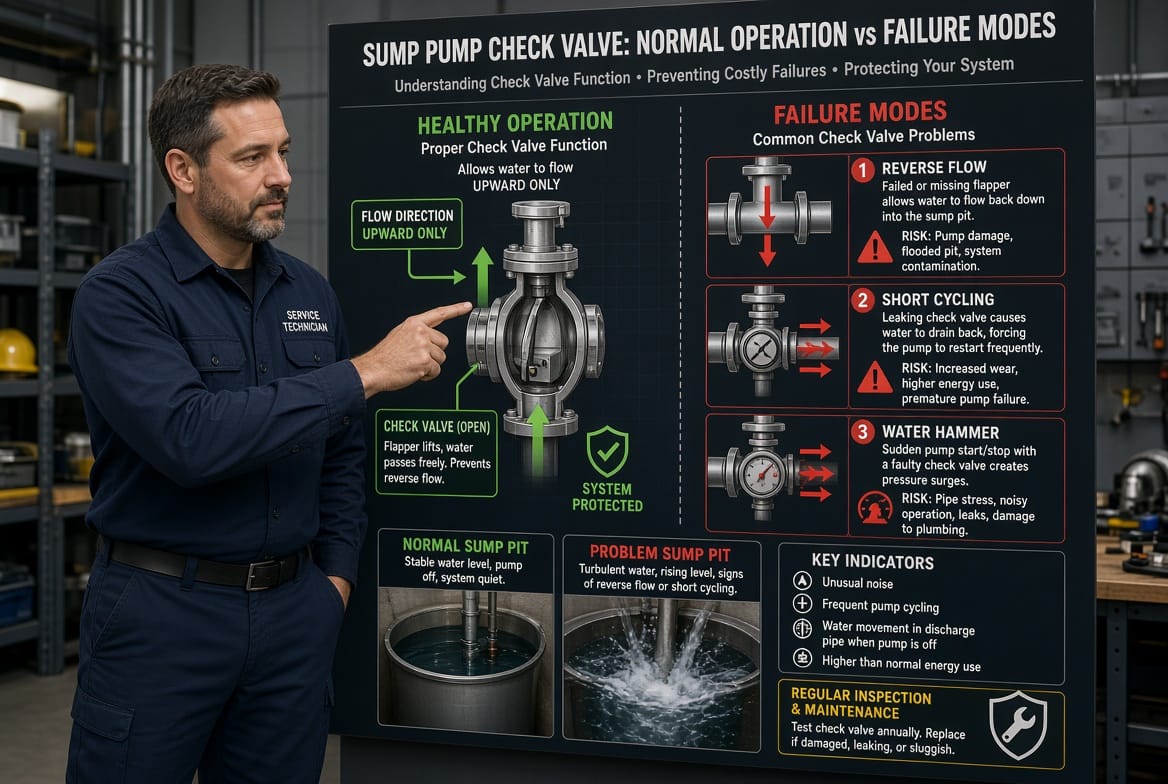
The check valve is a one-way gate installed on the vertical discharge pipe that rises from the sump pump. Its only job is to prevent water that has already been pumped out from flowing back into the sump pit once the pump shuts off. Without it, every time the pump stops, gravity pulls the water in the vertical pipe straight back down. The water level in the pit rises again, the float switch activates, and the pump restarts almost immediately. This rapid on-off pattern is known as short cycling.
A properly functioning check valve uses a simple internal mechanism—usually a spring-loaded flapper or a weighted ball—that opens under the pressure of the pump’s discharge and closes the moment that pressure drops. The result is a quiet, efficient system that only runs when necessary. Homeowners who maintain this valve enjoy lower energy costs, longer pump life, and far fewer emergency calls during heavy rain.
Why Backflow Creates Serious Risks
When the check valve fails, water returns to the pit. The pump must then re-pump the same water again and again. This constant restarting produces several dangerous effects:
- Excessive wear on the motor and impeller
- Higher electricity bills from repeated short cycles
- Water hammer—a loud banging noise caused by the sudden stop of moving water
- Premature float-switch failure
- Increased chance of the pump burning out during a prolonged storm
In the worst cases the continuous cycling can cause the pump to overheat and shut down completely, leaving the basement unprotected exactly when protection is needed most. Recognizing these risks early allows owners to schedule service before a minor part failure becomes a major flood event.
Clear Signs That the Check Valve Has Failed
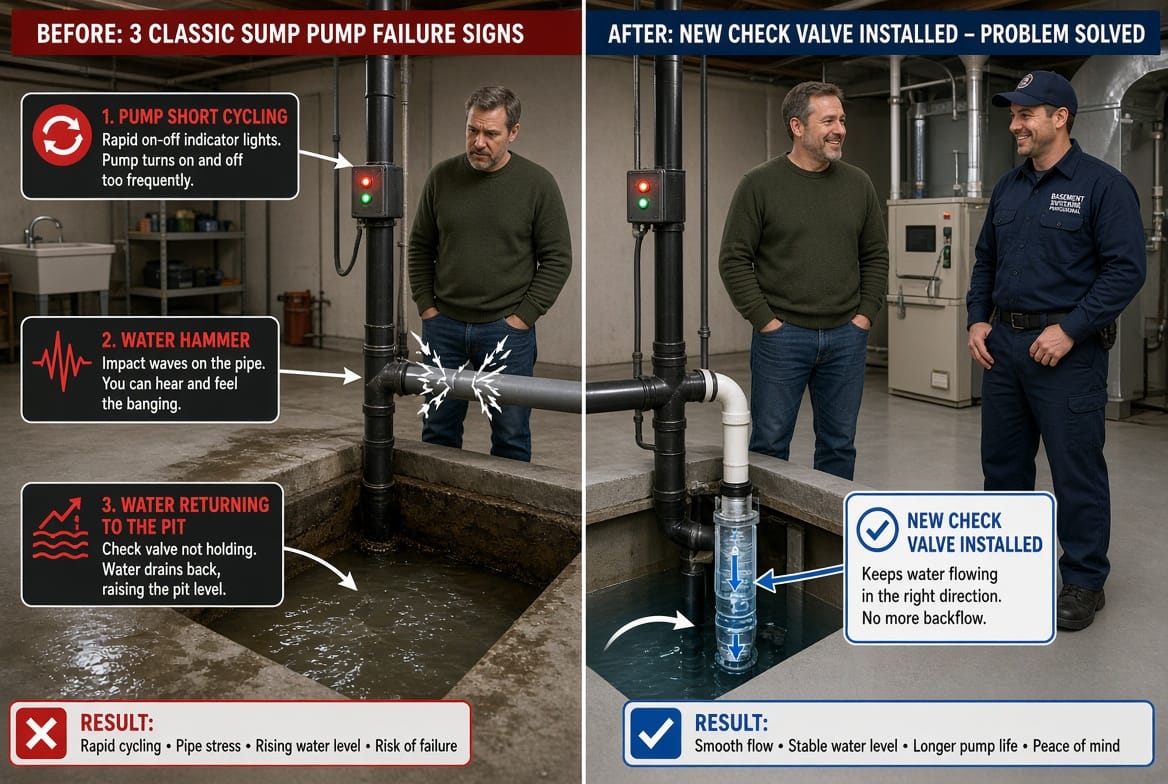
Most homeowners can detect a failing check valve by listening and watching carefully. The three most reliable indicators are:
- Pump short cycling – the pump turns on and off every few seconds or minutes instead of running for a normal 30–60 seconds
- Water hammer – a sharp knocking or banging sound in the discharge pipe each time the pump stops
- Visible water returning to the pit – after the pump shuts off, the water level rises again within seconds even though no new water is entering the pit
Additional clues include a pump that feels unusually hot to the touch, frequent breaker trips, or water stains around the discharge line joints. Any one of these signs warrants immediate inspection. Waiting only increases the chance that the pump will fail during the next heavy rainfall.
How a Failed Check Valve Accelerates Pump Damage
Every unnecessary start-stop cycle places mechanical stress on the motor bearings, the impeller, and the electrical contacts inside the switch. Over months or years this stress shortens the expected service life of the entire pump assembly. Manufacturers design sump pumps for thousands of normal cycles; they are not designed for the rapid, continuous cycling caused by backflow.
In addition, the repeated surge of water slamming against a closed or partially open valve creates water hammer. The shock wave travels through the pipe and can loosen fittings, crack PVC joints, or even damage the pump housing itself. Replacing a inexpensive check valve is far more economical than replacing a complete pump system that has been ruined by preventable cycling.
Step-by-Step Replacement Process
Replacing a sump pump check valve is a straightforward task for a trained technician, yet it requires careful attention to detail to ensure a leak-free, long-lasting result. The typical professional procedure includes:
- Power disconnection – the pump is unplugged or the circuit breaker is switched off to eliminate any electrical hazard.
- Water level management – remaining water in the pit is pumped out or bailed so the work area stays dry.
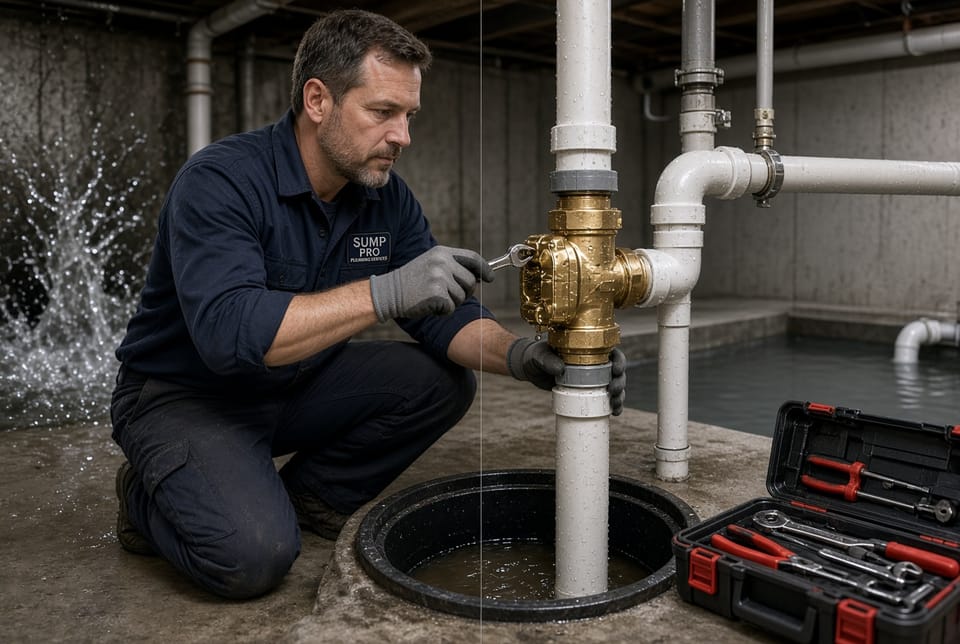
- Pipe section removal – the discharge pipe is cut or unthreaded above and below the old valve, allowing the failed unit to be lifted free.
- Surface preparation – pipe ends are cleaned, deburred, and inspected for cracks or warping.
- New valve installation – a correctly sized, spring-loaded or swing-style check valve is positioned with the flow arrow pointing upward. Solvent cement or threaded fittings create a permanent seal.
- System testing – power is restored, the pump is activated, and the technician watches for smooth discharge, quiet shut-off, and zero return flow.
- Final inspection – all joints are checked for leaks and the pit cover is replaced securely.
When performed by experienced hands, the entire process usually takes less than an hour and restores full system reliability immediately.
Choosing the Right Replacement Valve
Not every check valve is created equal. Quality units feature:
- Full-port design that maintains maximum flow capacity
- Quiet-close mechanisms that reduce water hammer
- Corrosion-resistant materials such as PVC, ABS, or brass suitable for continuous water exposure
- Clear directional markings so installation orientation is unmistakable
Cheap, generic valves often use thin plastic flappers that warp or stick after only a few seasons. Investing in a commercial-grade valve designed specifically for sump-pump duty delivers years of trouble-free service and eliminates the need for repeated repairs.
Preventive Maintenance That Protects the Entire System
Even the best check valve benefits from periodic attention. A simple annual inspection includes:
- Listening for unusual noises during a test cycle
- Verifying that the valve closes completely when the pump stops
- Checking the discharge pipe for any residual standing water
- Confirming that the float switch still activates and deactivates at the correct levels
Homeowners who schedule this quick check each spring or fall dramatically reduce the chance of unexpected failure. Professional technicians can also measure pump amperage, inspect the impeller for debris, and confirm that the overall system still meets the original design capacity.
The Long-Term Value of a Working Check Valve
A functioning check valve does more than stop backflow. It:
- Extends the mechanical life of the pump motor
- Keeps energy consumption low
- Eliminates noisy water hammer that disturbs household peace
- Provides consistent protection during multi-day storms
- Protects finished basements, stored belongings, and structural wood from water damage
These benefits compound over time. A single properly installed valve can easily add five to ten years to the service life of a quality sump pump—an excellent return on a modest investment.
When Professional Service Is the Smartest Choice
While some experienced do-it-yourself homeowners feel comfortable replacing a check valve, many situations call for trained help. Complex pipe routing, older galvanized lines, or pumps located in tight crawl spaces increase the risk of leaks or improper orientation. A professional arrives with the correct tools, the right replacement parts, and the knowledge to diagnose related issues that might otherwise go unnoticed.
Calling for service at the first sign of short cycling or water hammer prevents small problems from escalating into basement flooding. Technicians can also verify that the entire discharge line is free of blockages and that the exterior exit point remains clear of debris or ice.
Conclusion: Protect Your Home with a Reliable Check Valve
The sump pump check valve is a small part with an outsized responsibility. By preventing water from flowing back into the pit, it stops short cycling, eliminates water hammer, and keeps the pump operating only when truly needed. Recognizing the early warning signs—rapid on-off cycling, loud pipe noises, and visible return flow—allows timely replacement before damage occurs.
Professional installation guarantees correct orientation, leak-free joints, and a quiet, efficient system that stands ready for the next storm. Regular inspection further extends the life of both the valve and the pump itself.
Prevent sump pump backflow. A trained technician will inspect your check valve, replace it if necessary, and restore full protection so your basement stays dry season after season.
Fix Backflow Issues Fast – Schedule Service Today