The Solar Panel Tilt Angle Optimization: Maximizing Production by Season
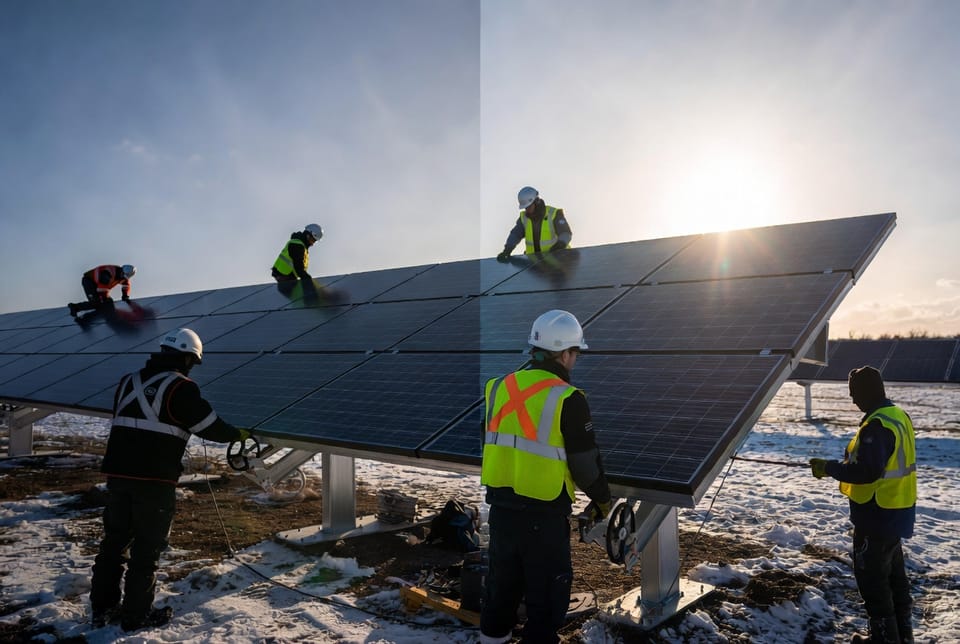
In the world of solar energy, every degree matters. Homeowners and businesses investing in solar power quickly discover that solar panel tilt angle optimization is one of the smartest ways to squeeze every kilowatt-hour from their system year-round. By understanding and applying seasonal adjustments, you can significantly boost annual output without adding more panels or upgrading expensive components.
Optimize Your Solar Production – Call Now!
Adjustable mounting systems give you the flexibility to respond to the sun’s changing path throughout the year. Unlike fixed installations that lock panels at a single angle, adjustable racks let you fine-tune tilt for summer’s high sun or winter’s low arc. The result? Higher energy production, faster return on investment, and greater peace of mind knowing your system is always working at its peak.
This comprehensive guide walks you through the science, the numbers, and the practical steps to master solar panel tilt angle optimization. Whether you’re planning a new installation or optimizing an existing array, you’ll learn exactly how seasonal adjustments deliver measurable gains.
Understanding the Science of Solar Panel Tilt
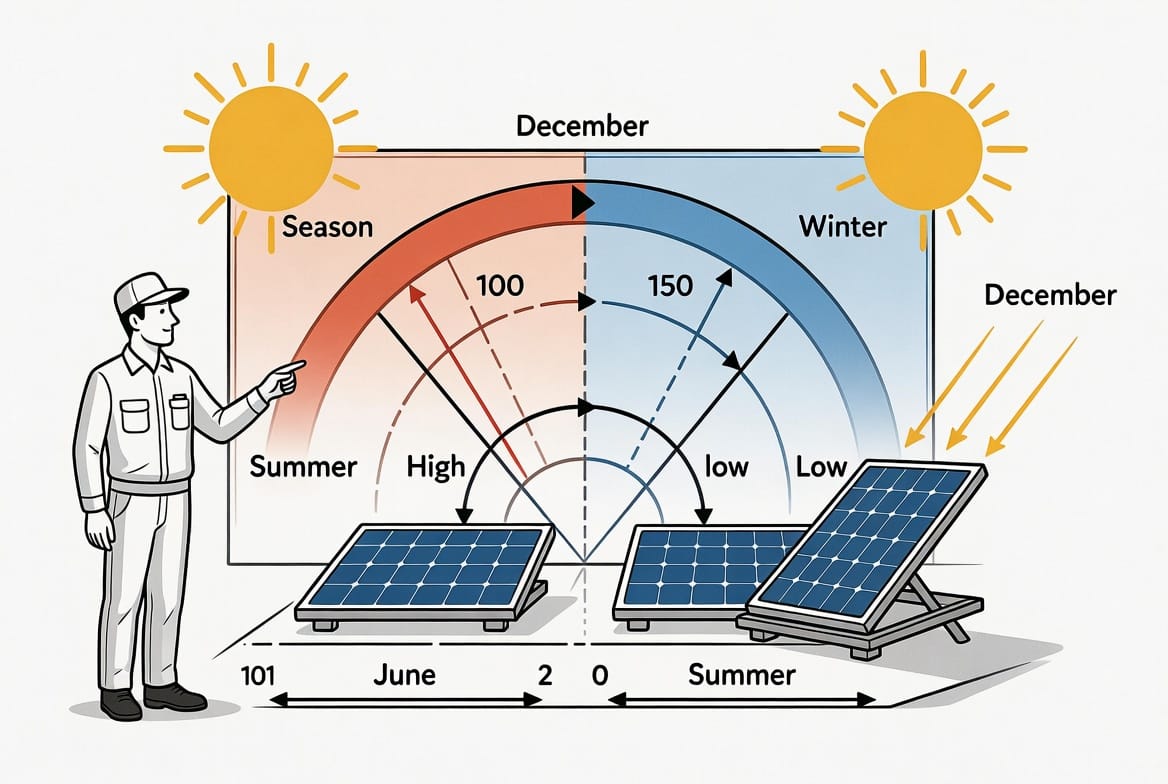
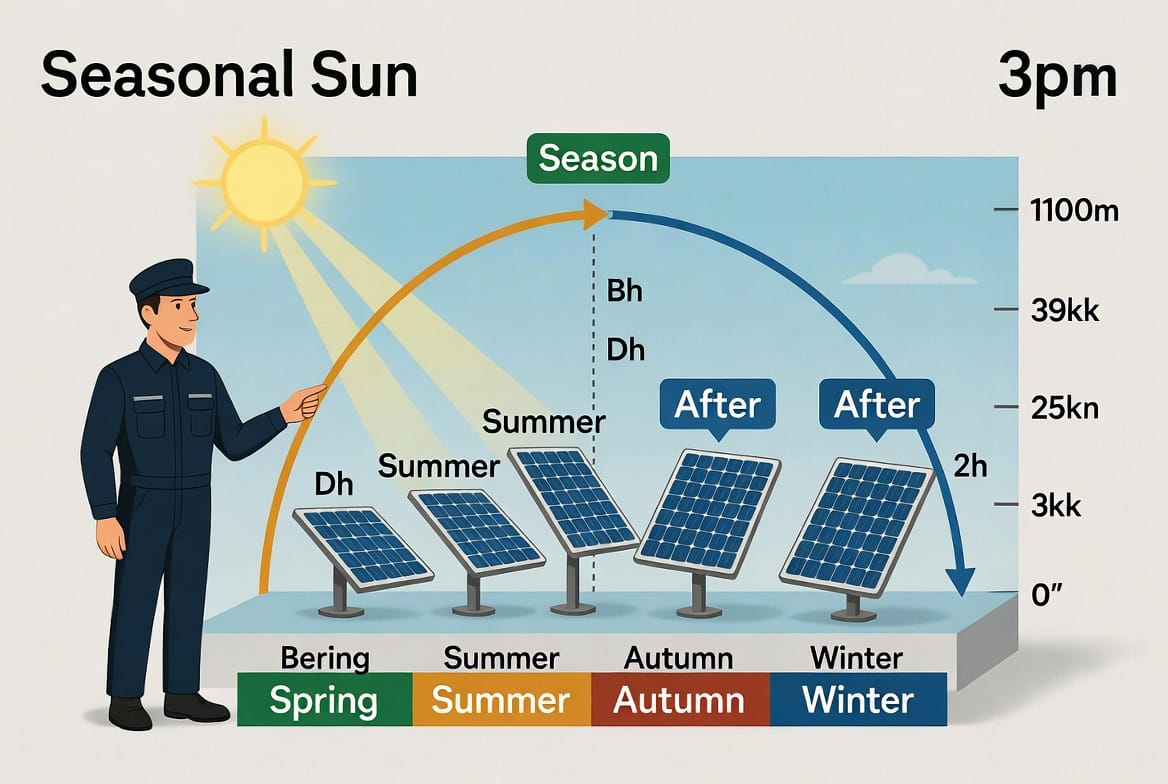
The sun’s position in the sky changes dramatically with the seasons. In summer, it rides high overhead; in winter, it hugs the southern horizon (in the Northern Hemisphere). Your solar panels convert sunlight most efficiently when rays strike them perpendicularly. Any deviation reduces output according to the cosine law of incidence.
Fixed tilt installations compromise by using one angle optimized for the entire year. Adjustable mounting racks, however, let you chase the sun’s optimal angle month by month or season by season. This dynamic approach can increase annual production by 15–40% depending on your latitude and local climate.
Think of it like this: a panel tilted at the wrong angle is like trying to catch rainwater with a bucket held at a slant—much of the resource simply slides off. Proper tilt angle optimization ensures your system captures the maximum available solar resource every single day.
Optimal Tilt Angles by Latitude and Season
Your latitude is the single most important factor in determining ideal solar panel tilt. Here’s the proven framework used by solar professionals:
- Annual fixed tilt: Set panels at an angle equal to your latitude for balanced year-round performance.
- Summer optimization: Reduce tilt by approximately 15° from your latitude to capture the high summer sun.
- Winter optimization: Increase tilt by approximately 15° from your latitude to catch the low winter sun.
For example:
- At 30° latitude, annual fixed tilt is 30°; summer drops to 15°; winter rises to 45°.
- At 40° latitude, annual fixed is 40°; summer is 25°; winter is 55°.
These adjustments align the panel surface perpendicular to the sun’s rays during peak production months, dramatically improving daily kWh generation when you need it most.
Seasonal tilt changes are simple manual adjustments on quality adjustable mounting systems. Most homeowners perform them just twice a year—spring and fall—yet reap benefits every day in between.
How Adjustable Racks Increase Annual Production
Adjustable solar panel mounts transform a good system into a great one. Independent engineering studies consistently show that seasonal optimization adds 20–35% more annual energy compared with fixed-tilt arrays at the same location.
The gains come from two sources. First, you capture more sunlight during the shoulder seasons when production would otherwise drop. Second, you reduce the cosine losses that plague fixed arrays during extreme summer and winter months.
Consider a typical 10 kW residential system in the mid-latitudes. A fixed-tilt setup might produce 14,000 kWh per year. With seasonal tilt adjustment, the same system can generate 17,000–19,000 kWh—an increase equivalent to adding 2–3 extra panels without the extra cost or roof space.
These production gains translate directly to higher utility bill savings and accelerated payback periods. Many homeowners report recouping the modest additional investment in adjustable hardware within 18–24 months through increased energy credits and reduced grid purchases.
Fixed vs. Adjustable: Cost-Benefit Analysis
Many homeowners initially choose fixed-tilt systems because they appear less expensive. While the upfront hardware cost for adjustable mounting racks is typically 10–20% higher, the long-term value tells a different story.
Fixed-tilt systems offer simplicity and lower initial investment. They require no maintenance beyond occasional cleaning. However, they leave significant production potential untapped, especially in regions with pronounced seasonal sun variation.
Adjustable mounting systems cost more initially but deliver superior lifetime performance. The hardware is engineered for decades of reliable service with corrosion-resistant components and straightforward manual adjustment mechanisms. Most quality racks require adjustment only twice per year and can be done in under an hour by a homeowner or technician.
When you run the numbers:
- Higher annual production means more energy sold back to the grid or used on-site.
- Faster payback period—often 1–2 years shorter than fixed systems.
- Greater resilience against future utility rate increases.
- Enhanced system value if you ever decide to sell your property.
The cost-benefit analysis overwhelmingly favors adjustable racks for anyone planning to stay in their home beyond five years. The incremental investment pays for itself many times over through increased energy independence and financial returns.
Practical Guide to Implementing Seasonal Adjustments
Performing solar panel tilt angle optimization is easier than most people expect. Quality adjustable racks feature simple crank or pin systems that require no special tools beyond a wrench and level.
Step-by-step process:
- Schedule adjustments for early March (spring) and early October (fall).
- Consult your system’s latitude-specific tilt chart (provided by the manufacturer or installer).
- Loosen the adjustment bolts or pins.
- Raise or lower the panel array to the new angle.
- Secure and verify with a digital inclinometer.
- Document the date and new setting for future reference.
Professional installers often include the first two seasonal adjustments as part of the service package, ensuring your system starts strong. After that, the process becomes routine maintenance that takes minimal time.
Adjustable mounting also provides the flexibility to respond to unusual weather patterns. During an exceptionally cloudy winter, you can fine-tune tilt even further to maximize the limited sunlight available.
Common Myths and How to Avoid Costly Mistakes
Some believe adjustable systems are too complicated or prone to failure. In reality, modern adjustable solar panel mounts are engineered for reliability and require less attention than many other household systems.
Another myth suggests that tracking systems (which follow the sun daily) are always superior. While trackers offer even higher gains, they come with significantly higher cost and maintenance. For most residential and small commercial installations, seasonal tilt adjustment provides 80–90% of the benefit of full tracking at a fraction of the price and complexity.
Avoid the mistake of setting a single “compromise” angle and forgetting about it. That approach leaves money on the table every single month. Likewise, don’t skip professional guidance when selecting and installing adjustable mounting racks—proper engineering ensures your system remains stable in high winds and heavy snow loads.
Real-World Impact and Long-Term Benefits
Homeowners who implement solar panel tilt angle optimization consistently report higher satisfaction with their solar investment. The visible increase in monthly production numbers reinforces the decision and provides ongoing reassurance that the system is performing exactly as engineered.
Businesses benefit even more dramatically. Commercial arrays using seasonal adjustments often see payback periods shortened by 2–3 years, improving cash flow and sustainability metrics. In regions with high electricity demand during summer or winter peaks, optimized tilt helps shave costly demand charges.
Long-term, these systems maintain their performance advantage for 25–30 years—the typical warranty period for modern solar panels. The modest moving parts in quality adjustable racks are designed for minimal wear, with many manufacturers offering 10–25 year warranties on the mounting hardware itself.
Capturing Every Available Ray
Solar panel tilt angle optimization represents one of the highest-return improvements you can make to any photovoltaic system. By embracing adjustable mounting and seasonal adjustments, you ensure your investment works as hard as possible throughout the year.
The sun’s path is predictable, and the technology to follow it is proven and affordable. There is no reason to accept anything less than maximum production from your solar array.
Ready to capture more sun with seasonal tilt adjustment? Our solar professionals will evaluate your location, calculate the exact production gains you can expect, and design a system that delivers optimal performance season after season.
Maximize Your Solar Output Year-Round – Call Today