The Solar Panel Mounting: Roof vs. Ground Mount
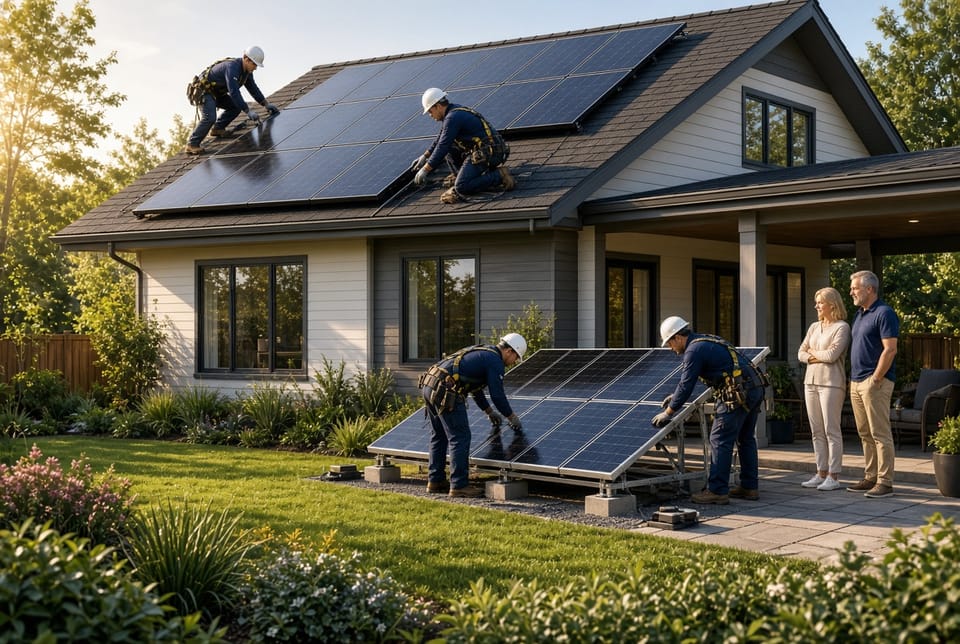
Choosing the right solar panel mounting system is one of the most important decisions a homeowner or business owner will make when going solar. The mounting method directly affects energy production, long-term maintenance costs, structural safety, and overall return on investment. Two primary options dominate the market: roof-mounted solar arrays and ground-mounted solar arrays. Each has distinct strengths. Understanding those differences allows you to select the solution that best matches your property, budget, and energy goals.
Get Expert Solar Mounting Advice – Call Today!
This guide compares both systems in detail so you can make a confident, informed choice. Professional installation remains essential in either case. When qualified technicians handle the work, common risks such as roof leaks, improper tilt, or inadequate foundations are systematically eliminated.
Roof-Mounted Solar Systems: Using Existing Space Efficiently
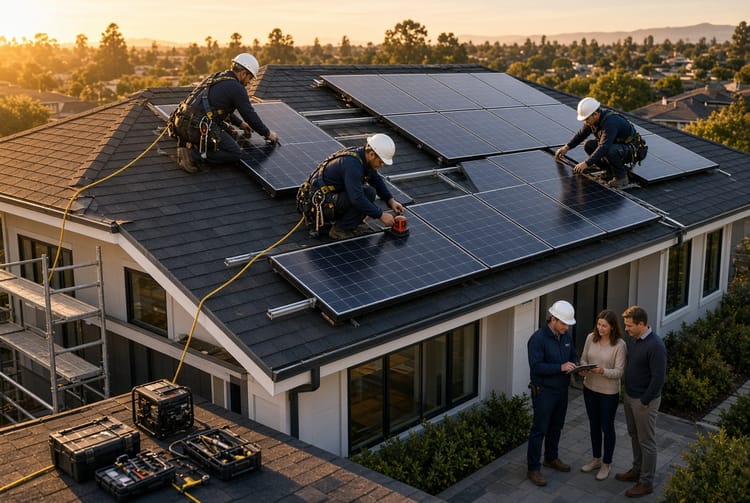
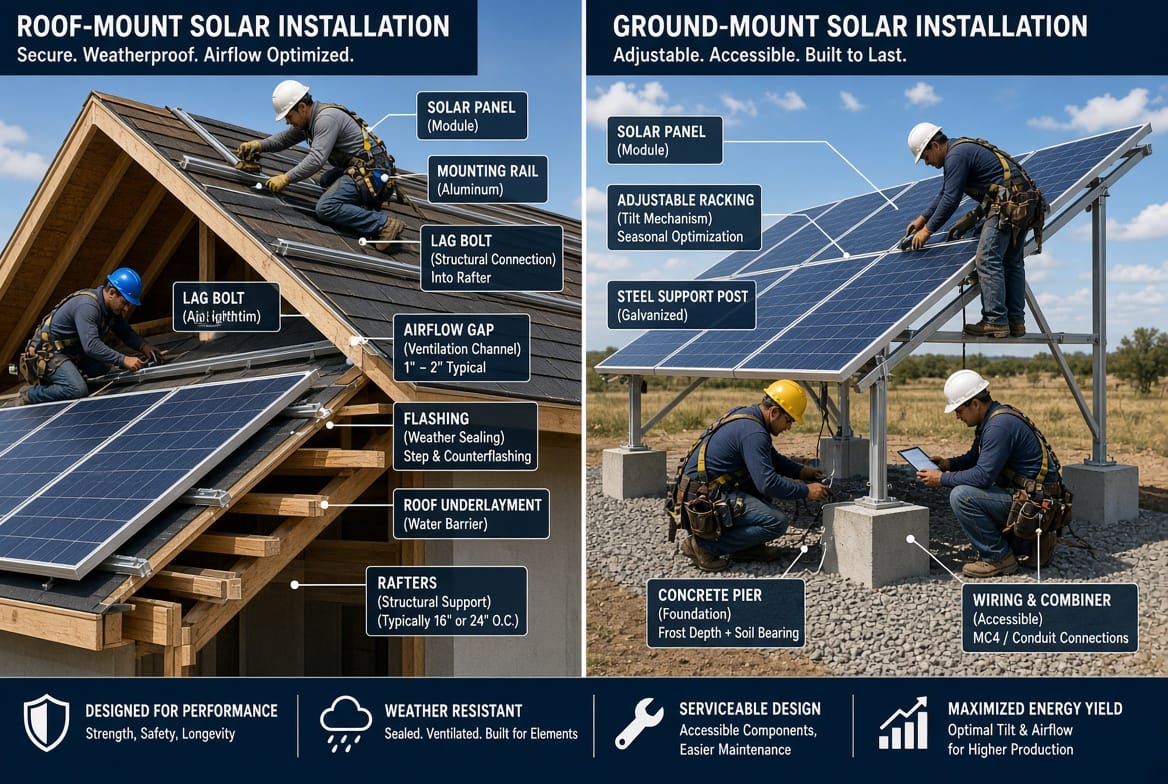
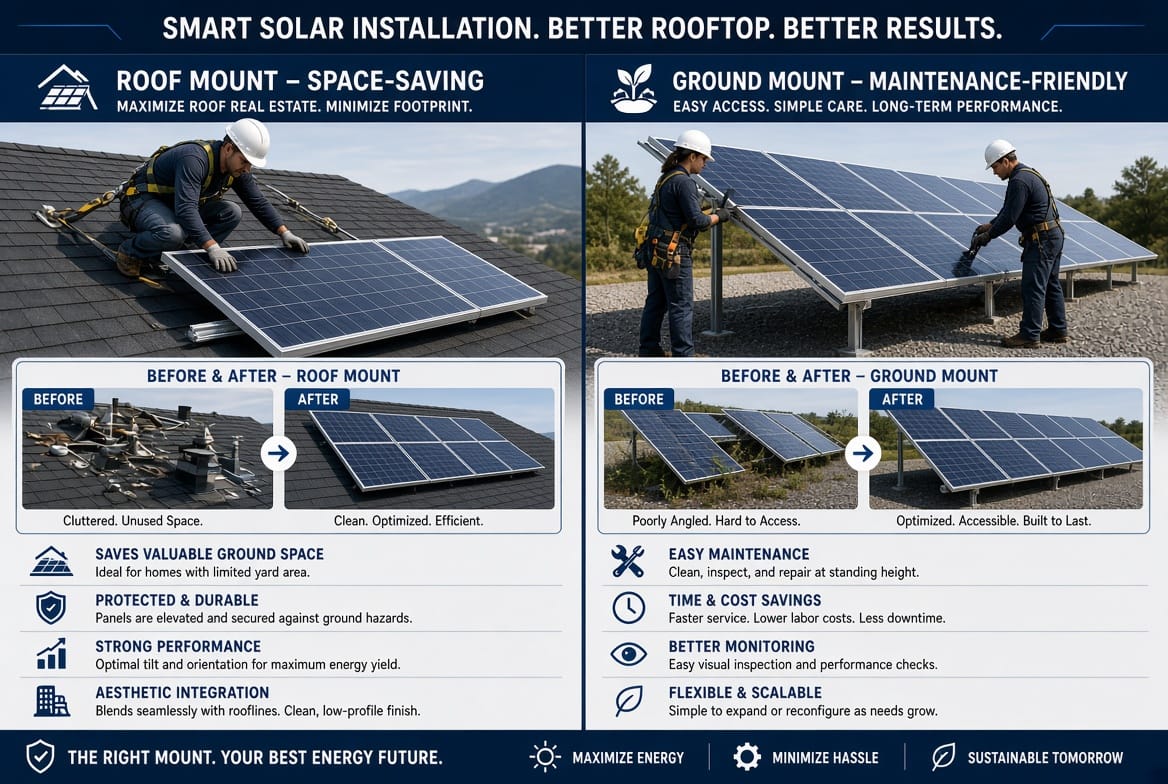
Roof mounting remains the most common residential installation method because it takes advantage of space you already own. Panels are attached to the existing roof structure using specialized rails, flashings, and lag bolts that penetrate the roof deck and attach to rafters.
Most asphalt-shingle, metal, and tile roofs can support a properly engineered array. The system sits several inches above the roof surface, allowing airflow that helps keep panels cooler and more efficient. Because no additional land is required, roof mounts are especially attractive in suburban neighborhoods and urban properties where yard space is limited.
Advantages of Roof-Mounted Arrays
- Space-saving design — Utilizes unused roof real estate without consuming yard or agricultural land.
- Lower material and labor costs in many cases because existing structure provides the support.
- Faster permitting in many jurisdictions since the installation stays within the building footprint.
- Cleaner aesthetic for homeowners who prefer a low-profile look.
- Reduced risk of accidental damage from lawn equipment or vehicles.
Potential Drawbacks and Risks
- Roof orientation and pitch may not be ideal, reducing annual production.
- Existing shading from chimneys, vents, or nearby trees can limit output.
- Access for cleaning and inspection is more difficult and may require roof-certified technicians.
- Improper flashing or attachment can create roof leak pathways if the installer lacks experience.
- Structural evaluation is mandatory; older or under-engineered roofs may need reinforcement.
When a qualified crew performs a thorough roof inspection and uses manufacturer-approved mounting hardware, these risks become manageable. Many homeowners enjoy 25-plus years of reliable production from a well-executed roof array.
Ground-Mounted Solar Systems: Optimal Angle and Easy Access
Ground-mounted systems are installed on a dedicated racking structure anchored in the earth, typically with concrete piers, ground screws, or ballast blocks. Because the array is independent of the building, designers can choose the exact tilt angle and azimuth that maximize annual sunlight capture for the specific latitude.
This flexibility often results in higher energy yield per panel compared with a compromised roof orientation. Ground mounts also make routine maintenance far simpler. Technicians can walk around the array at ground level to clean panels, inspect wiring, and replace components without ladders or roof harnesses.
Advantages of Ground-Mounted Arrays
- Better angle and orientation — Panels can be set at the mathematically ideal tilt, frequently increasing production 10–25 percent over a non-optimal roof.
- Easier and safer maintenance accessibility.
- Scalable for larger systems; additional rows can be added as energy needs grow.
- No impact on roof warranty or structural load.
- Option to incorporate single-axis trackers that follow the sun for even greater output.
Potential Drawbacks and Risks
- Requires available, relatively flat, unshaded land.
- Higher upfront cost for racking, foundations, trenching, and extra conduit.
- Possible zoning, setback, or homeowners-association restrictions.
- Visual impact on the landscape; some properties prefer the array to remain hidden.
- Additional land-use considerations if the property has future development plans.
Professional site assessment identifies soil conditions, frost-line depth, and drainage so the foundation remains stable for decades. When these engineering steps are followed, ground mounts deliver outstanding long-term performance.
Head-to-Head Comparison: Cost, Performance, and Practicality
Several factors determine which mounting style delivers the better overall value.
Energy Production
Ground mounts usually win when the roof faces east-west or is heavily shaded. A south-facing roof with a 15–40 degree pitch can perform nearly as well as a ground array, especially in sunny climates. Production modeling software used by reputable installers accounts for local weather data, shading analysis, and temperature coefficients so you receive realistic estimates rather than optimistic marketing numbers.
Upfront Investment
Roof systems typically cost less because they avoid extra steel, concrete, and trenching. Ground systems carry a premium of 10–30 percent depending on soil conditions and array size. That premium is often recovered through higher lifetime production and lower maintenance labor.
Maintenance and Longevity
Ground arrays allow quick visual inspection and cleaning with ordinary equipment. Roof arrays require scheduled professional visits. Both systems last 25–30 years when quality components and proper installation are used. The greater risk on roofs is water intrusion; the greater risk on ground mounts is foundation movement in expansive soils. Experienced crews mitigate both.
Aesthetics and Property Value
Many buyers view a neat roof array as a modern upgrade. Some rural or estate properties prefer ground mounts placed behind landscaping or in a distant field. Local real-estate data generally shows that a well-designed solar system, regardless of mounting type, adds value.
Permitting and Timeline
Roof projects often move faster through building departments. Ground projects may trigger additional electrical, zoning, or environmental reviews. A knowledgeable installer familiar with local codes shortens this process.
How to Decide Which Mount Fits Your Property
Begin with a professional site survey. Qualified solar designers evaluate roof condition, structural capacity, shading throughout the year, available land, soil type, and local regulations. They also review your electricity usage pattern and any planned expansions such as an electric vehicle or heat pump.
Consider these practical questions:
- Is your roof less than 15 years old and in good condition?
- Does the roof face within 30 degrees of true south with minimal shading?
- Do you have at least 400–600 square feet of unshaded, relatively level ground?
- Are there homeowners-association or historic-district restrictions?
- Do you prefer the array to be invisible from the street?
Homeowners with limited yard space and a sound, well-oriented roof usually choose roof mounting. Properties with ample land, a challenging roof, or a desire for maximum production and easiest upkeep often select ground mounting. Hybrid approaches—roof plus a small ground array—are also possible when both conditions exist.
Climate plays a supporting role. In snowy regions, ground mounts can be designed with extra ground clearance so snow slides off easily. In high-wind coastal zones, both systems require engineered attachment schedules that meet local wind-load requirements.
Why Professional Installation Protects Your Investment
Solar mounting is not a do-it-yourself project. Incorrect rail spacing, insufficient flashing, undersized foundations, or poor wire management can create safety hazards, void warranties, and reduce output for the life of the system. Licensed electricians and NABCEP-certified installers follow manufacturer specifications, local building codes, and utility interconnection rules.
They also provide documentation that supports rebate applications, tax-credit claims, and future home-sale disclosures. A reputable company stands behind its work with workmanship warranties that complement the 25-year panel performance warranties.
Choosing an experienced local team means the installation crew understands regional weather patterns, soil conditions, and permitting quirks. That knowledge translates into a system that performs reliably year after year.
Making the Right Choice for Lasting Energy Independence
Both roof-mounted and ground-mounted solar arrays can deliver decades of clean electricity when designed and installed correctly. Roof mounts excel at using space you already have and often keep costs lower. Ground mounts excel at capturing more sunlight and simplifying ongoing care. The best system is the one that matches your specific property constraints and long-term goals.
A thorough professional assessment removes guesswork. It identifies the safest attachment method, the highest-yielding layout, and the most cost-effective path to energy independence.
Choose the right mount for your property. An experienced consultant can review your roof, land, and energy usage and recommend the mounting solution that maximizes production while protecting your home or business.
Call Today for Professional Solar Mount Consultation