The Solar Panel Temperature Performance: How Heat Affects Production
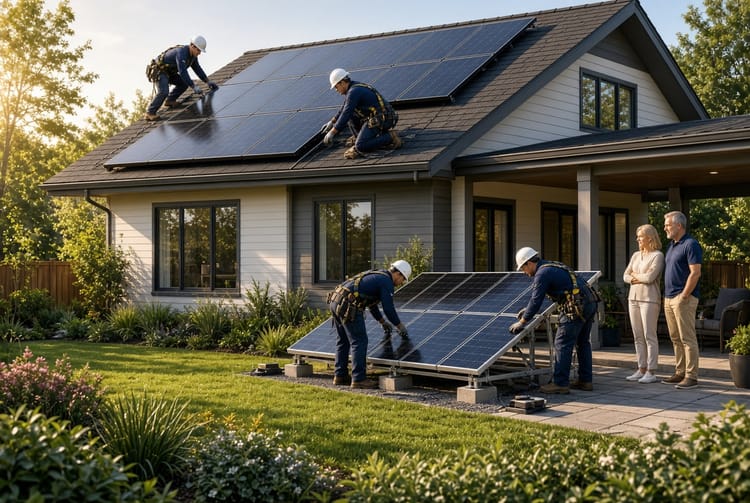
Solar energy systems deliver reliable power for homes and businesses across diverse climates, yet one critical factor consistently shapes real-world results: temperature. While sunlight drives electricity generation, excess heat quietly reduces output. Understanding solar panel temperature performance empowers owners to protect their investment and maintain strong production year after year. This guide examines exactly how heat influences panels, quantifies typical losses, and outlines practical steps that keep systems operating closer to their potential.
Choose Heat-Ready Solar Panels Today – Call Now!
Modern photovoltaic technology converts sunlight into electricity with impressive efficiency under standard test conditions. Those laboratory benchmarks, however, rarely match the temperatures panels experience on actual rooftops. When surface temperatures climb well above the 25°C reference point, performance declines in a predictable pattern. Recognizing this behavior is the first step toward smarter system design and long-term satisfaction.
Why Temperature Matters More Than Most Homeowners Realize
Every solar panel carries a temperature coefficient—a precise rating that reveals how much power drops for each degree Celsius above 25°C. This coefficient is not a minor technical detail; it is a fundamental performance characteristic that directly affects daily energy harvest. In warmer regions or during summer peaks, panels routinely reach 45°C to 65°C or higher. The cumulative effect of those elevated temperatures can shave meaningful percentages from expected output if left unaddressed.
The science is straightforward. Silicon cells generate electricity more efficiently when cooler. As temperature rises, the semiconductor properties shift, reducing voltage and overall power. Manufacturers publish the temperature coefficient on data sheets, typically expressed as a negative percentage per degree Celsius. Most crystalline silicon panels fall within a narrow but important range. Awareness of this value allows informed comparisons between products and realistic expectations for seasonal performance.
How Efficiency Declines in High Heat
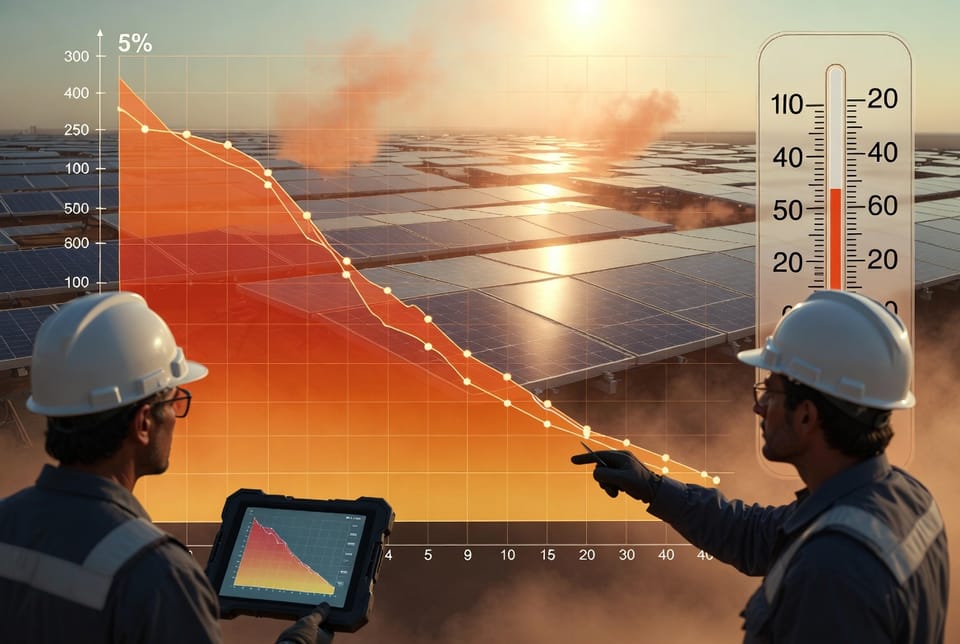
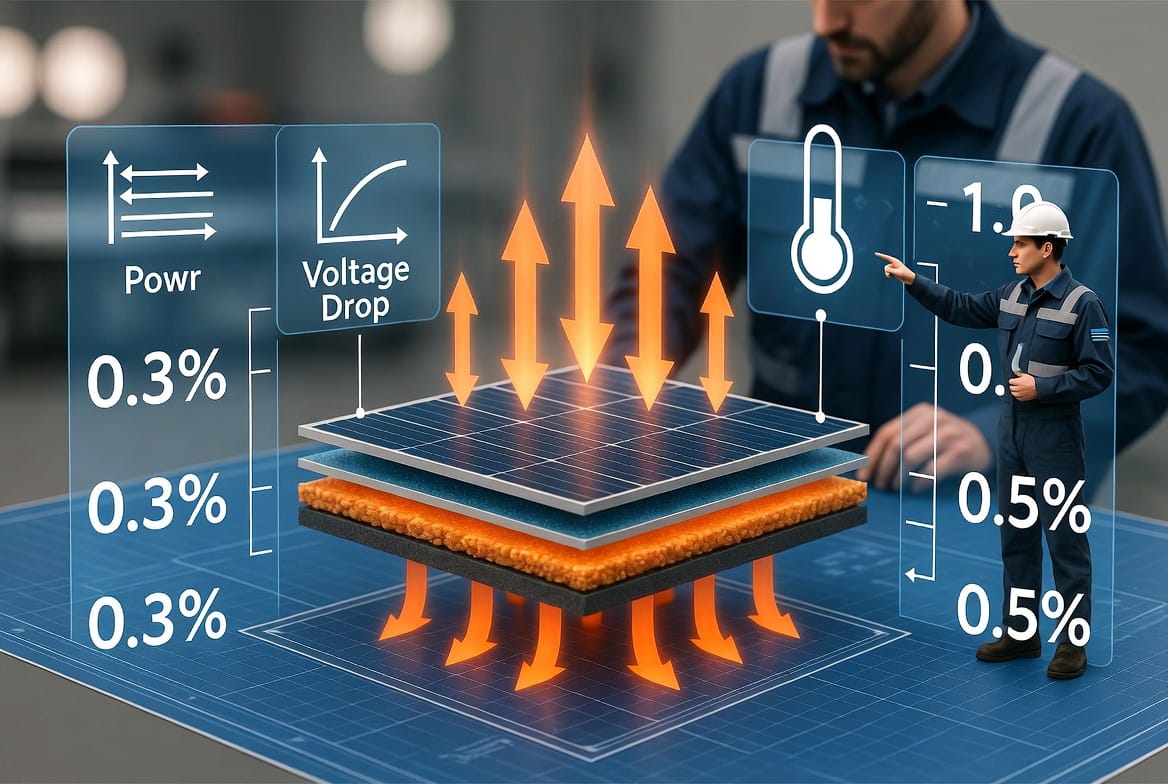
Laboratory tests measure panels at a controlled 25°C cell temperature. Real installations rarely stay near that mark. On a bright summer day, dark-colored roofs and limited airflow push panel temperatures far higher. The temperature coefficient quantifies the resulting loss. Industry-standard values commonly range from 0.3% to 0.5% per degree Celsius above 25°C.
Consider a practical example. A panel rated at 400 watts under standard conditions operates at 55°C—30 degrees above the reference point. At a 0.4% temperature coefficient, the loss calculates to 12%. The panel now produces roughly 352 watts instead of 400. Multiply that reduction across an entire array and across dozens of hot days, and the annual energy shortfall becomes noticeable. Higher coefficients amplify the effect; lower ones limit it.
These losses are temporary and reversible. When temperatures moderate in the evening or during cooler seasons, output recovers fully. The challenge lies in the cumulative impact during peak production months, precisely when households and businesses often need the most power for cooling loads. Understanding the mechanism removes uncertainty and replaces it with actionable knowledge.
Typical Output Reductions Across Common Conditions
The 0.3–0.5% per degree Celsius range covers the majority of widely available panels. Premium products sometimes achieve coefficients closer to 0.25% or even lower, while budget options may sit near the higher end of the spectrum. Geographic location further influences the practical outcome. Desert climates with intense solar radiation and high ambient temperatures experience more pronounced effects than milder coastal zones.
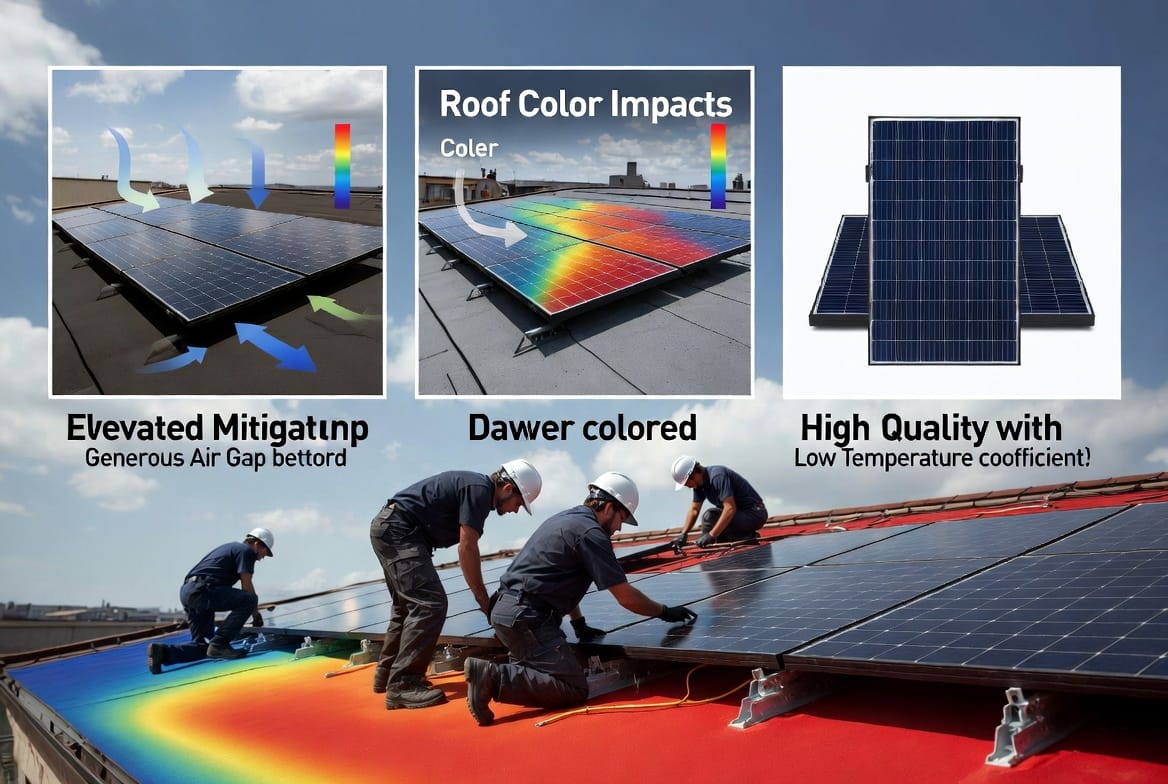
Roof characteristics also play a role. Dark shingles absorb and radiate heat, raising panel temperatures several degrees higher than lighter-colored surfaces. Flush-mounted arrays that sit tightly against the roof trap heat more effectively than elevated systems. These variables interact with the inherent temperature coefficient, creating site-specific performance profiles. Accurate assessment requires evaluating both the panel rating and the installation environment together.
Seasonal patterns add another layer. Spring and fall often deliver near-optimal conditions when strong sunlight coincides with moderate temperatures. Summer brings the highest irradiance alongside the greatest heat-related reductions. Winter may see lower absolute output due to shorter days, yet cooler panels operate closer to their rated efficiency. Tracking these cycles helps owners interpret monitoring data correctly and avoid unnecessary concern over temporary dips.
Proven Strategies to Reduce Heat-Related Losses
Fortunately, several practical approaches meaningfully improve solar panel temperature performance. The most effective solutions focus on lowering operating temperatures and selecting components engineered for thermal resilience.
Mounting design ranks among the highest-impact choices. Installing panels with a deliberate air gap between the module and the roof surface promotes natural convection. Cooler air flows underneath, carrying heat away and often reducing cell temperatures by 10°C or more compared with tightly flush mounts. Elevated racking systems achieve this airflow while maintaining structural integrity and aesthetic appeal. Proper spacing also simplifies future maintenance and inspection.
Panel selection offers another powerful lever. Choosing modules with a lower temperature coefficient directly shrinks the percentage loss for every degree of heat. When comparing products, review the coefficient alongside power rating, warranty terms, and degradation rates. A panel that loses only 0.29% per degree will consistently outperform one losing 0.45% under identical hot conditions. Over a 25-year lifespan, the difference compounds into substantial additional energy production.
Additional supporting measures reinforce these primary strategies. Lighter-colored roofing materials reflect more sunlight and absorb less heat, creating a cooler microclimate beneath the array. Adequate edge spacing and strategic orientation can further enhance airflow. In some cases, specialized coatings or rear-side treatments on panels help dissipate heat more effectively. Professional installers evaluate the full combination of site conditions, local climate data, and equipment options to recommend the optimal package.
Integrating Temperature Awareness into System Design
Thoughtful design begins long before panels reach the roof. Detailed shade analysis, accurate production modeling, and careful equipment matching already form standard best practice. Adding explicit consideration of thermal performance elevates those models from theoretical to realistic. Advanced software can incorporate local temperature profiles, roof characteristics, and specific module coefficients to generate more accurate annual yield forecasts.
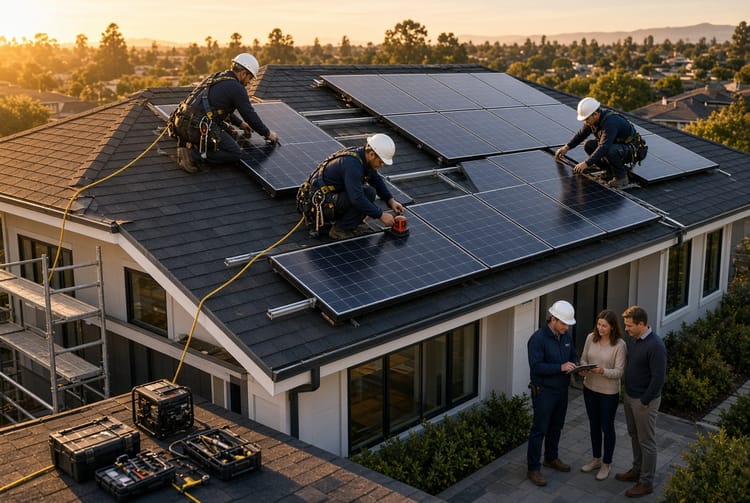
During installation, quality workmanship ensures the designed air gap remains consistent across the entire array. Secure mounting hardware, precise alignment, and attention to roof penetrations all contribute to both thermal and structural performance. Post-installation monitoring then validates expectations. Many modern systems provide real-time temperature and power data, allowing owners to observe the relationship between heat and output firsthand and confirm that mitigation measures are functioning as intended.
Long-term maintenance further supports strong temperature performance. Periodic cleaning removes dust and debris that can slightly elevate surface temperatures. Visual inspections identify any shifts in mounting that might reduce airflow. Prompt attention to these details keeps the system operating near its designed efficiency throughout its service life.
Real-World Benefits of Heat-Optimized Systems
Owners who prioritize temperature coefficient and mounting details enjoy several tangible advantages. Higher average production during the hottest months improves self-consumption rates and reduces reliance on grid electricity when rates are often highest. More consistent output supports better financial modeling and faster payback periods. Enhanced thermal management can also contribute to lower operating stress on the cells, supporting the long-term reliability already backed by robust manufacturer warranties.
The reassurance comes from control. Heat is an unavoidable environmental factor, yet its impact is manageable. By selecting panels engineered for superior thermal behavior and installing them with intentional airflow, systems deliver closer to their nameplate potential across a wider range of conditions. This approach transforms a potential limitation into a well-understood and mitigated characteristic of solar technology.
Choosing Panels That Handle Heat Better
When evaluating options, request the temperature coefficient for every module under consideration. Compare values side by side and weigh them against other performance metrics. Ask detailed questions about mounting recommendations that maximize airflow. A qualified solar professional can model the expected thermal performance for a specific property and present clear production estimates under both average and peak temperature scenarios.
The goal is not perfection—absolute elimination of heat effects is impossible—but intelligent minimization. Systems designed with temperature awareness produce more energy, generate stronger returns, and provide greater peace of mind. They turn a known physical reality into a managed variable rather than an unwelcome surprise.
Solar technology continues to advance, with newer cell architectures and materials offering steadily improving thermal coefficients. Yet even today’s widely available panels perform admirably when installed with care. The difference between an average system and an optimized one often lies in these deliberate choices around heat management.
Taking the Next Step Toward Optimal Performance
Heat remains a critical factor in solar panel temperature performance, yet it need not limit the value of a well-designed system. By understanding the temperature coefficient, recognizing typical losses of 0.3–0.5% per degree Celsius above 25°C, and applying proven mitigation techniques such as air-gap mounting and selection of lower-coefficient panels, homeowners and businesses secure stronger, more consistent production.
Choose panels that handle heat better. For personalized guidance on temperature coefficients and system design tailored to local conditions. Experienced advisors stand ready to review options, explain the numbers clearly, and help craft an installation that maximizes energy harvest through every season. Informed decisions today deliver reliable clean power for decades ahead.
Protect Your Solar Production from Heat Loss – Call Now