The Solar Panel Temperature Coefficient: Why Heat Reduces Output
Solar energy remains one of the most reliable and sustainable power sources available today. However, many homeowners and businesses notice that their solar panel systems produce less electricity on extremely hot days. This performance drop often stems from a critical but frequently overlooked factor: the solar panel temperature coefficient.
Call Now to Choose Heat-Resistant Solar Panels
In this comprehensive guide, we explore exactly what the temperature coefficient means, how it impacts your investment, and why selecting panels with superior thermal performance delivers better long-term results. Whether you're planning a new installation or optimizing an existing array, understanding this performance metric empowers you to make informed decisions that protect your energy production and financial returns.
What Is the Solar Panel Temperature Coefficient?
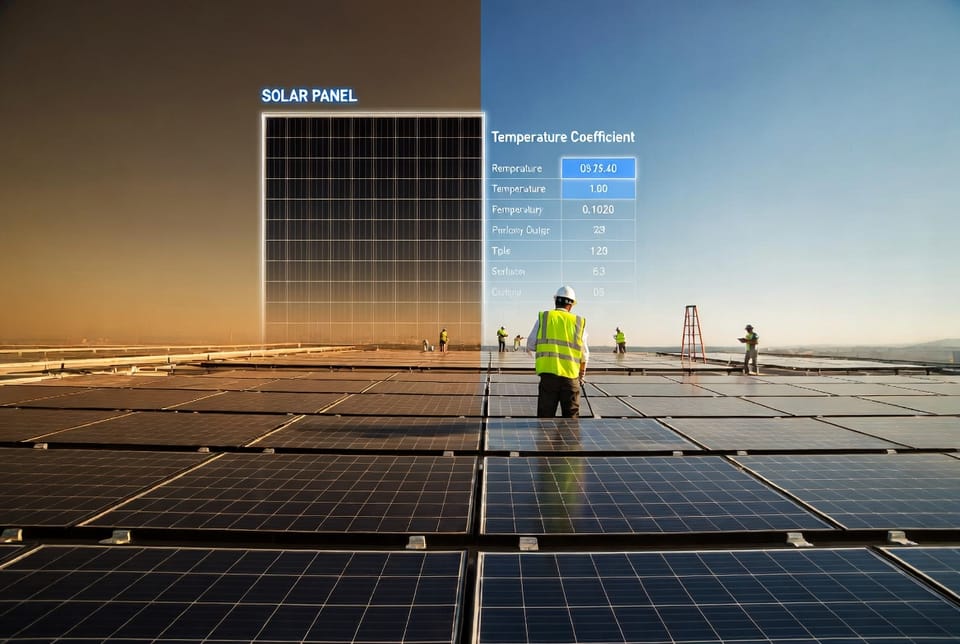
The temperature coefficient measures how a solar panel's power output changes as its operating temperature rises above the industry standard test condition of 25°C (77°F).
Most manufacturers list this value under electrical data in the product specifications. It appears as a percentage per degree Celsius (%/°C), typically in the range of -0.3% to -0.5% per °C for standard crystalline silicon panels.
Here's how it works in practice:
- For every degree Celsius the panel temperature exceeds 25°C, output decreases by the coefficient percentage.
- On a hot summer day when panel surface temperature reaches 55–65°C (common in direct sunlight), the difference from standard conditions can reach 30–40°C.
A panel with a -0.4% coefficient loses approximately 12–16% of its rated power under those conditions. This reduction occurs independently of the amount of sunlight hitting the panels.
Bold reality: Heat does not damage the panels permanently in most cases, but it does reduce immediate electricity generation. Panels with lower (more negative) temperature coefficients suffer greater losses, while those engineered with lower absolute values maintain higher output.
Why Solar Panels Get Hot and Lose Efficiency
Solar panels convert only about 15–22% of incoming sunlight into electricity. The remaining energy turns into heat, warming the panel surface significantly above ambient air temperature.
Several environmental and installation factors compound this heating effect:
- Intense direct irradiance on dark panel surfaces
- Limited airflow beneath the array
- High ambient temperatures common in many regions
- Roof integration that traps heat
This thermal buildup directly affects the semiconductor properties within the solar cells, reducing voltage output while current remains relatively stable. The net result is lower power production precisely when many households need cooling energy most.
Reassuring note: Modern solar technology continues to improve thermal resilience. Manufacturers now offer panels specifically designed for hot climates with advanced cell materials and better heat dissipation features.
Typical Temperature Coefficient Values Explained
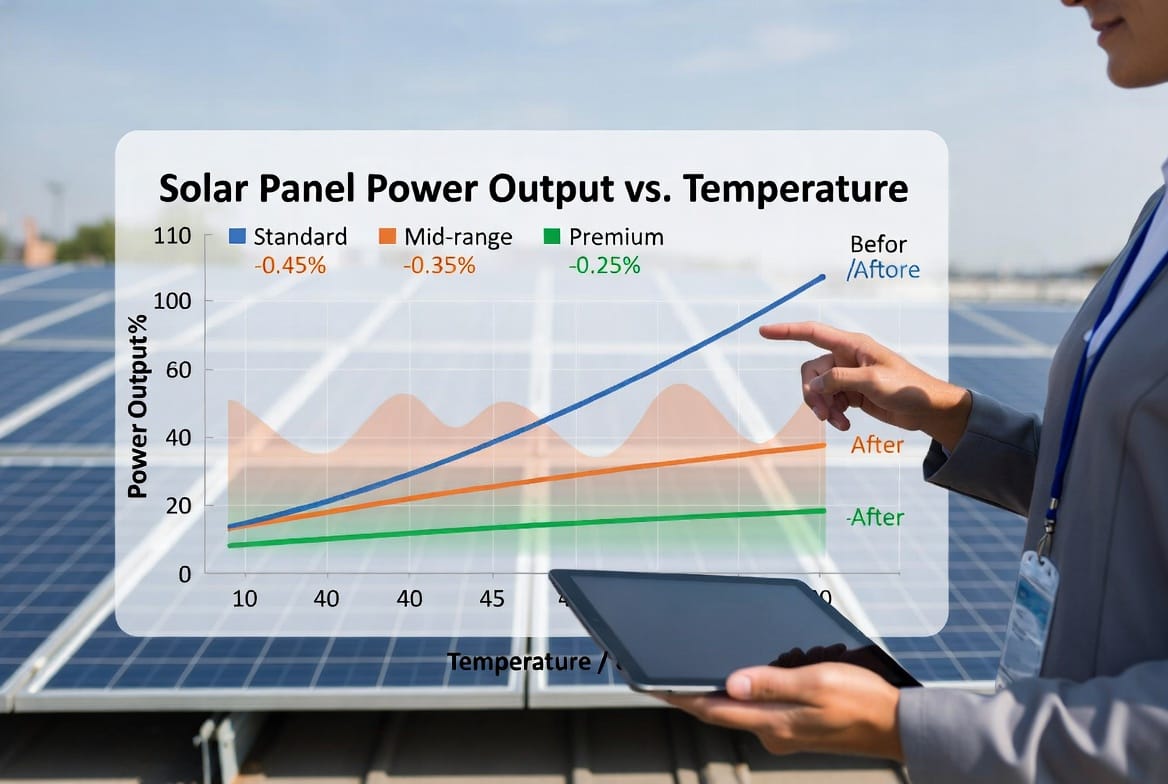
Standard panels often carry coefficients around -0.35% to -0.45% per °C. Premium or high-performance modules frequently achieve -0.25% to -0.30% per °C, representing a meaningful advantage.
Example calculation for a 400W panel on a 45°C hot day:
- Temperature rise: 45°C - 25°C = 20°C
- Standard panel (-0.40%/°C): 20 × 0.40% = 8% loss → Effective output ≈ 368W
- High-performance panel (-0.28%/°C): 20 × 0.28% = 5.6% loss → Effective output ≈ 378W
Over an entire summer season across hundreds of panels, these seemingly small differences accumulate into substantial additional kilowatt-hours and faster return on investment.
Key takeaway: Panels with lower temperature coefficients perform better in hot climates because they retain more of their rated capacity when temperatures climb.
Real-World Impact in Hot Climates
Regions with consistently high temperatures experience amplified effects from temperature coefficients. In desert or subtropical areas, panels may operate above 60°C for many daylight hours, creating cumulative seasonal losses that affect system payback periods.
Homeowners often report surprise when summer utility bills remain higher than expected despite their solar investment. The temperature coefficient explains much of this gap between expected and actual performance.
Fortunately, understanding this factor allows proactive optimization. Installers who prioritize panels with excellent thermal characteristics help customers achieve more consistent year-round production.
Factors That Influence Panel Operating Temperature
Beyond the inherent temperature coefficient, several installation and environmental variables affect how hot your panels actually become:
- Mounting system and air gap: Elevated racking with sufficient airflow underneath significantly reduces operating temperatures.
- Roof color and material: Dark roofs absorb and radiate more heat upward into the panels.
- Panel efficiency: Higher efficiency modules convert more sunlight to electricity and generate less waste heat.
- Geographic location and orientation: South-facing arrays in sunny climates face greater thermal stress.
- Local wind patterns: Natural breezes provide free cooling benefits.
Professional installers carefully evaluate these elements during system design to minimize heat-related losses.
Strategies to Maximize Performance in Warm Conditions
Selecting the right panels represents the most effective long-term solution. When evaluating options, always ask manufacturers or installers for the temperature coefficient (Pmax) value and compare it directly.
Additional proven approaches include:
- Optimized racking systems that promote ventilation
- Light-colored or reflective roofing materials where feasible
- Regular maintenance to keep panels free of dust and debris that can increase heat absorption
- Advanced monitoring systems that track performance metrics including temperature effects
- Hybrid solutions combining solar with energy storage for better overall management
These combined measures ensure your solar investment delivers maximum value throughout its 25+ year lifespan.
Choosing Panels That Handle Heat Better
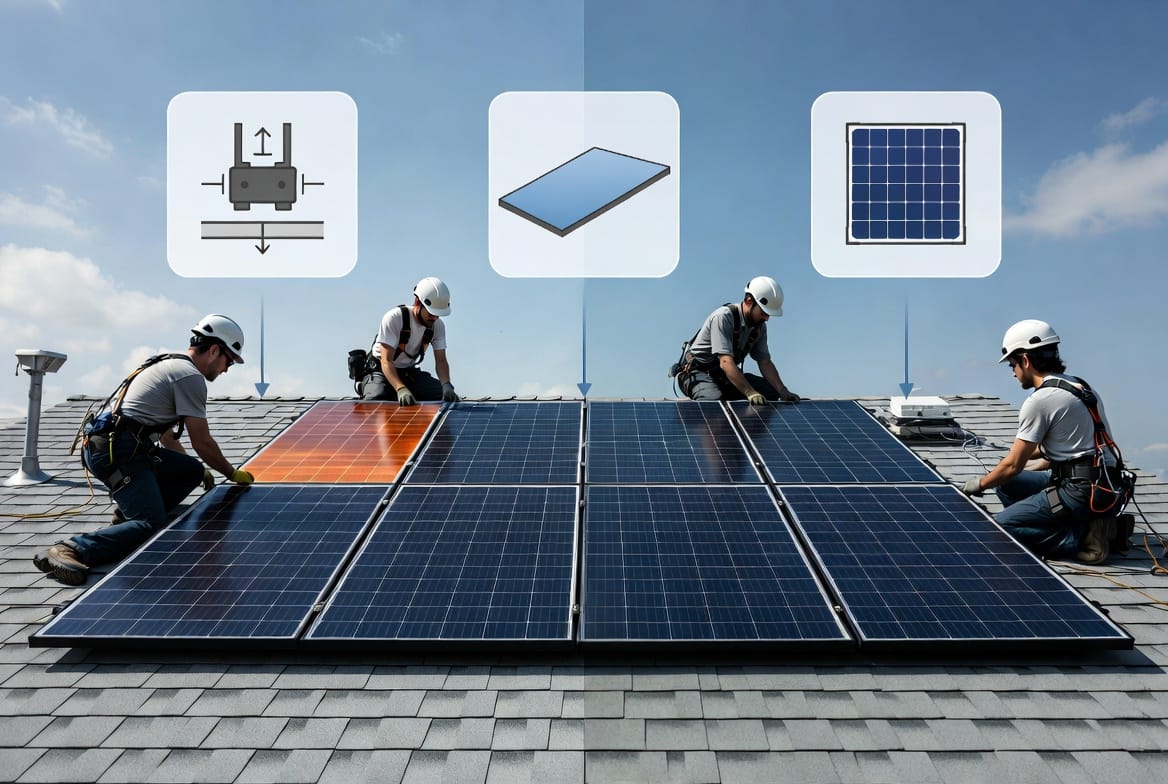
Not all solar panels perform equally under thermal stress. Forward-thinking manufacturers invest heavily in research to develop cells with improved temperature coefficients through better materials, cell architecture, and protective coatings.
When speaking with installers, confidently ask:
- What is the temperature coefficient of the panels you're recommending?
- How will this value impact annual production in our local climate?
- Are there higher-performance options available for better heat resistance?
Reputable professionals welcome these questions because they demonstrate customer awareness and commitment to long-term system value.
The Bottom Line: Knowledge Leads to Better Solar Outcomes
The solar panel temperature coefficient represents a fundamental performance characteristic that directly influences how much clean energy your system generates, especially during peak summer months. By understanding this factor and choosing panels engineered for thermal resilience, you protect your investment and enjoy more consistent electricity production.
Modern solar technology offers excellent solutions for virtually every climate. With proper panel selection, professional installation, and ongoing system care, you can achieve outstanding performance regardless of local temperatures.
Ready to explore solar options specifically optimized for your area? Our experienced team helps customers select panels that deliver reliable output even when temperatures rise. Contact us today to discuss temperature coefficient ratings and discover the best solutions for your home or business.
Get Solar Panels That Perform Better in Heat – Call Today