The Solar Panel System Monitoring: What Data You Should Track
Solar panel systems represent a significant investment in clean energy and long-term savings. Effective monitoring transforms your solar installation from a static array of panels into a dynamic, high-performing asset. By tracking the right data, you gain complete visibility into your system's health, maximize energy production, and protect your return on investment.
Get Expert Solar Monitoring Setup – Call Now!
Professional solar monitoring delivers peace of mind. Whether you're a homeowner or business owner, understanding key performance metrics ensures your system operates at peak efficiency year-round. This comprehensive guide explains exactly what data matters most and how to use it effectively.
Why Solar System Monitoring Matters
Solar panels generate clean electricity silently and reliably, but without proper oversight, small issues can grow into costly problems. Regular monitoring allows you to:
- Verify your system produces the expected energy output
- Detect performance issues before they impact savings
- Optimize energy usage patterns within your household or business
- Ensure compliance with utility requirements for grid-tied systems
Modern inverters and dedicated monitoring platforms make this process straightforward and accessible via smartphone apps or web dashboards. With intuitive interfaces, you stay informed without needing technical expertise.
Monitoring your solar investment is not optional—it's essential for protecting performance and longevity.
Key Data Points Every Solar Owner Should Track
Successful solar monitoring focuses on several core metrics. Here’s what to watch closely:
Daily and Lifetime Energy Production
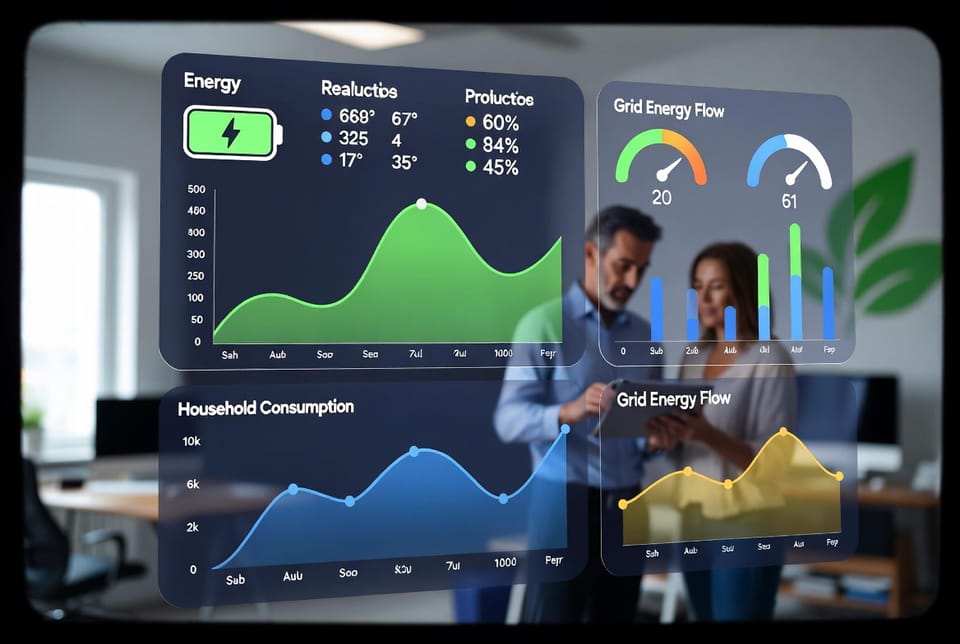
Daily production represents the total kilowatt-hours (kWh) your solar panels generate each day. Compare this against weather conditions and historical averages to establish normal performance baselines.
- Track peak production hours during midday sunlight
- Monitor cumulative lifetime production for overall system health
- Review monthly and yearly totals for seasonal trends
Consistent daily production builds confidence in your system. Unexpected variations often signal opportunities for optimization or maintenance.
Household Energy Consumption Patterns
Understanding consumption is equally important as production. Monitoring reveals exactly how and when your home or business uses electricity.
This data helps you:
- Align high-energy activities (like laundry or EV charging) with peak solar production hours
- Identify inefficient appliances or usage habits
- Calculate true net savings from your solar system
When production exceeds consumption, excess energy can be exported to the grid—creating additional value through net metering.
Grid Import and Export Metrics
For grid-tied systems, tracking grid import (energy drawn from the utility) and grid export (surplus solar energy sent back) provides a complete picture of energy flow.
Key benefits include:
- Accurate net metering credits verification
- Identification of times when your system underperforms
- Better planning for battery storage integration if desired
These metrics reveal how effectively your solar installation offsets utility bills.
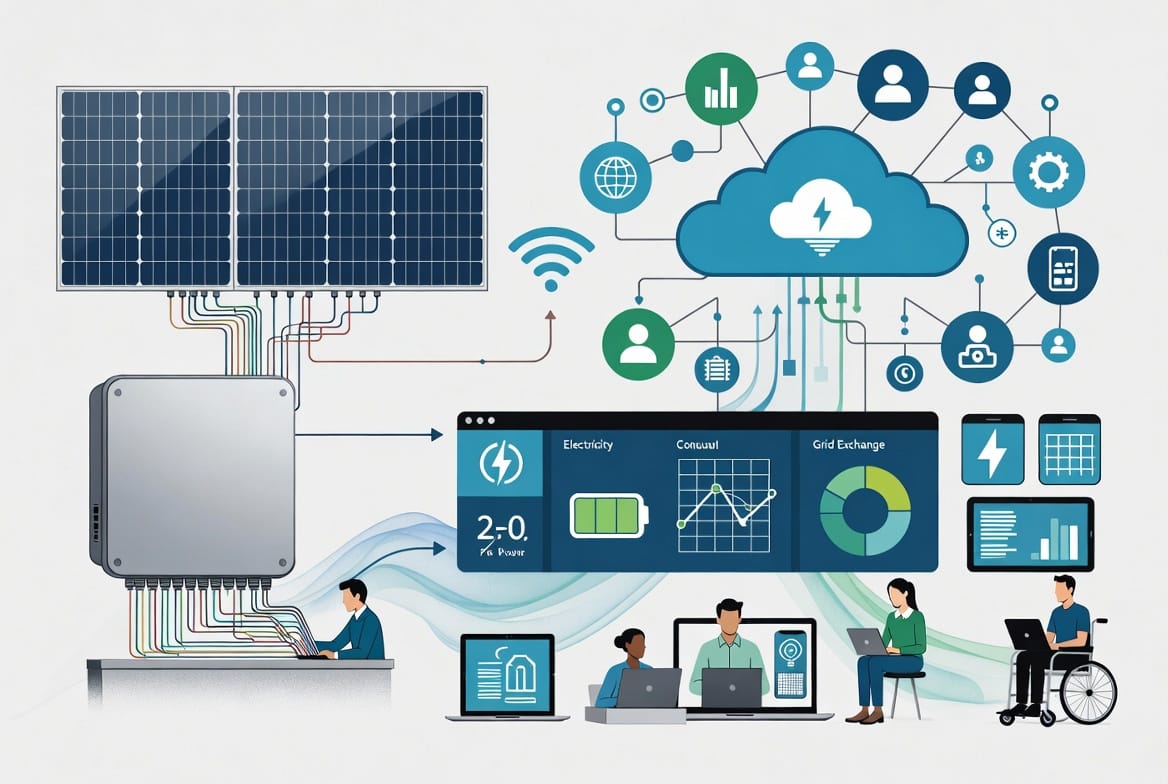
How Monitoring Technology Works
Contemporary solar monitoring solutions leverage smart inverters and cloud-based platforms. Data flows seamlessly from your panels to your devices.
Most systems offer:
- Real-time production updates
- Historical performance reports
- Custom alerts for performance deviations
- Mobile app access for on-the-go monitoring
These tools require minimal setup and deliver professional-grade insights previously available only to large-scale installations.
Spotting and Addressing Performance Issues Early
Proactive monitoring helps identify problems quickly. Look for these common indicators:
- Unexpected drops in daily production compared to previous periods
- Changes in expected seasonal patterns (e.g., lower winter output than anticipated)
- Sudden spikes in grid import despite good sunlight
- Inconsistent performance across different panel strings
Early detection prevents minor issues from becoming major repairs. Common causes include:
- Dust, debris, or snow accumulation on panels
- Shading from new tree growth or nearby construction
- Inverter faults or wiring problems
- Module degradation (usually very gradual)
Your monitoring platform typically sends notifications when performance falls outside normal parameters, allowing swift intervention.
Advanced Monitoring Features Worth Considering
Premium monitoring platforms provide deeper insights:
- Weather integration — correlates production with local conditions
- Performance ratio calculations — measures efficiency relative to ideal conditions
- String-level monitoring — identifies issues at individual panel groups
- Financial tracking — translates kWh into dollar savings
These features empower data-driven decisions about system maintenance and potential expansions.
Best Practices for Effective Solar Monitoring
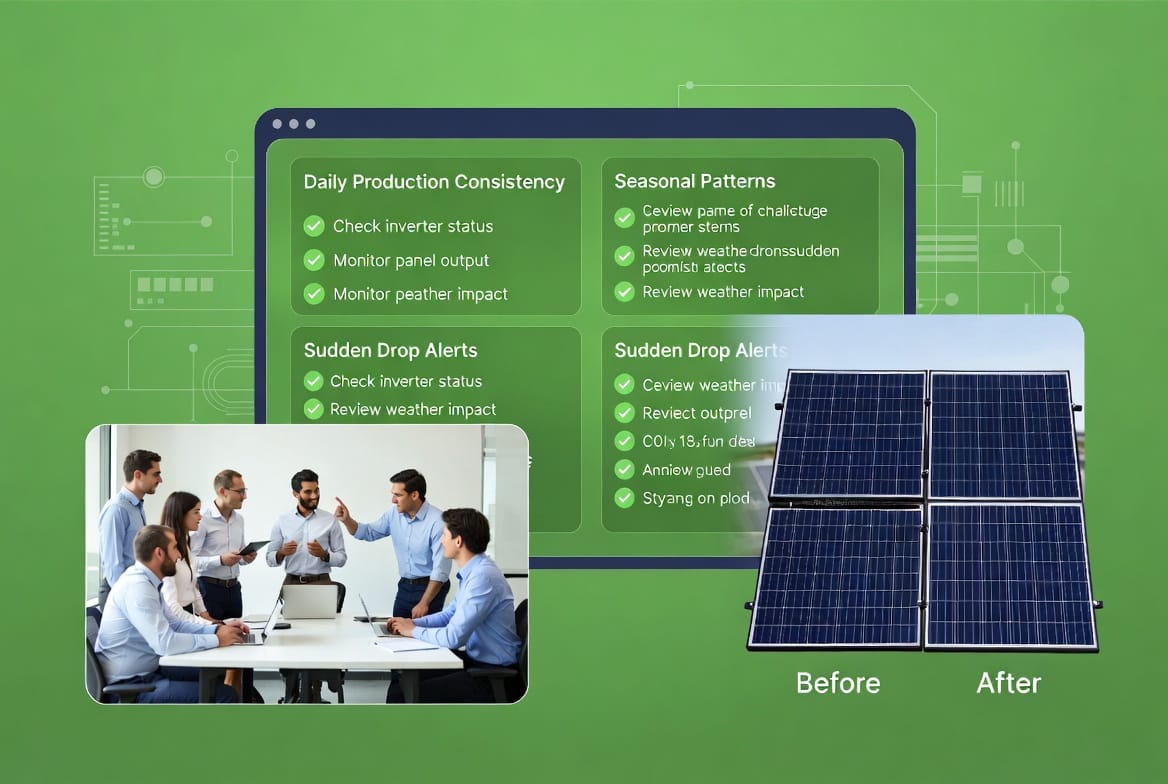
To get maximum value from your monitoring system:
- Check dashboards regularly — weekly reviews help spot trends early
- Set meaningful alerts — focus on significant deviations rather than minor fluctuations
- Maintain records — keep historical data for accurate year-over-year comparisons
- Schedule professional inspections — combine digital monitoring with periodic physical checks
- Review reports monthly — analyze consumption alongside production for optimization opportunities
Consistent attention to these practices ensures your solar investment continues delivering strong returns for decades.
The Long-Term Benefits of Diligent Monitoring
Owners who actively monitor their systems typically enjoy:
- Higher overall energy yield
- Extended equipment lifespan
- Greater peace of mind
- Maximized financial returns
- Faster issue resolution
Monitoring transforms solar ownership from passive to empowered. You gain control over your energy future rather than simply hoping everything works as expected.
Solar technology continues advancing, and monitoring capabilities improve alongside it. Staying informed positions you to take advantage of new features and optimizations as they become available.
Taking Control of Your Solar Performance
Your solar panel system deserves attentive oversight. By tracking daily production, consumption patterns, grid interactions, and performance consistency, you protect your investment while maximizing clean energy benefits.
Professional monitoring platforms make this responsibility straightforward and even enjoyable. The insights gained often lead to smarter energy habits and greater appreciation for your solar investment.
Ready to enhance your solar experience? Monitor your solar investment proactively.
Protect Your Solar Investment – Call for a Free Consultation