The Solar Panel Shade Impact: How Even Small Shadows Reduce Output
Shade ranks among the most underestimated performance factors in residential and commercial solar systems. Homeowners often focus on panel efficiency ratings, inverter quality, or battery storage, yet overlook how even a narrow strip of shadow can slash daily energy harvest. Understanding this solar panel shade impact empowers property owners to protect their investment and maximize long-term returns.
Call Today for Expert Site Assessment
A well-designed solar installation delivers reliable clean power for decades. When shadows from trees, chimneys, neighboring buildings, or even utility poles fall across the array, however, output drops far more than the shaded area alone would suggest. This article explains exactly how shade reduces production, how modern bypass diodes limit the damage, and why a professional site assessment remains essential before any installation begins.
Why Shade Hits Solar Panels Harder Than Expected
Solar panels consist of dozens of individual cells wired in series strings. Electricity flows through the entire string like water through a single pipe. When one cell falls into shade, its resistance rises dramatically. That single shaded cell acts as a bottleneck, restricting current for every cell downstream.
The result is dramatic. A shadow covering only 5–10 percent of a panel can cut that panel’s output by 30–50 percent or more under certain conditions. In extreme cases, an entire string may drop nearly to zero until the shade moves. This disproportionate effect is the core of the solar panel shade impact.
Morning or late-afternoon sun creates longer shadows. Seasonal changes shift the sun’s path, so a tree that causes no problem in summer may cast heavy shade in winter. Neighboring structures, new construction, or even a growing hedge can introduce new obstacles years after installation. These variables make shade a moving target rather than a fixed design flaw.
How Partial Shading Cascades Through a System
Consider a typical residential array of ten panels wired in two parallel strings of five. If a chimney shadow covers just two cells on one panel, the entire five-panel string may experience reduced current. The parallel string continues at full capacity, yet total system output still falls noticeably. Over a full day the cumulative energy loss compounds.
Hot spots form when shaded cells reverse-bias and dissipate power as heat. Prolonged hot-spot conditions accelerate cell degradation and, in rare cases, risk long-term module damage. Modern panels incorporate protective features, yet prevention through proper placement remains the superior strategy.
Time of day matters. Midday sun sits high, producing shorter shadows. Early morning and late afternoon rays travel at low angles, stretching shadows across wider areas. Seasonal shifts further complicate the picture: the sun’s winter arc sits lower in the sky, lengthening shadows from the same objects that caused minimal interference in summer.
Nearby obstructions evolve. A young sapling becomes a mature tree within a decade. A new two-story home next door can permanently alter the solar window. Even temporary items such as scaffolding, satellite dishes, or seasonal decorations introduce short-term losses that accumulate over months.
The Critical Role of Bypass Diodes
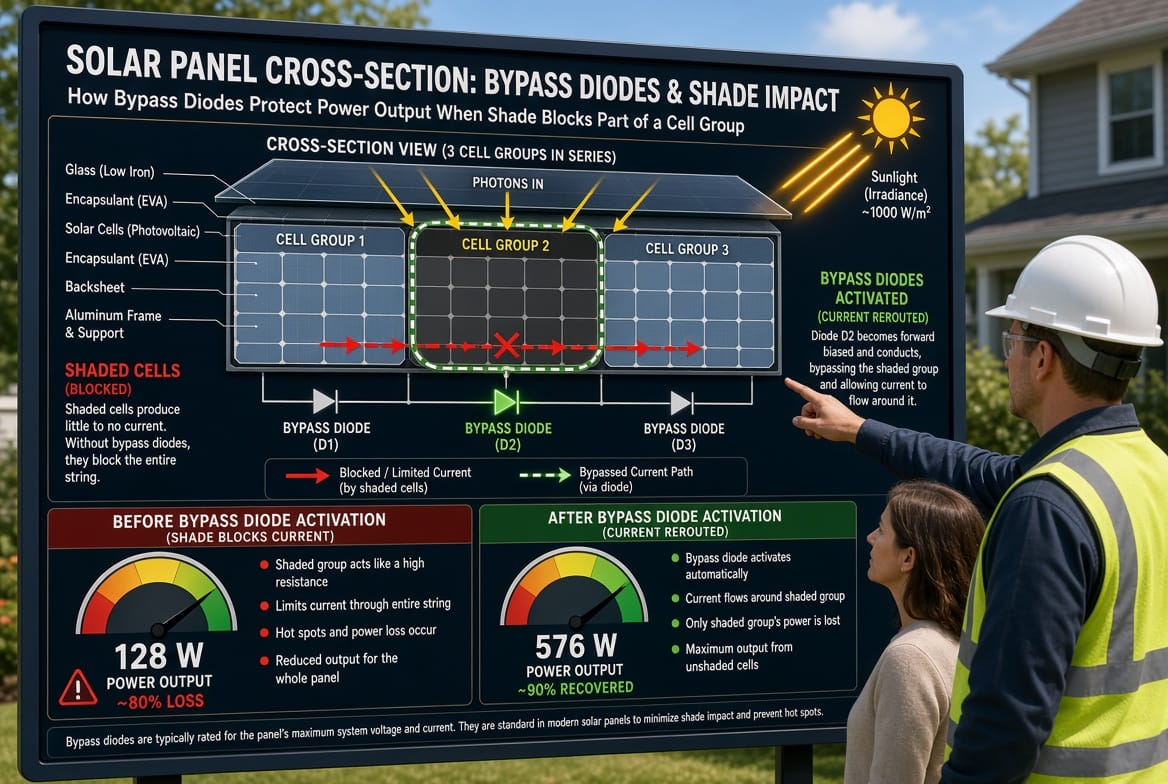
Manufacturers equip nearly every modern solar panel with bypass diodes. These small electronic components sit inside the junction box and provide an alternate current path around shaded cell groups.
A typical 60-cell or 72-cell panel contains three bypass diodes, each protecting one-third of the cells. When shade falls on a protected section, the corresponding diode activates, allowing current from the remaining unshaded sections to continue flowing. Instead of the entire panel collapsing, only the shaded third is bypassed. Output still declines, yet the reduction stays proportional rather than catastrophic.
Bypass diodes therefore serve as the system’s built-in safety net. They cannot restore lost production from the shaded cells themselves, but they prevent one small shadow from dragging an entire string offline. High-quality panels use robust Schottky diodes that activate quickly and handle the reverse current without excessive heat.
Even with excellent diode performance, the goal remains clear: minimize shade exposure from the outset. Diodes mitigate; they do not eliminate the solar panel shade impact.
Why Professional Site Assessment Prevents Costly Surprises
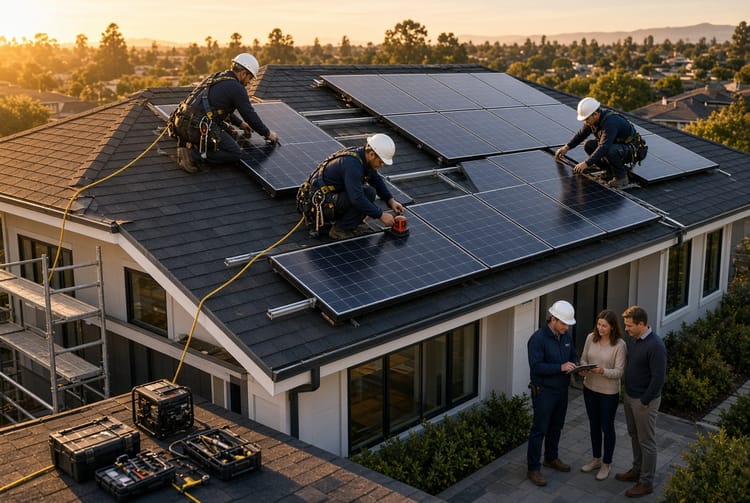
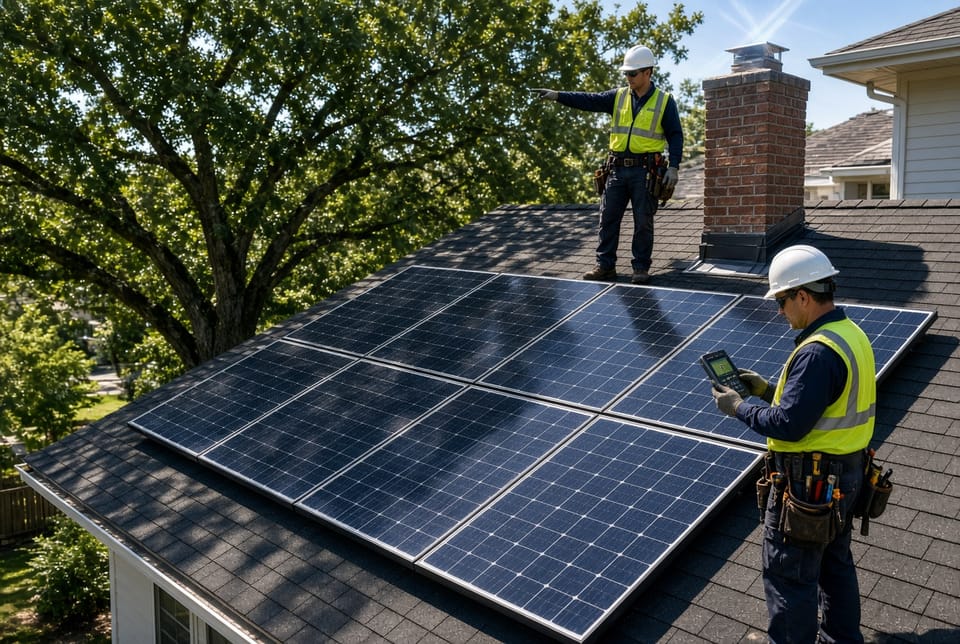
A thorough site assessment evaluates every potential shading source before panels reach the roof. Qualified solar professionals use specialized tools and methods that go far beyond a quick visual glance.
Irradiance meters measure actual sunlight intensity at multiple points across the proposed array area throughout the day. Digital shade analysis software models the sun’s path for every hour of every month, incorporating local latitude, roof pitch, and orientation. Drone imagery or 3D laser scanning captures precise heights and locations of trees, chimneys, vents, and neighboring structures. Seasonal growth projections estimate how trees will expand over the next 10–25 years.
The assessment also examines future risks. Will a planned second-story addition next door cast new shadows? Does the utility plan to install taller poles along the street? Are there any local ordinances that might require tree preservation? Answering these questions early avoids expensive redesigns or underperforming systems later.
During the visit, technicians document roof condition, structural capacity, electrical service details, and optimal mounting locations that naturally avoid shade. They calculate the precise energy yield expected under real-world conditions rather than ideal laboratory ratings. Homeowners receive a clear report showing predicted monthly production with and without identified shade sources.
This process delivers peace of mind. Property owners gain confidence that their system will perform as promised for decades. Any necessary tree trimming, chimney adjustments, or array repositioning can be planned and completed before installation begins, protecting both energy harvest and return on investment.
Key Shading Factors Every Homeowner Should Understand
Several variables interact to determine the true solar panel shade impact on any given property.
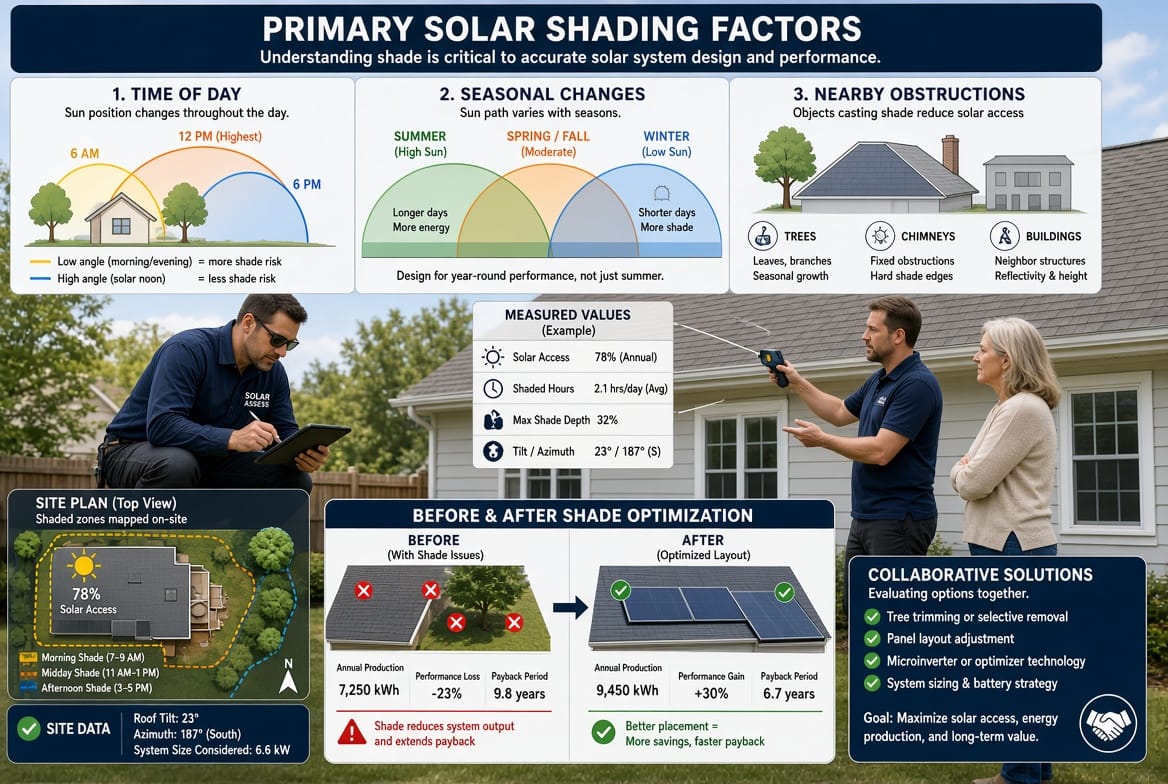
- Time of day: Low-angle morning and evening sun creates longer shadows that sweep across panels for extended periods. Midday sun minimizes this effect.
- Seasonal changes: Winter sun sits lower, stretching shadows from objects that cause little interference in summer. Leaf-on versus leaf-off conditions further alter tree shade patterns.
- Nearby obstructions: Trees, chimneys, dormers, vents, neighboring buildings, power lines, and even satellite dishes all contribute. Distance, height, and relative position determine severity.
- Array design: String configuration, module orientation, and microinverter or power optimizer choices influence how shade on one panel affects the rest of the system.
- Local climate and latitude: Higher latitudes experience more dramatic seasonal sun-path shifts. Frequent cloud cover can mask shade losses until clear days reveal the full impact.
Understanding these factors allows informed decisions. Strategic panel placement, selective pruning, or the use of module-level power electronics can further reduce residual losses when complete shade avoidance proves impossible.
Practical Steps to Minimize Shade Losses
Property owners can take several proactive measures. Schedule a professional evaluation early in the planning process. Request a shade analysis report that includes annual production estimates under actual site conditions. Discuss module-level electronics if residual shade cannot be fully eliminated. Consider strategic landscaping adjustments that balance energy goals with property aesthetics and local regulations.
Once installed, periodic visual inspections help catch new growth or unexpected obstructions. Many modern monitoring platforms alert owners to sudden production drops that may signal emerging shade issues. Addressing problems promptly preserves system health and financial returns.
The Long-Term Value of Shade-Aware Design
A solar system free from significant shade delivers consistent performance year after year. Energy bills stay lower, environmental benefits accumulate steadily, and the payback period shortens. Conversely, an array compromised by preventable shadows underperforms for its entire 25- to 30-year lifespan, eroding both savings and satisfaction.
Professional design that prioritizes shade mitigation protects every other high-quality component in the system—premium panels, efficient inverters, and robust racking. The modest investment of time and attention during the assessment phase yields outsized returns across decades of clean energy production.
Homeowners who understand the solar panel shade impact approach installation with realistic expectations and clear priorities. They select partners who treat site assessment as a non-negotiable foundation rather than an optional extra. The result is a system engineered for real-world conditions rather than idealized catalogs.
Shade need not undermine a solar investment. With proper evaluation, thoughtful design, and modern protective technologies such as bypass diodes, even challenging sites can achieve strong, reliable output. Knowledge and preparation turn a potential performance risk into a managed and minimized variable.
Evaluate shading carefully before installing solar. A comprehensive site assessment reveals every opportunity to protect production and maximize value. For expert guidance tailored to your property.
Protect Your Solar Investment – Book Assessment