The Solar Panel Sales Proposal: What to Look For in a Quote

Navigating a solar panel sales proposal can feel overwhelming, but understanding its key elements empowers you to make informed decisions. A well-crafted quote isn't just a price tag—it's a roadmap to energy independence, cost savings, and environmental benefits. In this comprehensive guide, we'll walk you through exactly what to examine, from system specifications to warranties and production estimates. By the end, you'll confidently evaluate any proposal with clarity and avoid common pitfalls.
Get Expert Solar Proposal Guidance – Call Now!
Whether you're comparing multiple bids or reviewing your first one, focusing on transparency and quality ensures your solar investment delivers maximum value for decades to come.
Why a Thorough Review of Your Solar Proposal Matters
Solar energy systems represent a significant investment, often paying for themselves through reduced utility bills and incentives. However, not all proposals are created equal. A detailed solar panel sales proposal should provide clear, verifiable information that aligns with your home's needs and long-term goals.
Rushing through a quote without scrutiny might lead to underperforming systems, unexpected costs, or missed savings opportunities. Taking time to analyze it positions you as an empowered customer, securing the best possible outcome. Professional installers welcome questions—they demonstrate their commitment to customer education and transparent solar practices.
Key takeaway: A strong proposal builds trust through specifics, not vague promises.

Evaluating System Size: Matching kW to Your Energy Needs
One of the first elements to verify in any solar panel sales proposal is the system size, typically measured in kilowatts (kW). This determines how much electricity your array can generate.
- Calculate your baseline: Review your past 12 months of utility bills to understand average monthly consumption.
- Right-sizing is crucial: An undersized system leaves you reliant on the grid; an oversized one inflates upfront costs without proportional benefits.
- Professional assessment: Reputable proposals include a site-specific analysis accounting for roof orientation, shading, and local sunlight hours.
Bold advice: Aim for a system that offsets 80-100% of your usage based on your goals. Look for explanations on how the kW rating was determined—vague estimates are a concern.
Proper sizing ensures optimal return on investment and smooth integration with your home's electrical setup.
Panel Brand and Model: Quality You Can Count On
The heart of your solar system lies in the solar panels themselves. Scrutinize the brand and model specified in the proposal.
Premium manufacturers invest heavily in research, offering higher efficiency ratings and better performance in varied conditions. Established names often provide superior temperature coefficients and degradation rates.
What to verify:
- Efficiency ratings: Higher percentages mean more power from the same space.
- Tier 1 status: Indicates strong financial stability and manufacturing quality.
- Technology type: Monocrystalline, polycrystalline, or advanced options like bifacial panels.
A trustworthy solar panel sales proposal lists exact models with datasheets or links for independent verification. Avoid generic "high-quality panels" descriptions without specifics.
Investing in reputable panels minimizes long-term maintenance and maximizes energy harvest year after year.
Understanding Inverter Types and Their Impact
Inverters convert the direct current (DC) from your panels into usable alternating current (AC) for your home. Your proposal should clearly specify the inverter type:
- String inverters: Cost-effective for uniform roofs but can be impacted by shading on one panel.
- Microinverters: Panel-level optimization, ideal for complex roofs or partial shading—often paired with stronger performance guarantees.
- Power optimizers: A hybrid approach offering many microinverter benefits at a different price point.
Key questions to ask:
- Is the inverter sized appropriately for the array?
- What are the efficiency ratings and expected lifespan?
- Are there monitoring capabilities included for real-time performance tracking?
Selecting the right inverter technology directly influences your system's overall reliability and energy production. A detailed proposal explains the rationale behind the choice for your specific installation.
The Critical Role of Warranties in Your Proposal
Warranties protect your investment against defects, performance shortfalls, and workmanship issues. A comprehensive solar panel sales proposal breaks these down clearly:
- Panel warranties: Typically 25 years on product and performance (e.g., guaranteeing 90% output after 25 years).
- Inverter warranties: Often 10-25 years depending on the model.
- Workmanship/installation warranty: Usually 5-25 years, covering labor and system integration.
- Production guarantees: Some providers offer specific annual output assurances.
Red flag alert: Beware of unusually short warranty periods or vague language. Strong proposals include full copies or detailed terms, emphasizing peace of mind for homeowners.
Understanding these protections reassures you that your solar system is built to last, with accountability from the provider.
Estimated Energy Production: Realistic Projections
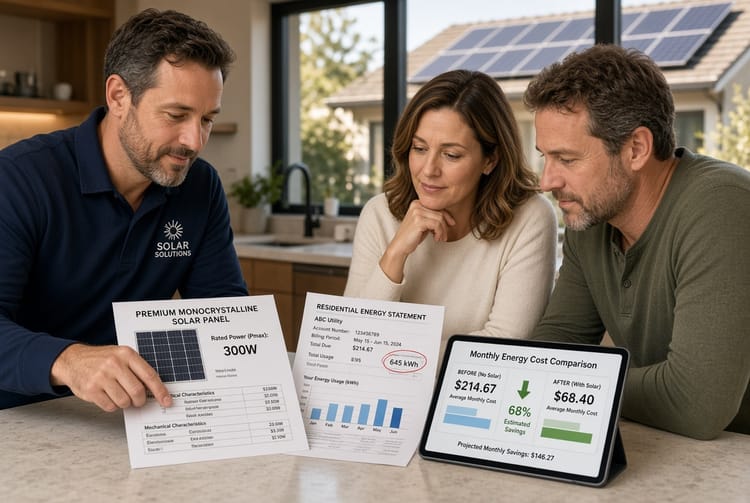
Look closely at the estimated annual production figures in kilowatt-hours (kWh). These should be based on:
- Local weather data and irradiance levels.
- Your roof's specifics (tilt, azimuth, shading analysis).
- System efficiency losses over time.
Reputable proposals use industry-standard modeling tools like PVsyst or similar for accuracy. They often include year-by-year degradation projections and comparisons to your current usage.
Pro tip: Cross-check these estimates against independent calculators using your address. Overly optimistic numbers without supporting data warrant further discussion.
Accurate production estimates form the foundation for calculating payback periods and lifetime savings.
Cost Per Watt and Overall Value Assessment
Cost per watt is a standard metric for comparing solar panel sales proposals. Divide the total system price (before incentives) by the kW capacity.
This helps normalize bids of different sizes. Factor in:
- Included equipment quality.
- Permitting, interconnection, and labor costs.
- Any additional features like monitoring or battery storage.
Transparent pricing breaks down these components. A higher upfront cost often reflects better equipment and service, leading to superior long-term value.
Red Flags That Signal Potential Issues
Stay vigilant for warning signs in any quote:
- Lowball pricing: Significantly below market averages may indicate corner-cutting on quality or hidden fees.
- No production guarantee or vague estimates: Lacks commitment to results.
- Missing details: Absence of specific brands, warranties, or installation timelines.
- Pressure tactics: Rushing you to sign without time for review.
- Unrealistic savings claims: Promises that seem too good without data backing.
Authoritative guidance: Trust your instincts and consult multiple providers. A professional solar company prioritizes education over quick sales.
How to Effectively Compare Multiple Proposals
Create a side-by-side evaluation using a simple spreadsheet or checklist:
- System size (kW) and expected output
- Panel and inverter specifications
- Total cost and cost per watt
- Warranty coverage details
- Timeline for installation and incentives handled
- Monitoring and maintenance plans
This structured approach reveals true value beyond the bottom line.
Remember, the lowest price doesn't always equal the best deal. Prioritize long-term performance, reputable partners, and comprehensive support.
Making Your Final Decision with Confidence
Evaluating a solar panel sales proposal thoroughly transforms uncertainty into assurance. By focusing on these critical components—system size, panel quality, inverter technology, warranties, production estimates, and fair pricing—you secure a system tailored to your needs.
Solar adoption continues to grow as technology advances and costs decrease, offering homeowners unprecedented control over energy expenses. With careful review, your transition to clean power will be smooth and rewarding.
Read your solar proposal carefully. Don't hesitate to ask detailed questions. For transparent guidance and expert support throughout the process. Our team is dedicated to helping you navigate every step with clarity and confidence.
Understand Your Solar Proposal – Speak to Experts Now