The Solar Panel Recycling: What Happens at End of Life (20-30 Years)
As the global solar energy boom continues to accelerate, a critical question emerges for every responsible homeowner and business: what happens to solar panels when they reach the end of their productive life after 20 to 30 years? Far from becoming environmental waste, today's solar panel recycling processes ensure these systems contribute to a truly circular economy.
Get Expert Advice on Solar Panel Recycling – Call Today
At BizTrendWatch, we believe in solar power as a long-term sustainable investment. Understanding the end-of-life management of photovoltaic panels provides confidence that choosing solar today supports environmental stewardship for generations to come.
Why Solar Panel Recycling Matters for Sustainability
Solar panels represent one of the cleanest forms of renewable energy during operation, but true sustainability requires responsible handling at every stage of their lifecycle. With millions of panels installed worldwide since the early 2000s, the industry is proactively preparing for the wave of decommissioned solar panels expected in the coming decades.
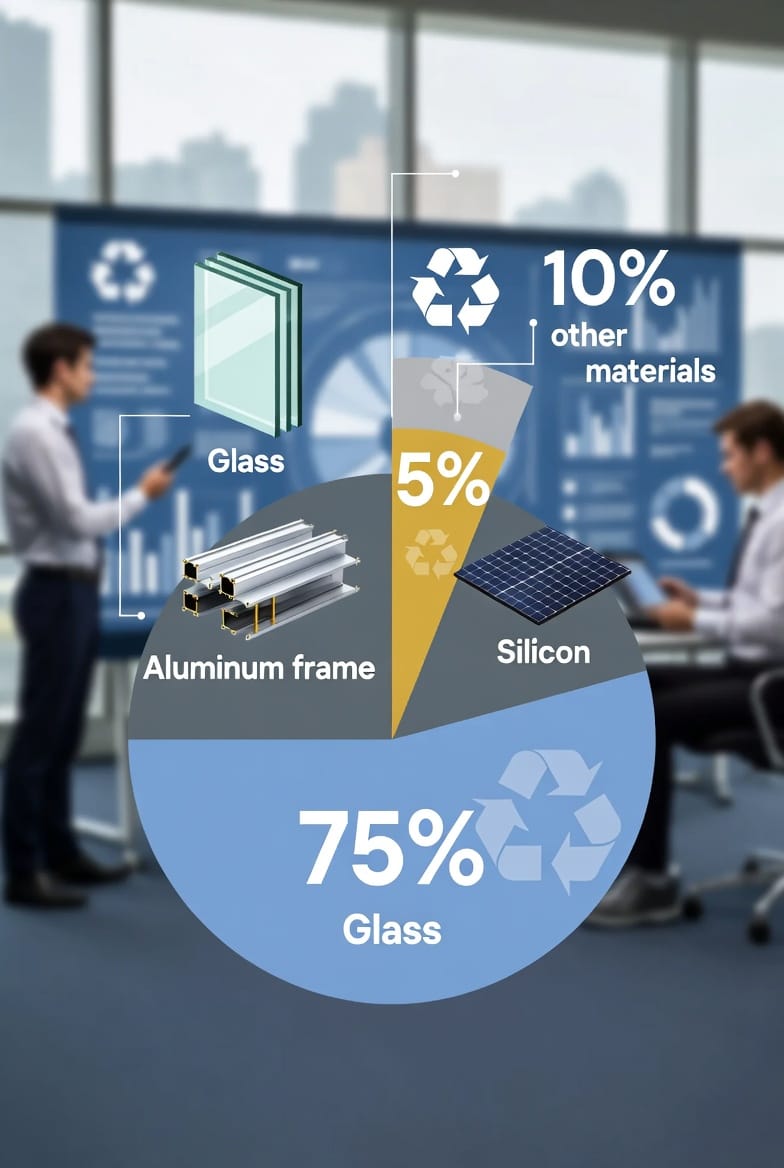
Key fact: Modern solar panels are highly recyclable. A typical crystalline silicon panel consists of approximately:
- 75% glass – the primary structural component
- 10% aluminum frame – strong and fully recyclable
- 5% silicon – the valuable semiconductor material
- 10% other materials – including copper wiring, polymers, and small amounts of silver
These materials retain significant value when properly recovered, reducing the need for virgin resource extraction and minimizing landfill impact.
The good news? Industry innovations and growing infrastructure make solar panel recycling increasingly efficient, cost-effective, and accessible.
Understanding the Solar Panel Lifecycle
Solar panels are engineered for durability. Most quality manufacturers warrant their products for 25 years, with many continuing to produce meaningful energy output well beyond 30 years. When efficiency eventually drops below viable levels (typically around 80% of original capacity), panels don't suddenly become hazardous waste.
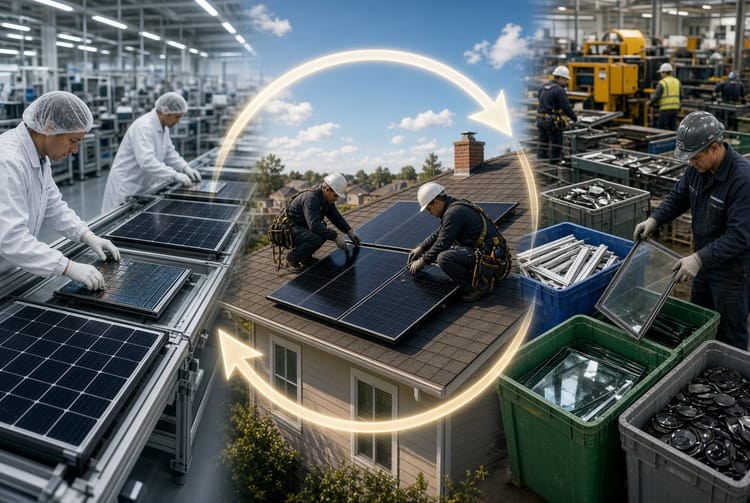
Instead, they enter a structured end-of-life process focused on material recovery and reuse. This approach aligns with broader sustainability goals and supports the transition to a low-carbon economy.
Bold reality: Without proper recycling programs, valuable resources would be lost. With them, we close the loop on solar energy production.
The Solar Panel Recycling Process Step by Step
The recycling journey begins with careful collection and transportation to specialized facilities. Here’s how the process typically unfolds:
- Collection and Transportation: Panels are safely removed from rooftops or ground-mounted arrays by certified technicians to prevent damage during handling.
- Initial Dismantling: Frames and junction boxes are removed for separate processing. Aluminum frames are sent directly to metal recyclers.
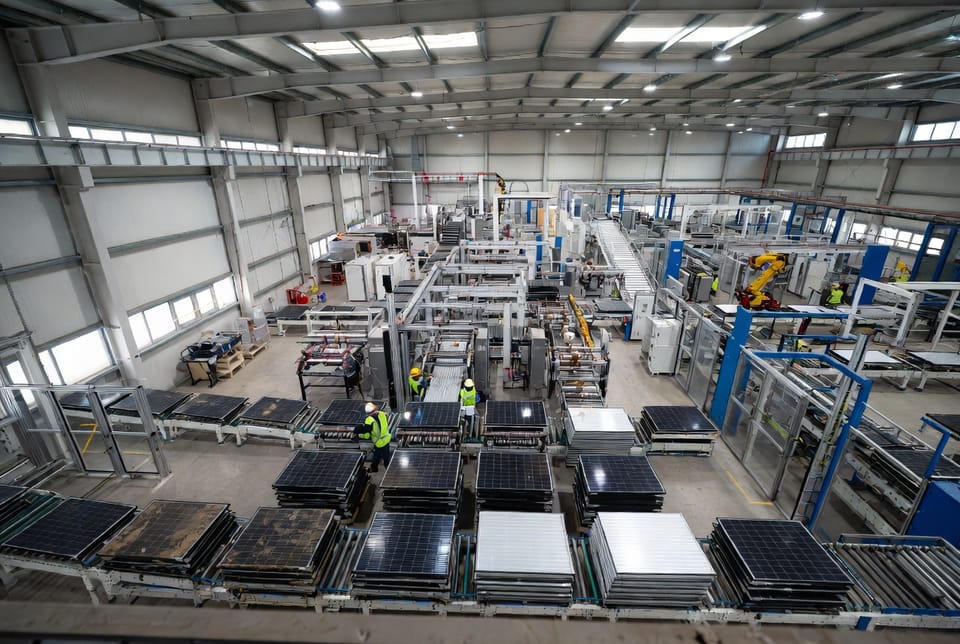
- Mechanical Separation: Advanced machinery breaks down the panels. Glass is separated through crushing and sorting technologies, achieving high purity levels suitable for new glass products.
- Thermal and Chemical Processing: Specialized methods recover silicon cells and precious metals like silver. These processes continue to improve in efficiency each year.
- Material Recovery and Reuse: Recovered glass returns to manufacturing, aluminum is reformed into new products, and silicon can be purified for new solar panels or electronics.
Current recovery rates for properly processed panels exceed 90-95% by weight, making solar one of the most recyclable energy technologies available.
Emerging Manufacturer Take-Back Programs
One of the most reassuring developments in solar panel recycling is the rise of manufacturer responsibility programs. Leading solar companies are establishing take-back initiatives where they handle collection and recycling of their products at end-of-life.
These programs offer several advantages:
- Convenience for system owners
- Guaranteed proper processing through certified channels
- Cost predictability built into long-term ownership
- Enhanced warranty value extending beyond energy production
As regulations evolve, more manufacturers are stepping up to create closed-loop systems for their panels.
Specialized Solar Recyclers and Industry Infrastructure
Beyond manufacturer programs, a network of specialized recycling facilities is expanding across regions. These dedicated plants use cutting-edge technology optimized specifically for photovoltaic waste.
Benefits of working with specialized recyclers:
- Higher material recovery rates
- Compliance with environmental standards
- Professional handling that protects workers and communities
- Contribution to local green job creation
The industry is investing heavily in research to improve recovery of rare materials and reduce processing energy requirements.

Regulatory Developments Supporting Responsible Recycling
Governments worldwide are recognizing the importance of solar waste management. Several regions have already implemented or are developing specific regulations for photovoltaic panel disposal and recycling.
These policies typically encourage:
- Producer responsibility
- Proper collection infrastructure
- High recovery targets
- Reporting and transparency requirements
Such developments provide additional assurance that the solar industry maintains high environmental standards throughout the full product lifecycle.
Addressing Common Concerns About End-of-Life Panels
Many potential solar adopters worry about future disposal costs or environmental impact. Here’s a reassuring perspective:
Concern: Will old panels end up in landfills?
Reality: With growing recycling capacity and regulatory frameworks, responsible pathways are increasingly available and preferred.
Concern: Is recycling expensive?
Reality: Recovered materials often offset processing costs. Many programs include end-of-life management in initial system planning.
Concern: Are there toxic materials?
Reality: Modern panels contain minimal hazardous substances, and proper recycling ensures these are safely managed.
The solar industry’s proactive approach demonstrates commitment to long-term environmental responsibility.
The Broader Impact on Solar Adoption
Understanding robust solar panel recycling options removes a significant barrier for many considering solar investment. When you know your panels will be responsibly handled decades from now, the decision becomes even more compelling.
Key advantages of choosing solar with end-of-life planning:
- Complete lifecycle sustainability
- Protection against future regulatory risks
- Enhanced system resale value
- Contribution to circular economy principles
- Peace of mind for environmentally conscious consumers
Planning Ahead: What You Can Do Today
While widespread panel retirement is still years away for many installations, proactive planning ensures smooth transitions when the time comes.
Consider these steps:
- Select manufacturers with established or emerging take-back programs
- Work with installers who understand recycling requirements
- Document your system details for future reference
- Stay informed about local recycling infrastructure developments
- Partner with companies committed to full lifecycle support
Looking Toward a Circular Solar Future
The solar industry continues to evolve rapidly. Innovations in panel design are making future recycling even more efficient, while material recovery technologies advance at impressive rates.
By choosing quality solar solutions today, you’re investing in both immediate energy independence and long-term environmental benefits. The infrastructure and processes for responsible solar panel recycling are maturing alongside the technology itself.
Choose Solar with Confidence and Responsibility
Solar power represents a powerful step toward sustainability, and proper end-of-life management completes that commitment. With high recyclability rates, emerging manufacturer programs, and specialized recycling infrastructure, solar owners can feel confident about their environmental impact across decades.
Ready to explore solar solutions designed for the full lifecycle? Choose solar with an end-of-life plan in mind. Our team can help you understand available options and connect you with responsible partners.
ecure Your Solar Investment with Proper End-of-Life Planning