The Solar Panel Power Tolerance: Understanding Actual vs. Rated Output
In the rapidly growing world of solar energy, choosing the right panels is one of the most important decisions for homeowners and businesses alike. While many focus on rated wattage, few pay close attention to power tolerance — a critical factor that determines whether your system will meet, exceed, or fall short of expectations.
Choose the Right Solar Panels Today – Call for Free Consultation
At its core, power tolerance reveals the real-world difference between what manufacturers promise in laboratory conditions and what you actually receive under daily use. This comprehensive guide explains everything you need to know about solar panel power tolerance to make informed, confident decisions.
What Is Power Tolerance in Solar Panels?
Power tolerance refers to the allowable variation between a solar panel’s rated output (the official wattage listed by the manufacturer) and its actual measured output under Standard Test Conditions (STC).
Manufacturers test panels in controlled lab environments with specific temperature, irradiance, and angle settings. However, production variations in materials, assembly, and quality control mean not every panel performs exactly at the rated level.
Key concept: Power tolerance is typically expressed as a percentage range, such as -0%/+5% or ±3%.
Bold insight: A positive tolerance means your panels might produce more power than rated, while negative tolerance indicates they could produce less.
How Manufacturers Rate Solar Panels
Solar panel ratings are determined through rigorous laboratory testing following international standards. The rated power (e.g., 450W) represents the maximum output a panel should deliver under ideal conditions:
- 1000 W/m² solar irradiance
- 25°C cell temperature
- Air mass 1.5 spectrum
However, real manufacturing is not perfect. This is where power tolerance becomes essential.
Common Power Tolerance Examples
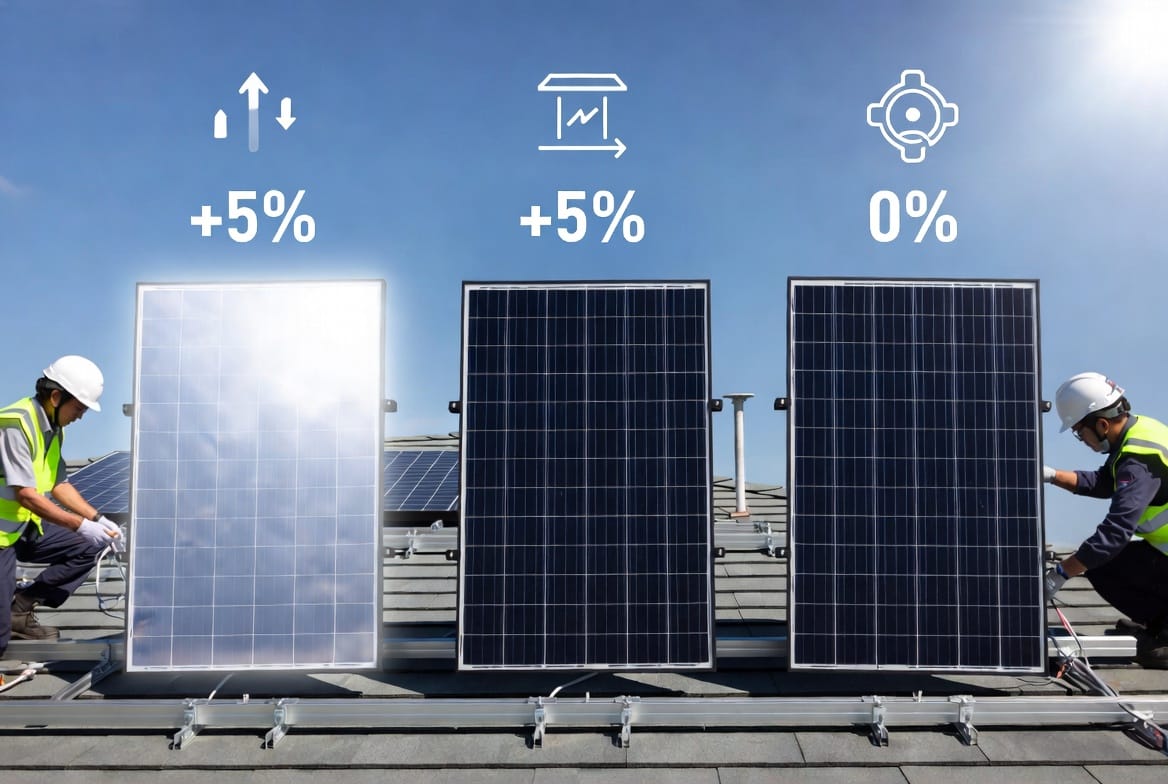
- -0% / +5%: The panel will never produce less than the rated wattage and may produce up to 5% more. This is highly favorable for customers.
- ±3%: The panel output can vary between 3% below and 3% above the rated power.
- -3% / +3%: Similar variation on both sides, common in mid-tier panels.
- 0% tolerance: Rare and premium — panels are guaranteed to meet or very closely match the exact rated output.
Pro tip: Always look for panels with positive tolerance (the “+” side) as they provide a buffer that can enhance your overall system performance.
Why Power Tolerance Matters for Your Solar Investment
Understanding power tolerance goes far beyond technical specifications. It directly impacts:
- Total energy production over the system’s lifetime
- Return on investment (ROI) calculations
- System sizing decisions
- Long-term reliability expectations
A 5% positive tolerance on a 10kW system could mean hundreds of extra kilowatt-hours per year. Over 25 years, this adds up to significant financial benefits and faster payback periods.
Reassuring fact: Modern manufacturing has improved dramatically, and reputable brands now offer tighter tolerances than ever before, giving customers more predictable and often better-than-expected performance.
Positive vs. Negative Tolerance: What’s the Difference?
Let’s break this down clearly:
Positive Tolerance Benefits
When panels have positive power tolerance, you gain:
- Potential for higher energy yield
- Better performance during suboptimal conditions
- Added value without paying premium prices
Example: A 400W panel with +5% tolerance could realistically output 420W under ideal conditions.
Negative Tolerance Risks
Panels with negative tolerance may:
- Deliver slightly lower output than expected
- Require slightly larger system designs to meet energy goals
- Affect long-term performance projections
Smart approach: Work with installers who understand these nuances and can adjust system designs accordingly.
Comparing Power Tolerance Across Brands
Not all solar panel manufacturers are equal when it comes to tolerance specifications. Here’s what to evaluate:
- Tier 1 manufacturers often provide -0%/+5% or better
- Budget brands may use wider ±5% ranges
- Premium lines sometimes advertise 0% or very tight positive tolerances
When comparing quotes, don’t just look at the sticker price and rated wattage. Calculate the effective power potential by factoring in tolerance:
Formula to remember:
Effective Maximum Power = Rated Power × (1 + Positive Tolerance)
This simple calculation helps you make apples-to-apples comparisons between different brands and models.
Real-World Performance Factors Beyond Tolerance
While power tolerance is important, remember it works alongside other variables:
- Temperature coefficients
- Degradation rates
- Low-light performance
- PID resistance (Potential Induced Degradation)
Authoritative advice: Choose panels where the manufacturer provides transparent data on all these factors combined. The best systems balance strong power tolerance with excellent overall specifications.
How to Verify Power Tolerance on Your Panels
Smart consumers take these steps:
- Request the technical datasheet for the exact model
- Look specifically for the “Power Tolerance” or “Output Tolerance” line
- Ask for flash test reports — individual panel performance measurements
- Review warranty documents — they often reference tolerance guarantees
- Consult with your installer about real-world expectations
Peace of mind: Reputable solar companies are happy to explain these details because transparency builds trust.
The Impact of Power Tolerance on System Design
Experienced solar designers account for power tolerance when sizing systems. A slight positive tolerance can allow for:
- Fewer panels to reach energy goals
- Optimized roof space usage
- Better performance during peak summer months
Conversely, understanding negative tolerance prevents undersized systems that fail to meet homeowner expectations.
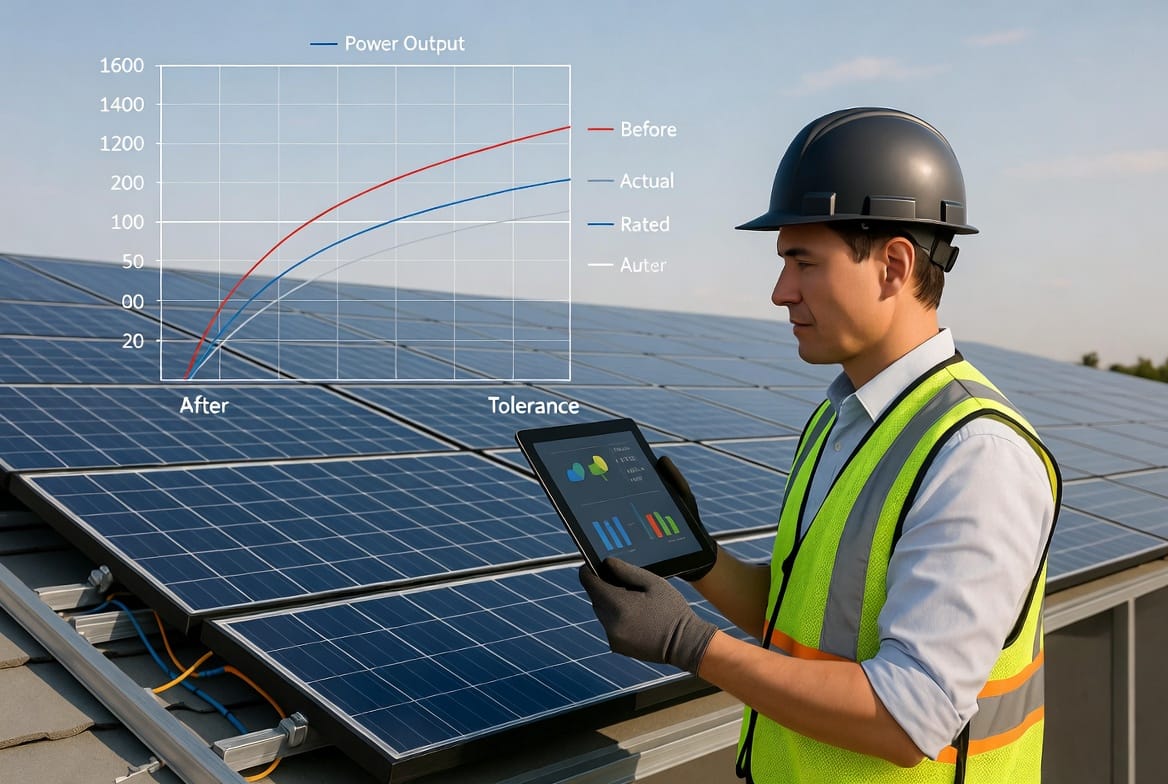
Key takeaway: Working with knowledgeable installers who factor tolerance into their designs ensures you get the system performance you truly need.
Common Myths About Solar Panel Output
Myth 1: All panels of the same wattage perform identically.
Reality: Power tolerance, along with other factors, creates meaningful differences.
Myth 2: Positive tolerance is just marketing hype.
Reality: It represents real measurable advantages in energy production.
Myth 3: You can ignore tolerance if the warranty is long.
Reality: Tolerance affects performance from day one, while warranties protect against major failures.
Making Better Solar Decisions
When evaluating solar proposals, create a simple comparison chart including:
- Rated wattage per panel
- Power tolerance range
- Expected annual output
- 25-year performance projections
- Total system cost
This methodical approach takes the guesswork out of solar investments.
Future Trends in Solar Panel Tolerance
The solar industry continues to advance rapidly. We’re seeing:
- Tighter manufacturing controls leading to narrower tolerance ranges
- More manufacturers offering positive-only tolerance
- Greater transparency in performance reporting
- Integration of tolerance data into smart monitoring systems
These improvements benefit consumers by delivering more reliable and higher-performing solar solutions.
Taking Action: What You Should Do Next
Don’t leave your solar investment to chance. Read the fine print on panel output and understand exactly what power tolerance means for your specific situation.
Ask your solar provider detailed questions about tolerance, real-world performance data, and how they account for these factors in system design. Knowledgeable companies welcome these conversations.
For expert guidance on choosing solar panels with optimal power tolerance and performance characteristics. We’re here to help you navigate the technical details and build a system that truly delivers.
Final thought: Solar power tolerance might seem like a small detail, but it represents an important part of ensuring your clean energy investment performs reliably for decades to come. By understanding actual versus rated output, you position yourself to maximize both energy production and financial returns.
Make your solar decision with confidence. The right knowledge leads to the right panels — and the best long-term results for your home or business.
Get Clear Answers on Solar Panel Tolerance – Call Now