The Solar Panel Efficiency Wars: Monocrystalline vs. Polycrystalline vs. Thin-Film
The race for superior solar panel efficiency has never been more intense. Homeowners, businesses, and energy professionals face a critical decision when selecting the right technology for clean power generation. Three leading contenders dominate the market: monocrystalline, polycrystalline, and thin-film solar panels. Each offers distinct advantages in performance, appearance, cost, and application. Understanding these differences empowers you to make a confident, informed choice that maximizes energy production while aligning with your budget and space constraints.
Get Expert Solar Efficiency Advice – Call Now!
This comprehensive guide breaks down the core characteristics of each technology. You will discover why monocrystalline panels lead in efficiency, how polycrystalline options deliver solid value, and where thin-film solutions provide unmatched flexibility. By the end, you will clearly see which panel type best suits your roof and energy goals.
Why Solar Panel Efficiency Matters More Than Ever
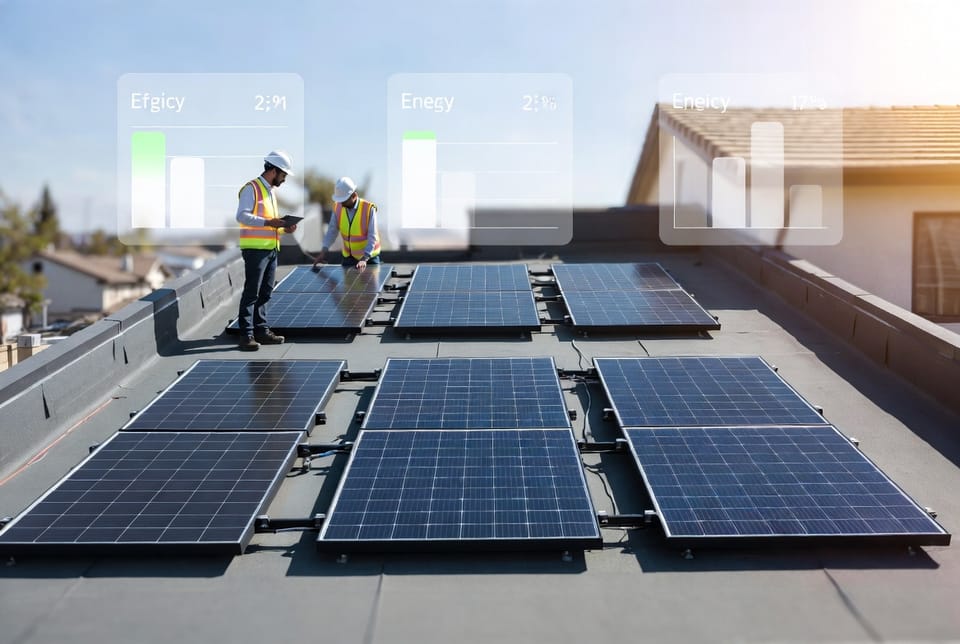
Solar panel efficiency measures how effectively a panel converts sunlight into usable electricity. Higher efficiency means more power from the same surface area. In regions with limited roof space or high energy demands, even a few percentage points can translate into significant long-term savings and greater energy independence.
Modern solar installations must also balance cost, aesthetics, durability, and installation requirements. The “efficiency wars” reflect ongoing innovation aimed at delivering better performance at accessible prices. Choosing wisely reduces reliance on the grid, lowers utility bills, and supports a sustainable future. Professionals consistently emphasize matching technology to specific site conditions rather than chasing the highest efficiency number alone.
Monocrystalline Solar Panels: The Efficiency Champions
Monocrystalline solar panels stand at the top of the efficiency hierarchy. Manufactured from a single, pure silicon crystal, these panels feature a uniform black appearance that many homeowners find sleek and modern. Their high-purity structure allows electrons to move more freely, resulting in superior conversion rates.
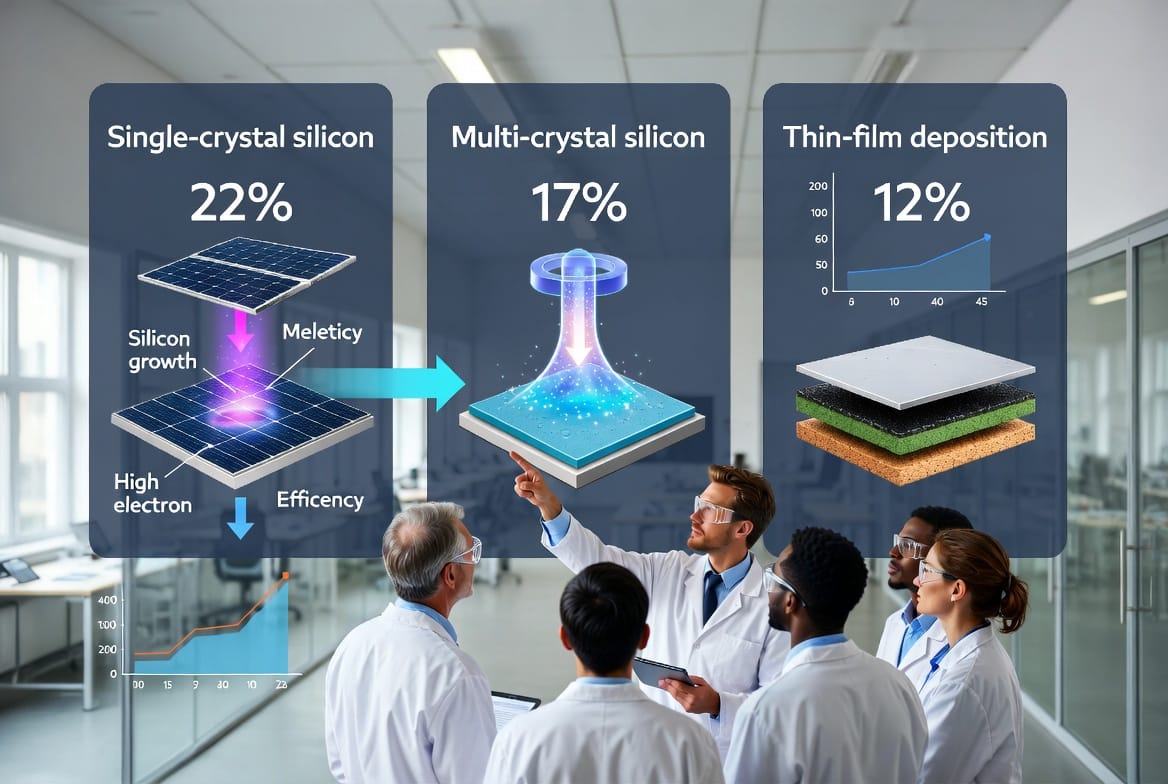
Typical monocrystalline efficiency ranges from 20 percent to over 23 percent under standard test conditions. Premium models continue to push higher as manufacturing techniques improve. Because they generate more electricity per square foot, they excel in space-constrained environments such as residential rooftops with limited southern exposure or partial shading challenges.
Key advantages include:
- Highest efficiency among the three main technologies
- Excellent performance in high-temperature and low-light conditions
- Long lifespan, often backed by 25-year or longer warranties
- Attractive all-black aesthetic that blends well with most roof styles
The primary trade-off is higher upfront cost. The complex crystal-growing process requires more energy and precision, which raises manufacturing expenses. Yet the greater energy yield often offsets this investment through faster payback periods and higher lifetime production.
Monocrystalline panels suit homeowners seeking maximum output from limited roof area, those prioritizing curb appeal, and properties in climates with variable weather. Professional installers frequently recommend them when every watt counts.
Polycrystalline Solar Panels: The Balanced Contenders
Polycrystalline panels offer a practical middle ground. Produced by melting multiple silicon fragments together, they display a characteristic blue, speckled surface. This manufacturing method is less energy-intensive than creating single crystals, resulting in lower production costs.
Efficiency typically falls between 15 percent and 18 percent. While lower than monocrystalline counterparts, modern polycrystalline modules still deliver reliable performance for many applications. They perform adequately across a wide range of temperatures and light conditions, though they lose slightly more efficiency in extreme heat compared with monocrystalline options.
Notable strengths include:
- Lower cost per watt, making solar more accessible
- Solid mid-range efficiency suitable for larger roof spaces
- Proven durability and long-term reliability
- Easier manufacturing that supports broader market availability
Homeowners with ample roof area often find polycrystalline panels an excellent value. The modest efficiency difference becomes less critical when more panels can be installed. Budget-conscious projects and larger residential or small commercial systems frequently benefit from this technology.
Appearance remains a consideration. The blue hue contrasts more noticeably with darker roofs, which some prefer to avoid for aesthetic reasons. Nevertheless, performance reliability and cost savings keep polycrystalline panels highly competitive in the efficiency wars.
Thin-Film Solar Panels: The Flexible Innovators
Thin-film technology takes a completely different approach. Instead of crystalline silicon wafers, these panels deposit extremely thin layers of photovoltaic material—such as amorphous silicon, cadmium telluride, or copper indium gallium selenide—onto glass, metal, or flexible substrates.
Efficiency generally ranges from 10 percent to 13 percent for commercial modules, placing them at the lower end of the spectrum. However, their unique properties open doors that rigid crystalline panels cannot match. Thin-film panels are lightweight, can be made flexible or semi-transparent, and perform relatively well in high temperatures and diffuse light conditions.
Primary benefits include:
- Exceptional flexibility and low weight for non-traditional surfaces
- Lower material and production costs in many cases
- Better tolerance to high heat and partial shading in certain formulations
- Aesthetic versatility, including building-integrated options
Applications shine where conventional panels struggle. Large commercial rooftops with weight restrictions, curved surfaces, portable systems, recreational vehicles, and certain architectural integrations favor thin-film solutions. Although more panels are required to match the output of crystalline systems, the overall project economics and design freedom often justify the choice.
Durability has improved significantly. Modern thin-film products carry competitive warranties and resist degradation effectively when properly installed. Their lower efficiency simply means larger surface areas are needed to achieve equivalent power generation.
Head-to-Head Comparison of Key Factors
Evaluating the three technologies side by side clarifies decision-making. Consider the following critical aspects:
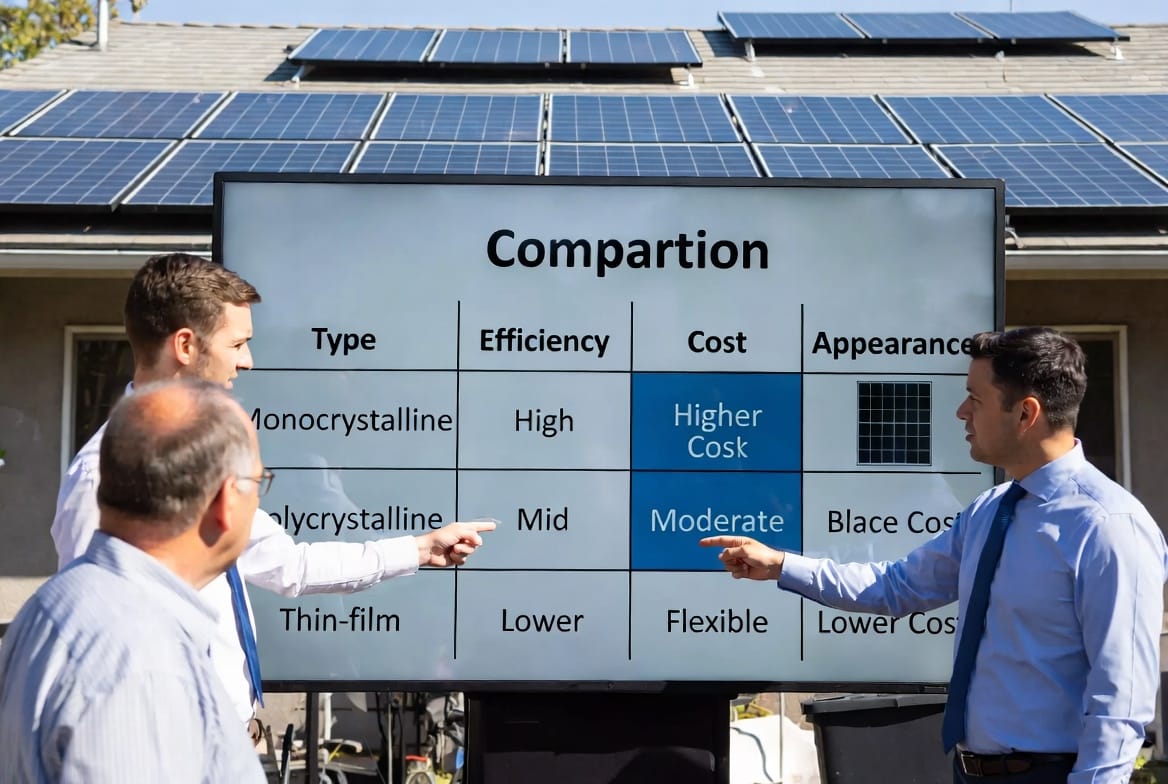
- Efficiency: Monocrystalline leads decisively, followed by polycrystalline, with thin-film trailing.
- Cost: Thin-film and polycrystalline generally offer lower price points; monocrystalline commands a premium.
- Appearance: Monocrystalline provides a uniform black look; polycrystalline shows blue texture; thin-film varies widely and can be customized.
- Space Requirements: Monocrystalline needs the least area; thin-film requires the most.
- Temperature Performance: Monocrystalline and certain thin-film types handle heat better than standard polycrystalline.
- Installation Flexibility: Thin-film excels on irregular or weight-sensitive surfaces; crystalline panels suit standard rooftops.
These differences underscore that no single technology wins every scenario. Site assessment remains essential. Professional evaluation of roof orientation, shading, structural capacity, local climate, and energy consumption patterns ensures optimal matching.
Matching Technology to Real-World Applications
Residential rooftops with limited space almost always benefit from monocrystalline panels. Their high efficiency extracts the maximum possible energy from available area, supporting whole-home power needs or partial offset goals. Homeowners valuing aesthetics also lean toward the black finish.
Larger residential properties or budget-focused projects often select polycrystalline modules. When roof space is abundant, the lower cost per watt delivers strong returns without sacrificing reliability. Many utility-scale and commercial installations historically favored this balance as well.
Thin-film panels find their strongest applications in specialized settings. Commercial buildings with expansive but weight-limited roofs, solar carports, agricultural structures, and portable power systems leverage their lightweight and flexible nature. Building-integrated photovoltaics that replace traditional roofing materials also utilize thin-film approaches for seamless design.
Climate plays a role too. In hotter regions, panels with better temperature coefficients—often monocrystalline or advanced thin-film—maintain higher relative output. Shaded environments may favor technologies less sensitive to partial obstruction.
Critical Considerations Beyond Efficiency Ratings
While efficiency captures headlines, several additional factors influence long-term satisfaction. Warranty terms, degradation rates, manufacturer reputation, and local incentives all matter. Most quality panels from reputable producers guarantee at least 80 percent of rated output after 25 years.
Installation quality profoundly affects real-world performance. Even the highest-efficiency panels underperform if poorly mounted, incorrectly wired, or mismatched to the inverter system. Working with experienced professionals ensures proper system design, permitting, and interconnection.
Financial analysis should include available tax credits, rebates, net metering policies, and projected utility rate increases. Higher-efficiency systems sometimes qualify for stronger incentives or achieve faster payback through greater production.
Maintenance remains minimal across all three technologies. Occasional cleaning and visual inspections suffice in most climates. Snow shedding, dust accumulation, and vegetation management differ slightly by panel type and mounting style but rarely present major challenges.
Looking Ahead in the Efficiency Wars
Innovation continues at a rapid pace. Research into tandem cells, perovskite materials, and advanced thin-film formulations promises further efficiency gains across categories. Monocrystalline panels already incorporate passivated emitter rear contact and other enhancements that close previous gaps. Thin-film technologies are steadily improving conversion rates while retaining flexibility advantages.
Market dynamics also evolve. Scale manufacturing continues to drive costs downward for all types. Supply chain improvements and recycling programs enhance sustainability. As energy storage becomes more affordable, pairing any of these panel technologies with batteries unlocks greater independence and resilience.
The ultimate winners remain informed consumers who select technology based on specific needs rather than marketing claims alone. Professional guidance transforms complex technical data into clear recommendations tailored to individual roofs and energy profiles.
Making the Right Choice for Your Roof
The solar panel efficiency wars highlight healthy competition that benefits everyone seeking clean energy. Monocrystalline panels deliver the highest performance for space-limited or premium installations. Polycrystalline options provide dependable mid-range results at attractive prices. Thin-film solutions unlock flexibility and specialized applications where traditional rigid panels fall short.
Your roof, energy goals, budget, and aesthetic preferences determine the best fit. A thorough site evaluation reveals the optimal path forward. Selecting the right technology maximizes production, accelerates financial returns, and contributes meaningfully to a cleaner energy future.
Find Your Perfect Solar Technology – Call Today!