The Solar Panel Degradation Warranty: What 25 Years Really Means

When you invest in a solar energy system, the most important long-term protection is not the product warranty that covers manufacturing defects. It is the linear power output warranty—the promise that your panels will still produce a defined percentage of their original power after a quarter-century of service. Understanding this single feature separates a confident ownership experience from costly surprises years later. This article explains exactly what a 25-year degradation warranty guarantees, why typical annual loss rates matter, and how you can verify that your panels are performing as promised.
Protect Your Solar Investment – Call Now
Why the Degradation Warranty Matters More Than Most Homeowners Realize
Solar panels do not stop working after 25 years. They simply produce less electricity each year as materials age under sunlight, heat, and weather. Manufacturers therefore offer two separate guarantees:
- A product warranty that covers physical defects (usually 10–12 years, sometimes 25).
- A performance or power output warranty that guarantees how much electricity the panel will still generate.
The second of these is the true measure of long-term value. A strong linear power output warranty tells you the minimum energy your system must deliver every year for 25 years. If production falls below that line, the manufacturer is obligated to repair, replace, or compensate. Without a clear understanding of this guarantee, homeowners can overestimate future savings and underestimate the importance of choosing quality modules.
What a Linear Power Output Warranty Actually Guarantees
Most reputable manufacturers today use a linear (not stepped) power output warranty. Instead of promising full output for ten years and then suddenly dropping to 80 percent, the warranty declines gradually in a straight line.
A common industry example looks like this:
- Year 1: the panel is warranted to deliver at least 98 percent of its rated power.
- Years 2–10: output declines by no more than 0.55 percent per year, so that by year 10 the panel still produces at least 90 percent of its original nameplate rating.
- Years 11–25: the same slow decline continues, guaranteeing 80 percent (sometimes 82 or 85 percent) of original power at the 25-year mark.
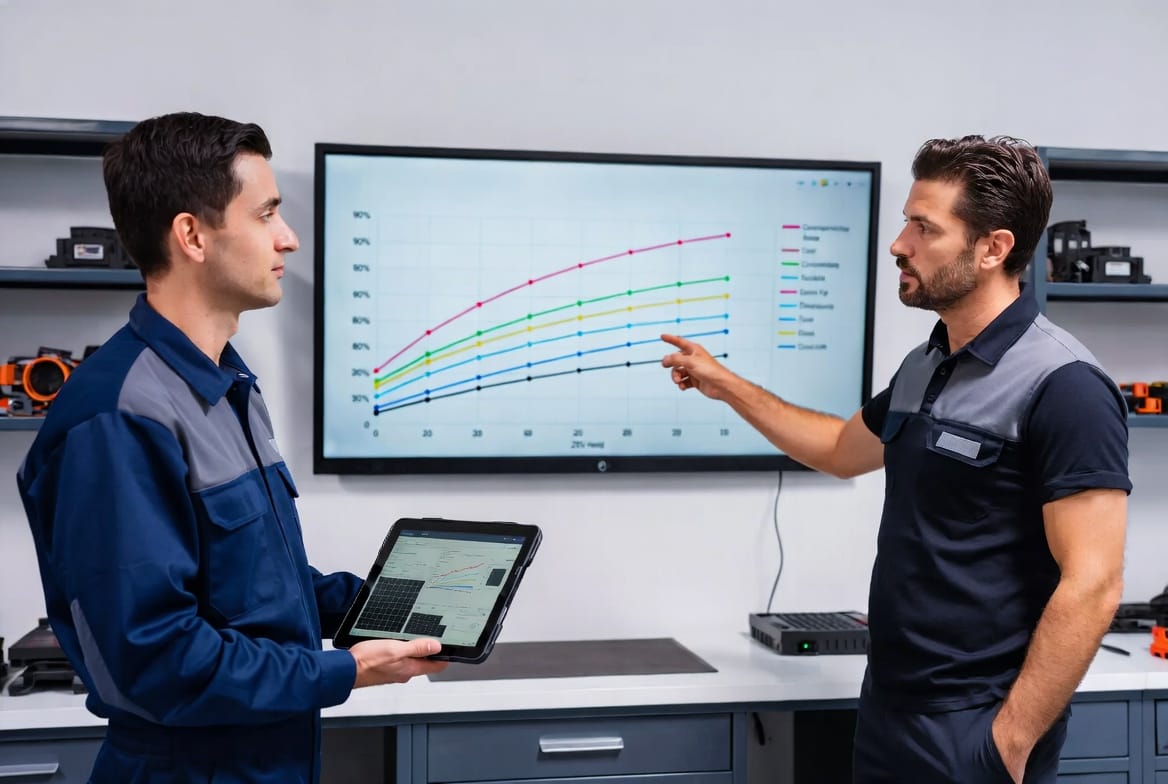
Some premium brands improve on these numbers, offering 92 percent at year 10 and 84–87 percent at year 25. The exact percentages appear in the warranty document as a graph or a table. The key point is the word linear: every year the minimum guaranteed output drops by a fixed, small amount rather than in sudden steps. This structure protects the owner more fairly because energy production is expected to decline steadily, not collapse after a decade.
Because the warranty is linear, the cumulative energy loss over 25 years is predictable. A panel that starts at 400 watts and is warranted to 80 percent will still be required to produce at least 320 watts under standard test conditions at the end of the period. That predictability is what allows accurate long-term financial modeling and gives homeowners confidence that their investment will continue to generate meaningful electricity for decades.
Typical Degradation Rates in the Real World
Laboratory and field studies consistently show that modern crystalline-silicon panels lose power at an average rate of 0.5 percent to 1 percent per year. High-quality modules from established manufacturers often degrade closer to 0.3–0.5 percent annually under normal conditions. Lower-tier panels or those exposed to extreme climates can approach or exceed 1 percent.
Several factors influence the actual rate:
- Panel quality and cell technology – Monocrystalline modules with advanced passivation layers and better encapsulants degrade more slowly than older polycrystalline designs.
- Temperature – Heat accelerates chemical reactions inside the cell. Panels operating in hot desert climates experience higher degradation than those in milder regions.
- UV exposure and humidity – Ultraviolet light and moisture can break down the encapsulant and backsheet over time, leading to potential-induced degradation or delamination if materials are inferior.
- Installation quality – Poor mounting that allows excessive movement, inadequate ventilation, or electrical mismatches can increase stress and speed up power loss.
Because real-world rates usually fall inside the 0.5–1 percent band, a manufacturer that warrants only 0.7 percent annual decline (reaching roughly 80–82 percent at year 25) is aligning the guarantee with observed performance. A warranty that claims almost zero degradation is either unrealistic or limited to a short period. The linear power output warranty therefore serves as both a performance floor and a quality signal.
How to Check Whether Your Panels Are Performing as Promised
A warranty is only useful if you can measure actual performance against the guaranteed line. Fortunately, several practical methods exist for homeowners and their service providers.
- Monitor annual production data
Most modern inverters and monitoring platforms record daily, monthly, and yearly kilowatt-hour totals. Compare each year’s production (adjusted for weather variation) against the linear warranty schedule. A consistent shortfall that exceeds the allowed degradation percentage is the first red flag. - Use performance ratio calculations
Professional installers calculate a performance ratio by dividing actual energy output by the theoretical output expected from the system’s size, local irradiance data, and temperature. A healthy system typically operates between 75 and 90 percent performance ratio. A steady decline below the manufacturer’s linear curve warrants further investigation. - Request an on-site IV curve test
A trained technician can measure the current-voltage characteristics of individual modules or strings under load. The resulting curve reveals whether cells have lost power beyond normal aging. This test is the most definitive way to document a warranty claim. - Compare against neighboring systems or historical baselines
If multiple systems of the same age and model exist in the same climate zone, relative production differences can highlight underperforming arrays. Your own system’s first-year data also serves as a useful baseline once weather normalization is applied. - Schedule periodic professional inspections
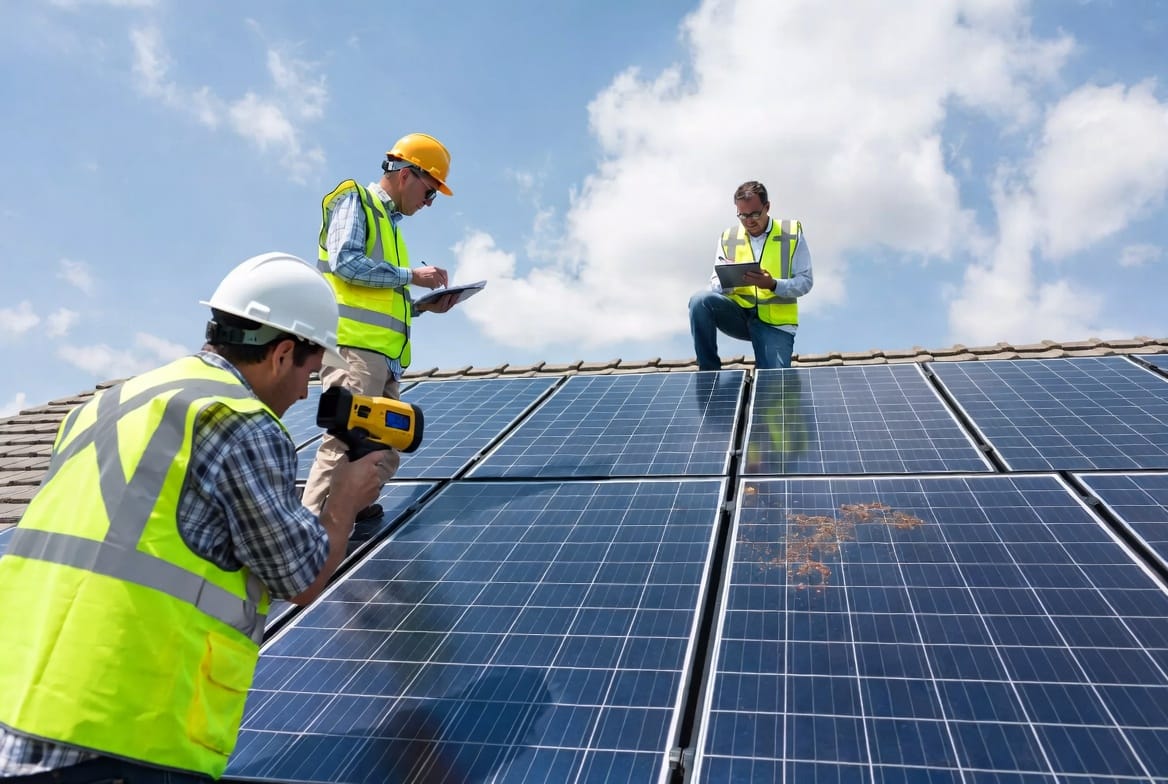
Visual checks for discoloration, delamination, hot spots (via thermal imaging), and connector corrosion should occur every three to five years. Catching physical problems early often prevents accelerated degradation that could later void or complicate a warranty claim.
Homeowners who track these metrics from day one rarely face unpleasant surprises at year 15 or 20. The data also strengthens any formal claim because manufacturers require documented evidence that production has fallen below the linear guarantee.
Factors That Influence Long-Term Degradation and How Quality Mitigates Them
Even the best warranty cannot eliminate all environmental stress. The three dominant drivers—panel quality, operating temperature, and cumulative UV exposure—interact continuously.
High-quality cells with superior anti-reflective coatings, robust solder bonds, and advanced encapsulants resist heat and ultraviolet damage more effectively. Proper system design that allows airflow beneath the modules keeps cell temperatures lower, slowing the chemical processes that cause power loss. Finally, choosing modules with proven UV-stable backsheets and edge seals reduces the risk of moisture ingress that accelerates degradation in humid or coastal climates.
When these three factors are managed well, real-world degradation frequently stays at the lower end of the 0.5–1 percent range, often leaving the system well above the warranty floor at year 25. That margin is the practical difference between a system that merely meets the contract and one that continues to deliver strong returns long after the warranty period ends.
Practical Steps Every Owner Should Take Today
- Locate and read the exact linear power output schedule in your warranty documents. Note the year-1 starting percentage and the final 25-year percentage.
- Enable continuous monitoring through your inverter platform and set annual calendar reminders to review production against the warranty line.
- Keep a simple log of any major weather events, soiling periods, or shading changes that could temporarily affect output.
- Schedule a professional performance check at year 5 and year 10 even if production looks normal. Early data strengthens later claims if needed.
- When expanding or replacing equipment, choose modules whose degradation warranty meets or exceeds the original system’s terms so the entire array remains balanced.
These habits turn the 25-year promise from a distant legal document into a living performance standard you can track and enforce.
The Confidence That Comes From Clarity
A well-written linear power output warranty is not marketing language. It is a measurable commitment that your solar investment will continue producing usable electricity at a defined minimum level for a full generation. Typical annual degradation of 0.5–1 percent is already built into that commitment, and modern high-quality panels routinely outperform the warranty floor. By understanding the numbers, tracking actual output, and addressing the factors that influence aging, homeowners convert uncertainty into reliable long-term energy independence.
The difference between a system that merely “works” and one that delivers on its financial and environmental promise is the clarity of that 25-year guarantee and the owner’s willingness to verify it.
Confirm Your Degradation Protection Today