The Solar Panel Micro-Cracks: Detection and Performance Impact
Solar energy systems represent one of the most reliable investments for clean power generation, yet even the most advanced photovoltaic technology can face subtle quality challenges that influence long-term results. Among these, solar panel micro-cracks stand out as a critical quality concern that every property owner, installer, and system designer must understand. These tiny fractures, often invisible to the naked eye, can quietly undermine panel performance if left unaddressed. This comprehensive guide explores exactly what micro-cracks are, why they form, how they affect energy output, and the professional inspection methods that keep systems operating at peak efficiency. By the end, you will feel fully equipped to prioritize durable panels and protect your solar investment with confidence.
Check Panel Durability Now – Call Today!
Understanding Solar Panel Micro-Cracks
At the heart of every solar panel lie crystalline silicon cells designed to convert sunlight into electricity with remarkable precision. Micro-cracks are extremely fine fractures that develop within these individual cells. Measuring only a few micrometers in width—far thinner than a human hair—these cracks rarely break the cell completely. Instead, they create partial separations in the silicon lattice that disrupt the smooth flow of electrons.
Unlike larger visible damage such as shattered glass or broken frames, micro-cracks remain hidden beneath the protective encapsulant and glass layers. They typically form during the cell’s manufacturing stage or later in the supply chain, yet their presence becomes noticeable only through specialized testing. Because solar cells operate under continuous mechanical and thermal stress once installed, even the smallest fracture can expand over years of outdoor exposure. Recognizing micro-cracks as a genuine quality concern allows system owners to demand higher manufacturing standards and schedule proactive inspections that safeguard overall array health.
Primary Causes of Micro-Crack Formation
Several interconnected factors contribute to the appearance of micro-cracks. Understanding each cause helps explain why rigorous quality control remains essential from factory floor to rooftop installation.
- Shipping and Transportation Stress
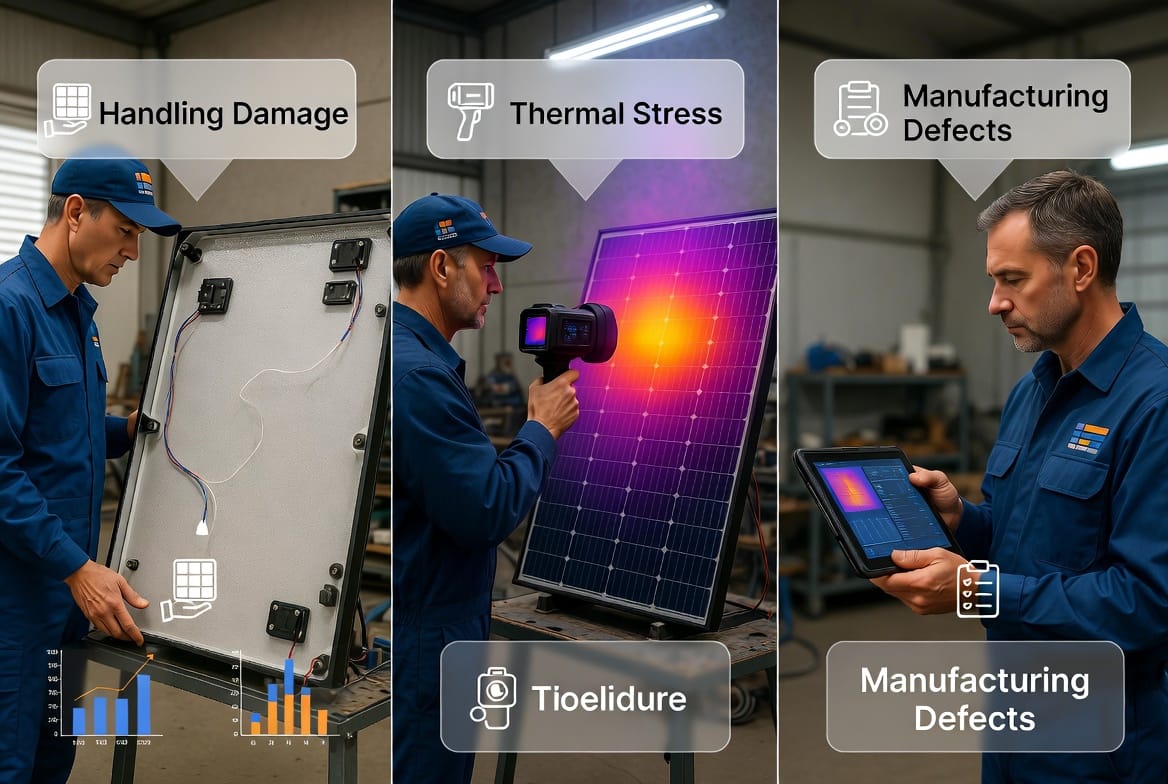
Solar panels travel long distances stacked on pallets. Vibration from trucks, ships, or aircraft, combined with occasional sudden impacts, can transmit force through the glass and into the fragile silicon cells. Even carefully packaged modules experience micro-level flexing that initiates hairline fractures. - Handling During Installation
Technicians lift, tilt, and position heavy panels on rooftops or ground mounts. Improper lifting techniques, excessive bending at the edges, or momentary pressure from tools can introduce stress points. A single moment of uneven force is sometimes enough to create a network of micro-cracks across multiple cells. - Thermal Stress Cycles
Once installed, panels expand and contract daily as temperatures rise under full sun and drop at night. Silicon, glass, and metal frames possess different coefficients of thermal expansion. Over thousands of cycles, these mismatched movements generate internal tension that gradually opens existing micro-fractures or creates new ones. - Manufacturing Defects
During wafer slicing, cell soldering, or lamination, microscopic impurities or uneven pressure can leave residual stress inside the silicon. Although modern factories employ automated optical inspection, residual defects occasionally escape detection and become micro-cracks only after the panel leaves the production line.
Each of these causes is preventable through disciplined processes. Manufacturers that invest in reinforced packaging, precise robotic handling, and multi-stage electroluminescence testing dramatically reduce the incidence of micro-cracks before panels ever reach the customer.
How Micro-Cracks Impact Panel Performance
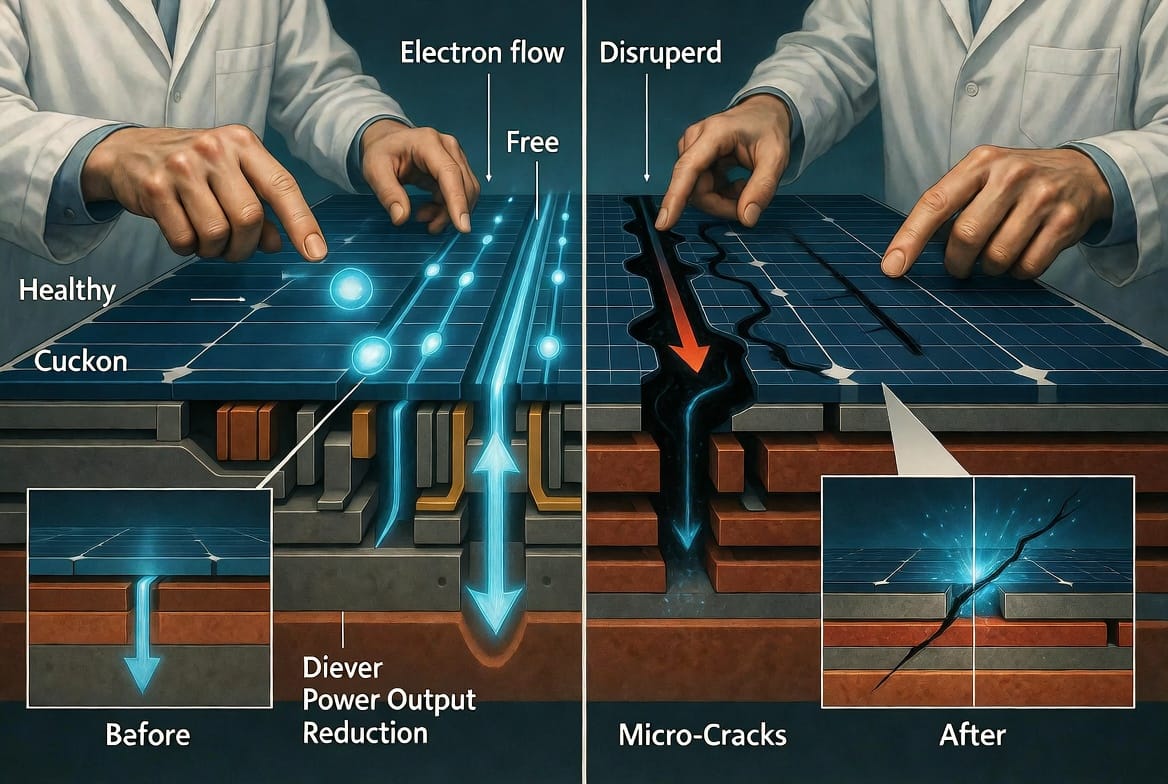
The consequences of micro-cracks extend far beyond the microscopic level. Because solar cells generate electricity through the movement of charge carriers, any interruption in the silicon pathway reduces the effective active area of the cell.
When a micro-crack forms, it creates a high-resistance barrier. Electrons that once traveled freely now must navigate around the fracture or become trapped. The result is a measurable drop in current output from the affected cell. In a typical series-connected string, the weakest cell limits the entire string’s performance—a phenomenon known as current mismatch. Over time, this mismatch produces several progressive effects:
- Reduced Efficiency
Panels that once delivered nameplate wattage may lose 5 % to 20 % of their rated power depending on the density and location of the cracks. The loss compounds across an array, lowering overall system yield and extending the payback period. - Hotspot Formation
Damaged cells can reverse-bias under certain lighting conditions, converting electrical energy into heat rather than useful power. Localized hotspots accelerate further crack growth and can eventually melt solder joints or discolor the encapsulant. - Accelerated Degradation
Moisture and oxygen may slowly penetrate along crack paths, leading to corrosion of metal contacts. This secondary degradation compounds the original performance loss and shortens the panel’s expected service life. - Potential Panel Failure
In extreme cases, expanding micro-cracks connect into larger fractures that isolate entire cell sections. The panel may continue operating at reduced capacity for years, yet the cumulative energy shortfall becomes significant. Early detection prevents this progression and preserves long-term reliability.
Fortunately, modern panels incorporate bypass diodes that mitigate some mismatch effects, yet these diodes cannot restore the lost cell area. The only true solution remains prevention through superior manufacturing and timely professional inspection.
Professional Inspection Methods for Reliable Detection
Detecting micro-cracks requires tools and techniques far more sensitive than visual walkthroughs. Leading solar service teams employ a combination of advanced diagnostic approaches that reveal damage invisible under ordinary light.
Electroluminescence (EL) Imaging
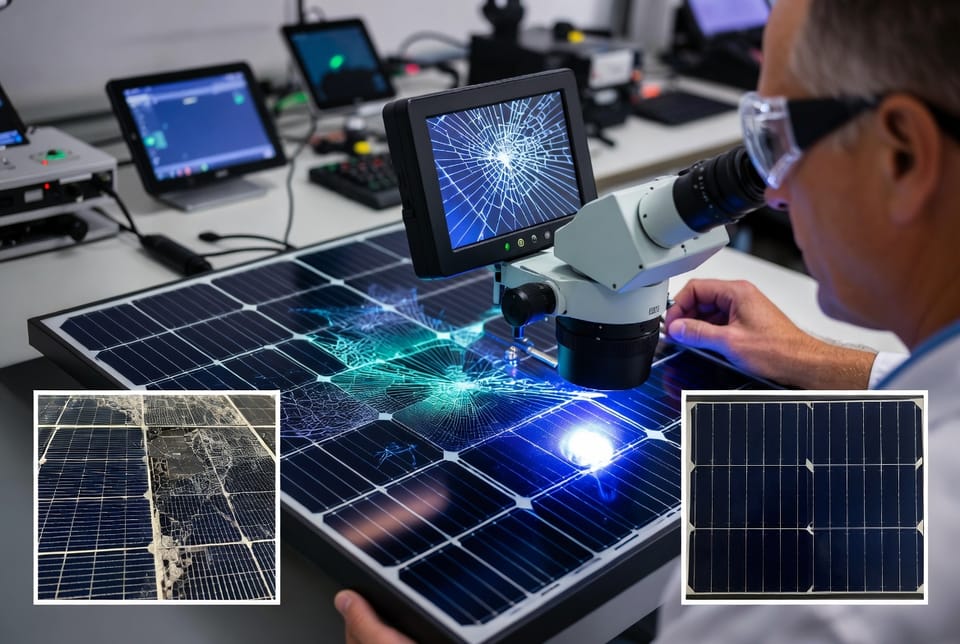
This gold-standard method applies a controlled current to the panel in a dark environment. The silicon emits faint infrared light wherever the crystal structure remains intact. Micro-cracks appear as dark lines against the glowing background, allowing technicians to map every fracture with millimeter precision. Portable EL systems now enable on-site testing without removing panels from the array.
Infrared Thermography
Under full sunlight or controlled load, thermal cameras detect temperature differences caused by current blockage. Hotspots associated with micro-cracks stand out clearly, providing rapid screening across large installations. When paired with EL imaging, thermography confirms both the presence and the functional impact of the cracks.
High-Resolution Visual Inspection Under Magnification
Specialized LED lighting and digital microscopes reveal surface-level indicators such as discoloration or fine stress lines in the encapsulant. While not as definitive as EL, magnified visual checks serve as an excellent first-line assessment during routine maintenance.
I-V Curve Tracing
By measuring the full current-voltage characteristic of a string or individual module, technicians quantify power loss and identify mismatch signatures consistent with micro-crack damage. Modern curve tracers deliver results in seconds and generate permanent digital records for warranty documentation.
Combining these methods creates a complete diagnostic picture. Regular inspections—especially after severe weather, system expansion, or the first year of operation—catch issues while they remain minor and easily managed.
Building Long-Term Confidence Through Quality Control
The presence of micro-cracks does not automatically mean a panel is unusable. Many modules continue delivering strong performance for decades when cracks remain limited and properly monitored. The key lies in selecting manufacturers that treat micro-crack prevention as a non-negotiable standard. Look for factories that publish EL test results for every panel, employ reinforced frames, and use advanced cell interconnection technologies designed to tolerate thermal expansion.
System owners also play an active role. Specifying careful shipping protocols, insisting on trained installation crews, and scheduling periodic professional inspections transform potential risks into manageable quality checkpoints. When micro-cracks are discovered early, targeted module replacement or string reconfiguration restores full output with minimal disruption.
Solar technology continues to advance rapidly. Newer cell architectures, including half-cut and shingled designs, inherently reduce the impact of any single micro-crack by limiting the affected area. Combined with stricter international quality certifications, these innovations give today’s buyers greater assurance than ever before.
Protecting Your Solar Investment Starts with Informed Choices
Micro-cracks represent a genuine quality concern, yet they are fully manageable through knowledge, careful product selection, and professional oversight. By understanding their microscopic nature, recognizing the primary causes of shipping vibration, handling pressure, thermal cycling, and manufacturing residuals, and applying advanced detection methods such as electroluminescence and infrared imaging, every solar owner can maintain peak system performance for decades.
Choose panels backed by rigorous quality control processes that actively minimize micro-crack formation from the start. When durability questions arise or you simply want confirmation that your array remains in excellent condition, reach out to experienced solar professionals ready to provide clear answers and reliable solutions.
Your solar investment deserves the highest standard of care—protect it with confidence and enjoy clean, consistent energy for years to come.
Get Expert Panel Quality Advice – Call Today!