The Solar Panel PID (Potential Induced Degradation): Causes and Prevention
Potential Induced Degradation (PID) represents one of the most significant yet often misunderstood challenges in solar photovoltaic systems. This voltage-related phenomenon can silently erode panel performance over time, leading to substantial energy production losses if left unaddressed. At its core, PID occurs when high voltages cause unwanted charge migration within the solar cells, compromising efficiency and long-term reliability.
Go Green & Save Big on Energy – Call Now!
Understanding and preventing PID is essential for anyone investing in solar energy. With proper knowledge and modern solutions, system owners can protect their investments and ensure decades of optimal performance. This comprehensive guide explores the technical details of PID, its root causes, real-world impacts, and proven prevention strategies.
What Exactly Is PID in Solar Panels?
Potential Induced Degradation is a performance degradation mechanism triggered by electrical potential differences between the solar module frame and the cells inside. It primarily affects crystalline silicon panels and manifests as a gradual decline in power output.
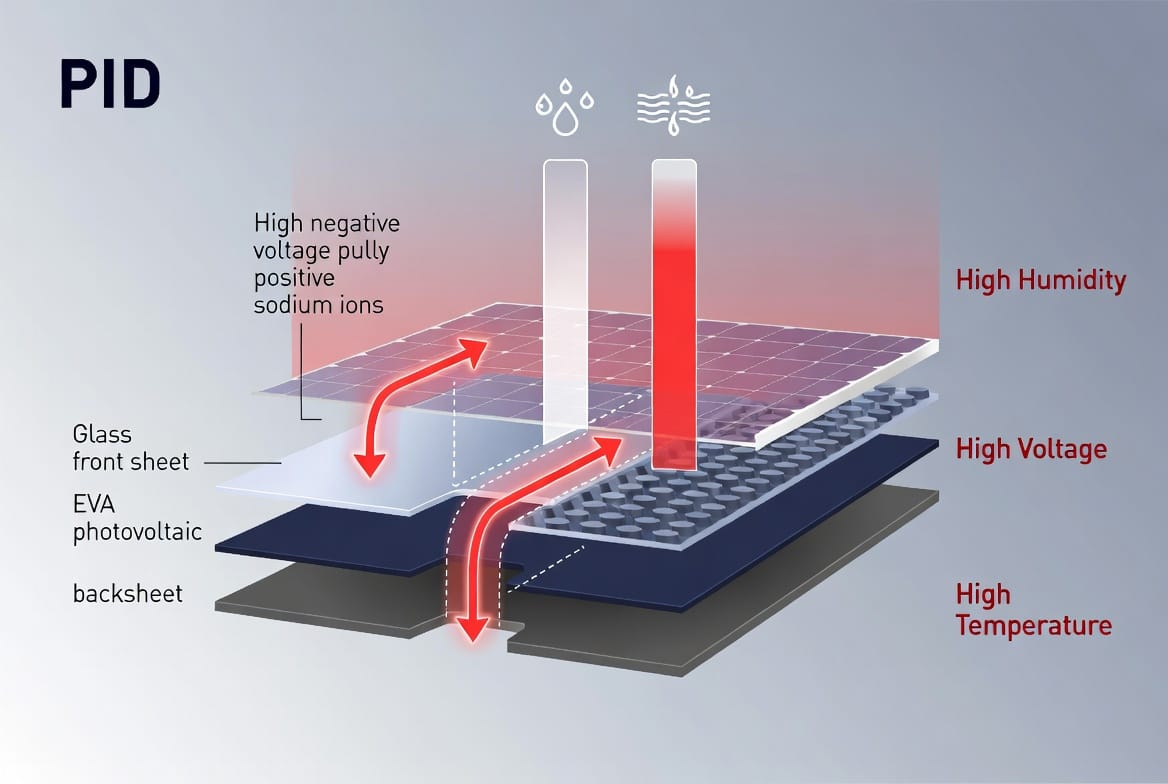
In simple terms, high system voltages push sodium ions or other charged particles through the panel's materials, creating leakage currents that "shunt" the cell's ability to generate electricity effectively. This results in reduced voltage and current output, directly lowering the overall system yield.
Key characteristics of PID include:
- Voltage-driven: More pronounced in systems with high string voltages.
- Environmental sensitivity: Accelerates in humid or hot conditions.
- Reversible in early stages: Unlike permanent physical damage, early PID can sometimes be mitigated.
- System-wide impact: Affects entire strings of panels, not just individual units.
Bold fact: Studies show untreated PID can cause power losses of 20-30% or more within a few years, turning a high-efficiency installation into an underperforming asset.
Primary Causes of Potential Induced Degradation
Multiple interconnected factors contribute to PID. Recognizing these helps in designing resilient solar systems.
High System Voltage
Modern solar arrays often operate at 600V, 1000V, or even 1500V to maximize efficiency. While beneficial for reducing wiring losses, these elevated voltages create a strong electric field that drives ion migration. Negative grounding or floating configurations can exacerbate the issue depending on the polarity.
Humidity and Moisture Ingress
High humidity allows moisture to penetrate the panel's encapsulation. Water acts as a conductor for sodium ions from the glass front sheet, facilitating the degradation process. Coastal or tropical installations face heightened risk due to persistent moisture.
Elevated Temperatures
Heat accelerates chemical reactions and ion mobility. Panels in hot climates experience faster PID progression, especially when combined with humidity. Daily thermal cycling adds mechanical stress to the materials.
Poor-Quality Materials
Low-grade encapsulants, backsheets, or cell coatings fail to provide adequate insulation. Older panel designs lacked the robust barriers now standard in premium products.
Installation and Grounding Issues
Improper grounding, faulty inverters, or suboptimal array layouts can increase potential differences, inviting PID.
Visual representation of the mechanism:
How PID Impacts Solar System Performance
The consequences of PID extend beyond simple efficiency drops. Affected panels exhibit:
- Reduced open-circuit voltage and short-circuit current
- Hot spots visible in thermal imaging
- Lower return on investment due to decreased energy harvest
- Potential warranty disputes if not properly addressed
In large commercial arrays, even a 10% system-wide loss can translate to tens of thousands of dollars in lost revenue annually. Residential owners may notice slower payback periods and higher utility bills than projected.
Modern Solutions: Building PID-Resistant Systems
Fortunately, the solar industry has made tremendous progress in combating PID. Today's advanced panels incorporate multiple protective layers.
PID-Resistant Panel Technologies
Leading manufacturers now produce panels with:
- Improved encapsulants that block ion migration
- Anti-PID cell coatings and enhanced glass formulations
- Tighter quality control during manufacturing
- Certification to IEC 62804 standards for PID resistance
These innovations make modern modules far more resilient than earlier generations.
System-Level Prevention Strategies
Bullet-point prevention measures:
- Negative grounding: Connects the negative DC conductor to ground, reducing the potential difference that drives PID.
- Floating systems with PID mitigation devices: Specialized inverters or add-on boxes that periodically reverse polarity or apply corrective voltages.
- High-quality cabling and connectors: Minimize leakage paths.
- Proper array design: Avoid excessive voltage stress and ensure adequate ventilation.
Regular monitoring through string-level data analytics allows early detection of performance anomalies, enabling proactive intervention before significant losses occur.
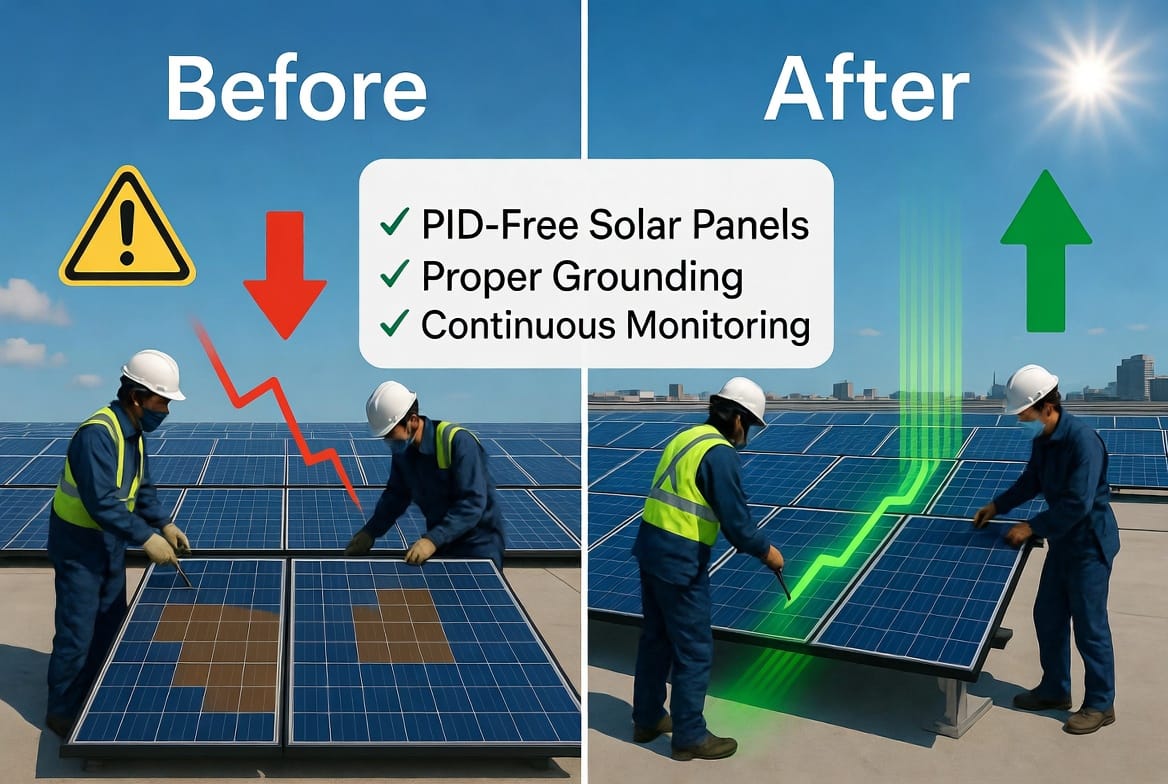
Step-by-Step Guide to PID Prevention
- Select Certified PID-Free Panels – Always verify manufacturer claims with independent test reports.
- Implement Proper Grounding – Consult with certified installers to determine the optimal configuration for your location and voltage.
- Choose Compatible Inverters – Many modern inverters include built-in PID mitigation features.
- Schedule Regular Inspections – Thermal imaging and IV curve tracing detect issues early.
- Monitor Performance Data – Cloud-based platforms provide real-time alerts.
- Maintain Environmental Controls – Ensure good airflow and minimize moisture accumulation around arrays.
Real-World Success Stories
Many solar farms that adopted comprehensive PID prevention strategies report less than 2% degradation after five years of operation – well within expected norms. Facilities using PID-resistant panels combined with active mitigation devices consistently outperform older installations by significant margins.
Investing in prevention upfront yields substantial long-term savings and peace of mind.
Why Professional Expertise Matters
While DIY knowledge helps, partnering with experienced solar professionals ensures correct implementation of technical solutions. Qualified teams understand local environmental factors and can tailor systems for maximum durability.
Conclusion: Secure Your Solar Investment Today
Potential Induced Degradation no longer needs to be a major concern for solar adopters. Through advanced panel technology, intelligent system design, and vigilant monitoring, PID risks can be effectively minimized or eliminated entirely.
By choosing PID-resistant panels and implementing robust prevention measures, you protect both performance and financial returns for decades to come. Solar energy remains one of the smartest investments available – especially when engineered correctly.
Ready to build a PID-resistant solar system? Contact our experts today to discuss panel quality and system optimization.
Claim Your Solar Tax Credits Before They’re Gone – Call Now!