The Solar Panel Snow Shedding: Pitch, Surface, and Gravity
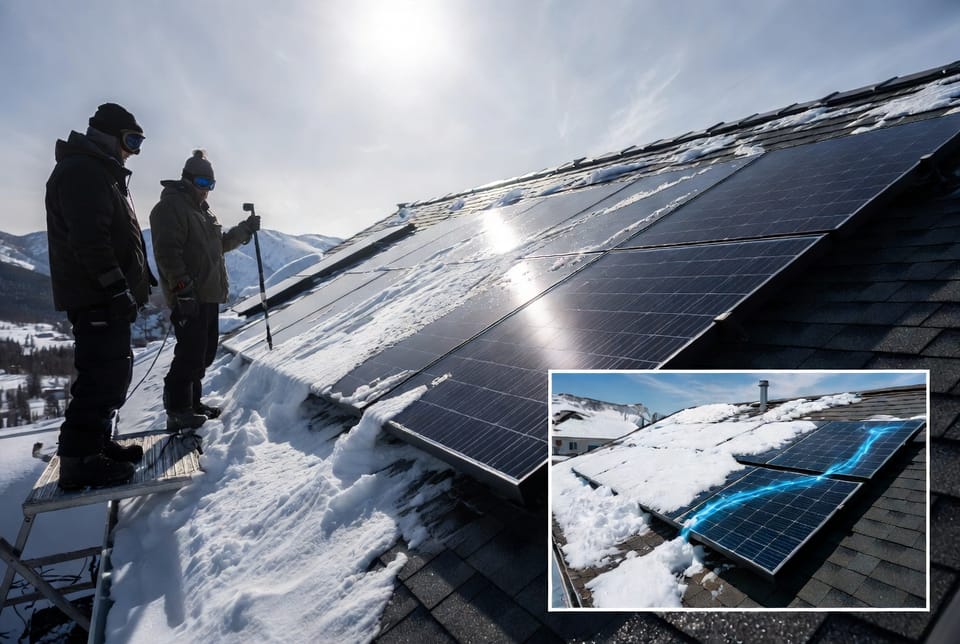
Winter brings beautiful snow-covered landscapes, yet many homeowners worry about how their solar arrays will perform when temperatures drop and flakes begin to fall. The truth is reassuring: modern solar systems are engineered to thrive even in the coldest months. Solar panel snow shedding relies on three powerful natural forces — panel pitch, the glass surface, and gravity — to keep energy production strong. Understanding these elements helps you maximize your system’s winter output while protecting your investment.
Maximize Your Winter Solar Production – Call Today!
At its core, effective snow management ensures your panels continue generating clean power without unnecessary downtime. Steep enough panel pitch lets gravity do the heavy lifting. The smooth, low-friction glass surface prevents snow from sticking. And when snow does accumulate briefly, the albedo effect from surrounding snow can actually boost production. This article explores each factor in depth, debunks common myths, and highlights why manual snow removal carries serious risks you should avoid.
Winter solar still works — often better than expected — when your system is designed and maintained correctly. Let’s examine how panel pitch, surface technology, and gravity work together to deliver reliable performance season after season.
The Fundamentals of Solar Panel Snow Shedding
Solar panel snow shedding is not accidental; it is the result of thoughtful engineering. Panels are intentionally installed at specific angles and built with specialized materials so snow cannot linger long enough to block sunlight. When snow slides off quickly, panels resume full production almost immediately.
The process is simple yet highly effective. Snow accumulates only until the combined forces of panel pitch and gravity overcome its adhesion to the glass surface. Once that threshold is reached, sheets of snow glide away cleanly, often in a single dramatic event. Homeowners in snow-heavy regions frequently report seeing this natural process within hours of a storm ending, especially on south-facing arrays.
This natural mechanism protects both performance and longevity. Panels that shed snow efficiently maintain higher average daily output and experience less thermal stress from repeated freeze-thaw cycles. Professional installers factor local snowfall data, roof slope, and climate patterns into every design to ensure optimal solar panel snow shedding from day one.
The Critical Role of Panel Pitch in Snow Shedding
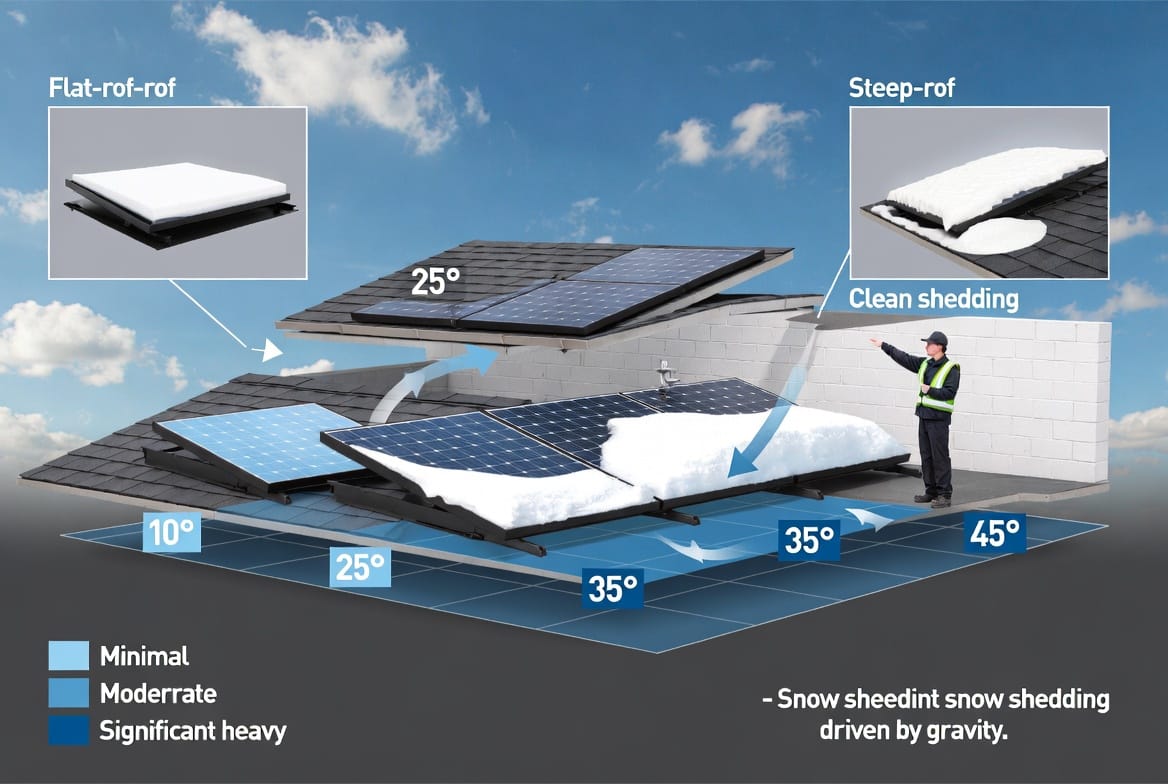
Panel pitch — the tilt angle of your solar modules — is the single most influential design choice for winter performance. Gravity acts more effectively on steeper surfaces, allowing snow to overcome friction and slide off sooner.
A shallow pitch (under 10 degrees) keeps snow in place longer, turning panels into unintended snow shelves. In contrast, a panel pitch of 30 degrees or greater dramatically improves shedding speed. Many experts recommend 35–40 degrees in heavy snow zones because this range balances year-round production with superior winter self-cleaning.
Consider a real-world comparison. On a 15-degree roof, snow may remain for days until temperatures rise or wind assists. On a 35-degree roof, the same snowfall often clears within hours. The steeper angle increases the component of gravitational force pulling parallel to the panel surface, quickly exceeding the snow’s cohesive strength.
Bullet-point benefits of optimal panel pitch:
- Faster natural shedding reduces downtime and maintains higher energy yields.
- Reduced structural load on your roof because snow does not build up excessively.
- Improved self-cleaning even after light dustings or ice events.
- Better overall system ROI through consistent winter performance.
Professional solar assessments always evaluate your roof’s existing slope and recommend racking solutions that achieve the ideal panel pitch without compromising aesthetics or structural integrity.
The Slick Glass Surface: Nature’s Built-In Snow Shedder
Modern solar panels feature high-transmittance, low-iron tempered glass with specialized coatings that create an exceptionally smooth, hydrophobic surface. This glass surface dramatically lowers the coefficient of friction, so snow has almost nothing to grip.
Unlike older modules with rougher textures or aftermarket films that can actually trap snow, today’s premium glass allows flakes to bond loosely and release at the first hint of gravity’s pull. Anti-reflective coatings further enhance this effect while boosting light absorption year-round.
The result? Snow rarely forms a stubborn crust. Instead, it remains loose and slides away cleanly. This surface technology works in harmony with panel pitch to make solar panel snow shedding automatic and reliable. Homeowners notice their panels look nearly spotless shortly after storms, preserving maximum sunlight capture.
Harnessing the Albedo Effect for Enhanced Winter Production
One of winter’s hidden advantages is the albedo effect — snow’s remarkable ability to reflect up to 90 % of incoming sunlight. When surrounding ground or rooftops are blanketed in white, this reflected light bounces upward and strikes the underside and edges of your panels, increasing total irradiance.
Even if a thin layer of snow remains on the very top, the albedo effect from ground snow can boost production by 10–30 % compared to snow-free but darker winter days. Once the glass surface and panel pitch clear the top layer, the full benefit combines with direct sunlight for peak output.
This phenomenon turns winter from a perceived weakness into a seasonal strength. Systems in snowy climates often record surprisingly high kWh numbers on bright, cold days precisely because of albedo reflection. Professional monitoring confirms that properly pitched and surfaced arrays capture this extra energy most effectively.
Gravity: The Reliable Force Behind Every Slide
Gravity never takes a day off. When combined with sufficient panel pitch and the ultra-slick glass surface, it becomes the silent partner that clears snow without any intervention. The steeper the angle, the stronger the parallel component of gravitational force acting on the snow mass.
This natural process requires no electricity, no moving parts, and zero maintenance costs. It is the reason well-designed solar arrays in Vermont, Colorado, and Minnesota continue producing through heavy winters with minimal owner involvement. Gravity ensures that once snow begins to move, it accelerates rapidly, carrying away any loose debris and leaving the glass surface pristine.
Risks of Manual Snow Removal: Protecting Your Investment
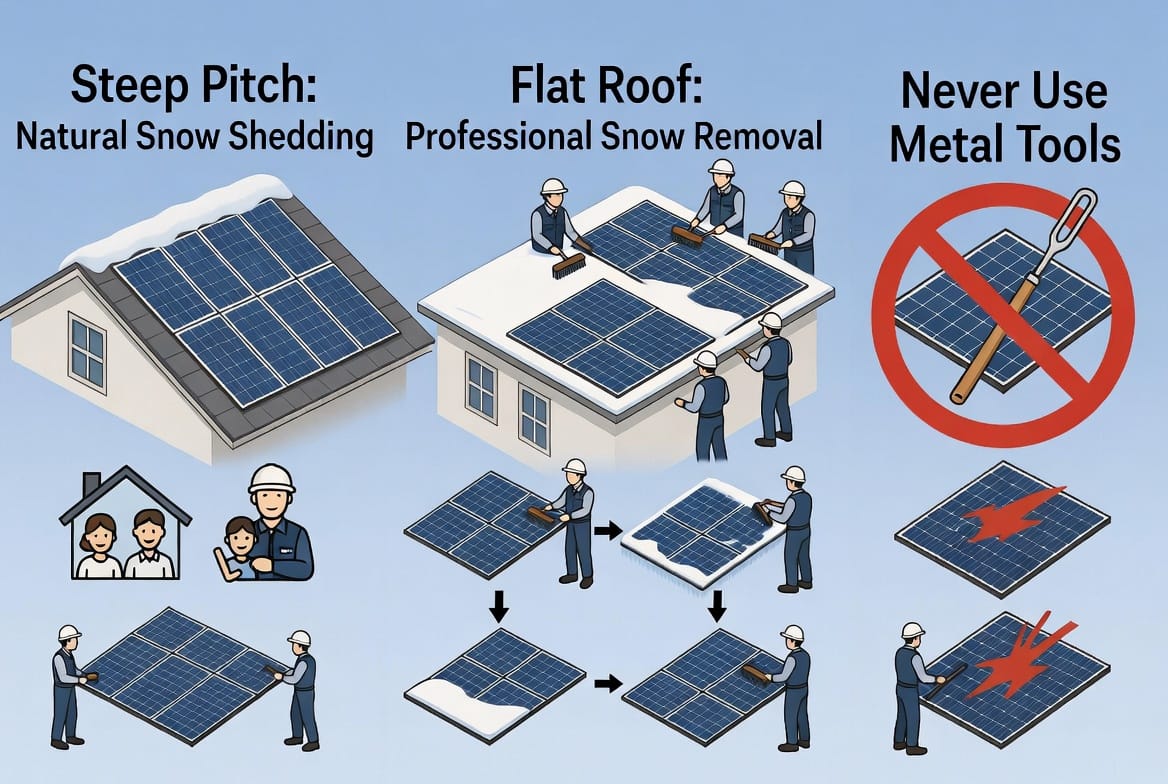
While the urge to clear snow manually is understandable, manual snow removal introduces significant risks that far outweigh any short-term gain. Using brooms, shovels, or — worst of all — metal tools can easily void your warranty, scratch the glass surface, or create micro-cracks in the cells that reduce long-term efficiency and lifespan.
Key risks to avoid:
- Warranty voidance — Most manufacturers explicitly prohibit aggressive mechanical clearing.
- Panel damage — Scratches and dents lower light transmission and create hot spots.
- Safety hazards — Working on snow-covered roofs increases fall risk and electrocution potential.
- Inefficient results — Partial clearing often leaves uneven layers that actually worsen performance.
Never use metal tools on panels. Soft-bristle brushes or telescoping tools may seem safer, yet even these can cause hidden damage if applied with force. The authoritative recommendation is clear: trust the engineered combination of panel pitch, glass surface, and gravity. When natural shedding needs support, qualified solar professionals use safe, non-abrasive methods that preserve your warranty and system integrity.
Optimizing Your Solar System for Superior Winter Performance
Achieving reliable solar panel snow shedding begins at installation. Choosing the right panel pitch, verifying high-quality glass surface specifications, and confirming proper orientation all contribute to effortless winter operation. Regular professional inspections catch any issues before snow season arrives.
In areas with extreme snowfall, advanced racking systems can add extra tilt or integrated heating elements as a last-resort option, though natural forces remain the preferred solution. Monitoring apps let you track production in real time, giving peace of mind that your system is performing as engineered.
Real-World Insights and Best Practices
Homeowners across snow-prone regions consistently report that systems designed with solar panel snow shedding in mind outperform expectations. Production dips are minimal and short-lived, while the albedo effect frequently delivers pleasant surprises on clear winter days.
Best practices include scheduling a pre-winter professional review, keeping surrounding vegetation trimmed to maximize albedo reflection, and documenting any extreme weather events for warranty purposes. When questions arise about winter performance, consulting experienced solar professionals ensures you receive tailored, authoritative guidance.
Winter Solar Still Works — And Works Well
The combination of proper panel pitch, advanced glass surface technology, and the relentless force of gravity makes solar panel snow shedding both reliable and efficient. Your system is built to handle winter conditions while often benefiting from the very snow that others view as an obstacle.
Winter solar still works. With the right design and a commitment to safe practices, you can enjoy consistent clean energy production all year long. If you have questions about snow performance on your existing array or are planning a new installation, our team is ready to help.
Let us evaluate your site and design a system that maximizes solar panel snow shedding for decades of worry-free power.
Learn How Your Panels Can Shed Snow Naturally – Call Now