The Solar Panel UV Degradation: What Causes Yellowing and Power Loss
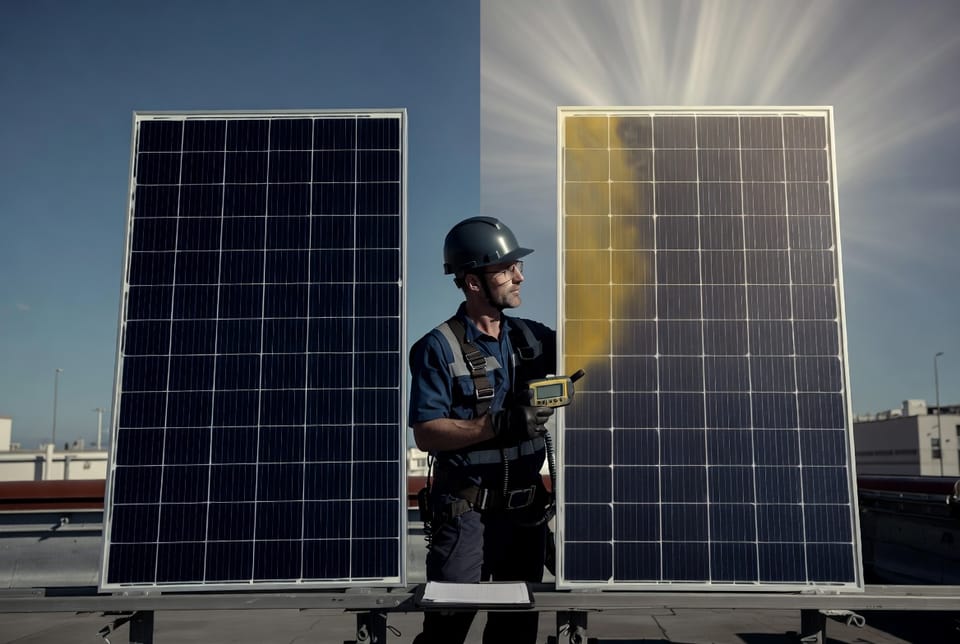
Solar power systems represent one of the smartest long-term investments for homes and businesses seeking clean, reliable energy. Yet even the most advanced solar panels are not immune to the effects of time and nature. Over years of constant exposure to sunlight, many panels begin to show signs of panel aging—most visibly through yellowing and browning that quietly steal away efficiency and output.
Stop UV Degradation & Power Loss – Get Expert Advice Today!
This is solar panel UV degradation in action. Understanding exactly what causes it, how it affects different materials, how manufacturers fight it, and what your warranty actually protects is essential for protecting your investment. The good news? With the right knowledge and the right panels, you can keep your system performing at peak levels for decades.
In this comprehensive guide, we break down the science, the risks, and the practical steps you can take to minimize power loss and maximize returns.
Understanding Solar Panel Aging
Every solar panel is engineered to withstand decades of harsh outdoor conditions. However, panel aging is a natural process driven primarily by ultraviolet (UV) radiation from the sun. Unlike sudden failures, UV degradation happens gradually, often becoming noticeable only after 5–10 years of service.
Key risks include reduced energy production, higher electricity bills, and in extreme cases, safety concerns from moisture ingress or delamination. Homeowners and business owners in sunny regions are especially vulnerable, yet many remain unaware until performance drops sharply.
The reassuring reality is that modern manufacturing has made significant strides. High-quality panels today age far more gracefully than earlier generations, thanks to improved materials and rigorous testing protocols. By choosing wisely, you can confidently expect your system to deliver strong returns long into the future.
How UV Exposure Affects Different Materials
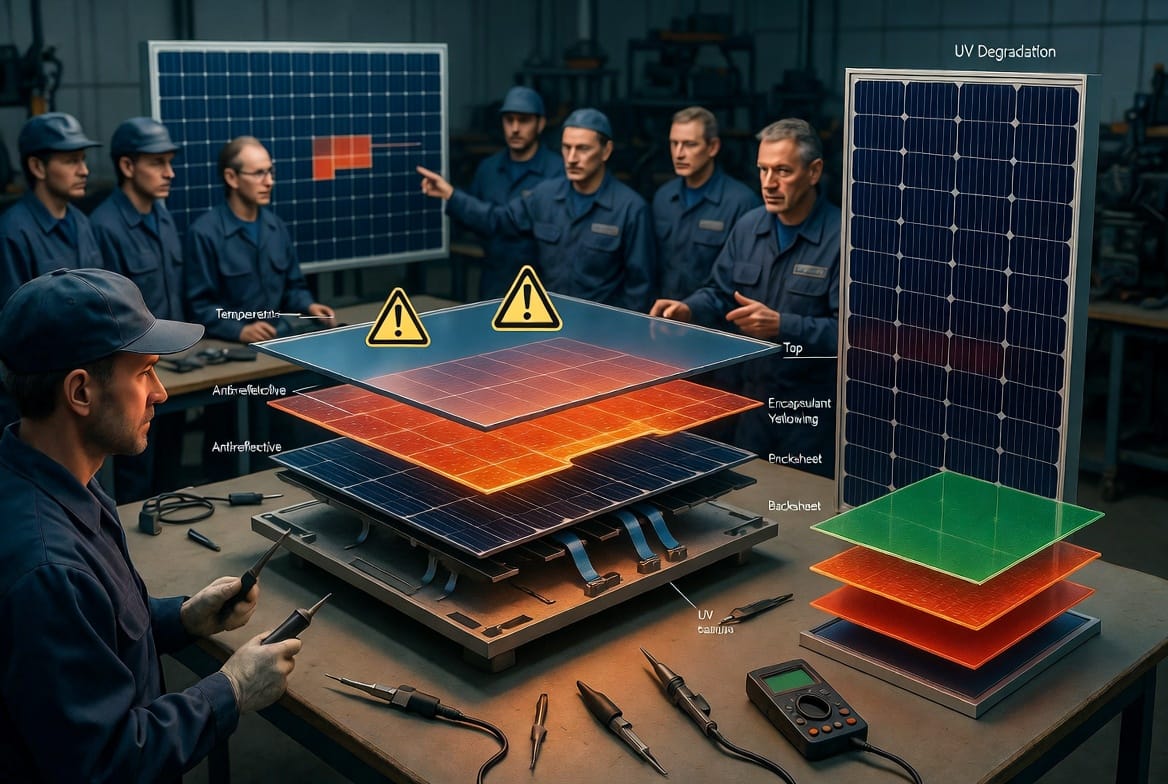
UV radiation penetrates the outer layers of a solar panel and triggers chemical changes deep within its construction. Two components are most affected: the encapsulant and the backsheet.
Encapsulant browning occurs when the ethylene vinyl acetate (EVA) or similar polymer layer that protects the solar cells begins to discolor under prolonged UV bombardment. This browning reduces the amount of light reaching the photovoltaic cells, directly translating into measurable power loss. In severe cases, the encapsulant can become brittle, leading to micro-cracks that further compromise performance.
Backsheet yellowing is equally concerning. The backsheet—the rear protective polymer layer—shields the internal electronics from moisture and mechanical damage. UV exposure causes yellowing, cracking, and eventual delamination. Once compromised, moisture can enter the panel, accelerating corrosion of electrical connections and potentially causing ground faults or fires.
These material-level changes are not cosmetic. They directly impact the panel’s ability to convert sunlight into electricity, often resulting in an annual degradation rate that exceeds the industry average of 0.5–0.8%.
Bold reminder: Not all panels age at the same pace. Premium manufacturers use advanced polymers that resist these changes far better than standard materials.
The Science Behind Yellowing and Browning
At the molecular level, UV photons break chemical bonds in polymer chains. This process, known as photodegradation, generates free radicals that react with oxygen and create chromophores—the molecules responsible for the yellow or brown discoloration.
In the encapsulant, acetic acid can also form as a byproduct, further etching the glass and cells over time. Backsheet polymers undergo similar chain scission, reducing flexibility and creating pathways for moisture.
Temperature plays a critical supporting role. Heat accelerates these reactions, which is why panels in hot climates often show faster UV degradation. Humidity and pollution add another layer of stress, making the combination of UV + heat + moisture particularly aggressive.
Understanding this science empowers you to ask the right questions when selecting panels and to monitor your system proactively rather than reactively.
The Real Impact on Power Output and Efficiency
Power loss from UV degradation is insidious because it compounds year after year. A panel that loses 1% extra efficiency annually due to yellowing can underperform by 15–20% over a 25-year lifespan compared to a UV-resistant counterpart.
This translates directly to lost kilowatt-hours and reduced return on investment. For a typical 10 kW residential system, even moderate browning can mean hundreds of dollars in additional grid electricity costs over time.
Fortunately, the industry has responded with better solutions. Panels using polyolefin encapsulants (POE) instead of traditional EVA show significantly less browning. Advanced backsheets with fluoropolymer coatings maintain their protective qualities far longer.
Reassuring fact: Many systems installed today retain over 85% of original output after 25 years when built with UV-resistant materials.
How Manufacturers Test for UV Resistance
Leading manufacturers subject their panels to rigorous accelerated testing long before they reach the market. The international standard IEC 61215 includes a specific UV preconditioning test that exposes panels to 15 kWh/m² of UV radiation (280–400 nm wavelength)—roughly equivalent to several years of real-world sunlight.
Additional tests combine UV with thermal cycling, humidity-freeze cycles, and mechanical load to simulate decades of service in a matter of months. State-of-the-art UV chambers use xenon arc lamps and precisely controlled conditions to replicate the sun’s spectrum with remarkable accuracy.
Only panels that pass these stringent protocols earn certifications such as IEC, UL, and TÜV. When shopping, always look for these marks—they are your assurance that the manufacturer has invested in UV resistance rather than cutting corners.
What Solar Panel Warranties Actually Cover
Most reputable manufacturers offer a 25-year linear power warranty guaranteeing at least 80–85% of original output after 25 years. A separate product warranty (typically 10–25 years) covers defects in materials and workmanship, including delamination or excessive yellowing that affects performance.
However, key risks exist: cosmetic yellowing alone may not trigger a claim if output remains above the warranted threshold. Always read the fine print regarding UV-related degradation. Premium brands often provide enhanced warranties that explicitly address long-term UV stability.
Authoritative advice: Choose panels backed by established companies with proven field performance data. A strong warranty combined with third-party testing gives you peace of mind that your investment is protected.
Factors Affecting UV Resistance
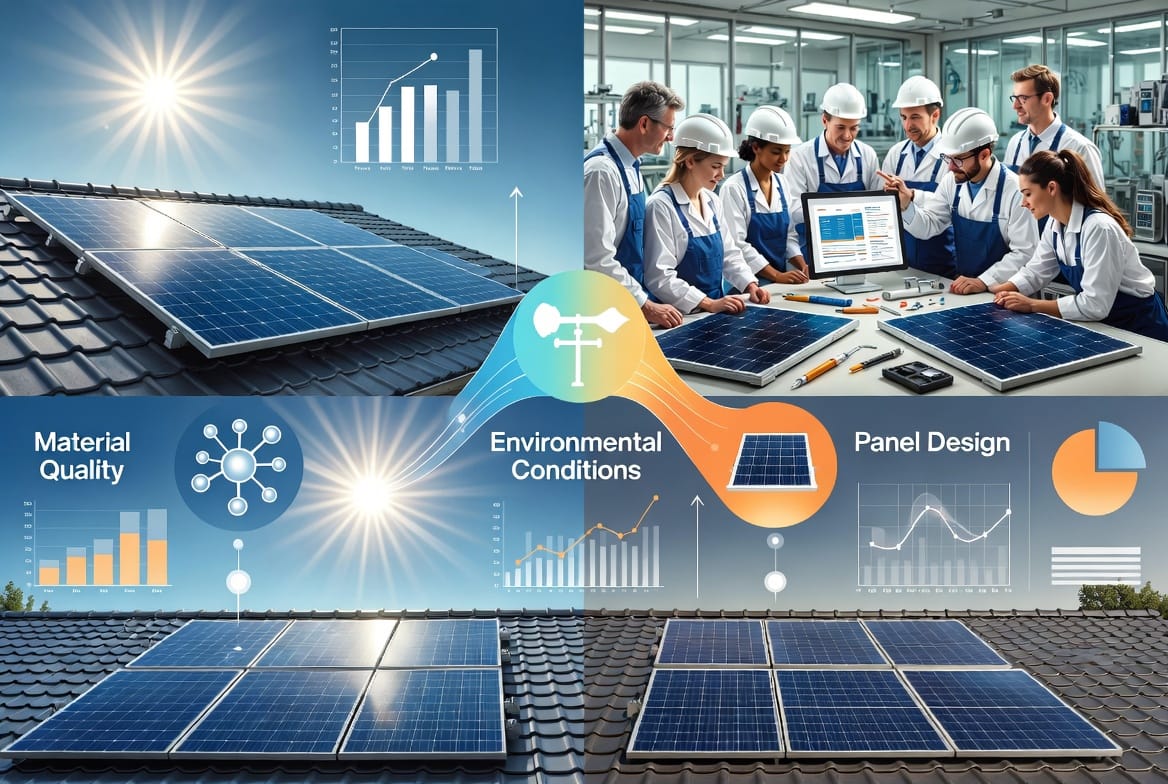
Several critical factors determine how well a solar panel withstands UV exposure:
- Material quality – High-grade POE encapsulants and fluorinated backsheets outperform standard EVA and basic polymers.
- UV exposure intensity – Location matters. Panels in high-irradiance regions (such as deserts or tropical areas) experience faster degradation unless built for it.
- Manufacturing standards – Strict quality control, proper lamination, and certified supply chains prevent early failures.
Choosing Panels That Resist UV Aging – Your Action Plan
Protecting your solar investment starts at the selection stage. Prioritize panels with:
- POE or advanced encapsulants
- Fluoropolymer or high-performance backsheets
- Full IEC 61215 UV testing certification
- Transparent, long-term field performance data
Regular professional inspections can catch early signs of yellowing or power loss before they become costly. Simple cleaning, proper mounting to reduce heat buildup, and avoiding shading also help slow degradation.
At the end of the day, solar panel UV degradation is manageable when you work with quality products and knowledgeable partners.
Ready to future-proof your solar system? Choose panels engineered to resist UV aging and keep your energy production strong for decades. Ask our experts about panel quality, warranty details, and the best UV-resistant options for your location.
Your solar investment deserves the best protection—let us help you secure maximum performance and peace of mind.
Avoid Yellowing & Maximize Efficiency – Call Now!