The Solar Panel Microinverter vs. String Inverter: Shade Tolerance and Monitoring
In today’s solar energy landscape, choosing the right inverter technology can make the difference between maximum energy production and disappointing performance. Homeowners and businesses with shaded roofs, complex rooflines, or varying sunlight patterns face a critical decision: solar panel microinverters or traditional string inverters.
Choose the Best Inverter for Your Roof – Call Now!
This comprehensive guide compares both technologies with a sharp focus on shade tolerance and panel-level monitoring. You will discover why microinverters often deliver superior results in real-world conditions while learning when a string inverter might still be the practical choice.
Microinverters attach to each individual solar panel, allowing every module to operate at its own maximum potential. String inverters connect multiple panels in a series “string,” with a single central unit handling the entire array. The technical differences become most evident when shade, debris, or orientation issues appear.
Understanding String Inverter Technology
String inverters have powered the majority of solar installations for decades. A single inverter connects to a series of 6–20 panels wired together. DC power from the panels travels down the string before conversion to AC at the central inverter.
Key characteristics include:
- Lower upfront cost per watt
- Simpler installation with fewer components
- Proven long-term reliability in ideal conditions
- Centralized monitoring of the entire system
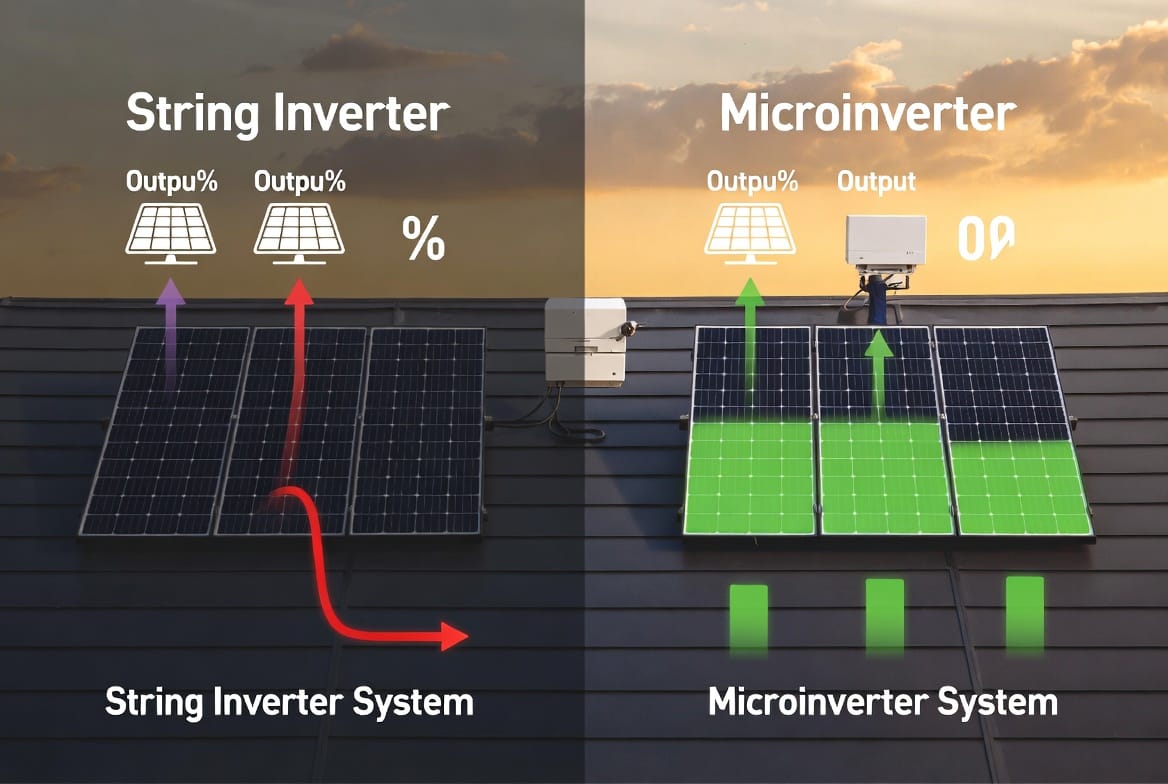
However, string inverters operate on the principle that current flows at the level of the weakest panel in the string. This creates a fundamental vulnerability in any shaded or mismatched environment.
How Microinverters Work Differently
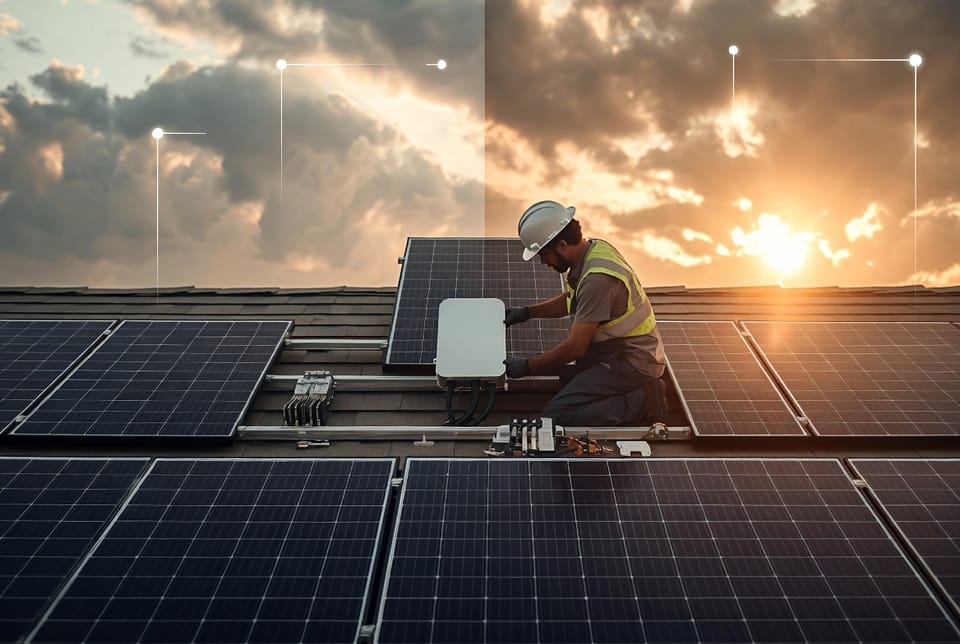
Microinverters represent a panel-level power electronics approach. One compact unit sits beneath each solar panel, converting DC to AC right at the source. Each panel operates completely independently.
This architecture delivers three major advantages:
- Individual Maximum Power Point Tracking (MPPT) for every panel
- Rapid shutdown compliance built into each unit
- Granular performance data down to the single-module level
When one panel experiences shade, only that panel’s output drops. The remaining panels continue producing at peak efficiency.
Shade Tolerance: The Deciding Factor for Many Roofs
Shade tolerance stands as the most significant differentiator between these technologies. Even partial shading from chimneys, trees, vent pipes, or neighboring buildings can drastically reduce output in a string inverter system.
Real-World Impact of Shade on String Inverters
When one panel in a string drops to 50% output due to shade:
- The entire string’s current is limited to that lower level
- Bypass diodes help somewhat but still cause measurable losses
- Production can drop 30–50% or more across the affected string
Homeowners often discover this only after installation when seasonal changes bring new shade patterns.
Microinverters Excel in Shaded Conditions
Microinverters isolate performance issues completely. A shaded panel affects only itself. Studies and field data consistently show microinverter systems producing 10–30% more energy annually on roofs with moderate shading compared to string systems of equal size.
Common shading scenarios where microinverters shine:
- Rooftops with multiple roof planes and orientations
- Properties near tall trees or buildings
- Installations with snow accumulation, leaves, or bird droppings
- Commercial canopies and carports with structural obstructions
Advanced Monitoring Capabilities
Panel-level monitoring transforms system ownership from guesswork into precise management.
String inverter monitoring typically provides:
- Total system output only
- Basic alerts for major failures
- Limited ability to pinpoint underperforming panels
Microinverter monitoring offers:
- Real-time data for every single panel
- Immediate identification of issues (shade, dirt, damage, or failure)
- Historical performance trends per module
- Mobile app access with detailed analytics
This granular visibility enables proactive maintenance. Instead of wondering why production dropped, owners see exactly which panel needs attention and why.
Cost Considerations and Long-Term Value
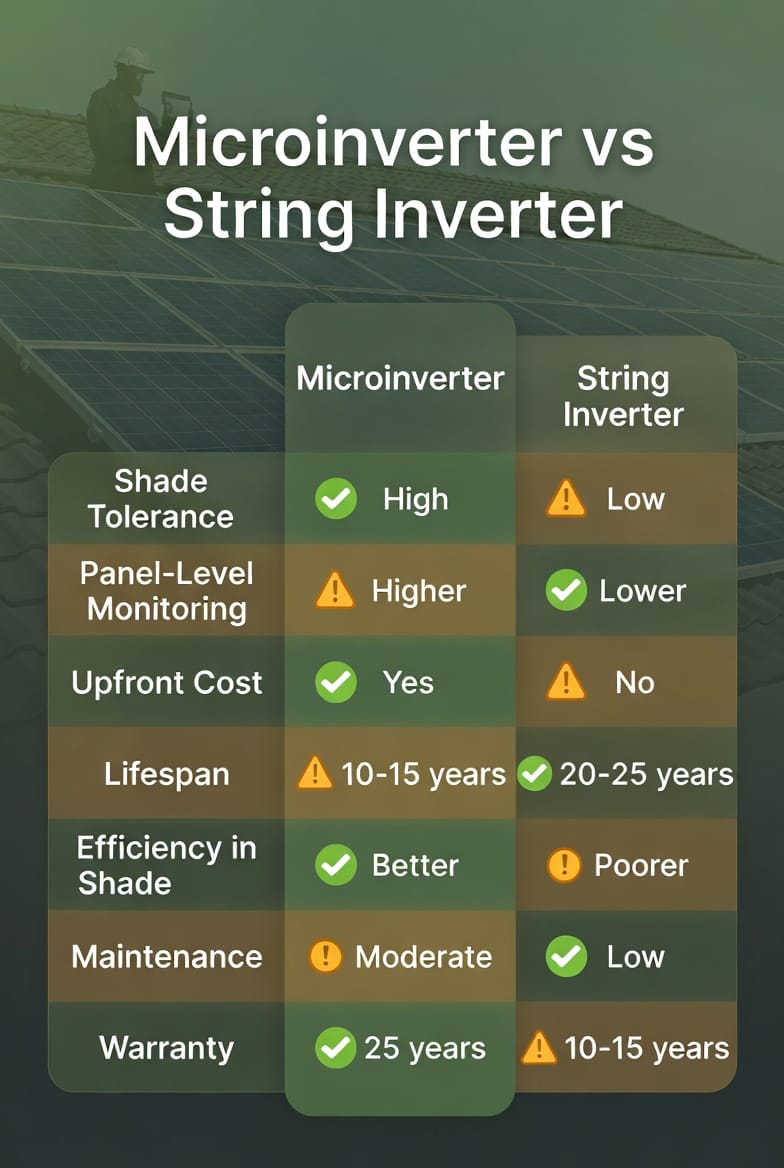
String inverters generally cost less upfront. A typical residential string inverter system might save $1,000–$3,000 initially compared to a full microinverter setup.
However, microinverters often deliver better lifetime value through:
- Higher lifetime energy production
- Longer individual component warranties (typically 25 years)
- Reduced maintenance costs due to early issue detection
- Better resale value for the property
When calculating total cost of ownership, many homeowners find microinverters break even within 3–7 years through increased production, especially on imperfect roofs.
Other Important Comparison Factors
Efficiency and Heat Management
Modern microinverters run cooler and more efficiently at the panel level. String inverters handle higher centralized power loads, sometimes requiring dedicated cooling or shaded locations.
System Expansion
Adding panels later proves easier with microinverters. Simply install new panels with their own microinverters. String systems often require careful matching and may need inverter upgrades.
Safety Features
Both technologies meet rapid shutdown requirements, but microinverters provide module-level shutdown, reducing high-voltage DC wiring on the roof.
Lifespan and Reliability
Quality microinverters now match or exceed string inverter durability, with many carrying 25-year warranties versus 10–15 years for many string models.
Choosing the Right Technology for Your Situation
Consider microinverters if your roof has:
- Any consistent shading from trees, structures, or chimneys
- Multiple roof orientations or angles
- Plans for future expansion
- High priority on maximum energy harvest and detailed monitoring
A string inverter may still make sense when:
- The roof receives full, unobstructed sunlight all day
- Budget is the primary constraint
- Simple roof design with uniform panel orientation
- Large-scale ground mount or commercial arrays with minimal shading
Professional installers evaluate site-specific conditions using shade analysis tools to model expected production for both options.
Making an Informed Decision
The choice between solar panel microinverters and string inverters ultimately depends on your unique roof conditions, energy goals, and budget priorities. While string inverters remain a cost-effective solution for ideal unshaded installations, microinverters consistently outperform in real-world shaded or complex scenarios through superior shade tolerance and panel-level monitoring.
Investing in the right inverter technology ensures your solar system delivers maximum clean energy for decades to come. Modern microinverter systems have matured into highly reliable, warrantied solutions that give homeowners confidence even on challenging rooftops.
Ready to maximize your solar production?
Choose the inverter technology best suited to your shade conditions and roof layout. Our solar experts provide detailed shade analysis and personalized recommendations.
Optimize every panel. Harvest more energy. Enjoy reliable solar performance for years ahead.
Get Expert Shade Analysis & Inverter Recommendations – Call Today