The Solar Panel Maintenance: Cleaning and Inspection Schedule
Solar energy systems deliver clean, reliable power when they receive consistent care. A well-structured solar panel maintenance routine protects your investment, sustains high energy output, and extends the operational life of every component. This comprehensive guide outlines a practical care routine focused on cleaning frequency, systematic inspection checkpoints, and essential safety practices. Following these steps helps homeowners and business owners keep their systems performing at peak efficiency year after year.
Keep Your Solar System at Peak Performance – Call Now!
Why Consistent Solar Panel Maintenance Matters
Dust, pollen, bird droppings, leaves, and environmental debris gradually reduce the amount of sunlight that reaches the photovoltaic cells. Even a thin layer of grime can lower energy production by several percentage points. Over time, unchecked buildup compounds losses and may stress other system parts. Regular cleaning and inspection prevent these issues before they escalate into costly repairs.
A disciplined schedule also supports warranty compliance. Most manufacturers require documented maintenance to keep coverage valid. Beyond financial protection, proper care contributes to grid stability and environmental goals by ensuring every panel converts as much sunlight as possible into usable electricity. Homeowners who adopt a proactive approach typically enjoy higher monthly savings and greater peace of mind.
Establishing the Ideal Cleaning Schedule
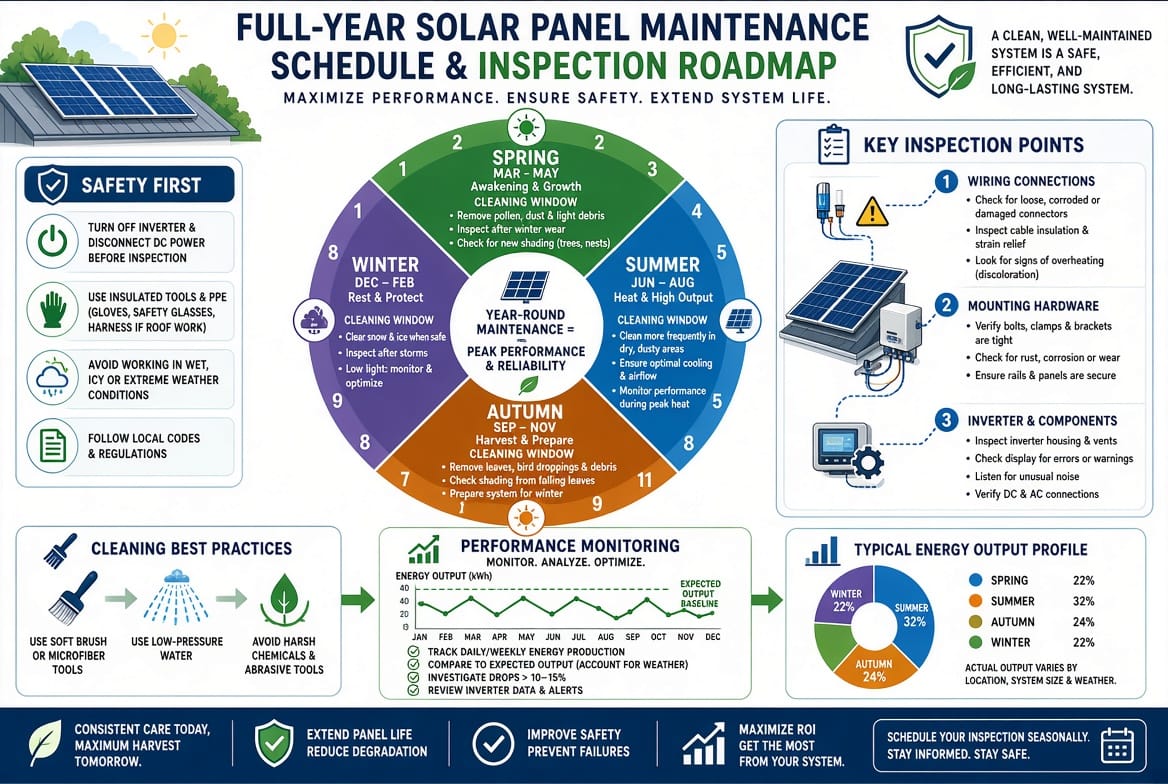
The foundation of effective solar panel maintenance is knowing how often to clean. For the majority of installations in moderate climates, cleaning panels twice a year provides excellent results. Spring and fall are ideal seasons because they bookend the periods of heaviest pollen and leaf accumulation.
In dusty or arid regions—such as desert communities, agricultural zones, or areas near construction sites—more frequent attention is necessary. Homeowners in these locations should plan quarterly cleanings or even monthly light rinses during peak dust seasons. Coastal properties may require additional washes to remove salt residue that can corrode frames and connections. Urban environments with high pollution levels also benefit from extra cleanings to counteract fine particulate matter.
Observe your local weather patterns and system performance data. A sudden drop in daily output often signals the need for an earlier cleaning. Tracking production through your monitoring app creates a personalized schedule that adapts to real conditions rather than relying solely on a calendar.
Step-by-Step Cleaning Process for Optimal Results
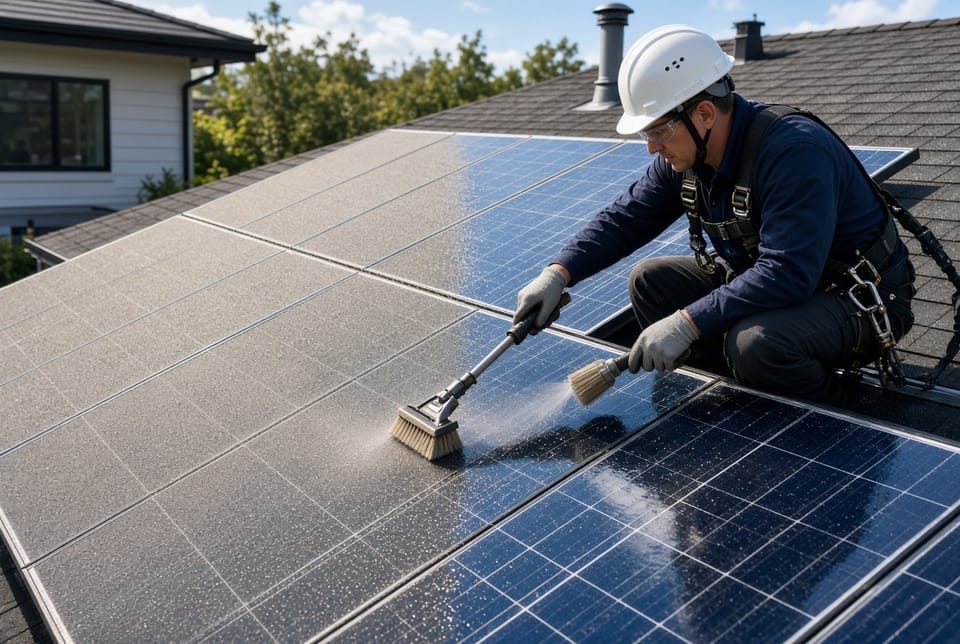
Begin every cleaning session by reviewing the manufacturer’s guidelines. Most panels tolerate soft water and mild, non-abrasive cleaners. Avoid harsh chemicals, abrasive pads, or high-pressure washers that can scratch the glass surface or force water into sealed junctions.
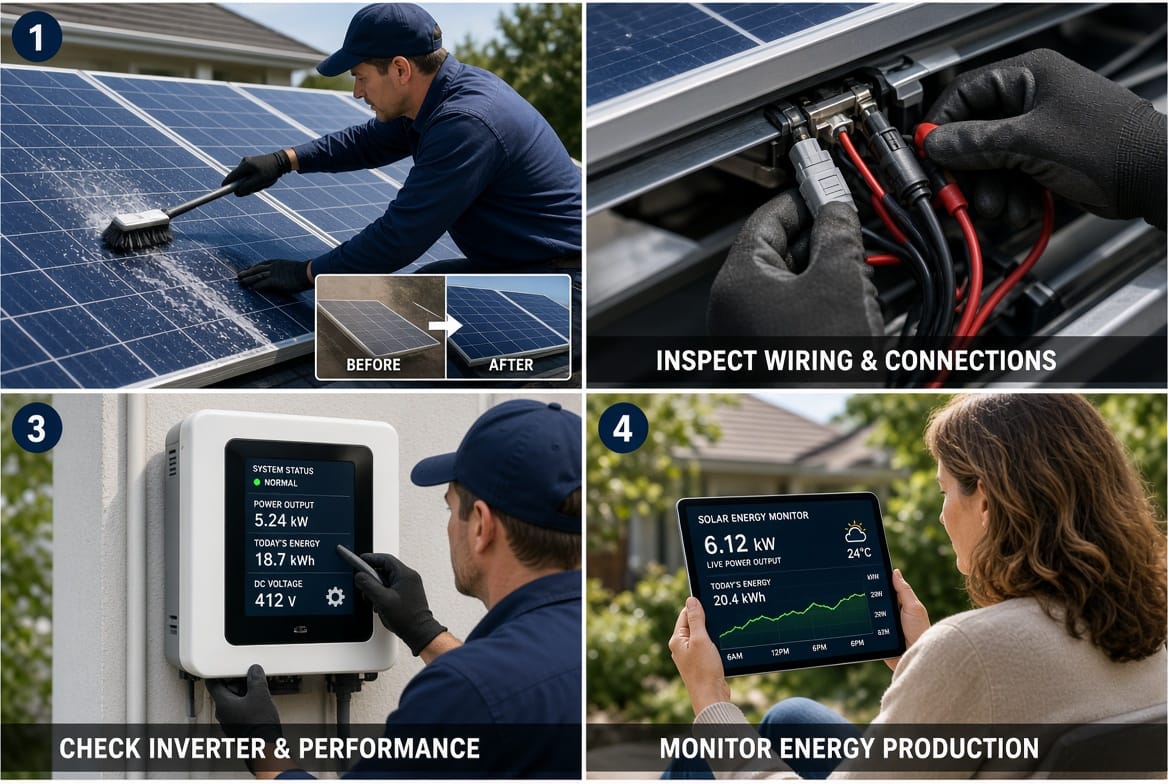
Use a soft brush or specialized solar panel cleaning tool designed to glide smoothly across the tempered glass. Work from the top of the array downward so dirt flows away with the rinse water. Deionized or distilled water minimizes mineral spots that ordinary tap water can leave behind. For stubborn bird droppings or sticky residue, allow a gentle soap solution to sit briefly before rinsing thoroughly.
Schedule cleanings early in the morning or late in the afternoon when panels are cool. Hot surfaces cause rapid evaporation and can leave streaks. Never walk on the panels themselves; always use proper access equipment and maintain three points of contact for stability. After cleaning, record the date, weather conditions, and any observations in a maintenance log. This simple habit builds a valuable history for future reference and professional service visits.
Comprehensive Inspection Checkpoints
Cleaning addresses surface efficiency, yet a thorough inspection schedule examines the structural and electrical integrity of the entire system. Perform visual and functional checks at least twice yearly, ideally during the same visits as cleaning. Focus on three primary areas: wiring, mounting hardware, and the inverter.
Wiring Inspection
Examine all visible wiring for signs of wear, cracking, UV degradation, or animal damage. Look carefully at conduit runs, junction boxes, and connectors. Loose or corroded terminals can create resistance, generate heat, and reduce system output. Ensure that grounding wires remain securely attached and free of rust. Any exposed copper or damaged insulation requires immediate professional attention to eliminate electrical hazards.
Mounting and Structural Integrity
Inspect every clamp, rail, and attachment point that secures the panels to the roof or ground mount. Check for loose bolts, shifted brackets, or corrosion on metal components. Verify that the array remains level and properly spaced for airflow. Roof penetrations must stay watertight; any evidence of leaking seals or compromised flashing needs prompt repair to protect the building envelope. In snowy climates, confirm that snow guards and structural reinforcements continue to handle seasonal loads safely.
Inverter Performance and Health
The inverter converts direct current from the panels into usable alternating current. Monitor its display or app for error codes, unusual noise, or temperature warnings. Clean dust from cooling vents and ensure adequate clearance around the unit for proper airflow. Confirm that all indicator lights function normally and that communication with the monitoring platform remains uninterrupted. A healthy inverter is essential for consistent energy delivery and accurate performance reporting.
Safety Considerations Throughout the Maintenance Process
Safety remains non-negotiable during every stage of solar panel maintenance. Always de-energize the system according to the manufacturer’s lockout-tagout procedure before approaching electrical components. Wear appropriate personal protective equipment, including non-slip footwear, gloves, safety glasses, and a hard hat when working at height.
Avoid maintenance during storms, high winds, or extreme temperatures. Wet roofs become extremely slippery, and metal surfaces can conduct electricity if insulation fails. Never attempt repairs involving internal wiring or inverter components unless you hold the proper certifications. When in doubt, contact a qualified solar technician. Professional service teams bring specialized tools, training, and insurance coverage that protect both the system and the property owner.
Keep children and pets clear of the work area. Store cleaning solutions and tools securely after use. Document every safety step completed so future technicians understand the system’s current condition.
Building a Year-Round Care Routine
Combine cleaning and inspection into a single, efficient routine. In spring, focus on removing winter debris and verifying that freeze-thaw cycles have not loosened hardware. Summer inspections emphasize heat-related expansion and dust accumulation. Autumn visits clear falling leaves and prepare the system for colder weather. Winter checks, when accessible, confirm that snow loads have not stressed mounts and that production remains within expected ranges for reduced daylight hours.
Integrate performance monitoring into daily or weekly habits. Modern monitoring platforms display real-time production, historical trends, and alerts for underperforming strings. A sudden or gradual decline often points to soiling, shading, or a developing electrical issue. Addressing these signals quickly restores output and prevents minor problems from becoming major failures.
Maintain a dedicated folder—digital or physical—containing installation manuals, warranty documents, previous service reports, and your maintenance log. This organized record streamlines communication with service providers and supports any future insurance or resale discussions.
Additional Tasks That Support Peak Performance
Beyond the core cleaning and inspection activities, several supporting practices enhance system longevity. Trim nearby vegetation that could cast shadows or drop debris onto the array. Ensure that roof drainage systems direct water away from the panels and mounting feet. Periodically review local utility interconnection requirements and any changes in net-metering policies that might affect system value.
Consider scheduling a professional comprehensive evaluation every three to five years. Technicians equipped with thermal imaging cameras can detect hot spots invisible to the naked eye, while specialized testing equipment verifies string voltages and insulation resistance. These deeper diagnostics complement the owner’s routine visual checks.
Recognizing When Professional Assistance Is Required
While many cleaning and visual inspection tasks fall within a careful homeowner’s capabilities, certain situations demand expert intervention. Persistent error codes, visible damage to panels or wiring, significant production drops that cleaning does not resolve, or any suspicion of water intrusion into electrical enclosures all warrant a service call. Attempting complex repairs without proper training risks personal injury and may void warranties.
Qualified solar maintenance teams arrive with the correct tools, safety protocols, and knowledge of local codes. They can also perform preventive upgrades such as adding bird deterrents, replacing aging connectors, or optimizing inverter firmware. Establishing a relationship with a trusted provider ensures rapid response when unexpected issues arise.
Long-Term Benefits of a Disciplined Maintenance Schedule
Systems that receive regular care consistently outperform neglected arrays. Higher energy yields translate directly into greater utility bill savings and faster return on investment. Clean, well-inspected panels also retain higher resale value should the property change hands. From an environmental perspective, maximized production means more clean kilowatt-hours displace fossil-fuel generation.
Owners who follow a structured cleaning and inspection schedule report fewer emergency service calls and greater confidence in their energy independence. The modest time and cost invested in routine maintenance pay dividends through reliability, efficiency, and extended equipment life—often measured in decades rather than years.
Common Pitfalls to Avoid
Several frequent mistakes undermine otherwise good intentions. Over-cleaning with abrasive materials scratches the anti-reflective coating and permanently reduces light transmission. Neglecting the underside of elevated arrays allows debris to accumulate and restrict airflow, elevating operating temperatures. Ignoring monitoring alerts until production has already declined for weeks wastes valuable energy that could have been recovered with timely action.
Another risk involves improper ladder placement or inadequate fall protection when working on roofs. Always prioritize safety equipment and techniques. Finally, failing to keep accurate records can complicate warranty claims or future troubleshooting. A simple notebook or digital spreadsheet eliminates this vulnerability.
Integrating Maintenance into Your Energy Lifestyle
View solar panel maintenance as an ongoing partnership with your energy system rather than an occasional chore. Set calendar reminders for seasonal cleanings and inspections. Share the schedule with family members or property managers so responsibility remains clear. Celebrate the tangible results—higher production numbers, lower bills, and the satisfaction of responsible stewardship of clean technology.
As solar technology continues to evolve, maintenance principles remain constant: keep surfaces clear, connections secure, and components cool and dry. Adhering to these fundamentals positions every system for decades of dependable service.
Conclusion and Next Steps
A thoughtful solar panel maintenance plan centered on cleaning twice a year (or more in dusty areas), systematic inspection of wiring, mounting, and inverter components, and unwavering attention to safety delivers lasting performance and protection. By following the routines detailed in this guide, you safeguard both energy production and the long-term health of your investment.
Boost Solar Efficiency – Schedule Maintenance Today!