The Solar Panel Grounding: Why It's Critical for Safety and Performance
In the rapidly growing world of renewable energy, solar panel systems stand out as a reliable and sustainable power source for homes and businesses. However, one crucial aspect often overlooked by homeowners is solar panel grounding. Proper grounding isn't just a technical requirement—it's the foundation of a safe, efficient, and long-lasting solar installation.
Ensure Safe Solar Grounding – Get Expert Help Today!
At its core, grounding provides a safe path for electrical currents to dissipate into the earth, protecting people, property, and equipment. Without it, even the most advanced solar array can pose serious risks. This comprehensive guide explores why grounding solar systems is essential, the science behind it, relevant code requirements, common signs of issues, and practical steps to ensure compliance and optimal performance.
Why invest in professional grounding? It delivers peace of mind, reduces long-term costs, and maximizes your solar investment's returns. Let's dive deeper.
Understanding Electrical Safety in Solar PV Systems
Electrical safety forms the backbone of any solar photovoltaic (PV) installation. Solar panels generate direct current (DC) electricity, which inverters convert to alternating current (AC) for home use. Throughout this process, various metallic components—like panel frames, mounting racks, conduits, and enclosures—can potentially become energized due to faults, surges, or insulation breakdowns.
Grounding mitigates these dangers by bonding all non-current-carrying metal parts to the earth. This creates a low-resistance path for fault currents, allowing protective devices like circuit breakers or ground-fault interrupters to activate quickly and shut down the system before harm occurs.
Key benefits include:
- Preventing electric shock to installers, maintenance workers, and homeowners.
- Protecting sensitive electronics from voltage spikes.
- Enhancing system reliability by minimizing electrical noise and interference.
Without proper grounding, stray voltages can make metal surfaces "live," turning a simple touch into a hazardous encounter. Professional installers prioritize safety to deliver systems that perform reliably for decades.
Why Solar Systems Must Be Grounded
Solar PV systems require grounding for several critical reasons, each addressing specific vulnerabilities in outdoor electrical setups exposed to the elements.
Lightning Protection and Surge Mitigation
Thunderstorms deliver powerful lightning strikes that can induce massive voltage surges in solar arrays. Proper grounding channels this energy safely into the ground, preventing damage to panels, inverters, and connected appliances.
Even indirect strikes or nearby electrical activity can create surges. Grounded systems equipped with surge protection devices (SPDs) offer superior defense, safeguarding your investment against nature's fury.
Equipment Grounding Conductor (EGC)
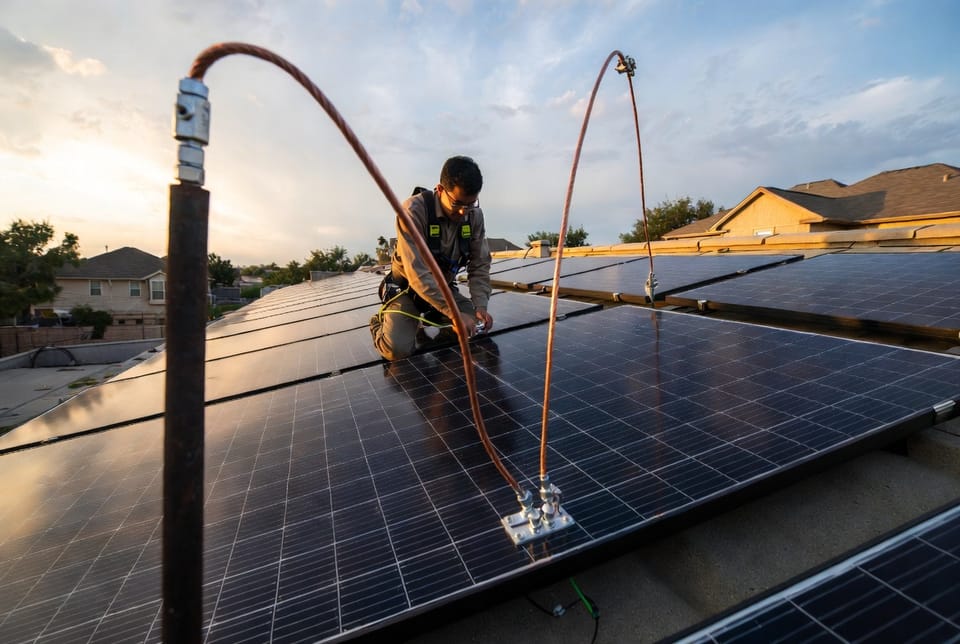
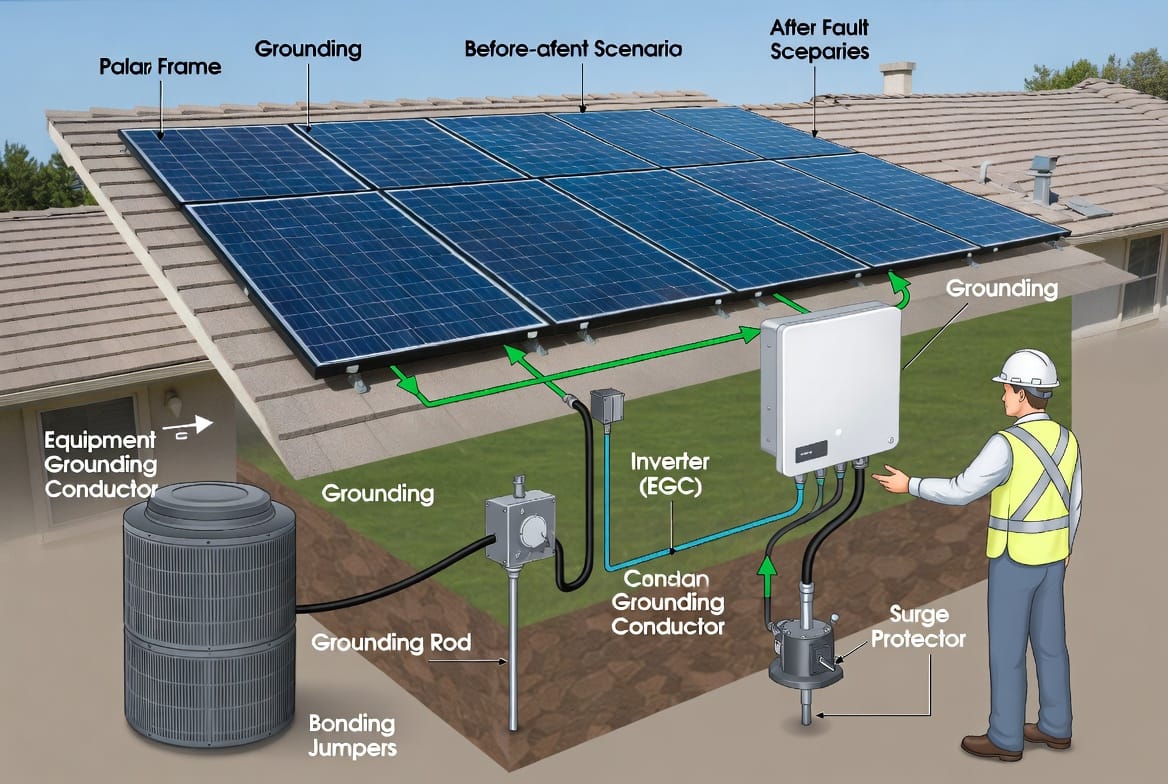
The Equipment Grounding Conductor (EGC) connects exposed metal parts—such as module frames and racking—to the grounding system. This ensures that if a fault occurs, current flows through the EGC rather than through a person or causing arcing.
Bold fact: NEC standards mandate EGCs for all PV systems with exposed conductive surfaces, regardless of system voltage. This continuous bonding path is non-negotiable for safety.
System Grounding
System grounding typically involves connecting one conductor of the DC circuit to ground at a single point, often at the inverter or combiner box. This stabilizes voltages, reduces electromagnetic interference, and helps fault detection.
In ungrounded (floating) systems, special monitoring is required, but most residential setups benefit from grounded designs for simplicity and compliance.
Code Requirements: Navigating NEC Article 690
Compliance with the National Electrical Code (NEC) Article 690 is mandatory for safe solar installations across the United States. This article provides detailed guidelines specifically for PV systems.
Core NEC 690 requirements include:
- Equipment grounding for all metallic parts (690.43).
- Proper sizing and installation of grounding conductors.
- Bonding of racking and modules to ensure electrical continuity.
- Grounding electrode systems for buildings supporting PV arrays (690.47).
Recent updates in NEC 2023 emphasize enhanced bonding for larger arrays and stricter continuity testing. Always work with licensed professionals familiar with local amendments to avoid inspection failures or insurance issues.
Adhering to these codes isn't bureaucratic red tape—it's a proven framework that has saved lives and prevented countless incidents. Professional teams ensure every connection meets or exceeds these standards, giving you confidence in your system's integrity.
Signs of Poor Grounding: What to Watch For
Even well-installed systems can develop issues over time due to corrosion, loose connections, or environmental wear. Recognizing signs of poor grounding early can prevent major problems.
Common indicators include:
- Frequent inverter errors or ground-fault alerts.
- Unexpected system shutdowns or performance drops.
- Visible corrosion on grounding lugs, wires, or rods.
- Shock sensations when touching metal parts (a critical warning—stop use immediately).
- Equipment damage, such as burnt components or frequent fuse blows.
Shock hazards arise when fault currents lack a proper path, energizing frames or racks. Equipment damage accelerates from surges that should have been dissipated. Regular professional inspections—ideally annually—help maintain optimal conditions.
If you notice any of these symptoms, contact a qualified technician promptly. Early intervention protects your family and preserves your solar savings.
The Components of an Effective Grounding System
A robust solar grounding system integrates several interconnected elements working in harmony.
Essential components:
- Grounding Electrode: Copper rods or plates driven into the soil for earth connection.
- Grounding Conductor (EGC): Copper wire providing the fault current path.
- Bonding Jumpers: Short conductors ensuring continuity between modules and racks.
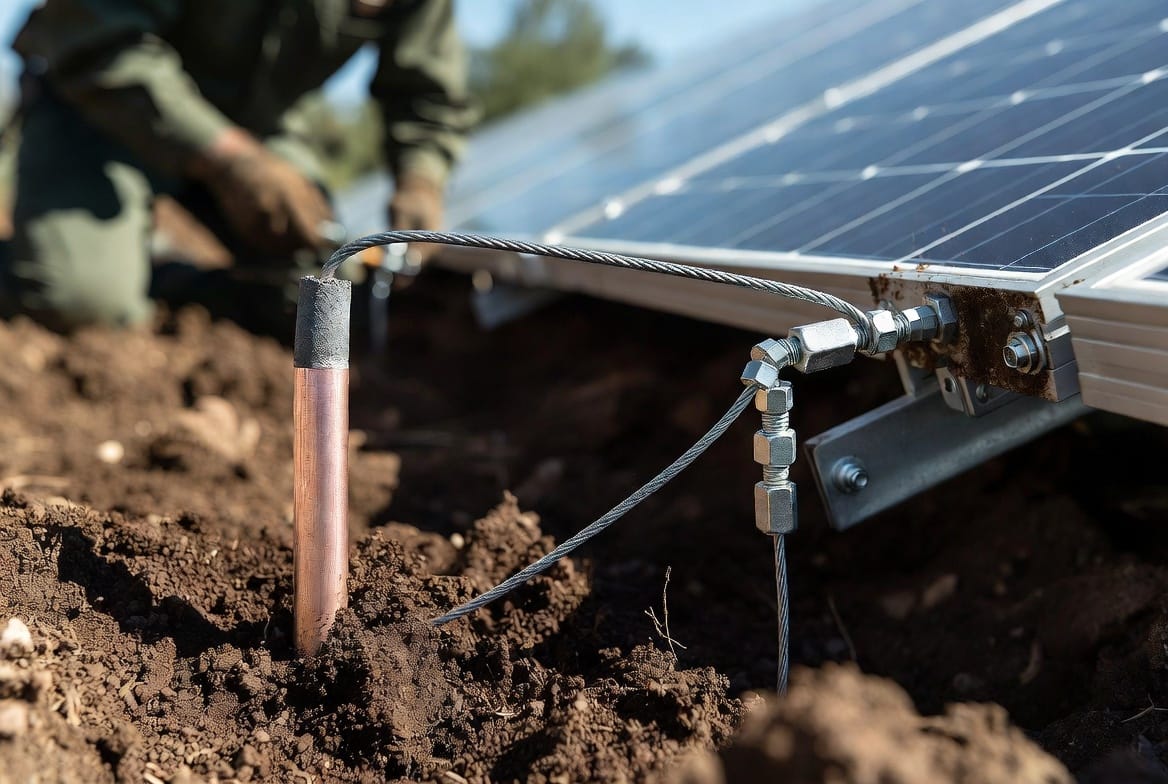
Additional elements like surge protectors and proper torque on connections enhance performance. Quality materials and meticulous installation ensure low resistance—ideally under 5 ohms—for maximum effectiveness.
Best Practices for Solar Grounding Installation and Maintenance
Achieving reliable grounding starts with expert design and continues with diligent upkeep.
Professional installation tips:
- Use UL-listed components compatible with your racking and modules.
- Maintain continuous, low-resistance paths without splices where possible.
- Bond all metallic parts thoroughly.
- Integrate lightning and surge protection tailored to your location.
Ongoing maintenance:
- Inspect connections for tightness and corrosion seasonally.
- Test ground resistance periodically.
- Monitor inverter logs for fault indicators.
- Schedule professional service after severe weather.
These steps ensure your system remains safe and productive year after year. Homeowners in areas like Dallas benefit from technicians experienced with local soil conditions and weather patterns.
Performance Benefits Beyond Safety
While safety is paramount, proper grounding also boosts overall system performance. It reduces electrical noise, improves inverter efficiency, and minimizes downtime. A well-grounded array operates more stably, potentially increasing energy yield and extending equipment lifespan.
In essence, grounding is an investment that pays dividends through reliability, lower maintenance costs, and enhanced peace of mind.
Addressing Common Myths and Concerns
Some homeowners worry that grounding complicates installations or attracts lightning. In reality, proper grounding actually helps manage lightning risks by providing controlled dissipation paths. Modern systems are engineered for safety in all conditions.
Another myth: "My system is ungrounded and works fine." While some designs operate ungrounded with monitoring, they still require robust equipment grounding for exposed metals. Compliance and expert advice are always recommended.
Conclusion: Prioritize Grounding for a Secure Solar Future
Solar panel grounding is far more than a checkbox—it's the invisible guardian ensuring your renewable energy system delivers safe, reliable power for years to come. From lightning protection and fault management to code compliance and performance optimization, its importance cannot be overstated.
By understanding these principles and partnering with experienced professionals, you protect your home, family, and investment while contributing to a greener tomorrow. Don't leave safety to chance—ensure your solar installation meets the highest standards.
Proper grounding prevents shocks and fires. Have questions about your system's installation standards or need expert assessment?
Get Professional Solar Grounding Assessment Today!