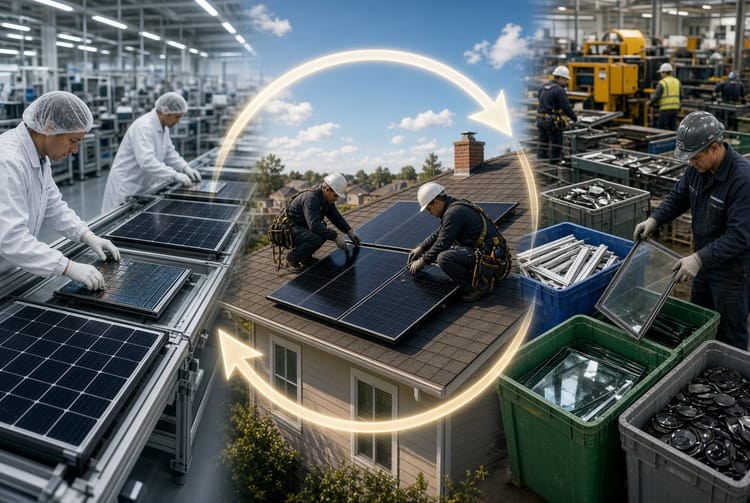
The Solar Panel End-of-Life: Landfill vs. Recycling Rates
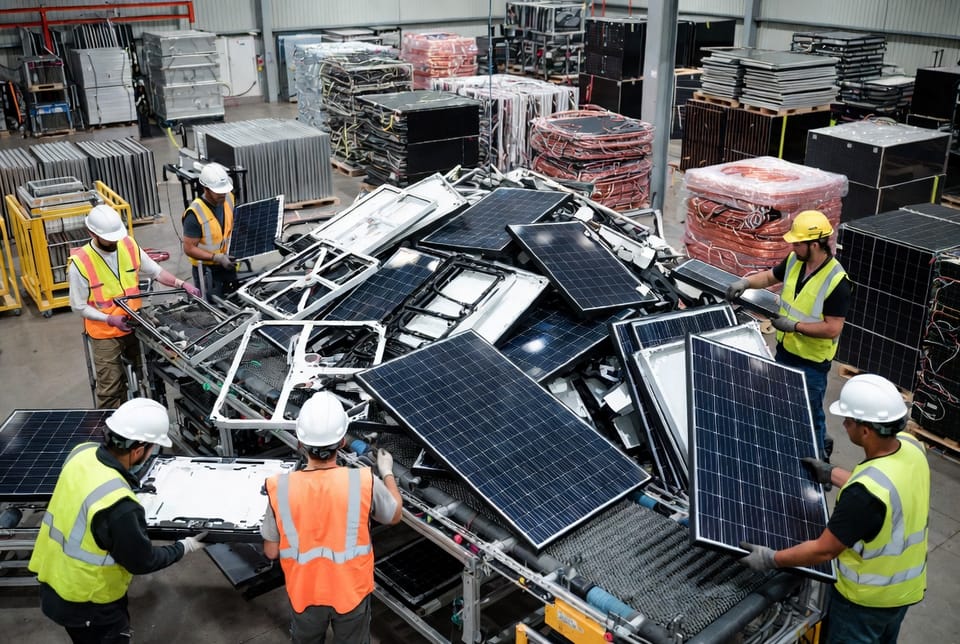
As the world embraces solar energy as a cornerstone of sustainable power, one critical question emerges: what happens when these panels reach the end of their productive lives? With millions of installations worldwide approaching their 25- to 30-year lifespan, the management of end-of-life solar panels has become a pressing environmental and economic issue. This article explores the stark contrast between landfill disposal and recycling, highlighting current rates, material recovery potential, regulatory differences, and the path forward for responsible solar adoption.
Ask About Solar Recycling Plans Today
Choosing solar power already delivers clean energy benefits, but true sustainability demands thoughtful end-of-life planning. By understanding the options, homeowners, businesses, and policymakers can ensure solar's positive impact extends far beyond energy production.
The Growing Volume of Solar Panel Waste
Solar installations have surged globally, creating a future wave of decommissioned panels. Projections indicate significant volumes entering the waste stream in the coming decades. In the United States alone, experts anticipate up to one million tons of solar panel waste by 2030, escalating dramatically by 2050.
This isn't a distant problem. Early adopters from the 1990s and 2000s are already facing decommissioning decisions. Without proper management, the risk of improper disposal grows. Yet, with proactive strategies, this "waste" stream represents a valuable opportunity for material recovery and reduced environmental footprint.
Key factors driving the increase include:
- Rapid expansion of residential and utility-scale solar projects.
- Panel degradation, damage from extreme weather, or technological upgrades.
- The natural 25-30 year operational lifespan of most photovoltaic modules.
Addressing this proactively protects our planet while supporting the solar industry's long-term viability.
Understanding Solar Panel Composition and Recyclability
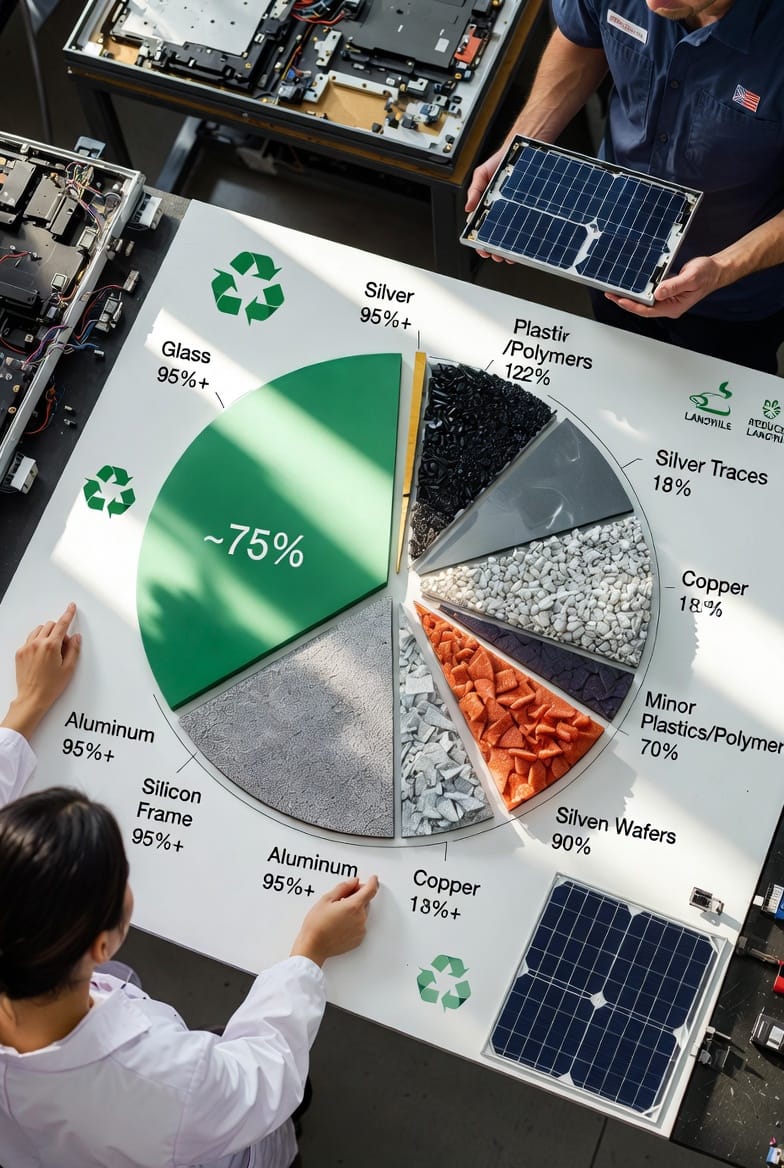
A typical crystalline silicon solar panel consists of materials that are highly recoverable. Approximately 90% or more of a solar panel's weight is recyclable, including glass, aluminum frames, copper wiring, and silicon cells.
Recyclable Materials Breakdown
- Glass (around 70-75% of weight): Highly recyclable for new panels or other glass products.
- Aluminum frames: Nearly 100% recoverable and reusable with minimal energy input.
- Silicon cells: Up to 85-95% recovery rates through advanced processes.
- Copper and silver: Valuable metals extracted for electronics and manufacturing.
These materials retain significant value. Recycling not only diverts waste but also reduces demand for virgin resource extraction, conserving energy and lowering emissions.
Current Recycling Rates: The Landfill Reality
Despite high recyclability, current global recycling rates for end-of-life solar panels remain low, often cited between 10-15% in many regions, with estimates of around 10% or less in the US. This means the vast majority—up to 90%—still end up in landfills.
Why the low rates? Primary barriers include:
- Cost disparities: Landfilling can cost $1-5 per panel, while recycling ranges from $15-45 or higher due to processing needs.
- Limited infrastructure: Not enough specialized facilities handle the volume efficiently.
- Lack of awareness: Many owners and installers default to the cheapest disposal option.
- Logistical challenges: Transporting bulky panels to recycling centers adds expense.
Landfilling poses environmental risks. While modern panels are generally not classified as hazardous under standard conditions, leaching of trace heavy metals (like lead or cadmium in certain thin-film types) into soil and groundwater remains a concern over time.
Environmental Impact: Landfill vs. Recycling
The environmental stakes are high. Landfilling contributes to resource depletion and potential contamination, whereas recycling delivers substantial benefits:
- Resource conservation: Recovered materials reduce mining needs for aluminum, silicon, and rare metals.
- Energy savings: Recycling aluminum uses up to 95% less energy than primary production.
- Emissions reduction: Proper recycling avoids methane from landfills and cuts CO₂ equivalent emissions significantly. One facility reported avoiding massive CO₂e through large-scale processing.
- Circular economy support: Materials re-enter supply chains, bolstering domestic manufacturing and reducing reliance on imports.
Studies show recycling scenarios generally outperform landfilling across lifecycle assessments, though specific process types (mechanical, thermal) vary in impacts.
Regulatory Landscape: Europe Leads, US Evolves
Europe sets a strong example with mandatory recycling under the Waste Electrical and Electronic Equipment (WEEE) Directive. This requires collection, treatment, and high recovery rates (often targeting 80%+), driving infrastructure development and higher compliance.
In contrast, the United States relies primarily on voluntary programs and state-level initiatives. Federal rules under RCRA address hazardous waste aspects, but broad mandates are limited. Some states like California and Washington have implemented specific requirements, while others encourage best practices.
This difference highlights a gap: Europe's structured approach achieves better outcomes, while the US sees innovation from private recyclers but slower overall adoption. Emerging trends, including potential universal waste regulations and manufacturer take-back programs, signal positive change.
Overcoming Challenges and Advancing Recycling
Several hurdles persist, but solutions are emerging:
- Technological innovations: Advanced mechanical, chemical, and thermal processes improve recovery rates and lower costs.
- Policy support: Extended producer responsibility (EPR) laws shift accountability to manufacturers.
- Industry collaboration: Partnerships between installers, utilities, and recyclers streamline logistics.
- Economic incentives: As material values rise and landfill fees potentially increase, recycling becomes more competitive.
Businesses and homeowners can contribute by selecting solar providers with robust end-of-life programs.
The Benefits of Choosing Recycling
Prioritizing recycling yields:
- Environmental protection: Minimizes landfill burden and pollution risks.
- Economic value: Recovers materials worth billions in the coming decades.
- Sustainability leadership: Strengthens solar's green credentials.
- Job creation: Supports a growing recycling sector with skilled labor opportunities.
By demanding accountability, consumers accelerate the transition to a true circular solar economy.
Best Practices for Solar Owners
When your panels near end-of-life:
- Consult certified recyclers early.
- Explore manufacturer take-back or warranty extensions.
- Partner with installers offering decommissioning services.
- Stay informed about local regulations.
These steps ensure your investment in clean energy remains environmentally sound throughout its lifecycle.
Protect the Planet with Smart Solar Choices