The Solar Panel Degradation Rate: What 25-Year Warranties Actually Mean
Solar energy continues to transform homes and businesses across America, offering clean, renewable power that reduces electricity bills and environmental impact. However, one critical aspect often overlooked by homeowners is solar panel degradation rate – the gradual decline in energy output over decades. Knowing exactly what your 25-year warranty promises can mean the difference between expected savings and disappointing performance.
Understand Your Solar Warranty – Call Now!
In this comprehensive guide, we break down this key performance metric, explain typical degradation patterns, and reveal what truly affects your system's long-term efficiency. Whether you're considering a new installation or evaluating existing panels, understanding degradation empowers you to make informed decisions and maximize your investment.
What Is Solar Panel Degradation?
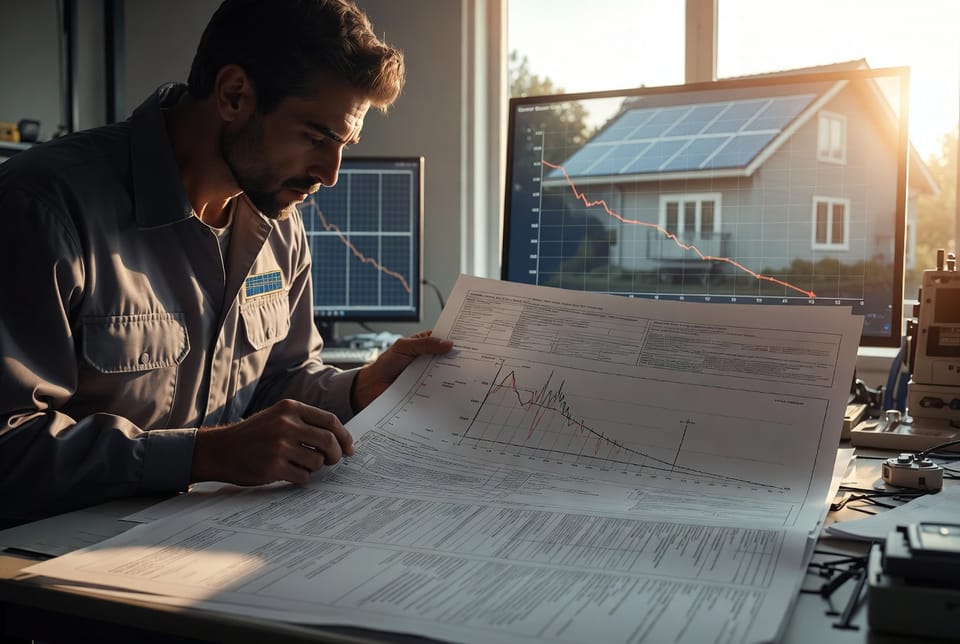
Solar panel degradation refers to the natural, gradual reduction in a panel's ability to convert sunlight into electricity over time. Panels don't fail suddenly; instead, they experience a slow yearly decline in output, typically measured as a percentage loss per year.
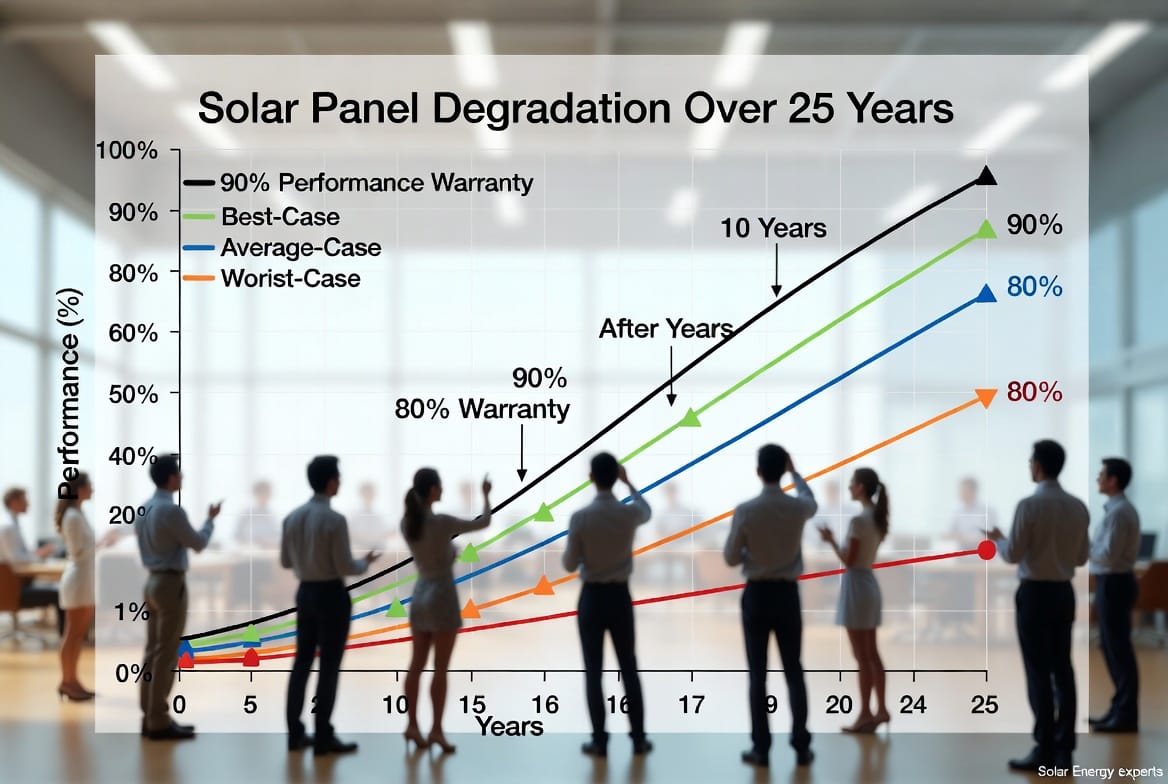
Most high-quality solar panels lose between 0.5% to 1% of their efficiency annually. This means that after 25 years, a system might still produce 80-90% of its original rated power under standard test conditions. This predictable decline is built into modern solar technology and is far less dramatic than many homeowners initially fear.
The degradation process occurs due to various environmental and material factors that affect the photovoltaic cells. Early years often see a slightly higher "light-induced degradation" (LID) phase in the first 1-2 years, followed by a more stable linear rate thereafter.
- Why it matters: A 0.5% annual degradation rate is excellent, while rates exceeding 1% may signal quality concerns or installation issues.
Understanding this metric helps set realistic expectations for energy production and return on investment calculations.
Decoding 25-Year Solar Panel Warranties
Manufacturers back their products with robust linear power output warranties that provide peace of mind for homeowners. These warranties typically guarantee:
- 90% of original output after 10 years
- 80% of original output after 25 years
This "linear" structure means the warranted minimum output decreases steadily rather than dropping sharply at the end. It's a reassuring commitment that protects your investment against excessive performance loss.
Unlike product warranties that cover defects and repairs (often 10-25 years), power output warranties specifically address degradation. Reputable brands stand behind these figures because modern monocrystalline and polycrystalline panels use advanced materials designed for longevity.
However, it's essential to read the fine print. Warranties usually require proper installation by certified professionals, regular maintenance, and adherence to usage guidelines. Claims involve documentation of performance shortfalls under standardized testing.
Homeowners who understand these terms avoid surprises. A system performing within warranted levels continues delivering substantial savings well into its second and third decades.
Factors That Influence Real-World Degradation
While warranties set a baseline, actual solar panel degradation rates in the field can vary based on several key factors.
- Panel Quality: Premium panels from trusted manufacturers with rigorous testing degrade more slowly. Look for certifications like IEC and UL standards.
- Temperature Extremes: High heat accelerates degradation. Panels in hotter climates may experience slightly faster output decline unless properly ventilated.
- UV Exposure and Weathering: Constant sunlight, hail, wind, and humidity affect encapsulants and backsheets over time.
- Installation Practices: Proper mounting, wiring, and inverter compatibility minimize stress on panels. Poor installation can lead to higher-than-expected degradation.
- Maintenance Habits: Regular cleaning to remove dust, bird droppings, and debris helps maintain efficiency.
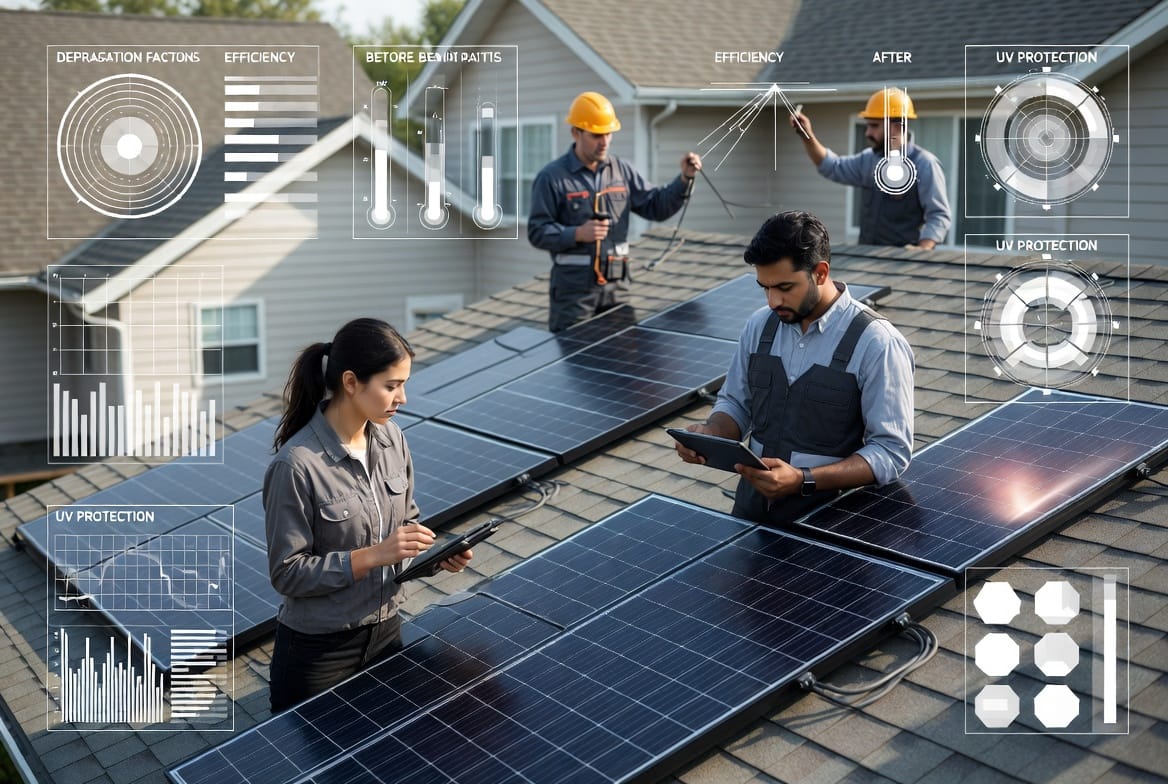
Other influences include shading patterns, system voltage, and even manufacturing batch variations. Climate plays a major role – panels in temperate regions with moderate sunlight often outperform expectations compared to those in extreme desert or coastal environments.
By addressing these factors proactively, you can keep degradation closer to the lower end of the spectrum (around 0.5% annually).
The Science Behind Photovoltaic Aging
Solar cells rely on silicon wafers and other semiconductors to generate electricity. Over time, exposure to light, heat, and oxygen causes minor changes at the molecular level:
- Cell cracking or microcracks from thermal cycling
- Potential-induced degradation (PID) in poorly grounded systems
- Boron-oxygen complex formation in certain silicon types (largely mitigated in modern panels)
Manufacturers combat these through improved cell passivation, anti-reflective coatings, and robust framing. Tier-1 brands invest heavily in research to push degradation rates lower each generation.
Real-world studies from large solar farms and independent testing labs confirm that well-installed systems frequently outperform warranty minimums, often retaining 85-92% output after 25 years.
Calculating Long-Term Energy Production and Savings
Let's consider a typical 6 kW residential solar system. In the first year, it might generate 8,000-10,000 kWh depending on location and orientation.
With a conservative 0.5% annual degradation:
- Year 10: Approximately 92-95% of initial output
- Year 25: Around 88-90% of initial output (well above the 80% warranty floor)
This predictable performance supports accurate financial modeling. When combined with net metering, tax incentives, and rising utility rates, solar remains one of the smartest home investments.
Use online calculators or consult professionals to model your specific scenario, factoring in local irradiance data and your electricity rates.
Signs of Abnormal Degradation and What to Do
Most systems age gracefully, but watch for these indicators of potential issues:
- Sudden drops in monthly production beyond expected degradation
- Visible physical damage like cracked glass or delamination
- Inverter errors or monitoring alerts
If performance falls below warranted levels, document everything and contact your installer or manufacturer promptly. Many issues are covered under warranty with professional verification.
Routine inspections by certified technicians catch problems early, preserving your system's health.
Best Practices to Minimize Degradation
Protect your investment with these proven strategies:
- Choose high-efficiency panels from established brands
- Ensure optimal roof orientation and tilt
- Schedule annual professional maintenance
- Monitor production via smart apps
- Consider panel coatings or elevated mounting in harsh climates
Proper care extends effective lifespan well beyond 25 years – many systems continue producing meaningful power for 30-40 years.
The Future of Solar Panel Technology
Innovation continues to reduce degradation rates. Next-generation panels with heterojunction technology (HJT), perovskite layers, and improved bifacial designs promise even greater longevity and efficiency.
As the industry matures, warranties may become even more generous, further strengthening solar's value proposition for homeowners.
Making an Informed Solar Decision
Understanding solar panel degradation rate demystifies long-term performance and builds confidence in your renewable energy journey. A 25-year warranty isn't just a piece of paper – it's a manufacturer’s pledge backed by engineering and real-world data.
By selecting quality components, prioritizing expert installation, and maintaining your system, you secure decades of reliable, low-cost electricity.
Know what your panels will produce over time.
Our experienced team helps homeowners evaluate warranties, compare systems, and design installations optimized for minimal degradation and maximum output. Don't leave your solar future to chance – get the clarity and assurance you deserve today.
Learn Your True Solar Degradation Rate – Call Now