The Solar Panel Cleaning: DIY vs. Professional
Solar panels are a long-term investment in energy independence and lower utility bills. Dust, pollen, bird droppings, mineral deposits, and seasonal debris quietly reduce the amount of sunlight that reaches the photovoltaic cells. Even a thin film can cut production. The question most owners face is straightforward: should you clean the array yourself or hire a trained crew? This guide compares DIY solar panel cleaning and professional solar panel cleaning in practical, safety-first terms so you can protect both performance and warranty.
Get Peak Solar Output – Call Now for Cleaning Options
Why Clean Solar Panels at All?
Panels are designed to shed rain, yet rain alone rarely removes stubborn soil. In dry climates, dust and agricultural residue accumulate quickly. Near the coast, salt spray leaves a film. Under trees, sap and droppings create hot spots. Each of these conditions lowers kilowatt-hour output and, over years, can stress cells and inverters.
A clean surface also makes visual inspection easier. You notice cracked glass, loose racking, or discoloration sooner. Regular, correct cleaning is therefore both an efficiency task and a maintenance habit. The method you choose—soft household tools or specialized professional equipment—determines whether you gain those benefits without introducing new risks.
Understanding DIY Solar Panel Cleaning
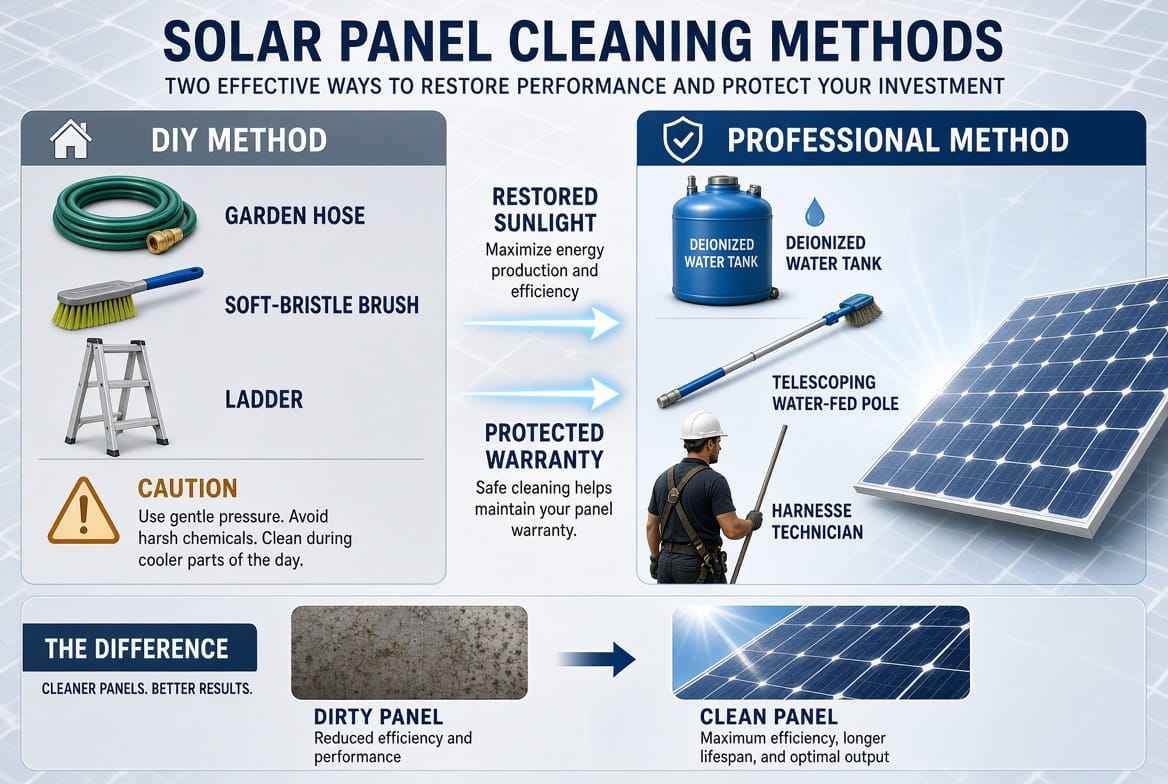
DIY cleaning typically means a homeowner using a garden hose, a soft-bristle brush or sponge, and plain water, sometimes with a mild, non-abrasive soap. The appeal is obvious: low cash outlay and the satisfaction of doing it yourself.
Safe DIY Technique in Brief
- Work from the ground or a stable platform whenever possible; avoid walking on the modules.
- Use only soft brushes or microfiber tools designed not to scratch anti-reflective coatings.
- Rinse with a gentle stream of water. Many owners prefer distilled or deionized water for the final rinse to reduce mineral spotting.
- Clean in the early morning or late afternoon when panels are cool. Hot glass plus cold water can cause thermal shock.
- Never use pressure washers, abrasive pads, metal scrapers, or harsh chemicals.
When conditions are mild—light dust after a dry spell and panels that are easily reached from the ground—this approach can restore much of the lost output. It remains a legitimate option for single-story installations with good access and for owners who are comfortable with heights and understand the limits of household tools.
Advantages of the DIY Route
- Lower immediate cost. You already own a hose and a brush.
- Flexible timing. You can clean the day after a dust storm instead of waiting for a scheduled visit.
- Simple process when the array is low and unobstructed.
Drawbacks and Risks of DIY
- Roof and fall hazards. Ladders, wet surfaces, and sloped roofs create genuine injury risk.
- Warranty exposure. Many manufacturers specify approved methods and water quality. A scratch or chemical residue can complicate a future claim.
- Incomplete results. Household water leaves mineral spots; a standard brush may miss edges and the spaces between modules.
- Electrical caution. Wet connectors and junction boxes should never be sprayed at close range.
- Time and physical demand. A large residential array can take hours and repeated trips up and down.
DIY is not inherently wrong. It is simply limited by equipment, access, and the owner’s risk tolerance. If any of those factors feel uncertain, the professional path exists for a reason.
Understanding Professional Solar Panel Cleaning
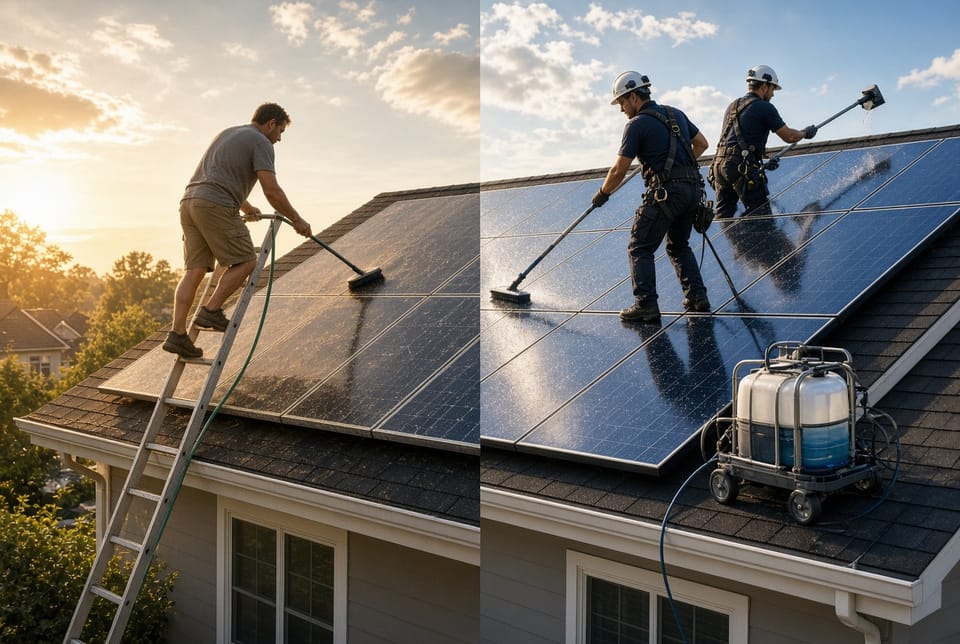
Professional solar panel cleaning uses purpose-built systems: deionized or purified water, water-fed poles that reach high and steep roofs from the ground or a secure platform, soft specialized brushes, and trained technicians who follow manufacturer guidelines. Crews typically carry insurance, follow lock-out procedures around electrical components, and document the work.
Deionized water is central to the professional method. It contains almost no dissolved minerals, so it dries without spots and lifts soil more effectively than tap water. Combined with the correct brush pressure and a systematic pattern, the result is a uniformly clean surface that maximizes light transmission.
Technicians can also perform a basic visual check while they work—looking for hot-spot discoloration, cracked glass, or loose hardware—and report findings. That extra layer of observation is difficult to replicate from a ladder with a garden hose.
Advantages of Professional Service
- Warranty-safe methods that align with most manufacturer recommendations.
- Reach and safety. High roofs, steep pitches, and multi-story homes are handled with proper fall protection and equipment.
- Superior water quality that reduces spotting and residue.
- Thorough coverage including edges, frames, and hard-to-see sections.
- Time savings and consistency. A trained team finishes faster and returns on a predictable schedule.
- Documentation that can support insurance or warranty conversations later.
Drawbacks of Hiring Professionals
- Higher per-visit cost than a Saturday morning with a hose.
- Scheduling. You wait for an available appointment rather than acting the same afternoon.
- Variable quality if you choose an untrained or uninsured provider. Vetting matters.
When the array is large, elevated, or under a remaining manufacturer or installer warranty, the professional route usually delivers the better risk-adjusted outcome.
Side-by-Side Comparison: Cost, Safety, and Results
The real decision is not “cheap versus expensive.” It is “acceptable risk versus protected performance.”
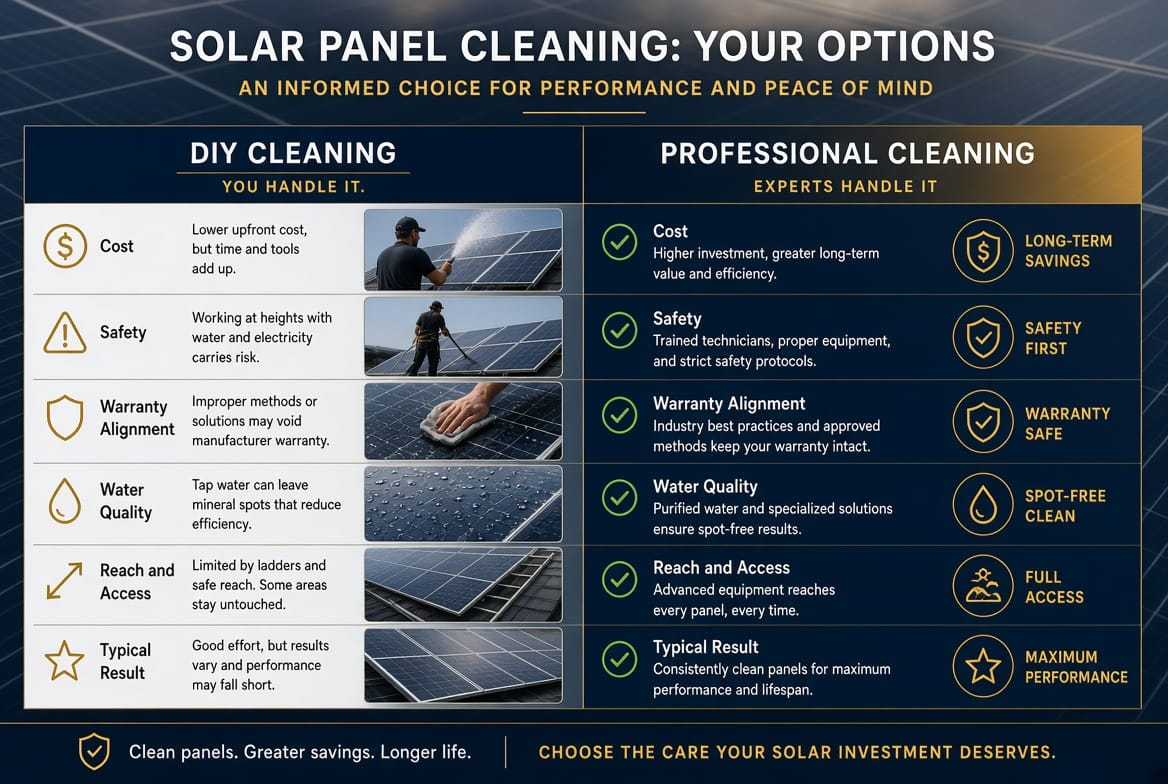
DIY wins on sticker price for a small, accessible array cleaned once or twice a year. Professional service wins on safety, completeness, water quality, and warranty alignment—especially on two-story homes, steep roofs, or systems still under coverage.
Consider these practical differences:
- Water quality. Tap water often leaves white mineral film. Deionized water does not.
- Access. A water-fed pole lets a technician clean from the ground or a secure point; a homeowner on a ladder cannot match that reach safely.
- Consistency. Professionals follow a repeatable pattern so no section is skipped.
- Liability. A fall or a scratched module is the owner’s problem in a DIY session and the contractor’s insured responsibility in a professional visit.
Neither method replaces good system design or regular monitoring of production data. Cleaning is one part of a larger maintenance picture.
How Often Should Panels Be Cleaned?
Frequency depends on location more than on a universal calendar.
- Arid, dusty, or agricultural areas may need attention two to four times a year.
- Regions with regular rain and low pollution may need only an annual or biennial cleaning.
- Coastal or high-pollen zones sit in the middle.
Watch your inverter or monitoring app. A persistent drop in expected production that cannot be explained by weather or shading is a signal. Visual cues—visible dust layers, white mineral rings, or clustered droppings—also tell you it is time.
Over-cleaning is rarely necessary and can introduce wear if abrasive tools are used. Under-cleaning slowly costs you energy every sunny day.
Safety and Warranty Considerations You Should Not Ignore
Two topics deserve extra weight: personal safety and the written warranty.
Roof work is inherently hazardous. Wet glass is slippery. Ladders shift. Electrical components remain live. A single misstep can change the economics of “saving money” overnight. If you are not experienced with roof access and fall protection, the professional option is the more conservative choice.
Warranties often contain cleaning language. Some specify deionized water, prohibit certain chemicals, or require that work be performed without walking on the modules. Using an unapproved method can give a manufacturer grounds to question a future claim. Professional companies that specialize in solar typically keep current on those requirements and carry insurance that protects both parties.
When in doubt, read the warranty packet that came with your system or ask the original installer what methods they endorse. That five-minute check is cheaper than a disputed claim years later.
Making the Choice That Fits Your Home
Choose DIY when:
- The array is low, easily reached from the ground or a stable one-story roof.
- You are comfortable with heights and basic safety practices.
- Soil is light and recent.
- You accept the possibility of mineral spotting and the physical effort involved.
Choose professional cleaning when:
- The roof is high, steep, or complex.
- The system is still under manufacturer or workmanship warranty.
- You want deionized water and documented, insurance-backed work.
- You prefer to spend time on other priorities rather than on a ladder.
Many owners adopt a hybrid pattern: a professional visit once or twice a year for a thorough, warranty-safe reset, with light rinsing from the ground between visits if dust is heavy. That combination often delivers the best balance of cost and protection.
Keeping Performance High Over the Life of the System
Solar panels can produce for twenty-five years or more when they receive appropriate care. Cleaning is not glamorous, yet it is one of the few owner-controlled actions that directly affects daily output. Pair it with occasional professional inspections, monitoring of production data, and prompt attention to shading or hardware issues, and the array will repay the original investment more reliably.
The goal is not a spotless showroom look. The goal is unobstructed light, intact coatings, and a system that continues to meet the production estimates you were given at installation. Whether you pick up a soft brush yourself or schedule a trained crew, the principle stays the same: remove the film, protect the glass, and respect the warranty.
Keep your panels clean for peak performance. If you would like help deciding which approach fits your roof, your warranty, and your schedule. A short conversation can clarify cost, timing, and the safest method for your specific array.
Call Now to Compare DIY vs Professional Panel Cleaning