The Solar Panel Bypass Diode: How It Protects Against Shading
In the world of solar energy, every component plays a vital role in maximizing efficiency and longevity. Among these, the solar panel bypass diode stands out as a silent guardian against one of the most common challenges: shading. Whether from trees, chimneys, clouds, or nearby buildings, even partial shading can dramatically impact performance. Understanding how bypass diodes work empowers homeowners and businesses to make informed decisions about their solar investments.
Protect Your Solar Panels from Shading – Call Now!
This comprehensive guide explores the critical function of bypass diodes, their protective mechanisms, warning signs of failure, and practical steps for maintenance. By the end, you'll appreciate why quality panels with robust diode systems are essential for reliable, long-term solar production.
Understanding Bypass Diodes in Solar Panels
Bypass diodes are small but powerful semiconductor devices integrated into solar panel junction boxes. Their primary purpose is straightforward yet essential: they provide an alternative pathway for electrical current when certain cells are underperforming due to shading or damage.
Without bypass diodes, shaded solar cells act like roadblocks in a circuit. They can force the entire string of cells to reduce output or, worse, create dangerous hot spots where excessive heat builds up, potentially damaging the panel.
Modern solar panels typically incorporate multiple bypass diodes – often three or more – dividing the panel into substrings. This design ensures that shading affecting only a portion of the panel doesn't compromise the whole system.
Key benefit: Bypass diodes prevent reverse current flow through shaded cells, safeguarding the panel's overall health and maintaining higher energy yields.
How Bypass Diodes Work: The Science Made Simple
When sunlight hits a solar cell, it generates voltage and current. In a fully illuminated panel, current flows smoothly through all cells in series.
However, when shading occurs:
- Shaded cells produce less current and can become reverse-biased.
- Without protection, this reverse bias leads to power dissipation as heat.
- Bypass diodes activate at this point, conducting current around the shaded section.
This "bypass" action allows the unshaded portions to continue producing power efficiently. The result? Minimal performance loss instead of total shutdown or damage.
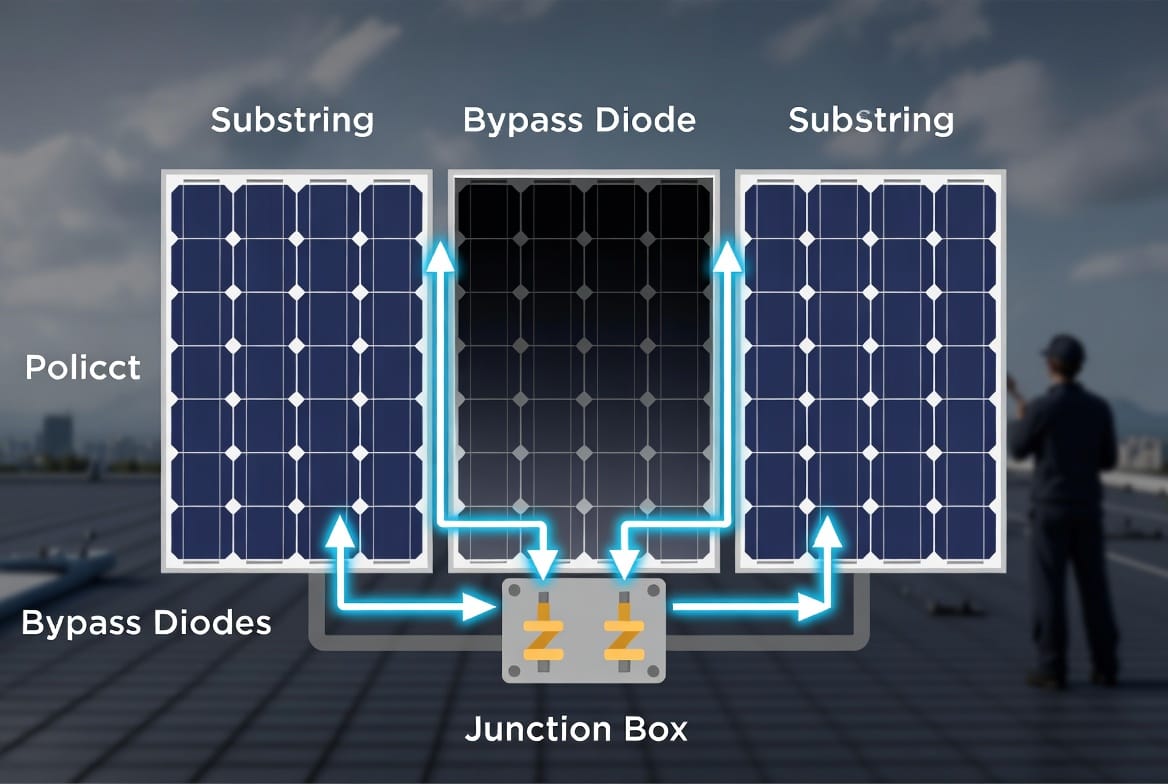
This mechanism is particularly valuable in residential settings where shading patterns change throughout the day and seasons. A well-designed system with effective bypass diodes can maintain 70-90% of potential output even under partial shading conditions, compared to near-total loss without them.
The Risks of Shading Without Proper Protection
Shading isn't just an inconvenience – it poses real risks:
- Hot spots: Localized overheating that can crack cells, delaminate encapsulant, or cause fires in extreme cases.
- Reduced energy production: Even 10% shading on one panel can drag down an entire string's output.
- Long-term degradation: Repeated stress accelerates panel aging and voids warranties.
Bypass diodes mitigate these risks by isolating problems quickly and safely. Reputable manufacturers rigorously test their diodes for durability under high temperatures and repeated activation cycles.
Recognizing Signs of Bypass Diode Failure
While bypass diodes are built for reliability, they can eventually fail due to manufacturing defects, extreme weather, or prolonged stress. Early detection prevents bigger issues.
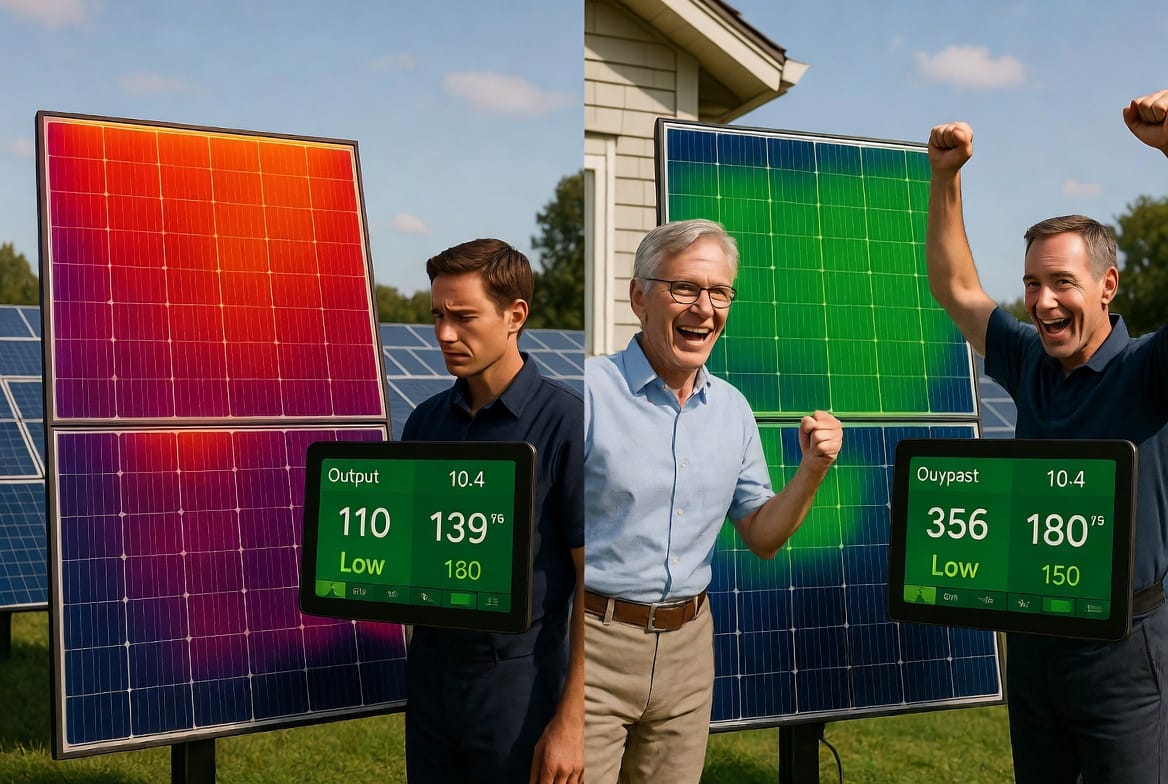
Look for these common signs of diode failure:
- Unexpected drop in system output – panels produce significantly less power than historical data or expected values.
- Visible hot spots during thermal imaging inspections (one area of the panel much hotter than others).
- Complete failure of one panel while others perform normally.
- Intermittent performance issues that correlate with specific shading patterns.
- Error codes or alerts from your solar inverter or monitoring system.
If you notice any of these, prompt investigation is recommended. A qualified technician can use multimeters, thermal cameras, and I-V curve tracers to diagnose diode health.
How to Check Bypass Diodes: Professional Methods
Testing bypass diodes requires specialized knowledge and tools. Here's what professionals typically do:
- Visual Inspection – Check the junction box for discoloration, corrosion, or physical damage.
- Multimeter Testing – Measure forward voltage drop across each diode (typically 0.3-0.7V for Schottky diodes).
- Thermal Imaging – Identify abnormal heat patterns during operation.
- Performance Monitoring – Compare real-time data against baseline expectations.
Pro tip: Schedule annual professional inspections, especially after severe storms or in areas with frequent shading. Early intervention protects your entire solar investment.
Homeowners should never attempt to open junction boxes themselves, as this risks shock and voids warranties. Always work with certified installers.
Real-World Impact and Case Studies
Consider a typical suburban home with afternoon tree shading. Without effective bypass diodes, daily production could drop by 30-50%. With quality diodes, the same system might lose only 5-15%, preserving significant annual energy savings.
In commercial installations, where rows of panels might experience varying shade, bypass diodes become even more critical for maintaining predictable ROI and meeting performance guarantees.
Advanced panels today use higher-quality Schottky diodes with better heat dissipation and longer lifespans, reflecting ongoing innovation in solar technology.
Choosing Solar Panels with Reliable Bypass Diode Systems
When evaluating solar options, look beyond wattage ratings. Ask these questions:
- How many bypass diodes does each panel have?
- What type and quality of diodes are used?
- What are the manufacturer's testing protocols for shading performance?
- How does the panel perform under partial shading in independent lab tests?
Reputable brands design their panels with robust diode protection as standard, offering peace of mind and superior long-term value.
Maintenance Best Practices for Optimal Performance
Protecting your bypass diodes starts with good system design and continues with proactive care:
- Strategic panel placement during installation to minimize unavoidable shading.
- Regular cleaning to remove dirt, leaves, or snow that could create shading.
- Vegetation management – trimming trees and plants around arrays.
- Monitoring system alerts and addressing them promptly.
- Professional servicing every 1-2 years.
These steps ensure your solar panel bypass diodes continue providing reliable protection for decades.
The Bigger Picture: Why Component Quality Matters
The solar panel bypass diode exemplifies how thoughtful engineering at the component level delivers outsized benefits for the entire system. It transforms a potential weakness (shading vulnerability) into a manageable aspect of solar operation.
Investing in high-quality panels with proven diode technology means:
- Higher lifetime energy production
- Reduced maintenance costs
- Stronger warranty protection
- Greater overall peace of mind
Conclusion: Safeguard Your Solar Future Today
Bypass diodes are unsung heroes in the fight against shading-related losses. By allowing current to flow around underperforming cells, they prevent hot spots, maintain output, and extend panel lifespan. Recognizing signs of failure and conducting regular checks keeps your system operating at peak efficiency.
Good diodes protect your panels. If you're planning a solar installation or concerned about your existing system's performance, ask about panel quality and bypass diode specifications. Our team is here to help you choose the right solution for maximum reliability and returns.
Ensure Maximum Solar Performance – Call Now