The Solar Panel Automatic Shutoff: Rapid Shutdown Requirements Explained
Solar energy continues to transform homes and businesses across the nation, offering clean, reliable power while reducing utility bills. However, with great power comes the need for robust safety measures. One critical advancement in solar panel systems is the solar panel automatic shutoff, commonly known as rapid shutdown. This essential safety feature protects first responders and homeowners alike by quickly reducing system voltage during emergencies.
Get Rapid Shutdown Protection Today – Call Now!
In this comprehensive guide, we'll explore everything you need to know about rapid shutdown requirements. Whether you're installing a new solar system or upgrading an existing one, understanding these regulations ensures compliance, safety, and peace of mind.
Rapid shutdown isn't just a technical specification—it's a lifesaver designed with firefighters and emergency personnel in mind. Let's dive into the details.
What Is Rapid Shutdown and Why Does It Matter?
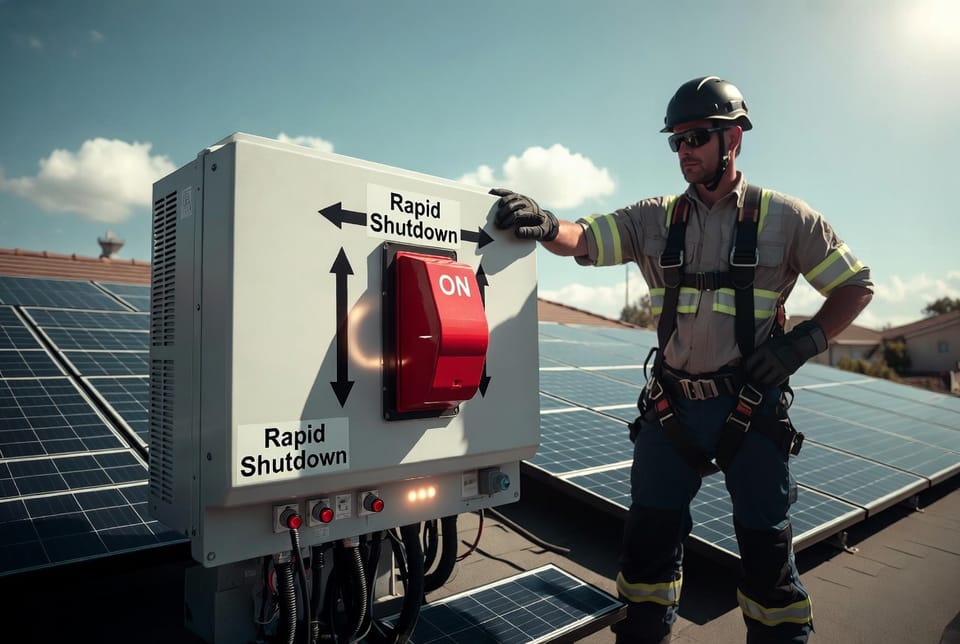
Rapid shutdown is a mandated safety protocol for photovoltaic (PV) solar systems. It automatically or manually reduces the voltage of solar panels to safe levels within seconds of activation.
High-voltage DC electricity generated by solar panels can pose serious risks during fires, natural disasters, or maintenance work. Without rapid shutdown capabilities, energized panels could endanger firefighters attempting to battle rooftop fires or create hazards for service technicians.
Key benefits include:
- Enhanced firefighter safety by limiting live voltage exposure.
- Compliance with national electrical codes for new installations.
- Protection for homeowners and installers during routine maintenance.
- Reduced risk of electrical shock in emergency scenarios.
By integrating module-level electronics, modern solar systems can isolate power generation almost instantly. This technology represents a significant evolution in solar safety standards, reassuring homeowners that their investment prioritizes both performance and protection.
Understanding the Science Behind Solar Panel Automatic Shutoff
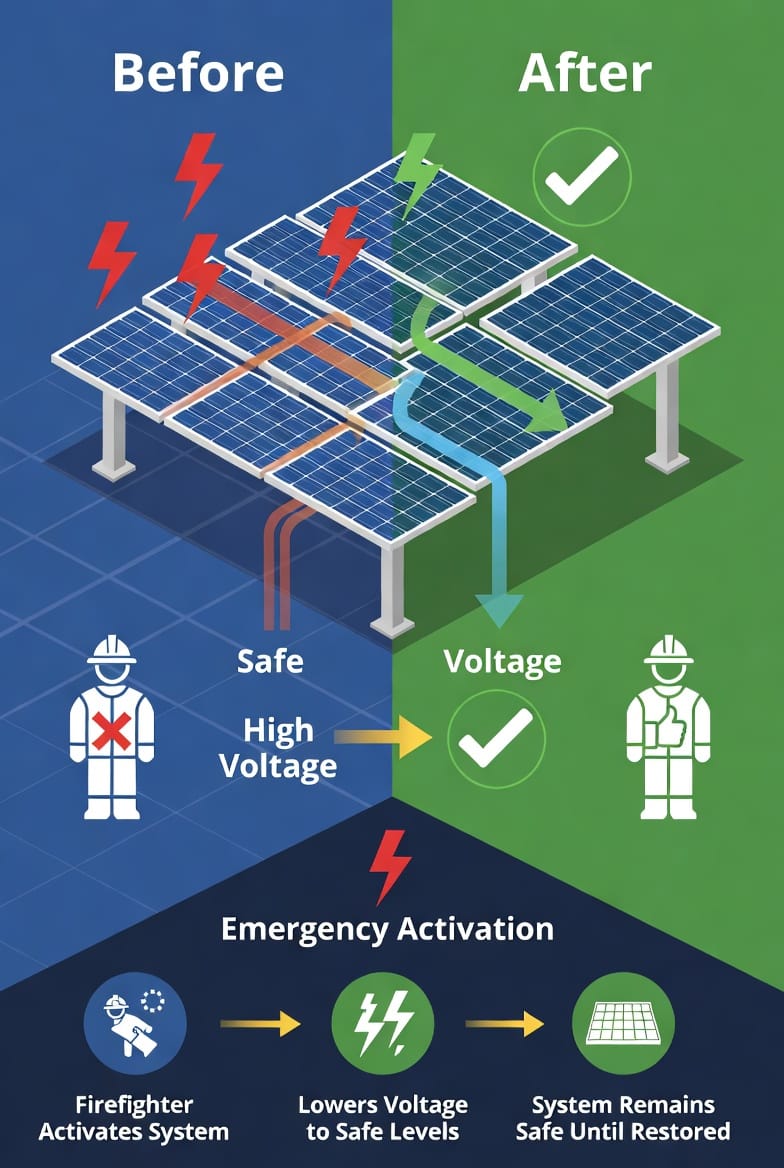
Solar panels generate direct current (DC) electricity when exposed to sunlight. In a traditional setup without rapid shutdown, this voltage can remain high across the entire array, even if the main inverter is disconnected.
Rapid shutdown systems address this by deploying electronics at the module level—typically microinverters or power optimizers attached to individual panels. When triggered:
- The system detects the shutdown signal.
- Module-level devices cut off power production.
- Voltage drops to safe thresholds (typically under 30 volts) within 30 seconds or less.
- The array becomes de-energized for safe access.
This process happens seamlessly and reliably, thanks to advanced electronics engineered specifically for solar applications. Homeowners can rest assured knowing that their system meets stringent safety benchmarks without compromising energy output under normal operating conditions.
When Are Rapid Shutdown Requirements Mandatory?
Rapid shutdown became a focal point in the National Electrical Code (NEC) updates. Specifically:
- NEC 2017 introduced stricter requirements for rapid shutdown in many jurisdictions.
- NEC 2020 further refined these standards, emphasizing module-level shutdown for most new installations.
Local authorities having jurisdiction (AHJs) adopt these codes, often with amendments. Most new solar installations in the United States must comply with rapid shutdown provisions if they fall under the applicable NEC editions.
Important considerations:
- Rooftop systems on residential and commercial buildings face the highest scrutiny due to firefighter access needs.
- Ground-mounted arrays may have different requirements depending on location.
- Existing systems installed before these codes are typically grandfathered, but upgrades often trigger compliance updates.
Consulting with a licensed solar professional ensures your installation aligns with current regulations in your area. This proactive approach prevents costly retrofits later and maintains full system warranties.
NEC 2017 and 2020: Key Rapid Shutdown Provisions
The NEC rapid shutdown requirements focus on limiting voltage in the array boundary. Under NEC 2017, systems must reduce voltage to 30 volts or less within 30 seconds inside the array boundary.
NEC 2020 builds upon this with even clearer guidelines:
- Module-level shutdown is the primary method for compliance.
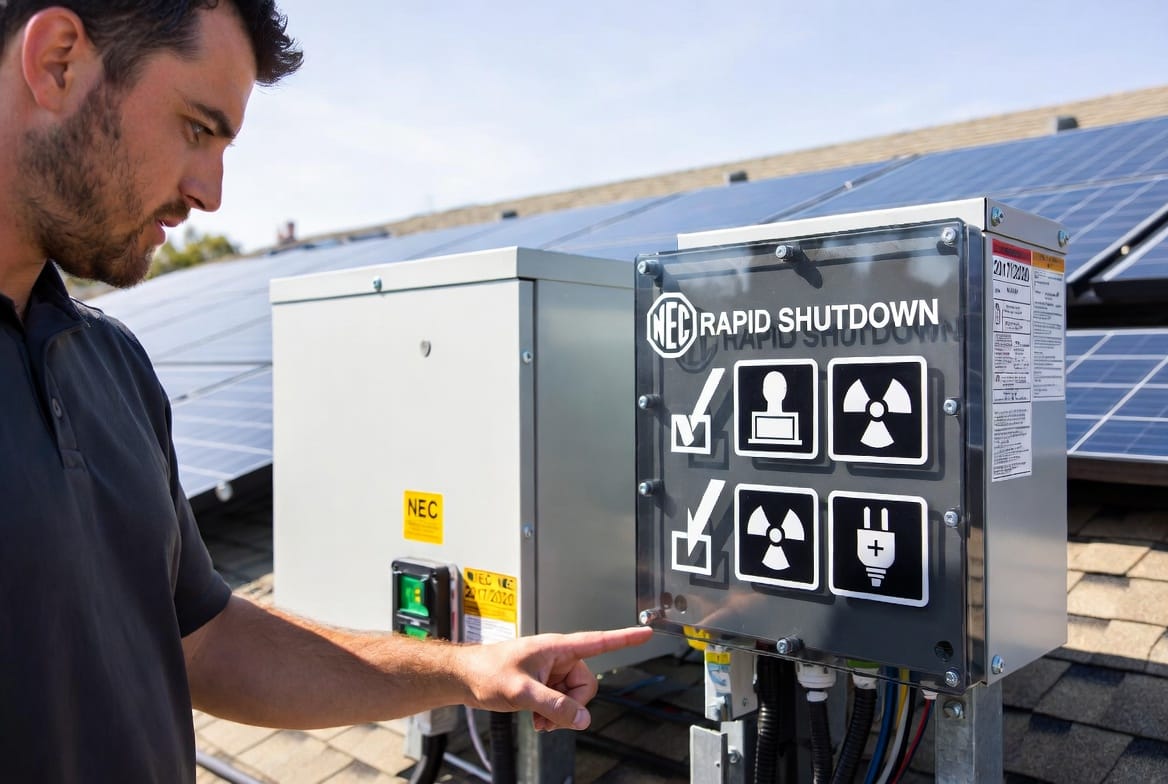
- Labeling requirements ensure first responders can quickly identify shutdown initiation points.
- Initiation methods include manual switches, automatic sensors, or remote activation.
Bold compliance note: Installations must feature prominent rapid shutdown labels at the service disconnect and other key locations. These labels provide critical information for emergency personnel.
Failure to meet these standards can result in inspection failures, insurance issues, or safety liabilities. Reputable installers prioritize full NEC adherence, giving you confidence in your solar investment.
How Module-Level Electronics Enable Rapid Shutdown
The heart of effective solar panel automatic shutoff lies in module-level power electronics (MLPE). These include:
- Microinverters: Convert DC to AC at each panel, inherently supporting rapid shutdown.
- Power Optimizers: Work with string inverters to provide individual panel control and shutdown capabilities.
- Dedicated rapid shutdown devices: Retrofit solutions for compatible systems.
These components communicate with the central inverter or a dedicated controller. Upon shutdown initiation—via a rooftop switch, interior disconnect, or automated system—the electronics immediately cease power conversion and isolate the panels.
This granular control ensures that even large arrays can de-energize safely and efficiently. Homeowners benefit from maximized energy production daily while enjoying emergency-ready safety features.
Benefits of Installing a Compliant Rapid Shutdown System
Beyond code compliance, embracing rapid shutdown technology delivers multiple advantages:
- Peace of mind for families with solar installations.
- Faster emergency response times for firefighters.
- Potential insurance premium reductions due to enhanced safety.
- Future-proofing your solar investment against evolving codes.
- Improved system monitoring and diagnostics through advanced electronics.
Many modern systems integrate rapid shutdown with smart monitoring apps, allowing homeowners to track performance and receive alerts. This combination of safety and convenience makes solar more accessible and trustworthy than ever before.
Common Questions About Solar Rapid Shutdown
Q: Does rapid shutdown affect my daily energy production?
A: No. The system operates at full efficiency under normal conditions and only activates safety protocols during emergencies or manual initiation.
Q: Can older solar systems be upgraded?
A: Yes, many pre-2017 installations can incorporate module-level rapid shutdown solutions. A qualified technician can assess compatibility and recommend optimal upgrades.
Q: How do I test or maintain the rapid shutdown feature?
A: Professional installers include testing protocols during routine maintenance visits. Regular inspections ensure all components function reliably.
Q: Is rapid shutdown required everywhere?
A: Requirements vary by jurisdiction. Always verify with local building departments or your solar provider for precise guidelines.
These clarifications address frequent homeowner concerns, reinforcing the importance of working with experienced professionals.
Ensuring Compliance and Professional Installation
Selecting the right solar partner is crucial for meeting rapid shutdown requirements. Look for certified installers who:
- Stay current with NEC updates.
- Use high-quality MLPE components from reputable manufacturers.
- Provide clear documentation and labeling.
- Offer comprehensive warranties covering safety features.
A thorough site assessment will determine the best rapid shutdown configuration for your roof layout, panel count, and local codes. This tailored approach guarantees optimal performance and full regulatory compliance.
Investing in a code-compliant system protects your property, supports emergency services, and contributes to a safer community. Solar power with built-in automatic shutoff represents responsible, forward-thinking energy management.
Taking the Next Step Toward Safe Solar Energy
As solar adoption grows, understanding features like the solar panel automatic shutoff empowers informed decisions. Rapid shutdown exemplifies how the industry prioritizes safety alongside innovation.
Ensure your solar system meets all current safety codes. Whether planning a new installation or reviewing an existing setup, professional guidance makes all the difference.
Contact trusted solar experts today to discuss rapid shutdown options and create a safer, more efficient energy solution for your home.
Your family's safety and energy independence deserve the highest standards—partner with professionals who deliver both.
Protect Your Home with Rapid Shutdown – Call for Expert Help!