The Slime Mold: Colorful, Harmless Lawn Fungus That Startles Homeowners

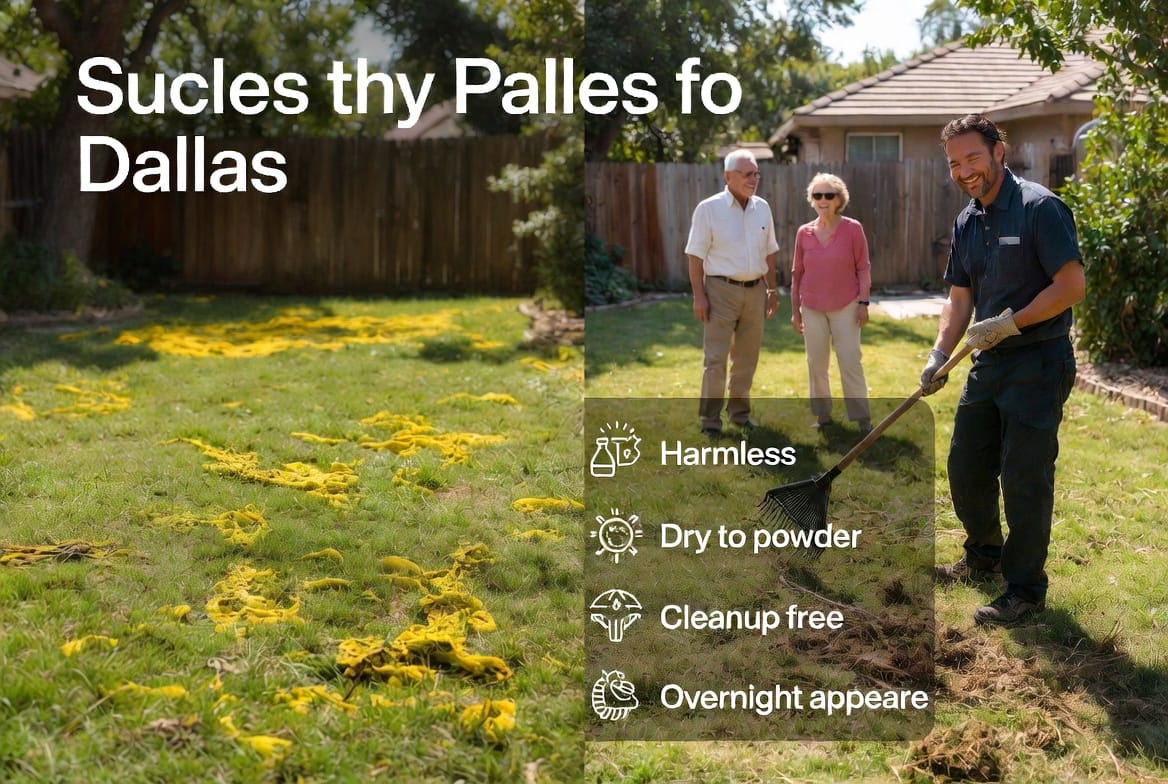
Have you ever stepped outside after a heavy rain and spotted what looks like a bright yellow, gray, or even black blob creeping across your otherwise pristine lawn? If so, you're not alone. Many homeowners panic at the sight of slime mold, mistaking it for a devastating lawn disease or invasive pest. The good news? This colorful organism is entirely harmless to your grass, your family, and your pets.
Don’t Panic Over Slime Mold – Call for Professional Lawn Help
In this comprehensive guide, we'll explore what slime mold really is, why it appears, and how simple it is to manage. By the end, you'll feel confident and reassured the next time these mysterious patches show up.
What Exactly Is Slime Mold?
Slime mold belongs to a group of organisms known as Myxomycetes. Despite the "mold" in its name, it isn't a true fungus like the ones that cause brown patch or dollar spot diseases. Instead, it's more like a fascinating, primitive life form that bridges the gap between fungi and amoebas.
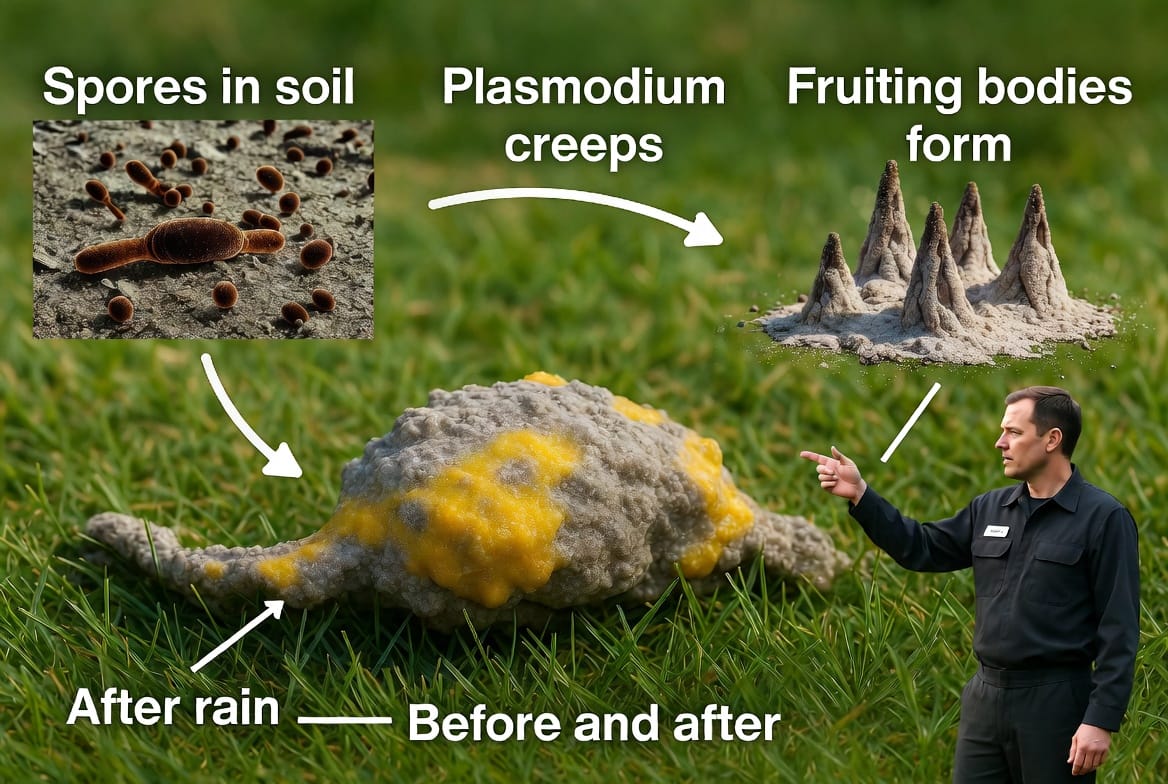
These organisms spend most of their lives as microscopic spores or single-celled entities in the soil and thatch layer. Under the right conditions – typically warm, moist weather following heavy rains – they aggregate into a visible plasmodium. This is the slimy, blob-like stage that often catches homeowners off guard.
- Appearance: Patches can range from creamy yellow and bright orange to gray, white, or black. They often look like scrambled eggs, dog vomit (hence names like "dog vomit slime mold"), or even a dusting of ash on grass blades.
- Size and Movement: Individual spots are usually 4 to 8 inches across but can merge into larger areas. The plasmodium can slowly "creep" across surfaces as it searches for food.
- Timing: They frequently appear overnight or after prolonged leaf wetness, making them seem like they materialized out of nowhere.
Don't let the dramatic look fool you – slime mold is a natural part of the ecosystem and plays a beneficial role by breaking down decaying organic matter.
Why Slime Mold Appears on Your Lawn
Slime molds thrive in environments rich in organic debris. They feed primarily on bacteria, fungi, and decaying plant material in the thatch or soil, not on your living grass. This makes them saprophytic (decomposers) rather than parasitic.
Common triggers include:
- Prolonged wet weather or poor drainage that keeps the lawn moist.
- Thick thatch buildup, which provides a perfect habitat for spores and microorganisms.
- Warm temperatures (typically 50–80°F or 10–27°C).
- Heavy leaf litter or mulch in shaded or low-lying areas.
It's important to note that the presence of slime mold does not indicate poor lawn care. Even perfectly maintained lawns can experience it during particularly damp periods. Homeowners in regions with frequent rain, like parts of Texas or other humid areas, often encounter these colorful visitors seasonally.
Reassuring fact: Unlike actual lawn diseases, slime mold does not kill grass, stunt growth, or spread systemically. Your turf will recover beautifully once conditions dry out.
Is Slime Mold Harmful? The Truth Revealed
The short answer: No. Slime mold is completely harmless to grass, humans, pets, and the environment. It doesn't produce toxins, cause allergies in most people, or damage roots.
Many homeowners worry when they see the slimy mass because it can temporarily coat grass blades, potentially shading them if left for too long. However, this effect is minimal and short-lived. Once the weather dries, the plasmodium typically transforms into a crusty, powdery mass of fruiting bodies (sporangia) and dissipates within days to a week.
Key facts about its safety:
- Non-toxic to children, dogs, cats, or wildlife.
- Does not spread to plants, shrubs, or garden beds as a pathogen.
- Beneficial decomposer that helps recycle nutrients back into the soil.
How to Easily Remove and Manage Slime Mold
While you can simply wait it out, most homeowners prefer to speed up the process for cosmetic reasons. The best part? Removal is straightforward and requires no harsh chemicals.
Simple Removal Methods:
- Raking or Brushing: Use a stiff broom or garden rake to gently dislodge the mass. This is often enough to clear the visible growth.
- Hosing Off: A strong spray from a garden hose can wash it away. Do this during drier periods to avoid spreading spores unnecessarily.
- Mowing: For drier fruiting bodies, mowing can help remove and disperse them naturally.
- Let It Dry: In many cases, simply waiting for sunny weather causes it to crust over and blow away.
Pro Tip: Avoid fungicides. They are unnecessary and can disrupt your lawn's natural microbial balance.
Prevention Strategies for the Future
To minimize future occurrences:
- Improve drainage in low spots.
- Dethatch regularly to reduce organic buildup.
- Aerate your lawn annually to promote healthy soil.
- Maintain proper mowing heights and avoid overwatering.
- Clear leaf litter promptly, especially in shaded areas.
These cultural practices not only deter slime mold but also contribute to overall lawn resilience.
The Fascinating Biology of Slime Mold
Beyond the backyard, slime molds are remarkable subjects of study. Their plasmodium stage can solve mazes and make "decisions" based on environmental cues – behaviors once thought limited to animals. When food is scarce, individual cells stream together in a coordinated effort, forming the visible mass.
This lifecycle includes:
- Spore stage – Dormant and resilient.
- Plasmodium stage – The mobile, feeding form.
- Fruiting body stage – Releases new spores.
Understanding this helps shift your perspective from alarm to appreciation for nature's ingenuity.
Common Myths About Lawn "Fungus" Like Slime Mold
Myth 1: Slime mold means your lawn is dying.
Reality: It's a sign of active decomposition in the thatch, not turf decline.
Myth 2: You need expensive treatments.
Reality: Physical removal and cultural care are all that's required.
Myth 3: It's contagious to other plants.
Reality: It stays localized and doesn't harm living tissue.
By debunking these, you can approach lawn care with confidence and avoid unnecessary worry or spending.
When to Call a Professional for Lawn Concerns
While slime mold is benign, it's always wise to monitor your lawn for other issues. Persistent problems like actual fungal diseases, pest damage, or nutrient deficiencies may require expert intervention.
Don't panic over slime mold.
Call Now for Fast, Reliable Lawn Care Solutions