The Sand Leveling: Fixing Bumpy Lawns with Topdressing

Uneven lawns don’t just look unsightly—they create safety hazards, damage mowing equipment, and stress your grass. Sand leveling, also known as topdressing with sand, offers a proven, minimally invasive solution to correct bumpy lawns without the expense and disruption of tearing out existing turf.
Smooth Your Bumpy Lawn Today – Call Now!
This corrective technique fills low spots, smooths surface irregularities, and promotes healthier grass growth when performed correctly. Professional lawn care teams across the country rely on sand leveling to restore beauty and functionality to residential and commercial properties.
Why Lawns Become Bumpy and Uneven
Several factors contribute to an uneven lawn surface:
- Soil settling after construction or heavy rains
- Burrowing animals like moles or gophers
- Freeze-thaw cycles in colder climates
- Poor initial grading during lawn installation
- Heavy foot traffic or equipment use
Left unaddressed, these bumps create tripping hazards, collect water, and lead to patchy grass growth. Sand leveling provides an effective remedy by gradually building up low areas while preserving your established turf.
How Sand Leveling Works
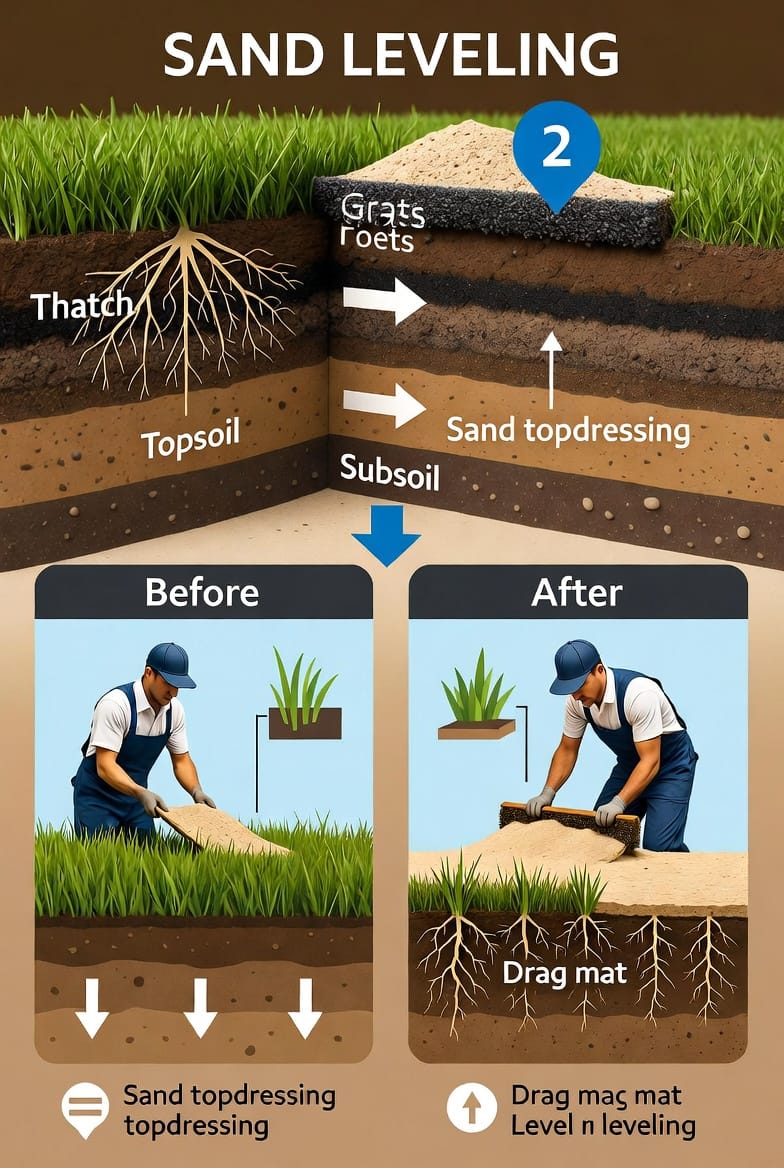
Sand leveling involves applying a thin layer of sand or sandy loam mix over the lawn surface and working it into the low spots. The process allows grass to grow through the material while the sand creates a stable, level foundation.
Key Benefits of Professional Sand Leveling
- Minimally invasive compared to re-grading
- Cost-effective long-term solution
- Improves drainage in low-lying areas
- Encourages thicker turf growth
- Reduces water pooling and disease risk
When executed properly, results appear gradually as the grass grows through the topdressing, creating a beautifully smooth lawn.
Best Timing for Sand Leveling
The optimal time for sand leveling is during the active growing season when your grass can recover quickly. For most cool-season grasses, this means late spring through early fall. Warm-season grasses respond best when actively growing in late spring and summer.
Avoid applying sand during:
- Extreme heat or drought
- Dormant periods
- Heavy rainy seasons (risk of runoff)
Professional timing ensures your lawn recovers rapidly and the sand integrates properly into the soil profile.
Step-by-Step Sand Leveling Process
Professional lawn topdressing follows a precise sequence:
- Mow Low – Cut grass shorter than usual to expose low spots clearly
- Assess and Mark – Identify all depressions and irregularities
- Apply Topdressing Mix – Spread ¼ to ½ inch of sand or sandy loam
- Drag and Level – Use a drag mat or board to work material into lows
- Water Thoroughly – Settle the sand and stimulate grass recovery
- Monitor and Repeat – Multiple light applications often yield best results
Consistent, light applications prove more effective than one heavy layer. Professionals typically complete major leveling over several weeks or months.

Choosing the Right Topdressing Material
Quality matters significantly in sand leveling success. Use:
- Washed, sharp sand or sandy loam mix
- Material matching your existing soil texture
- Sterile, weed-free products
- pH-balanced blends when necessary
Avoid using pure play sand or builder’s sand, which can compact and harm soil structure over time.
Potential Risks and How to Avoid Them
While highly effective, sand leveling carries certain risks if mismanaged:
- Too much sand at once can smother grass and damage roots
- Poor material choice may lead to compaction and poor drainage
- Applying during wrong season slows recovery and stresses turf
- Inadequate watering prevents proper integration
Experienced professionals understand these risks and take preventive measures to protect your lawn investment. They apply conservative layers and monitor progress carefully.
Maintaining Your Newly Leveled Lawn
After successful topdressing, proper maintenance ensures lasting results:
- Adjust mowing height gradually back to normal
- Fertilize appropriately to boost recovery
- Water consistently during establishment period
- Monitor for new settling and address promptly
- Schedule annual inspections
With proper care, a sand-leveled lawn can remain smooth and beautiful for many years.
When to Call Professional Lawn Leveling Services
DIY sand leveling works for minor issues, but professional intervention becomes essential for:
- Extensive unevenness across large areas
- Lawns with complex drainage problems
- Properties with slopes or multiple level changes
- Homeowners lacking time or proper equipment
Professionals possess specialized tools, quality materials, and expertise to achieve superior results efficiently.
Common Questions About Sand Leveling
How long does it take to see results?
Visible improvement often appears within 2-4 weeks, with full results developing over one to two growing seasons.
Will sand leveling damage my grass?
When performed correctly with proper material and timing, established grass thrives after topdressing.
How often should I repeat the process?
Most lawns benefit from maintenance topdressing every 1-3 years depending on soil conditions and usage.
The Professional Advantage
Trained lawn care specialists understand local soil conditions, grass types, and climate factors affecting sand leveling success. They deliver consistent, high-quality results while protecting your existing turf investment.
CTA: Smooth out lawn bumps without tearing out turf.
Don’t let an uneven lawn detract from your property’s beauty and safety. Our experienced team delivers reliable sand leveling solutions tailored to your specific lawn needs.
Restore your lawn’s smooth, professional appearance with proven topdressing techniques. Experience the difference quality lawn care makes.
Transform Bumpy Lawns into Perfect Turf – Call Now!