The Skunk Under the Porch: Humane Eviction and Prevention
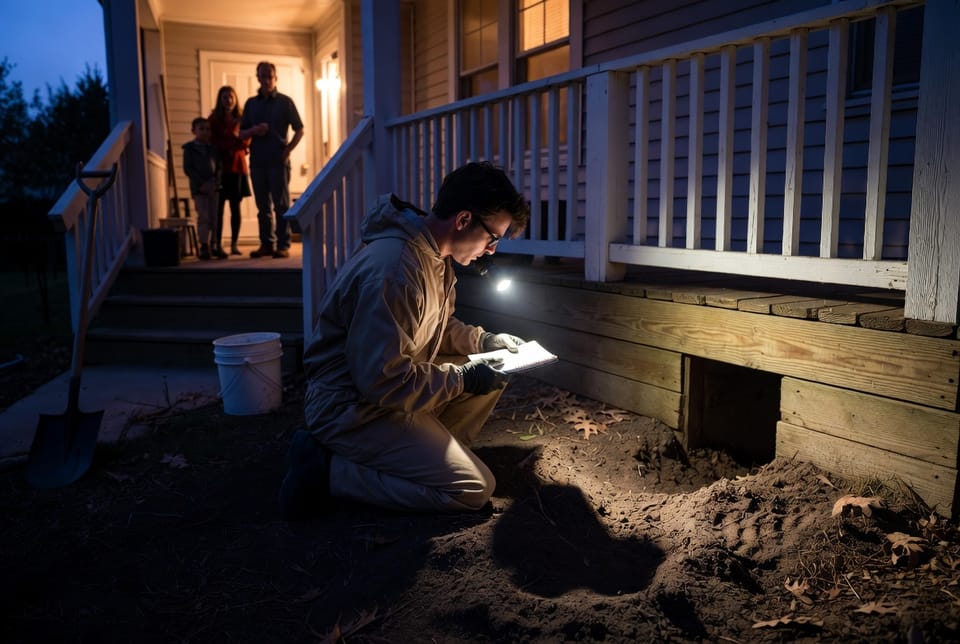
Discovering a skunk under the porch can feel unsettling, yet it is one of the most common wildlife challenges homeowners face. These striped visitors seek quiet, sheltered spaces for denning, and porches, decks, and crawl spaces often provide exactly what they need. The good news is that humane eviction combined with smart prevention restores peace without harm. This guide walks you through skunk behavior, clear signs of activity, step-by-step eviction methods, and lasting solutions so you can reclaim your property confidently and compassionately.
Evict Skunks Humanely Today – Call Now!
Understanding Skunk Behavior and Den Preferences
Skunks are primarily nocturnal mammals that prefer low-disturbance areas for rest and raising young. A skunk under the porch is typically seeking protection from predators and weather extremes. Porches, raised decks, basements with gaps, and woodpiles offer ideal microclimates—cool in summer, insulated in winter, and shielded from rain.
Female skunks, especially during spring and early summer, look for secure dens to give birth. Litters usually arrive between April and June, and the mother remains highly protective until the kits are mobile. Single adults may also occupy these spaces year-round when food sources such as grubs, insects, or pet food are nearby. Skunks do not dig elaborate tunnels like some rodents; instead, they enlarge existing openings or use natural voids under structures. Once settled, they may reuse the same den across seasons if left undisturbed.
Their defensive spray is a last resort, triggered only when they feel cornered or threatened. Understanding this helps homeowners approach the situation calmly. Most encounters remain peaceful when people avoid sudden movements or blocking escape routes. Recognizing that the animal is simply following natural instincts reduces fear and supports a more effective, humane eviction process.
Clear Signs a Skunk Has Moved In
Early detection prevents longer-term issues. Homeowners often notice these indicators before seeing the animal itself:
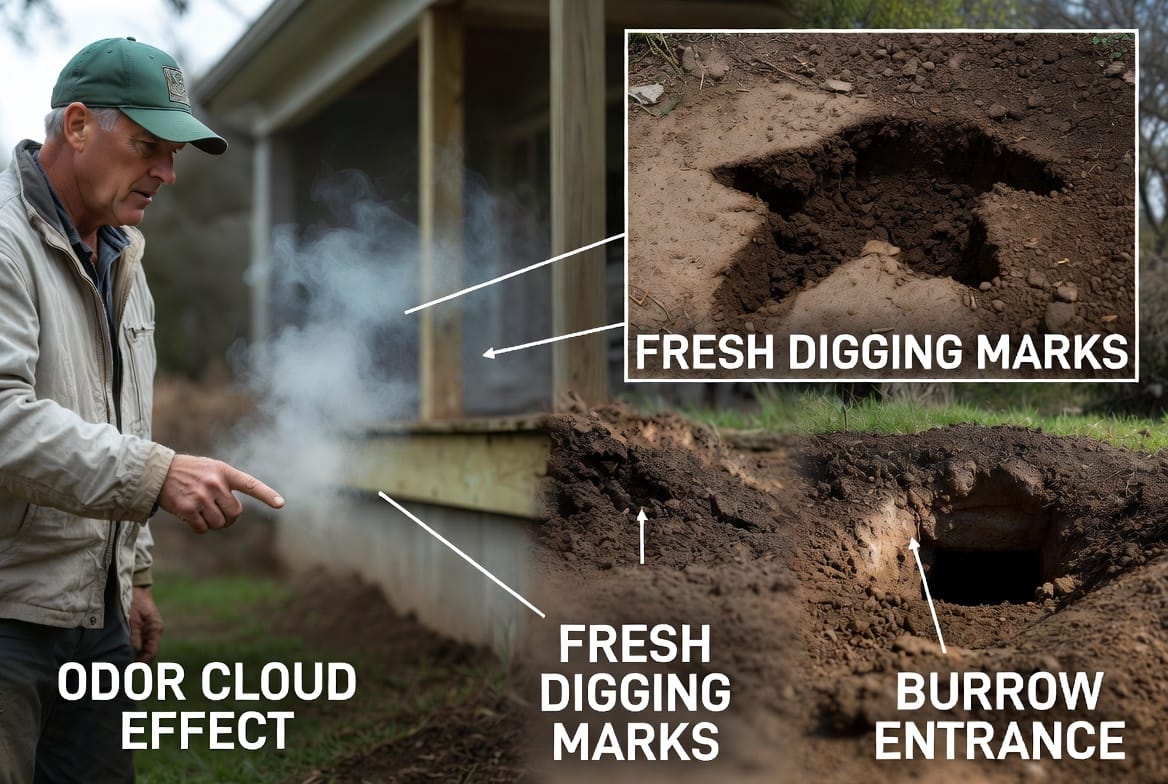
- A persistent musky odor that intensifies at night or after rain
- Fresh soil mounds or shallow digs near foundation edges
- Visible burrow entrances roughly four to six inches wide under the porch or deck
- Distinctive tracks showing five-toed prints with visible claw marks
- Droppings containing insect parts or berry seeds near the den
- Faint rustling or scratching sounds after dark
These signs confirm activity and help determine whether a single adult or a family occupies the space. Ignoring them can lead to expanded dens or repeated visits the following season. Careful observation from a safe distance—never approaching the entrance directly—allows accurate assessment without elevating stress for the animal or the household.
Why Immediate Action Matters and Common Risks
Leaving a skunk under the porch unaddressed carries several practical concerns. Persistent odor can drift indoors through vents or gaps. Digging may undermine foundation soil over time. In rare cases, skunks can carry diseases such as rabies or parasites, though transmission risk remains low when contact is avoided. The greatest immediate risk is accidental confrontation that triggers spraying, which is difficult and costly to neutralize.
Homeowners sometimes attempt quick fixes that increase danger. Pouring ammonia, mothballs, or water into dens often drives the animal deeper or causes it to spray in confined spaces. Blocking the entrance while the skunk is inside traps it, creating severe stress and potential structural damage as it tries to escape. These approaches violate humane eviction principles and can prolong the problem.
Professional methods prioritize the animal’s natural exit while permanently securing the structure. This balanced strategy protects both the household and local wildlife populations.
Timing the Eviction Process Correctly
Successful humane eviction depends heavily on season and family status. In late spring and early summer, a mother may still be nursing immobile kits. Evicting too early separates the family and leaves young vulnerable. The safest window begins once kits are approximately six to eight weeks old and capable of following the mother at night. By mid-to-late summer most young are independent, making eviction straightforward.
Outside breeding season, single adults can leave at any time. Observation over several evenings—listening for movement after dusk—helps confirm whether the den is currently occupied. Patience during the right timeframe yields the highest success rate and avoids unnecessary stress.
Step-by-Step Humane Eviction Using One-Way Doors
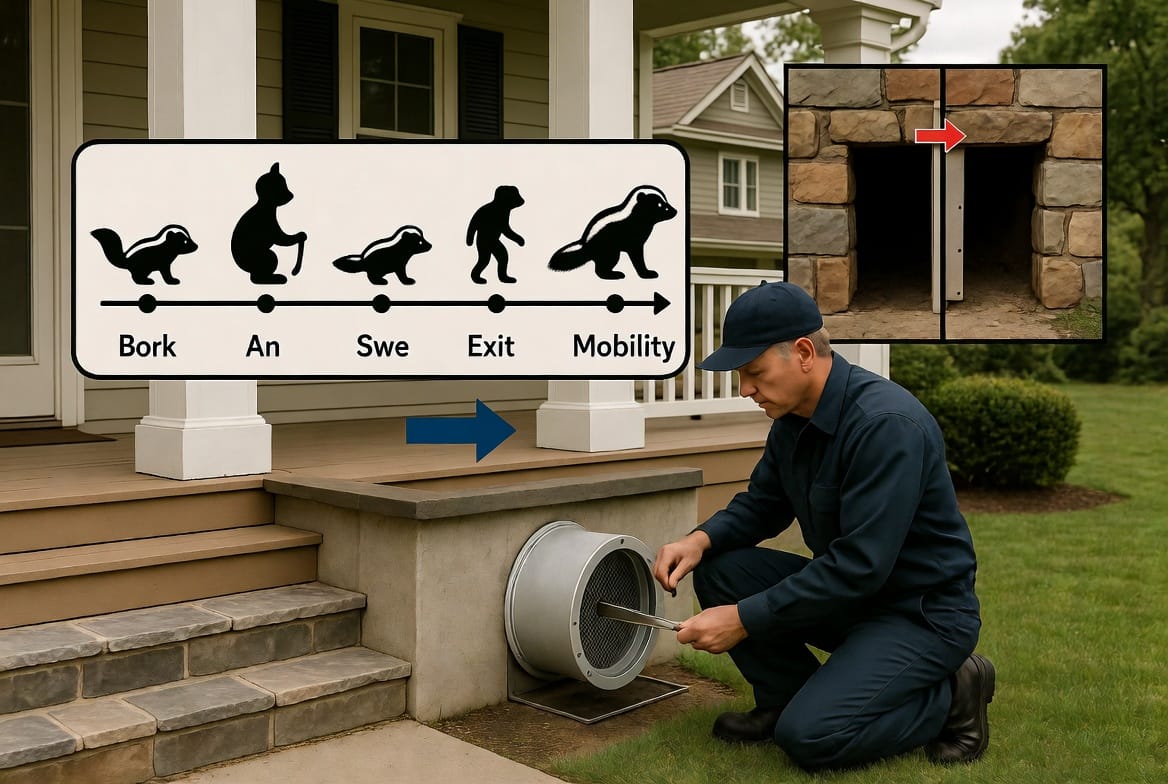
The cornerstone of humane eviction is the one-way door. This simple device allows the skunk to exit for nighttime foraging but prevents re-entry. Installation follows a clear sequence:
- Confirm the den is active and identify every possible entry point around the porch or deck.
- Choose a mild-weather evening when the skunk is likely to leave.
- Secure a rigid one-way door over the primary entrance using sturdy wire mesh and fasteners that match the structure.
- Seal all secondary gaps temporarily so the animal has only one exit path.
- Monitor for two to three nights to ensure the den is empty.
- Once activity ceases, remove the door and permanently close every opening.
This method respects the skunk’s natural rhythm. The animal departs on its own schedule, and the structure becomes inaccessible. Never place food or attractants near the door, as that encourages lingering. After eviction, a thorough inspection ensures no kits remain behind.
Permanently Sealing Entry Points
Once the den is vacant, sealing becomes the critical final step. Use heavy-gauge hardware cloth, metal flashing, or concrete depending on the surface. Overlap materials by several inches and bury the lower edge at least twelve inches into the soil to deter digging. Pay special attention to corners, utility penetrations, and lattice work. A complete seal not only stops the current skunk but also deters raccoons, opossums, and future visitors.
Inspect the entire perimeter of the home for similar vulnerabilities. Even small gaps under sheds, steps, or air-conditioning units can become new dens. Addressing every weak point creates a comprehensive barrier.
Long-Term Prevention Strategies That Work
Prevention keeps porches skunk-free year after year. Focus on three practical areas:
- Eliminate food sources by securing trash cans, bringing pet food indoors at night, and treating lawns for grubs.
- Reduce shelter options by clearing woodpiles, dense vegetation, and debris near foundations.
- Install motion-activated lights or gentle deterrents that make the area less appealing without harming wildlife.
Regular seasonal checks—especially before spring breeding—catch potential issues early. A well-maintained perimeter combined with the absence of easy meals encourages skunks to den elsewhere in more natural settings.
Addressing Common Myths and Misconceptions
Many homeowners believe skunks are aggressive or that spraying is inevitable. In reality, skunks give clear warning signals—stamping feet, raising the tail, and turning away—before releasing odor. Giving them space almost always prevents spraying. Another myth suggests that trapping is the only solution. Live trapping requires special permits in many areas and can separate families. One-way doors achieve the same result more gently and with higher long-term success.
Some people worry that eviction simply moves the problem next door. When combined with thorough sealing and habitat modification, the skunk is encouraged to find a more suitable natural den rather than relocating under another structure.
The Value of Professional Support
While determined homeowners can manage simple cases, complex situations benefit from trained specialists. Professionals assess structural integrity, identify hidden entry points, and apply techniques refined through experience. They also understand local regulations and seasonal patterns that affect timing. Choosing experts ensures the process remains fully humane and the results permanent.
When the odor is strong, the den is difficult to access, or young are present, calling for help protects both the family and the animals. Specialists arrive equipped with the correct materials and knowledge to complete the work efficiently and safely.
Restoring Peace of Mind After Eviction
Once the skunk under the porch is gone and the structure sealed, residual odor typically fades within days to a couple of weeks. Ventilating the area and using enzymatic cleaners on any affected soil speeds recovery. Homeowners often report renewed comfort using the outdoor space again—children playing on the deck, pets relaxing nearby, and evening gatherings free from worry.
The entire process, from discovery to permanent prevention, reinforces a respectful relationship with local wildlife. Skunks play a beneficial role by controlling insects and rodents; guiding them away from human structures allows that role to continue without conflict.
Final Thoughts on Humane Coexistence
A skunk under the porch is temporary when handled correctly. By learning behavior, recognizing signs early, applying timed humane eviction techniques, and investing in solid prevention, homeowners achieve lasting results. The approach outlined here prioritizes safety, effectiveness, and compassion at every stage.
Clear Your Porch of Skunks Safely – Call Specialists Now!