The Showerhead Cleaning: Removing Mineral Buildup for Better Flow
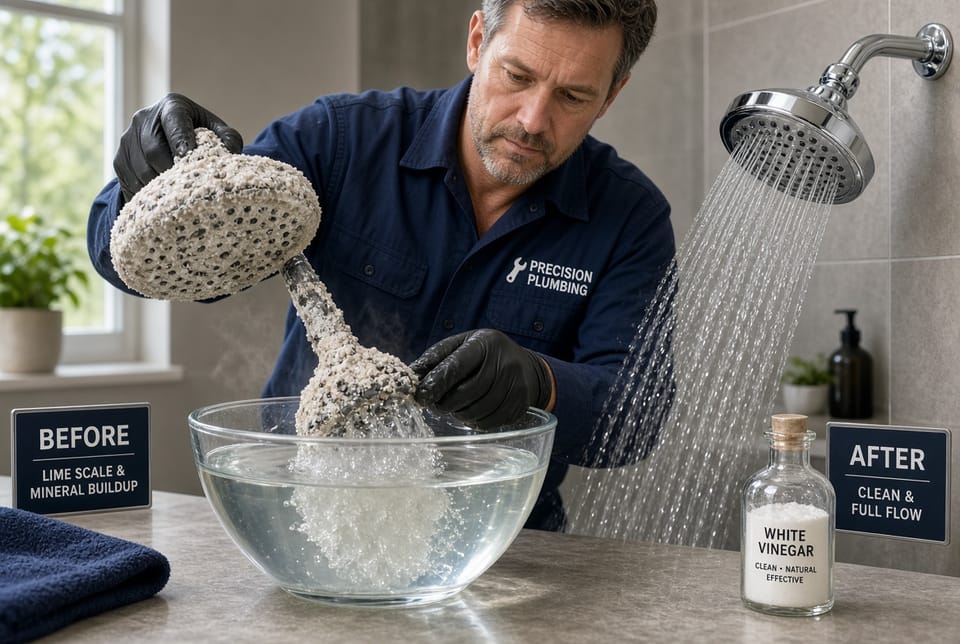
A clogged showerhead can turn an everyday rinse into a frustrating trickle. Mineral buildup from hard water is the most common culprit, quietly restricting water flow and diminishing the experience you deserve. The good news is that this is a straightforward maintenance task anyone can handle with common household items. In the following guide, you will discover exactly how mineral deposits form, the clear warning signs to watch for, and a reliable vinegar-based cleaning method that restores strong, even pressure.
Call Now to Remove Mineral Buildup Fast
Regular attention to your showerhead protects both comfort and plumbing efficiency.
Understanding How Mineral Buildup Forms in Showerheads
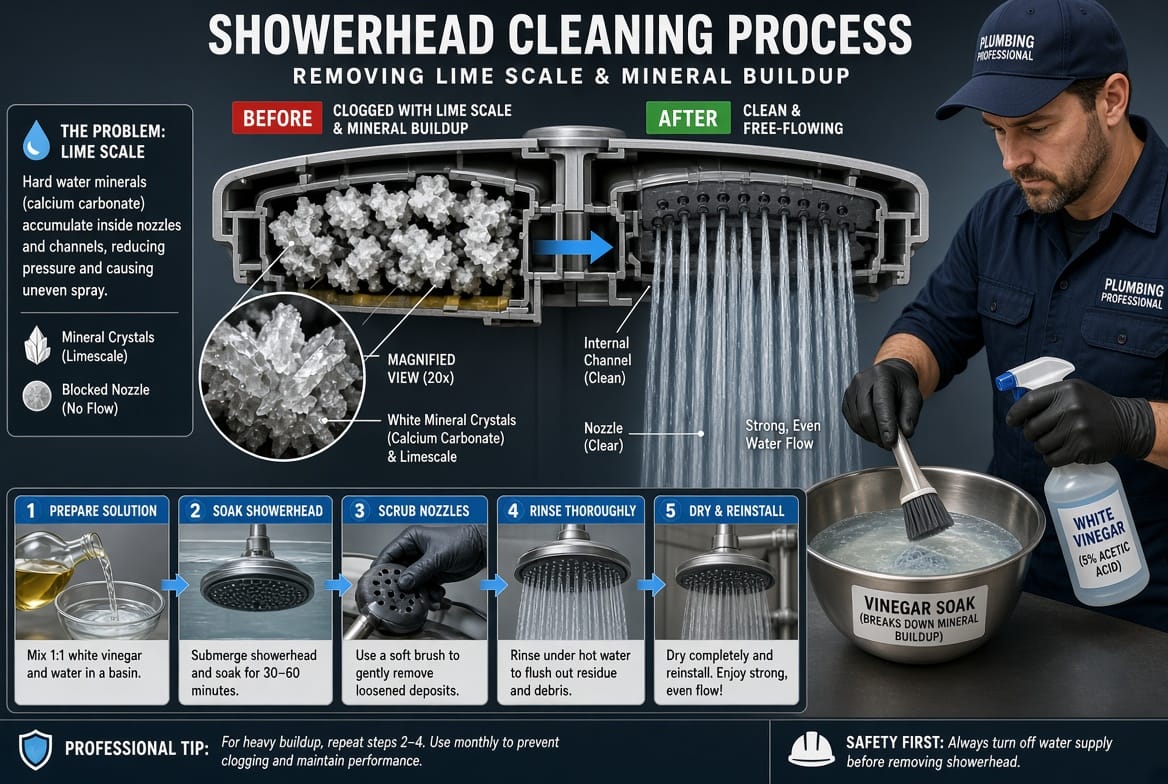
Hard water contains elevated levels of dissolved minerals, primarily calcium and magnesium. As water exits the tiny nozzles of a showerhead, it evaporates and leaves microscopic particles behind. Over weeks and months these particles accumulate into a hard, chalky layer known as limescale or mineral scale.
The process accelerates in areas with particularly high mineral content. Each time you shower, fresh water carries new minerals that bond to existing deposits. The result is progressive narrowing of the openings that once delivered a full, invigorating spray.
This buildup does more than reduce flow. It creates uneven patterns, forces the system to work harder, and can eventually affect related fixtures. Recognizing the chemistry behind the problem empowers you to act early and keep performance consistent.
Recognizing the Signs of a Clogged Showerhead
Early detection makes cleaning far easier. Watch for these reliable indicators that mineral buildup has begun to interfere:
- Uneven spray – Water streams from only some nozzles while others remain dry or sputter weakly.
- Reduced pressure – The overall force feels noticeably weaker than when the fixture was new.
- Visible white or yellowish crust – Chalky deposits appear around the outer edges or inside the faceplate.
- Longer time required to rinse soap or shampoo thoroughly.
- Occasional dripping after the water is turned off, caused by partially blocked channels.
These symptoms rarely appear overnight. They develop gradually, which is why many homeowners overlook them until the shower becomes genuinely inconvenient. Addressing them promptly returns the fixture to its designed performance level and prevents further restriction.
Preparing for a Successful Cleaning Session
Gather a few simple supplies before you begin. You will need:
- White distilled vinegar
- A plastic bag large enough to enclose the showerhead
- A rubber band or twist tie
- An old toothbrush or soft nylon brush
- Clean cloths or paper towels
- Optional: mild dish soap and a small bowl for additional soaking of removable parts
Work in a well-ventilated bathroom and protect surrounding surfaces with a towel. If your showerhead is attached by a flexible hose, consider removing it entirely for easier handling. Fixed models can usually be treated in place.
Safety remains straightforward. Vinegar is gentle on most finishes when used correctly, yet prolonged contact with certain specialty coatings should be avoided. When in doubt about material compatibility.
Step-by-Step Method: Soaking and Scrubbing Away Mineral Deposits
The vinegar soak remains the most effective and accessible approach for dissolving mineral buildup. Follow these clear stages for reliable results.
Stage 1: Secure the Vinegar Soak
Fill a sturdy plastic bag with enough white vinegar to fully submerge the face of the showerhead. Slip the bag over the fixture so the nozzles sit completely in the liquid. Fasten the bag tightly with a rubber band around the neck of the showerhead. Leave the assembly undisturbed for at least thirty minutes; stubborn deposits may benefit from one to two hours.
During this period the mild acidity of the vinegar reacts with calcium carbonate, breaking the crystalline structure into a soft residue that rinses away easily.
Stage 2: Remove and Inspect
Carefully remove the bag and pour the used vinegar down the drain. Rinse the showerhead under warm running water to flush loosened particles. If the unit is removable, detach it and examine the interior channels for remaining scale.
Stage 3: Gentle Mechanical Cleaning
Dip a soft brush into fresh vinegar or a mild soap solution. Work the bristles into each nozzle with circular motions. Avoid metal implements that could scratch the finish. Pay special attention to the outer ring of openings where deposits often concentrate.
For particularly stubborn spots, a second short soak of fifteen minutes followed by another light brushing usually completes the job.
Stage 4: Final Rinse and Reassembly
Run hot water through the showerhead for one to two minutes to clear any remaining vinegar and debris. Wipe the exterior with a soft cloth. Reattach any removed components securely. Turn on the water and observe the spray pattern. You should notice immediate improvement in both volume and uniformity.
This sequence restores flow without harsh chemicals or specialized tools. Most households complete the entire process in under an hour, including preparation and cleanup.
Additional Tips for Long-Term Showerhead Performance
Consistency multiplies the benefits of a single cleaning. Consider these practical habits:
- Wipe the faceplate with a damp cloth after each use to limit new mineral adhesion.
- Install a simple inline water softener or filter if your region has particularly hard water.
- Schedule a brief visual inspection every three months.
- Avoid abrasive cleaners that can damage the surface and create sites for future buildup.
These small actions keep the fixture operating near peak efficiency and reduce the frequency of deeper interventions.
Benefits Beyond Improved Flow
Restoring a clogged showerhead delivers multiple advantages. Stronger pressure shortens shower times and improves rinsing effectiveness. Even spray patterns enhance comfort and reduce water waste caused by prolonged use. Clean nozzles also help maintain consistent temperature mixing in dual-handle or thermostatic systems.
From a maintenance perspective, preventing severe scale accumulation protects downstream valves and pipes from related stress. The modest time investment therefore supports both daily enjoyment and longer fixture life.
When Professional Assistance Becomes the Smarter Choice
Most mineral issues respond well to the vinegar method. However, certain situations call for experienced hands. Persistent low pressure after thorough cleaning may indicate deeper blockages in the supply line or a failing pressure-balancing valve. Visible corrosion, cracked components, or fixtures older than ten years often warrant evaluation rather than repeated home treatments.
A qualified plumbing technician can diagnose hidden restrictions, replace worn parts, and recommend water-quality solutions tailored to your home. Reaching out early prevents minor annoyances from escalating into more extensive repairs.

Maintaining Confidence in Your Home’s Plumbing System
A clean showerhead represents more than convenience; it reflects attentive care of the systems that support daily life. By understanding the role of hard water, recognizing the early signs of restriction, and applying a simple vinegar soak followed by gentle scrubbing, you regain full control over water delivery.
The process is approachable, inexpensive, and highly effective for the vast majority of households. Should questions arise or results fall short of expectations, expert guidance remains readily available.
Restore shower flow with a simple cleaning. For personalized assistance or more complex plumbing concerns.
End Hard Water Problems – Call a Pro Now