The Roof Valley Flashing: Open vs. Closed Valley Systems Compared
When it comes to protecting your home, roof valley flashing stands as one of the most critical yet often overlooked elements of any roofing system. These narrow channels where two roof slopes meet channel massive volumes of rainwater, snowmelt, and debris. A single flaw here can lead to costly water intrusion, structural damage, or premature roof failure.
Compare Valleys & Protect Your Roof – Call Now!
At Domain House, we’ve installed and repaired thousands of valley systems across diverse climates, and we know that choosing between an open valley and a closed valley directly impacts your roof’s durability, appearance, and long-term performance. This in-depth guide breaks down both systems with clear explanations, real-world pros and cons, and expert guidance so you can make an informed decision that protects your investment for decades to come.
Understanding Roof Valleys: The Heart of Water Management
Every pitched roof creates valleys where water naturally converges. Without properly engineered roof valley flashing, even the highest-quality shingles cannot prevent leaks. These junctions experience constant water flow, UV exposure, thermal expansion, and debris accumulation—making them the most vulnerable area on your entire roof.
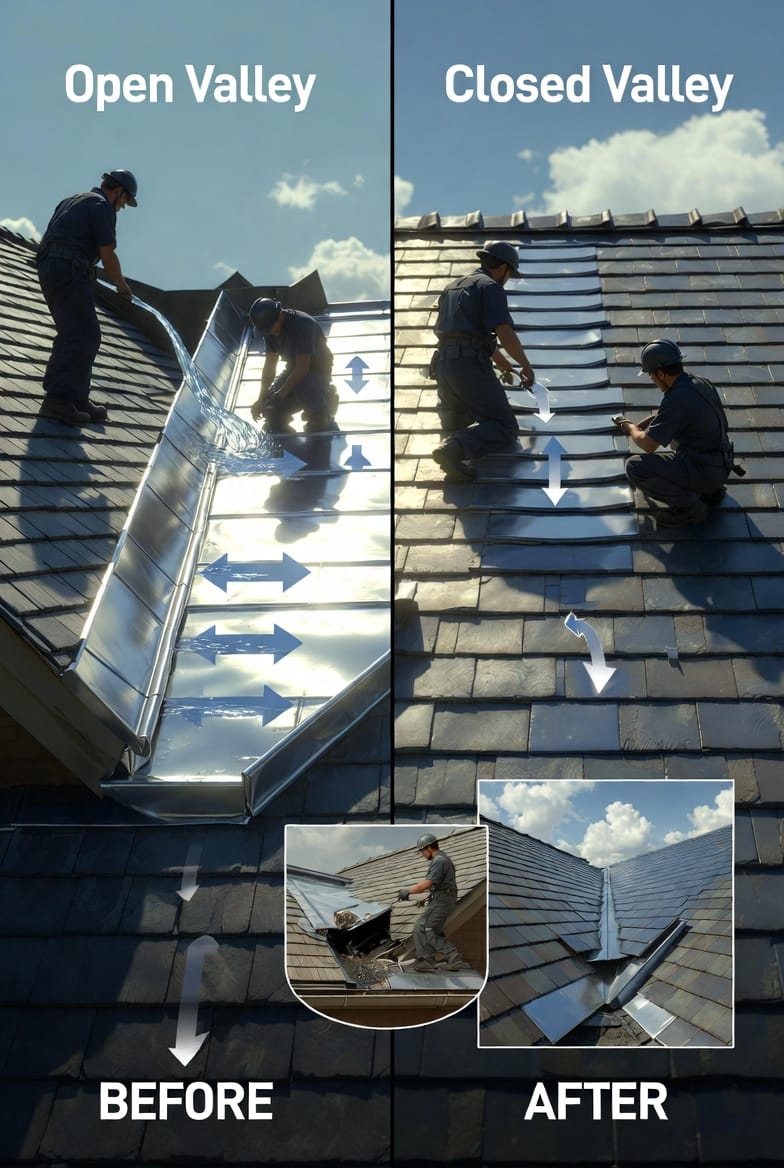
Open valley systems feature exposed metal flashing that water flows directly across. Closed valley systems conceal the flashing beneath overlapping shingles for a seamless look. Both rely on high-grade metal (typically copper, aluminum, or galvanized steel) and premium underlayment, but their installation methods and performance differ significantly.
Proper valley design prevents ice dams in cold climates, reduces shingle wear from constant moisture, and maintains the structural integrity of your home. When installed correctly by certified professionals, either system can deliver reliable protection—but the right choice depends on your roof style, local weather patterns, and aesthetic preferences.
Open Valley Systems: Exposed Metal Flashing for Superior Drainage
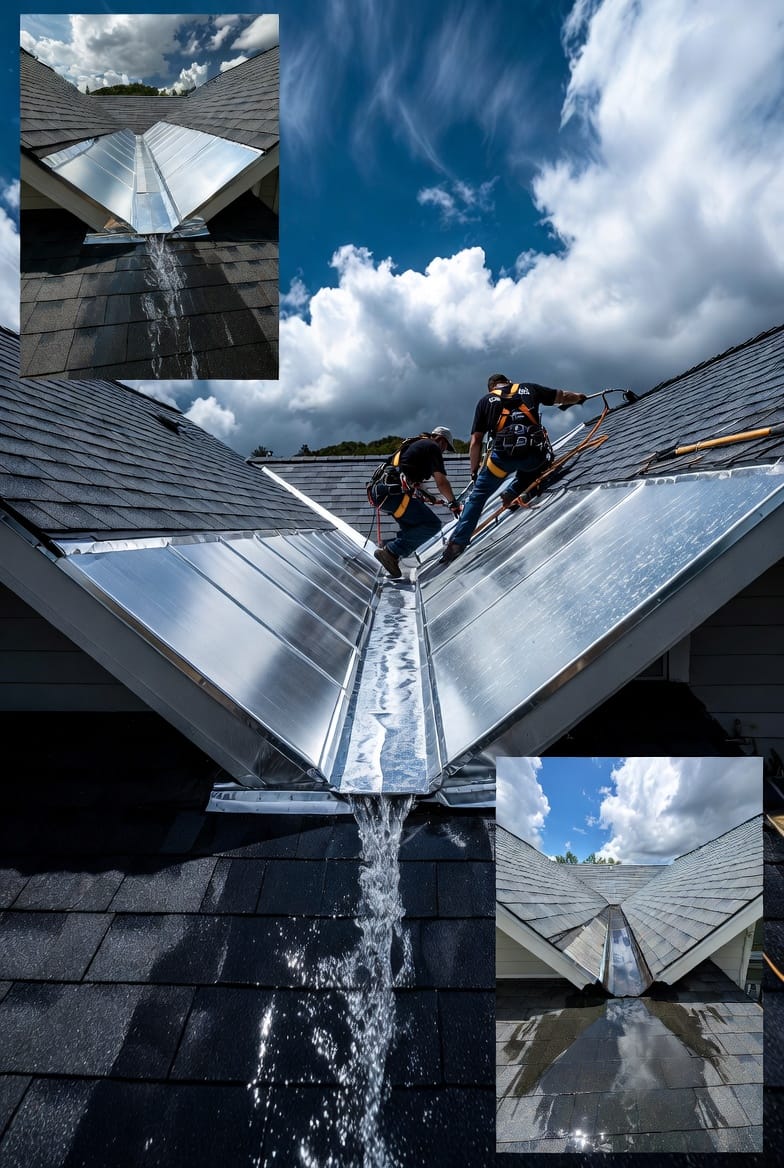
In an open valley, the metal flashing remains visible as a clean, V-shaped or W-shaped channel running the full length of the valley. Roofers install continuous metal sheets (often 24–36 inches wide) over high-quality underlayment, then butt the shingles against the edges without overlapping the flashing itself.
This design allows water to rush freely down the metal surface, minimizing turbulence and trapping far less debris than hidden systems. The exposed flashing also expands and contracts independently of the shingles, reducing stress points that can cause cracks over time.
Key benefits include:
- Exceptional water evacuation – Even during heavy downpours or rapid snowmelt, water clears the valley quickly.
- Reduced debris buildup – Leaves, pine needles, and granules wash away rather than accumulating under shingles.
- Extended lifespan in harsh climates – Open valleys handle ice dams and freeze-thaw cycles better because water does not pool beneath shingles.
- Easier inspection and maintenance – Roofers can spot issues instantly without removing shingles.
Many homeowners appreciate the bold, architectural contrast the metal provides, especially on contemporary or historic homes where the flashing complements the overall design.
Closed Valley Systems: Shingled-Over for a Seamless Appearance
Closed valleys hide the flashing completely beneath cut and overlapped shingles, creating a uniform roof surface with no visible metal. Installers first lay the metal flashing and underlayment, then weave or cut shingles to overlap across the valley centerline, forming a watertight seal through layered asphalt.
This method delivers a clean, continuous look that many prefer for traditional or high-end residential roofs. The shingles blend perfectly with the rest of the roof, maintaining a cohesive color and texture.
However, because water must travel through the layered shingles rather than over smooth metal, closed valleys require precise cutting, proper nailing patterns, and high-quality sealants to prevent leaks at the overlaps.
Advantages include:
- Superior aesthetics – The roof appears as one seamless surface.
- Modern curb appeal – Especially effective with architectural or designer shingles.
- Lower visual maintenance – No metal to polish or monitor for oxidation in some climates.
Yet this beauty comes with trade-offs that every homeowner should understand before deciding.
Head-to-Head Comparison: Durability, Appearance, and Performance
When evaluating open valley vs closed valley, focus on three core factors: water management, longevity, and visual harmony with your home’s architecture.
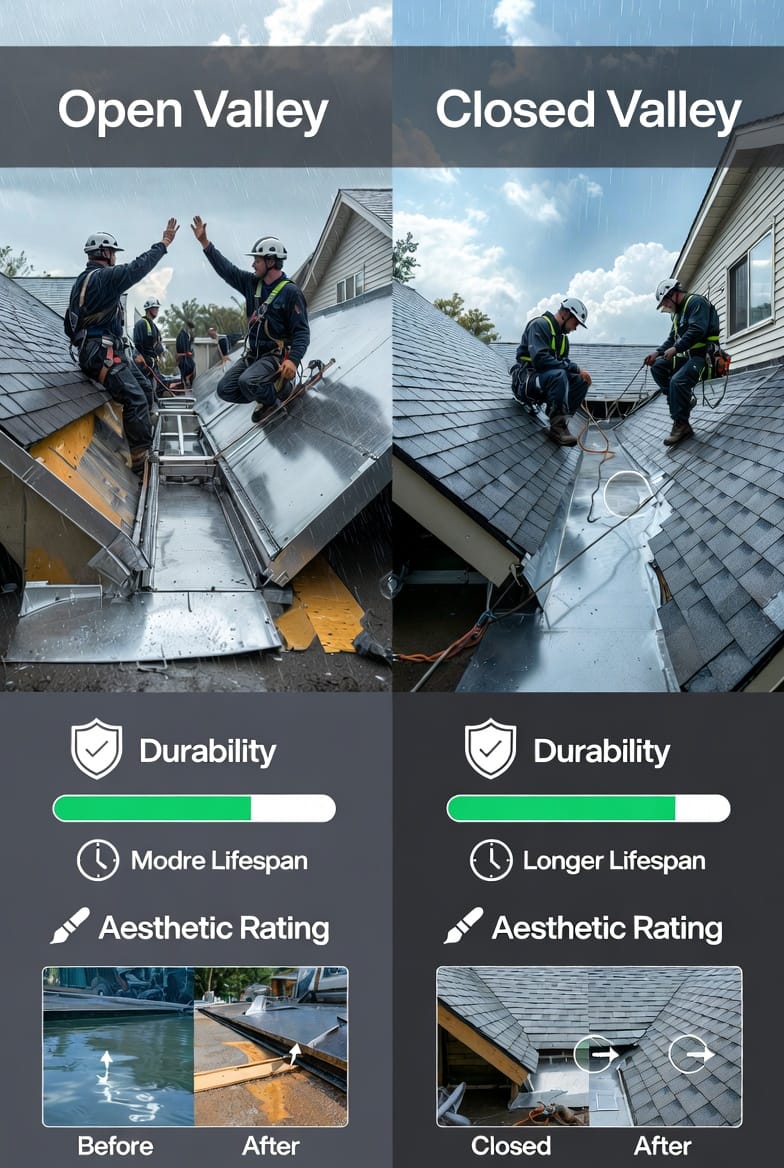
Durability favors open valleys in most scenarios. The exposed metal resists granule abrasion from shingles and handles high-volume water flow without the risk of hidden leaks at cut edges. Closed valleys, while effective when perfectly installed, can develop subtle weaknesses over 15–20 years as overlapping shingles age and sealants degrade.
Appearance clearly favors closed valleys. The uniform shingle surface creates a polished, high-end finish that many homeowners desire. Open valleys introduce a deliberate metal accent that some love for its craftsmanship and others find too industrial.
Maintenance requirements differ noticeably. Open valleys need occasional cleaning and metal inspection but allow easy access. Closed valleys require less frequent surface cleaning yet demand more thorough professional inspections because problems remain hidden until they surface as interior leaks.
In regions with heavy rainfall, frequent snow, or significant debris from surrounding trees, open valleys consistently outperform. In milder climates where aesthetics take priority, closed valleys deliver excellent results when paired with premium materials and expert installation.
Pros and Cons: Making an Informed Choice
Open Valley Pros:
- Faster and more reliable water drainage
- Lower risk of hidden leaks
- Better performance against ice dams and heavy debris
- Longer overall system lifespan (often 25–40 years with proper care)
- Easier long-term maintenance and repairs
Open Valley Cons:
- Visible metal may not suit every architectural style
- Requires periodic cleaning to maintain appearance
- Slight potential for noise during heavy rain on certain metal types
Closed Valley Pros:
- Elegant, seamless roof appearance
- Perfect color and texture match with surrounding shingles
- Popular choice for traditional and luxury homes
- Minimal visual disruption to roof lines
Closed Valley Cons:
- Higher risk of debris trapping under shingles
- Shorter effective lifespan in demanding climates
- More complex installation requiring greater precision
- Harder to detect early signs of wear or damage
Both systems, when installed by experienced professionals using top-tier materials, provide decades of reliable protection. The key lies in matching the valley style to your specific roof design, local weather conditions, and personal priorities.
Choosing the Right Valley System for Your Home
Every roof tells a different story. Factors such as roof pitch, local rainfall totals, tree coverage, architectural style, and even HOA guidelines should guide your decision.
Homes in rainy or snowy regions benefit most from the robust drainage of open valleys. Properties emphasizing curb appeal or matching existing traditional roofing often choose closed valleys. Hybrid approaches—open valleys on the main water-shedding areas and closed valleys on less critical sections—can also deliver optimal results.
We always recommend a professional roof inspection and detailed consultation. Our team evaluates your specific roof structure, measures water flow patterns, and presents custom renderings so you can visualize both options on your actual home before any work begins.
Maintenance Tips to Maximize Valley Lifespan
Regardless of your choice, proactive care ensures maximum performance:
- Schedule annual professional inspections focusing on valley flashing
- Clear debris twice yearly, especially after fall leaf drop
- Monitor for signs of wear such as granule loss or loose metal edges
- Address any nearby tree overhang that increases debris load
- Consider protective coatings on exposed metal in high-UV areas
With routine attention, both open and closed valley systems deliver outstanding longevity and peace of mind.
Protect Your Roof’s Most Vulnerable Area
Your roof valleys handle more water than any other section of your home. Choosing the right roof valley flashing system—whether open or closed—is one of the smartest decisions you can make for long-term protection and value.
Don’t leave this critical area to chance. Protect your roof’s most vulnerable area. Our expert team is ready to evaluate your roof and recommend the perfect solution tailored to your home and climate.
Get Expert Valley Flashing Advice Today