The Roof Drip Edge Gutter Integration: Proper Overhang for Water Flow
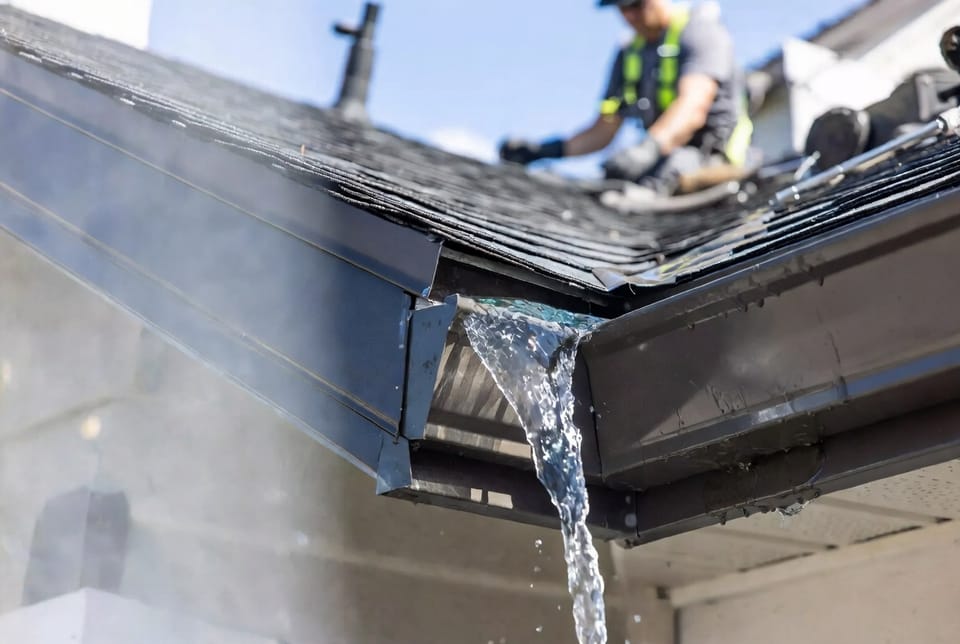
When it comes to protecting your home from water damage, few details matter more than the critical interface between your roof's drip edge and gutters. Many homeowners overlook this connection, yet it plays a vital role in directing rainwater away from your property effectively.
Protect Your Roof from Rot – Call Now!
At its core, drip edge gutter integration ensures water flows smoothly from the roof into the gutter system without leaking behind the fascia board. Proper installation prevents costly structural issues and extends the life of your entire roofing system.
In this comprehensive guide, we'll explore why the drip edge overhang is essential, the risks of improper setup, and exactly how professionals achieve optimal results.
Understanding Drip Edge and Its Role in Roof Protection
Drip edge is a specialized L-shaped metal flashing installed along the roof's perimeter. Its primary function is to guide water off the roof's edge and prevent it from seeping underneath the shingles or back into the fascia and soffit areas.
Without proper drip edge gutter integration, even the highest-quality shingles and gutters can fail prematurely. Water naturally follows the path of least resistance. When the drip edge doesn't extend correctly over the gutter, rainwater can run behind the gutter, leading to hidden moisture problems that worsen over time.
Key benefits of quality drip edge installation include:
- Superior water channeling away from the roof structure
- Protection against fascia board rot and decay
- Enhanced overall roof system longevity
- Improved gutter efficiency during heavy rainfall
A well-integrated drip edge acts as the first line of defense in your home's waterproofing system.
The Critical Importance of Proper Drip Edge Overhang
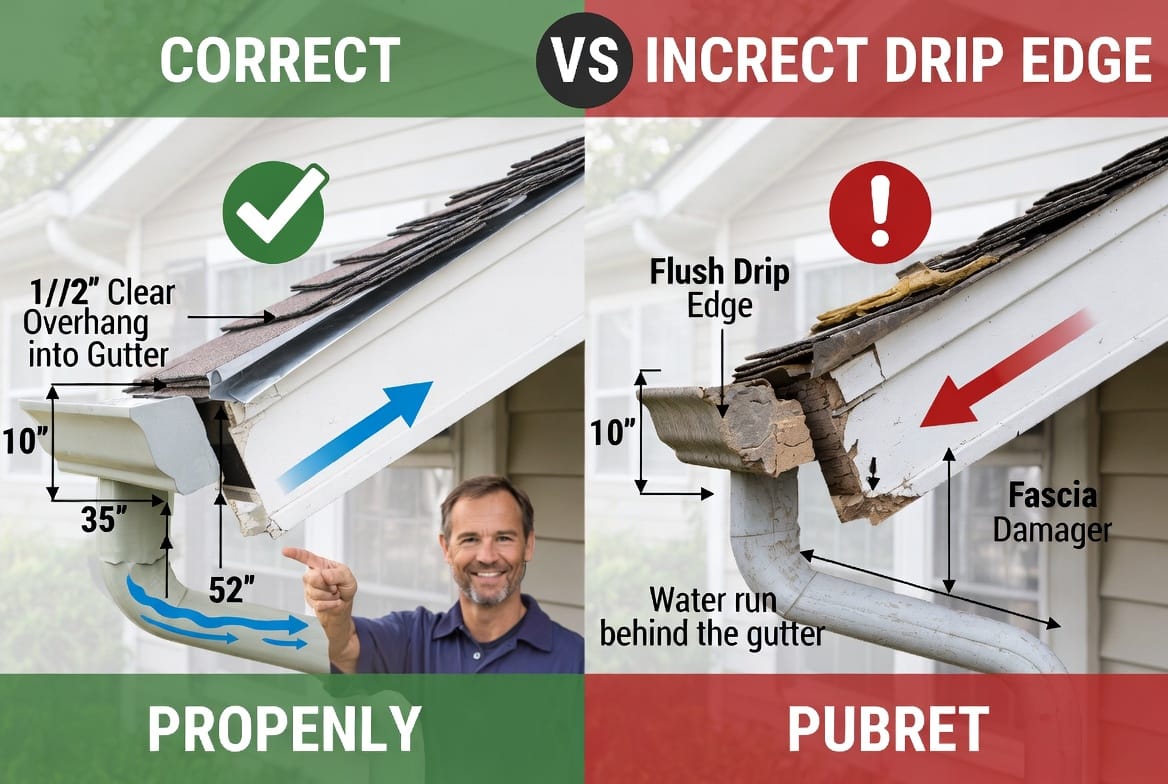
The overhang distance between the drip edge and the gutter is not arbitrary. Industry best practices recommend a 1/4-inch to 1/2-inch overhang for optimal performance.
This precise measurement ensures water leaving the roof edge falls cleanly into the gutter without gaps. Even a small space allows water to follow the back of the gutter and run down the fascia board.
Why this specific overhang matters:
- It creates a continuous flow path for rainwater
- Prevents capillary action that pulls water backward
- Maintains structural integrity of wood components
- Reduces the risk of ice dam formation in colder climates
When installed correctly, this integration becomes nearly invisible while delivering powerful protection.
What Happens When Drip Edge Overhang Is Incorrect
Improper drip edge gutter integration ranks among the most common hidden causes of roof-related damage. When the drip edge sits flush with the gutter or falls short, water finds its way behind the system.
Common Problems from Poor Installation
- Water running behind gutters: This leads to constant moisture exposure on the fascia board.
- Fascia rot and decay: Wood absorbs water, causing swelling, cracking, and eventual structural weakness.
- Mold and mildew growth: Hidden damp areas create perfect conditions for biological growth.
- Soffit and interior damage: Water can migrate further, affecting ceilings and walls inside the home.
- Premature gutter failure: Overflow and improper drainage stress the entire system.
Bold warning: These issues often remain invisible until significant damage has occurred. Early detection through professional inspection can save thousands in repairs.
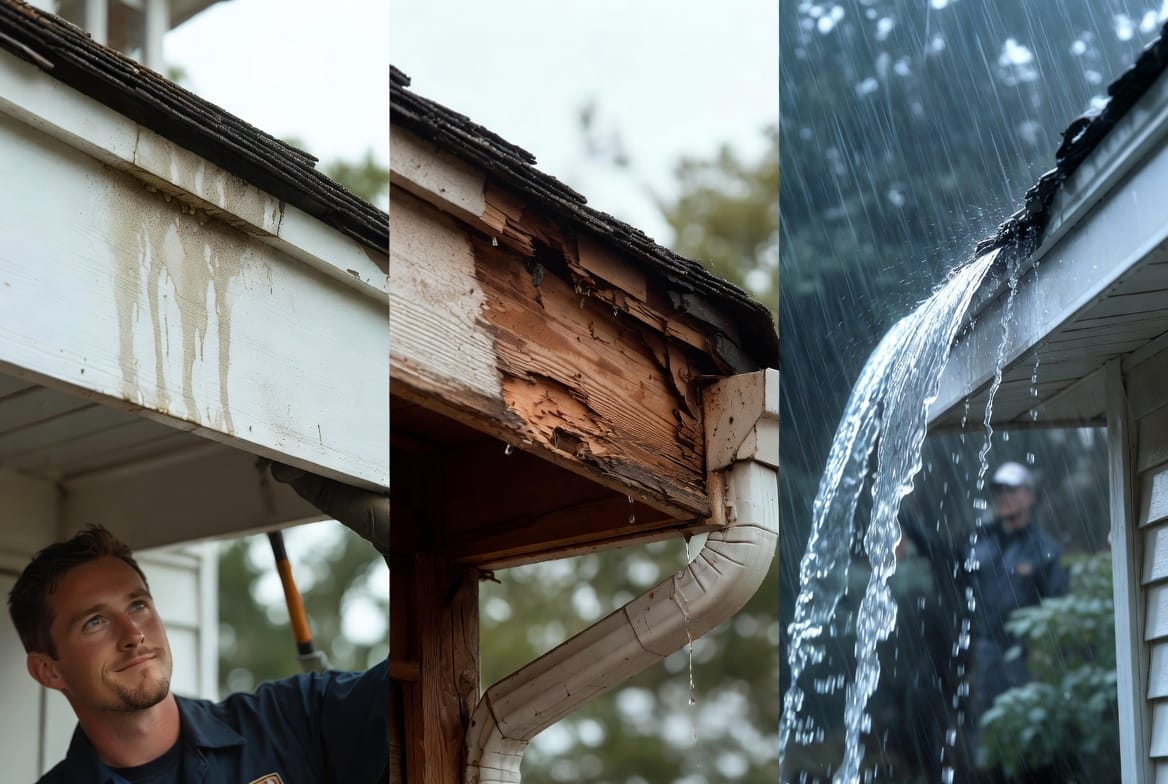
Many homeowners only notice problems during heavy storms when water cascades down the side of the house instead of staying contained in the gutters.
Signs Your Drip Edge and Gutter Integration Needs Attention
Stay vigilant for these warning indicators that suggest your roof's edge details require professional evaluation:
- Water stains on the fascia board – Dark vertical streaks or discoloration
- Rotted or soft fascia sections – Visible wood deterioration or spongy texture
- Overflow behind gutters during moderate rain
- Peeling paint on eaves or soffit areas
- Musty odors near the roofline or attic
- Increased pest activity attracted to damp wood
Professional Installation: Achieving Perfect Drip Edge Overhang
Expert roofers follow a meticulous process to ensure flawless drip edge gutter integration:
- Roof evaluation – Assessing existing conditions and measuring overhang needs
- Proper material selection – Using high-grade, corrosion-resistant metal drip edge
- Precise positioning – Installing with the recommended 1/4 to 1/2 inch overhang
- Secure fastening – Using appropriate nails or screws at correct intervals
- Seamless gutter alignment – Ensuring the entire system works in harmony
- Final inspection – Testing water flow with controlled simulation
This methodical approach eliminates guesswork and delivers lasting results.
Tools and Materials Used by Professionals
- Galvalume or aluminum drip edge for superior durability
- Roofing nails with proper coating
- High-quality sealants for any necessary joints
- Leveling tools for perfect alignment
The investment in professional installation pays for itself through prevented damage and extended roof lifespan.
Why DIY Attempts Often Fall Short
While many homeowners are handy, drip edge installation requires specialized knowledge and experience. Incorrect measurements or poor technique can create bigger problems than they solve.
Professional teams bring:
- Years of practical field experience
- Access to commercial-grade materials
- Understanding of local building codes and weather patterns
- Warranty-backed workmanship
Peace of mind comes from knowing the job was completed correctly the first time.
Long-Term Benefits of Correct Drip Edge Integration
Homes with properly installed drip edge and gutter systems enjoy numerous advantages:
- Reduced maintenance costs over time
- Enhanced property value and curb appeal
- Better protection during extreme weather events
- Improved energy efficiency through reduced moisture intrusion
- Greater overall home durability
These seemingly small details contribute significantly to your home's structural health and your family's comfort.
Seasonal Considerations for Roof Edge Systems
Different seasons present unique challenges for drip edge performance:
- Spring rains test water channeling capacity
- Summer heat affects material expansion
- Fall debris can impact gutter flow
- Winter snow and ice create additional stress
Regular professional inspections help maintain peak performance year-round.
Maintaining Your Drip Edge and Gutter System
Simple maintenance steps complement professional installation:
- Clean gutters twice annually
- Inspect drip edge during routine roof checks
- Address any loose fasteners promptly
- Monitor for new signs of water intrusion
These proactive measures extend the effectiveness of your roof protection system.
When to Schedule a Professional Roof Inspection
Don't wait for visible damage to appear. Schedule an inspection if your roof is over 10 years old, after major storms, or if you notice any concerning signs.
Our experienced team specializes in detailed assessments of drip edge gutter integration and all related roof components.
Proper drip edge prevents rot. Protect your home's foundation from water damage with expert care.
Our certified technicians will evaluate your drip edge overhang and overall roof health, providing clear recommendations tailored to your specific needs.
Don't leave this critical interface to chance. Secure your home's protection with professional roofing expertise you can trust.
Expert Drip Edge Installation – Call for Free Consultation