The Roof Parapet Flashing: Preventing Leaks on Flat Roof Edges
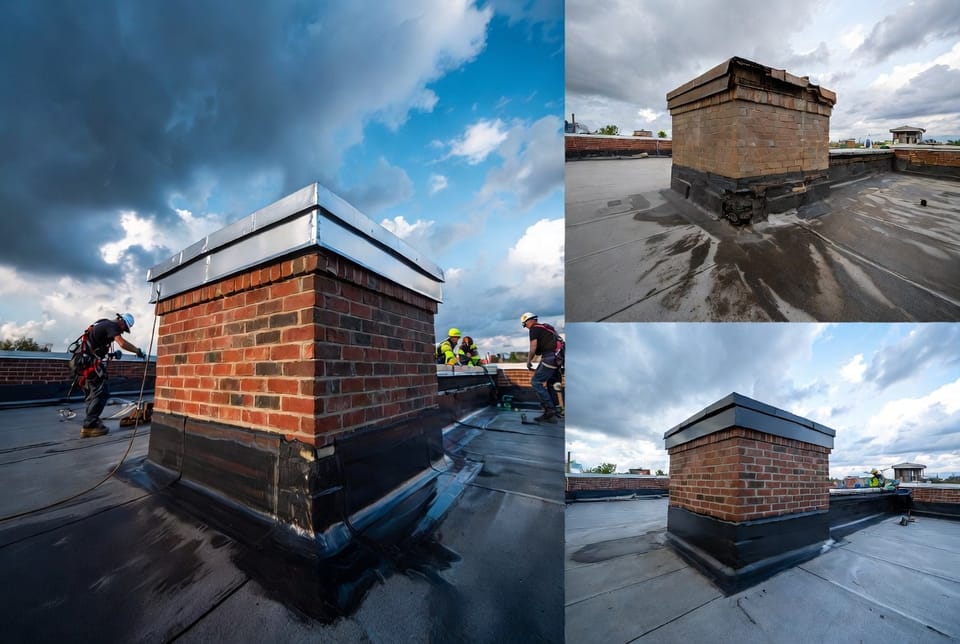
Flat roofs require meticulous attention to every detail, especially at the edges where parapet walls meet the roofline. Roof parapet flashing serves as the critical defense against water intrusion at these vulnerable transitions. When properly installed and maintained, it protects your building from costly damage and extends the life of your entire roofing system.
Protect Your Flat Roof Edges – Call Today!
In this comprehensive guide, we explore the essential role of parapet flashing, why it fails, how to identify problems early, and the most effective repair strategies available today.
Understanding Parapet Walls on Flat Roofs
Parapet walls are vertical extensions of a building’s exterior walls that rise above the roofline. They create a barrier around the perimeter of flat or low-slope roofs, offering both aesthetic appeal and functional protection.
These walls are common in commercial buildings, apartment complexes, and modern residential designs. While they enhance the building’s profile, they also introduce specific waterproofing challenges at the junction between the wall and the roof surface.
Key functions of parapet walls include:
- Protecting the roof edge from wind uplift
- Concealing mechanical equipment and rooftop amenities
- Providing safety barriers for maintenance crews
- Contributing to the architectural style of the structure
However, without robust parapet flashing systems, these walls become primary entry points for water, especially during heavy rain, wind-driven storms, or freeze-thaw cycles.
The Critical Role of Parapet Flashing and Coping Caps
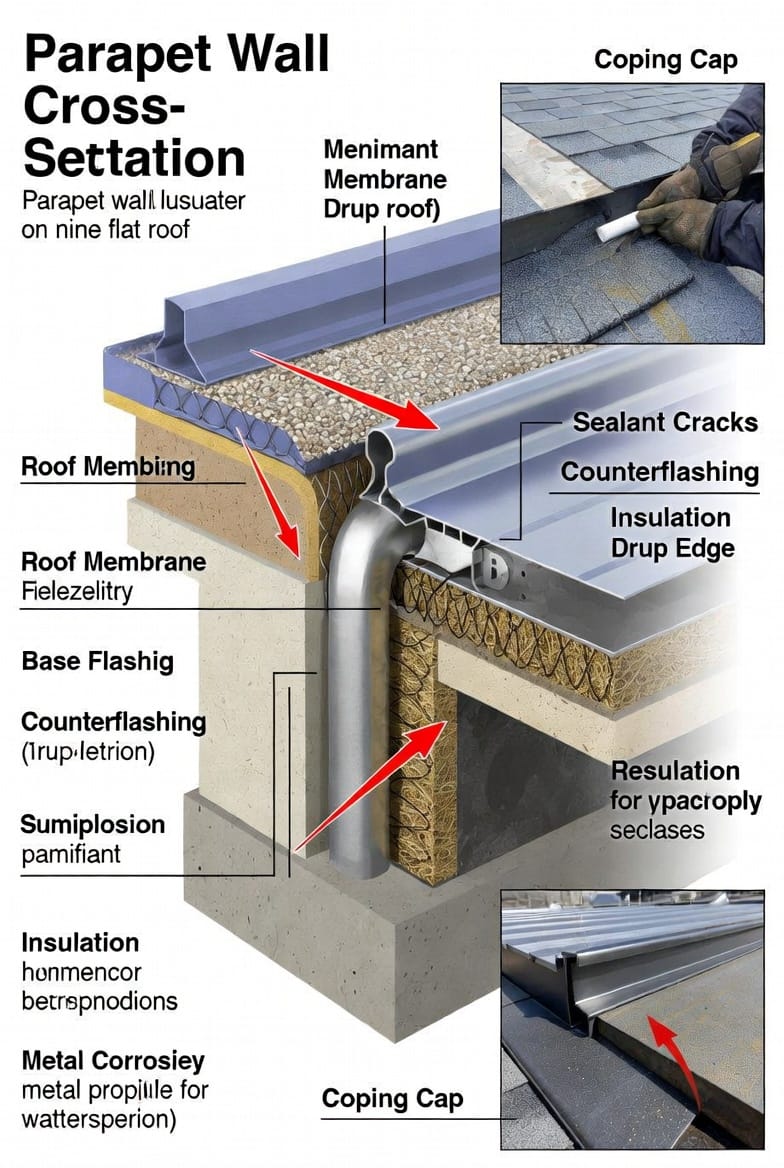
Parapet flashing consists of specially fabricated metal components, membranes, and sealants that create a continuous waterproof barrier. The coping cap — the top covering of the parapet wall — is particularly important as it sheds water away from the wall while protecting the underlying structure.
High-quality flashing systems typically include:
- Base flashing integrated with the roof membrane
- Counterflashing embedded into the wall
- Metal coping caps with proper slopes and drip edges
- High-performance sealants and termination bars
When these components work together, they effectively direct water away from sensitive areas, preventing penetration into the building envelope.
How Parapet Flashing Systems Fail
Flashing failures at coping caps are among the most common sources of leaks on flat roofs. Several factors contribute to these problems over time.
Primary causes of failure include:
- Sealant degradation: Exposed sealants break down due to UV exposure, thermal movement, and weather extremes, creating gaps where water can enter.
- Metal corrosion: Coping caps made from lower-grade materials or improperly coated can rust, leading to holes and compromised structural integrity.
- Improper installation: Insufficient overlaps, missing termination bars, or inadequate slopes allow water to pool and penetrate.
- Thermal expansion and contraction: Repeated movement stresses joints and seams, eventually causing cracks.
- Debris accumulation: Leaves, dirt, and standing water accelerate deterioration of flashing materials.
Left unaddressed, these issues allow water to travel behind the parapet wall and into interior spaces, causing extensive damage to ceilings, walls, insulation, and electrical systems.
Recognizing the Warning Signs of Edge Leaks
Early detection is key to minimizing damage. Property owners should regularly inspect for these common indicators of parapet flashing problems:
- Water stains or discoloration on interior walls near the roof edge
- Musty odors or mold growth in upper floors
- Visible cracks or separation in coping cap sealant
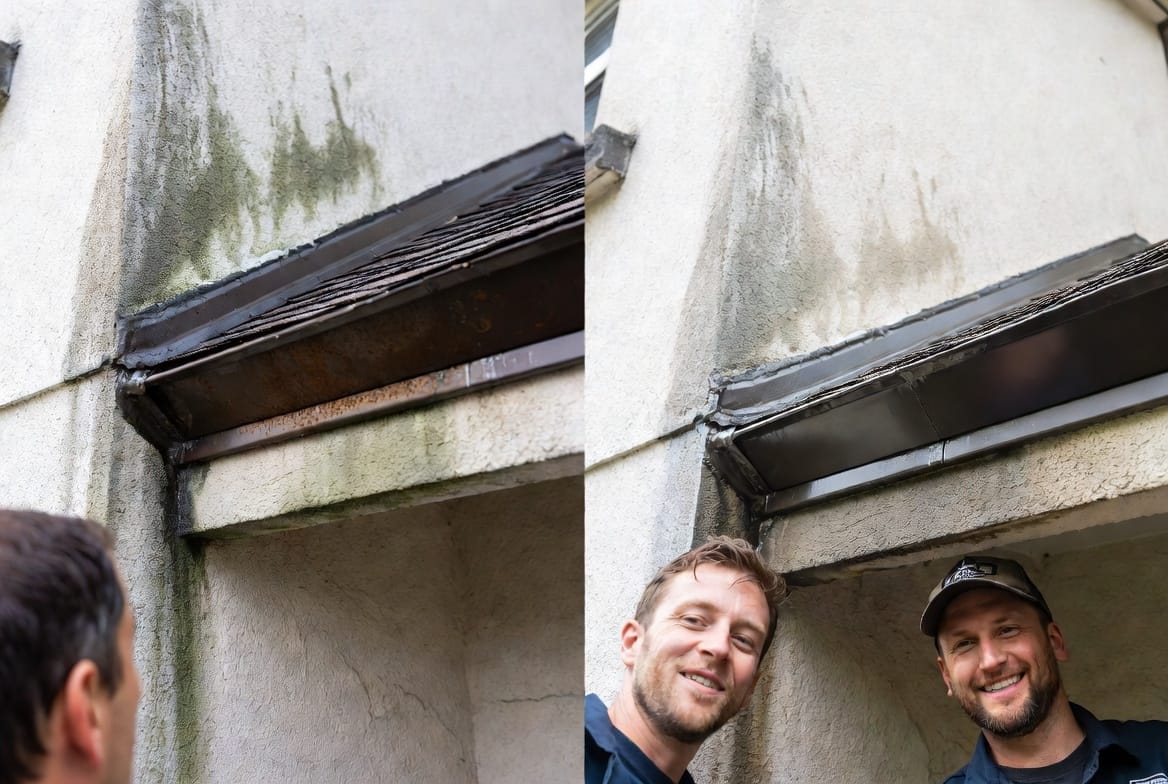
- Rusted or deteriorated metal coping sections
- Peeling paint or bubbling wallpaper along perimeter walls
- Increased energy costs due to wet insulation
Professional Repair Options for Parapet Flashing
When parapet flashing issues arise, timely intervention prevents minor problems from becoming major structural concerns. Here are the most effective repair approaches:
1. Re-caulking and Sealant Restoration
Professional-grade sealants are applied to all joints and transitions. This cost-effective solution works well when metal components remain in good condition. Technicians use high-performance polyurethane or silicone sealants designed for extreme weather exposure.
2. Metal Coping Cap Replacement
Damaged or corroded coping caps are fully removed and replaced with new, properly sloped metal sections. This typically includes custom-fabricated aluminum or galvanized steel with superior coatings for long-term durability.
3. Complete Flashing System Upgrade
For severe cases, a full replacement of base flashing, counterflashing, and coping provides the most reliable long-term solution. This approach often includes improved membrane integration and enhanced drainage features.
4. Preventive Maintenance Programs
Regular inspections and maintenance contracts help catch small issues before they escalate, ensuring your roof parapet flashing continues performing effectively.
Our experienced roofing teams assess each situation individually to recommend the most appropriate, cost-effective solution for your specific building and climate conditions.
Benefits of Addressing Parapet Issues Promptly
Investing in quality parapet flashing repair delivers multiple advantages:
- Immediate leak prevention protecting interior assets
- Extended roof lifespan by eliminating water intrusion
- Reduced energy costs through dry, efficient insulation
- Preserved property value with maintained structural integrity
- Peace of mind during severe weather events
Buildings with well-maintained parapet systems experience significantly fewer emergency repairs and enjoy greater overall stability.
Best Practices for Long-Term Prevention
Preventing future problems requires both quality installation and ongoing vigilance. Consider these expert recommendations:
- Schedule professional roof inspections twice yearly
- Ensure proper drainage around parapet areas
- Choose high-quality, corrosion-resistant materials for replacements
- Maintain clear pathways for water to flow away from edges
- Address any structural movement promptly
Pro Tip: Combining parapet flashing maintenance with full roof system evaluations creates a comprehensive protection strategy.
Real-World Success: A Recent Project
Recently, our team helped a local office complex struggling with recurring leaks along 800 linear feet of parapet wall. After replacing deteriorated coping caps and upgrading all counterflashing, the building has remained completely dry through two major storm seasons. The property manager reported substantial savings on interior repairs and improved tenant satisfaction.
Secure Your Building with Expert Parapet Flashing Solutions
Edge leaks almost always indicate parapet problems. Don’t wait until water damage spreads throughout your property.
Call our specialized roofing team today for a thorough assessment of your parapet flashing system. With decades of experience in flat roof edge repairs, we deliver reliable, long-lasting solutions tailored to your needs.
Protecting your building starts with securing its most vulnerable edges. Trust our experts to keep your roof watertight and your investment secure for years to come.
Expert Roof Parapet Flashing Solutions – Call Today